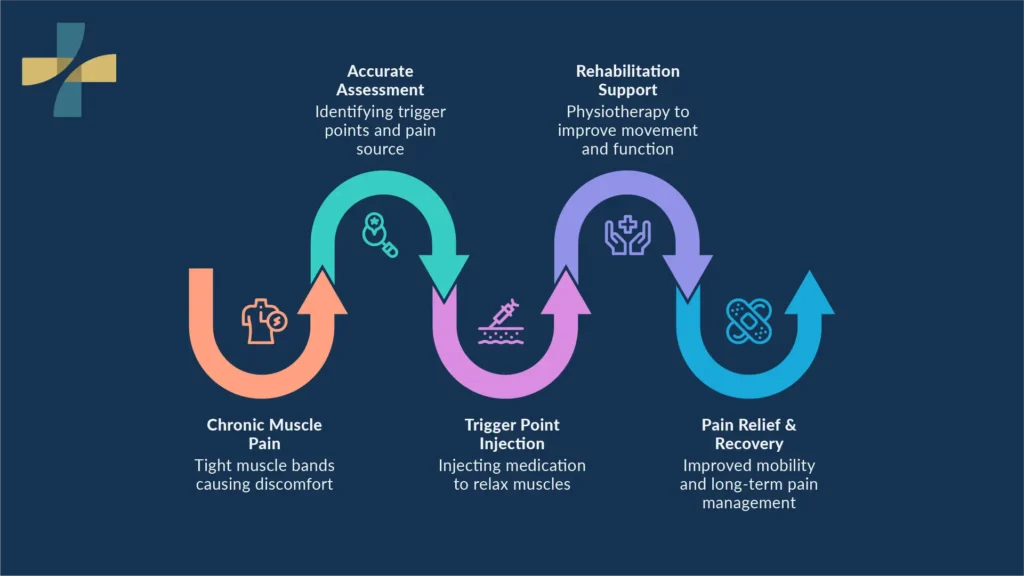
Choosing the best trigger point injection clinic in Vancouver involves more than finding a clinic that offers injections. The quality of the assessment, rehabilitation planning, and provider experience can influence not only treatment safety but also whether the underlying causes of persistent muscle tightness are properly addressed.
Many patients in Vancouver and North Vancouver start researching trigger point injections after dealing with chronic neck stiffness, shoulder tension, upper back pain, or tension headaches that continue interfering with work, sleep, driving, exercise, or daily movement. Office workers often describe worsening discomfort after long hours at a desk. Tech professionals and commuters may experience chronic postural strain from prolonged sitting and screen use. Some patients seek treatment after ICBC-related injuries or repetitive gym-related muscle overload.
The challenge is that not every clinic approaches trigger point injections the same way. Some clinics focus primarily on symptom relief, while others combine injections with movement assessment, physiotherapy coordination services, rehabilitation planning, and follow-up care designed to address why muscular pain developed in the first place.
This matters because chronic muscle pain is rarely caused by a single issue alone. Ongoing myofascial discomfort may involve posture, movement mechanics, workstation setup, muscle imbalance, mobility restrictions, stress-related guarding, or compensation after previous injuries.
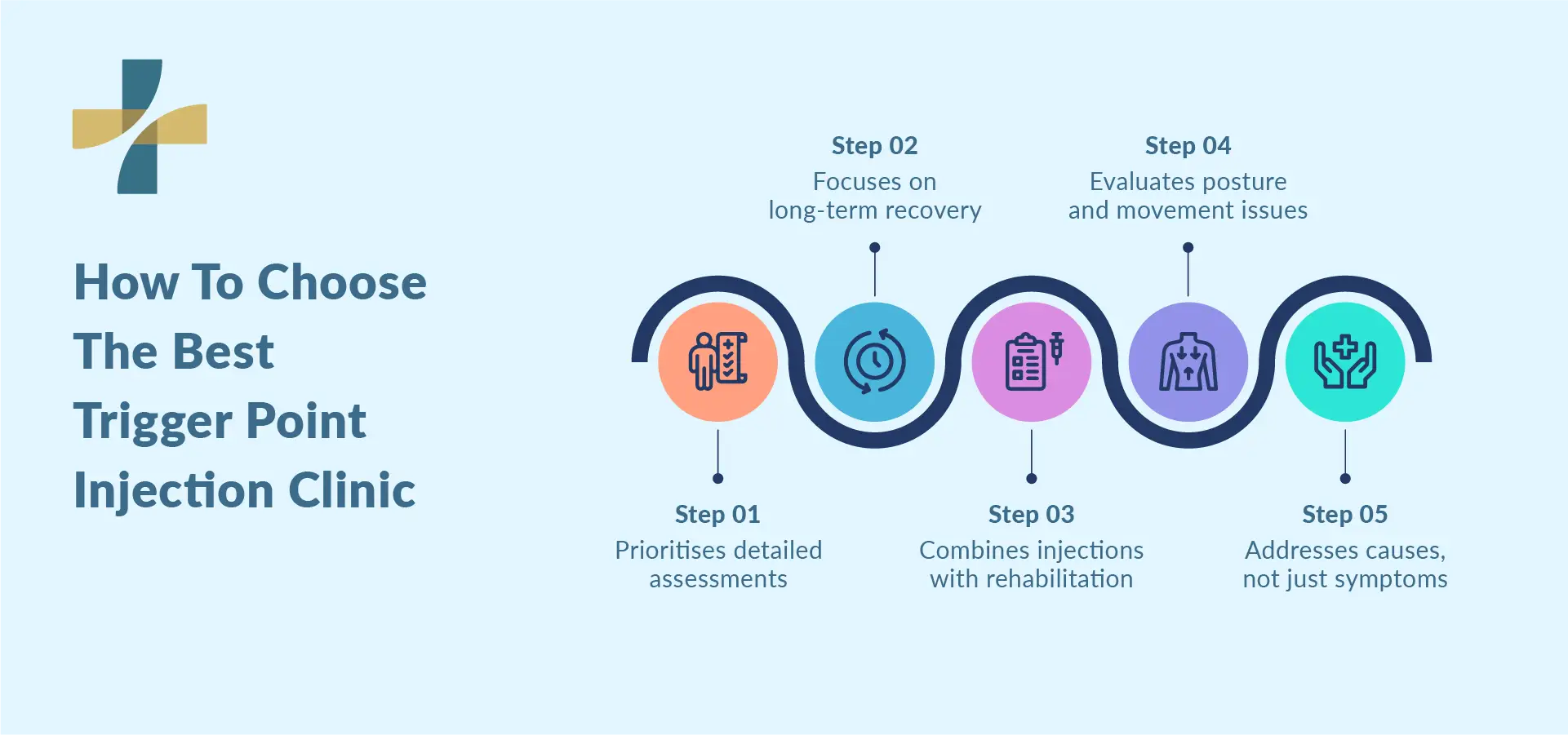
The best trigger point injection clinics in Vancouver prioritize detailed assessment, rehabilitation integration, provider experience, and long-term recovery planning rather than offering injections alone.
This guide explains how patients can evaluate trigger point injection clinics in Vancouver, what qualifications and treatment approaches matter most, what to expect during recovery, and why rehabilitation support often plays a major role in long-term outcomes.
How to Choose the Best Trigger Point Injection Clinic in Vancouver
The best trigger point injection clinics usually prioritize assessment quality, rehabilitation planning, provider qualifications, and long-term recovery support rather than treating injections as a quick, standalone procedure.
This is one of the biggest differences between high-quality musculoskeletal care and injection-only treatment models.
Patients dealing with chronic tension patterns often benefit most from clinics that evaluate:
- why pain keeps returning
- whether trigger point injections are appropriate
- whether physiotherapy or rehabilitation may also help
- how posture and movement patterns contribute to symptoms
- whether additional medical evaluation may be needed
For example, a patient with chronic trapezius tightness may temporarily improve after massage therapy or injections, but symptoms may continue recurring if workstation ergonomics, neck mobility restrictions, shoulder mechanics, and muscle endurance are never addressed.
Providers often see patients whose symptoms temporarily improve after massage therapy or stretching, but return within weeks once desk work, commuting, or gym activity resumes because underlying movement restrictions and muscle endurance deficits were never addressed.
What Often Separates a Strong Vancouver TPI Clinic From a Generic Injection Clinic
| What to Look For | Why It Matters |
| Full musculoskeletal assessment | Helps identify contributing factors behind recurring pain |
| Licensed physicians or qualified medical providers with musculoskeletal assessment and injection experience | Improves safety, screening, and treatment planning |
| Differential diagnosis screening | Helps rule out conditions that may require other care |
| Rehabilitation integration | Supports long-term recovery instead of short-term symptom relief |
| Physiotherapy coordination | Helps improve mobility, posture, and movement control |
| Clear safety protocols | Reduces avoidable complications |
| Follow-up reassessment | Helps monitor progress and treatment response |
| Realistic treatment planning | Avoids “quick fix” expectations |
| Transparent consultation process | Helps patients make informed decisions |
The best trigger point injection clinics in Vancouver usually explain not only what injections may help with, but also:
- when injections may not be appropriate
- when rehabilitation matters more
- why symptoms may return
- what long-term recovery may involve
- how movement retraining supports recovery
Patients searching for long-term muscle pain relief often prefer clinics that combine medical treatment with rehabilitation because persistent muscular pain frequently involves workplace strain, posture issues, repetitive movement, mobility deficits, or chronic compensation patterns.
Questions to Ask During a Trigger Point Injection Consultation
Patients comparing Vancouver trigger point injection clinics may benefit from asking:
- What type of assessment is performed before injections?
- Who performs the injections, and what are their qualifications?
- How do you determine whether TPI is appropriate?
- Do you screen for other causes of pain before treatment?
- Is physiotherapy or rehabilitation recommended afterward?
- How do you evaluate recurring tension patterns?
- What happens if symptoms return after treatment?
- Do you coordinate care between medical providers and physiotherapy teams?
- What recovery expectations should patients realistically expect?
These questions often help patients identify whether a clinic focuses on long-term musculoskeletal care or only short-term symptom management.
Best Trigger Point Injection Clinic Checklist
Before booking a consultation, patients may want to look for clinics that provide:
- detailed movement and posture assessment
- licensed providers experienced in musculoskeletal pain
- evidence-informed treatment planning
- rehabilitation and physiotherapy integration
- follow-up reassessment
- individualized recovery planning
- realistic discussions about treatment limitations
- clear explanation of risks and aftercare
- coordinated care for chronic or recurring pain conditions
Patients with recurring neck pain, shoulder tightness, or myofascial pain often benefit from clinics that evaluate the entire movement system instead of focusing only on painful trigger points.
What Are Trigger Point Injections?
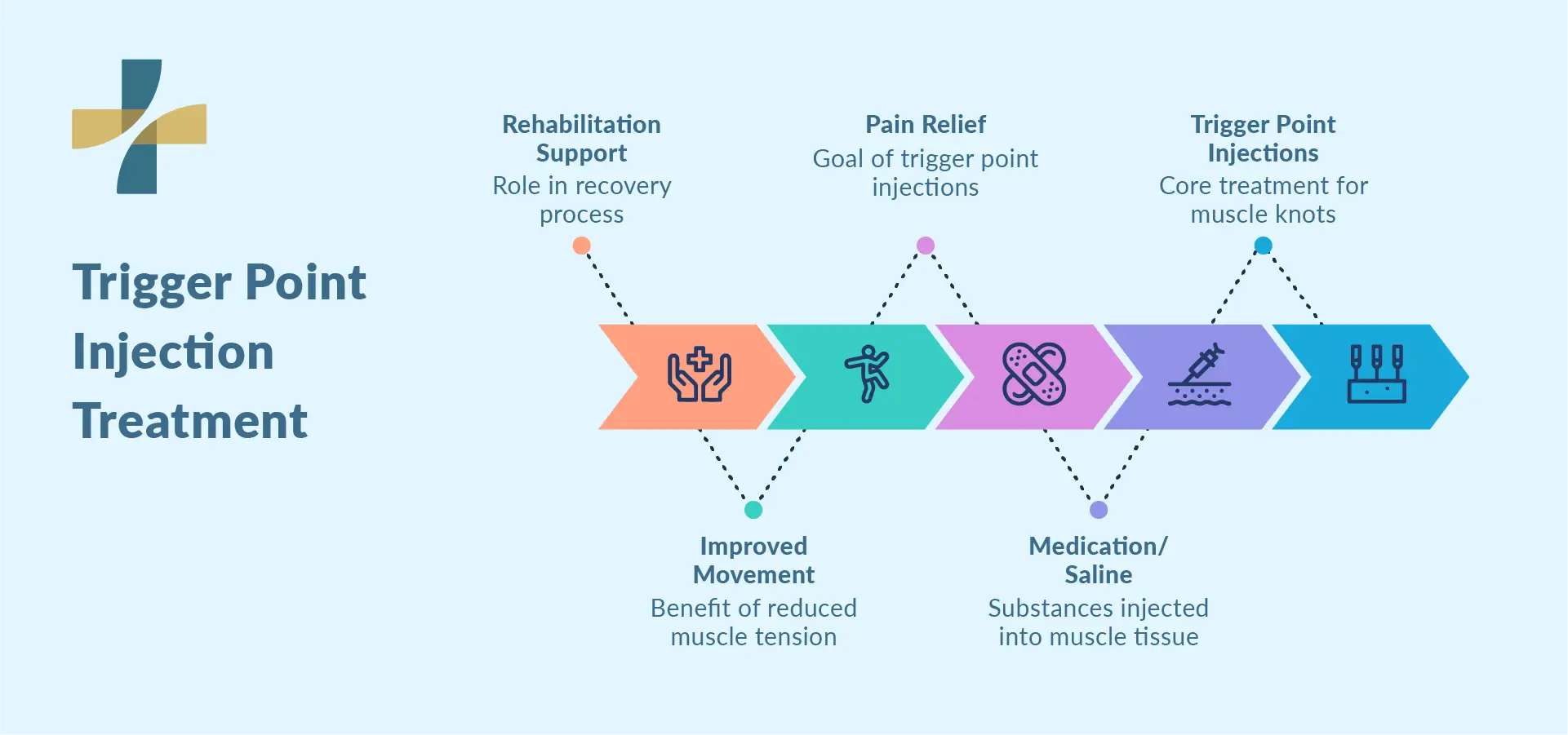
Trigger point injections are used to treat painful muscle knots, also called trigger points, that may develop from repetitive strain, poor posture, overuse, injury, or chronic muscular tension.
The treatment involves injecting an anesthetic, saline, or another solution into tight muscle bands to help reduce pain, decrease muscular tension, and improve movement tolerance.
Trigger points may contribute to:
- neck stiffness
- shoulder pain
- tension headaches
- upper back tightness
- lower back muscular pain
- restricted movement
- referred pain into nearby areas
According to HealthLinkBC, myofascial pain syndrome may be treated with approaches such as physiotherapy, exercise, stretching, massage therapy, and trigger-point injections, depending on the patient’s condition and contributing factors.
However, the best clinics generally avoid presenting trigger point injections as a permanent solution for chronic pain. Outcomes vary depending on:
- symptom duration
- rehabilitation participation
- workplace strain
- posture
- mobility limitations
- activity levels
- movement mechanics
- underlying medical conditions
When comparing clinics in Vancouver, patients should ask whether trigger point injections are being recommended as part of a broader recovery plan or simply as a standalone procedure.
Why Assessment Quality Matters More Than the Injection Itself
One of the biggest indicators of a high-quality trigger point injection clinic is the quality of the assessment performed before treatment.
In many cases, the assessment matters more than the injection itself.
Strong clinics usually evaluate:
- mobility restrictions
- posture-related strain
- work ergonomics
- movement compensation patterns
- previous injuries
- symptom triggers
- exercise tolerance
- muscle imbalance
- headache referral patterns
- activity limitations
Some patients initially assume the painful area is the primary problem, but assessment may reveal that nearby mobility restrictions or movement compensation patterns are repeatedly overloading the muscle.
For example:
- limited thoracic mobility may overload neck muscles
- prolonged laptop positioning may contribute to forward head posture
- hip or core weakness may contribute to chronic lower back tension
Providers may see chronic upper trapezius tightness develop when shoulder instability forces surrounding neck muscles to compensate during lifting, overhead movement, or prolonged desk work.
The best trigger point injection clinics in Vancouver typically screen for red-flag symptoms and other medical conditions before recommending injections. A strong clinic should also evaluate whether symptoms may be related to cervical joint dysfunction, nerve irritation, or referred pain patterns rather than muscular trigger points alone.
This differential diagnosis process helps identify whether symptoms may involve:
- nerve compression
- joint pathology
- inflammatory conditions
- neurological issues
- structural injuries requiring different treatment
This assessment-first approach is one reason many patients prefer clinics with integrated rehabilitation and musculoskeletal care experience instead of procedure-only models.
What to Expect During the Trigger Point Injection Process
Most trigger point injection appointments are relatively short and are performed after assessment and treatment planning are completed.
The procedure generally involves identifying painful trigger points, performing the injection, reviewing aftercare instructions, and discussing whether rehabilitation or physiotherapy may help support longer-term recovery.
Patients may briefly experience pressure, twitching, or temporary soreness during treatment. Mild discomfort afterward is common and often improves within 24 to 48 hours.
Some clinics may use ultrasound guidance in specific cases where additional precision or anatomical visualization is helpful.
However, experienced rehabilitation-focused clinics typically spend far more time on:
- assessment
- movement evaluation
- treatment planning
- rehabilitation coordination
- recovery progression
- follow-up recommendations
rather than treating the injection itself as the entire treatment plan.
Why Rehabilitation Support Matters After Trigger Point Injections
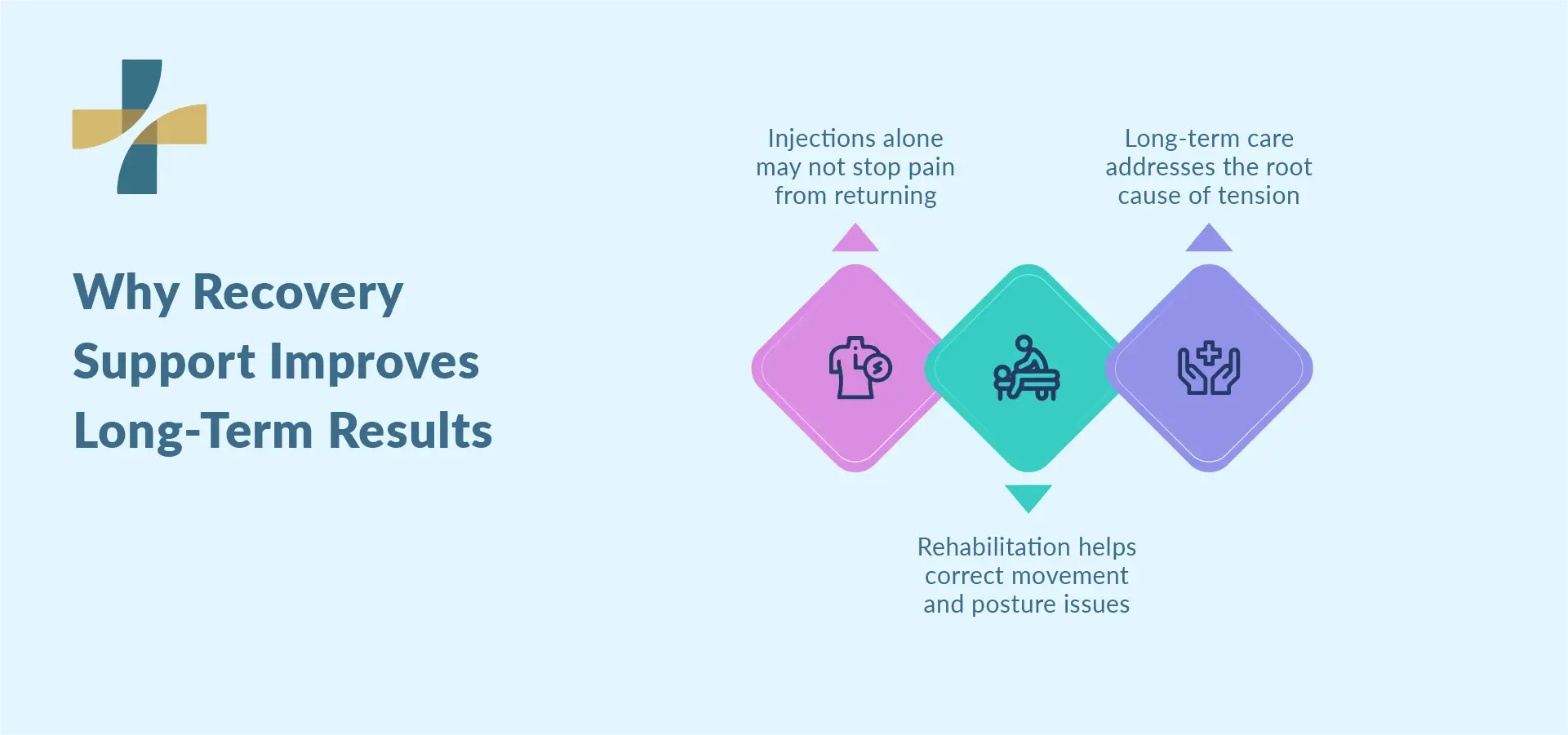
The best trigger point injection clinics in Vancouver typically combine injections with rehabilitation because persistent muscle tightness often returns when posture, mobility, and movement mechanics are not addressed.
This is one of the biggest differences between rehabilitation-focused clinics and injection-only treatment models.
Trigger point injections may temporarily reduce muscle guarding and pain sensitivity, but they do not automatically correct:
- movement dysfunction
- poor posture
- repetitive strain
- muscular imbalance
- workstation stress
- lifting mechanics
- mobility restrictions
Trigger Point Injections Alone vs Combined Rehabilitation
| Trigger Point Injections Alone | Combined Rehabilitation Approach |
| Focuses on painful trigger points | Addresses contributing movement factors |
| May provide temporary relief | Supports longer-term recovery |
| Limited prevention strategy | Helps reduce recurring muscular strain |
| Does not improve strength or mobility | Supports movement retraining and mobility restoration |
| Symptoms may return without correction | Helps improve functional recovery |
For example, an office worker in North Vancouver with recurring neck tightness may initially experience relief after injections. However, symptoms often return if workstation setup, posture, thoracic mobility, shoulder strength, and movement habits remain unchanged.
Rehabilitation-focused clinics may include:
- graded return-to-activity planning
- movement retraining progression
- posture correction strategies
- strengthening exercises
- mobility restoration
- ergonomic guidance
- reassessment after symptom improvement
Providers commonly see symptoms return when patients resume prolonged desk work or high-volume gym activity too quickly before movement tolerance and muscular endurance improve.
In rehabilitation-focused care, providers may gradually increase activity tolerance as pain decreases so patients can return to work, exercise, or daily movement without immediately re-triggering muscle guarding patterns.
According to NCBI Bookshelf, effective long-term management of myofascial pain often involves addressing both muscular symptoms and the biomechanical factors contributing to recurring tension.
How Much Do Trigger Point Injections Cost in Vancouver?
Trigger point injection costs in Vancouver can vary depending on the provider performing the injections, whether an initial consultation fee applies, the complexity of the assessment, whether ultrasound guidance is used, and whether follow-up rehabilitation or physiotherapy is included after treatment. Some services may be partially covered through extended health benefits, while ICBC-related care may involve separate billing pathways depending on the treatment plan.
In British Columbia, MSP may cover certain medically necessary physician services and limited supplementary rehabilitation benefits for eligible patients. Coverage for trigger point injections and related rehabilitation can vary depending on the provider, treatment plan, and the type of private or extended health insurance.
For example, physician-led trigger point injections combined with physiotherapy coordination, movement assessment, and rehabilitation planning may cost differently than injection-only appointments focused primarily on short-term symptom relief.
Patients recovering from ICBC-related injuries may also receive coordinated rehabilitation support involving physiotherapy, reassessment visits, and recovery planning, which can affect overall treatment structure and billing.
Some clinics charge separately for:
- the consultation
- the injection procedure
- physiotherapy sessions
- follow-up reassessment
- ultrasound-guided injections
Other rehabilitation-focused clinics may integrate treatment planning into a broader musculoskeletal recovery program.
Patients comparing clinics in Vancouver should ask:
- whether rehabilitation is included
- whether follow-up reassessment is recommended
- whether extended health benefits apply
- whether ICBC-related coordination is available
- whether the clinic focuses on long-term recovery planning instead of temporary symptom relief alone
The lowest-cost option is not always the best long-term value if assessment quality, rehabilitation support, and follow-up planning are limited.
Are Trigger Point Injections Safe?
Trigger point injections are generally considered safe when performed by qualified licensed healthcare professionals using appropriate screening procedures, injection protocols, and safety standards.
However, like most medical procedures, there are risks and limitations.
Potential side effects may include:
- temporary soreness
- bruising
- localized discomfort
- mild bleeding
- temporary symptom flare-ups
Outcomes vary depending on:
- chronicity of symptoms
- anatomy
- provider technique
- rehabilitation participation
- activity modification
- underlying medical conditions
- treatment adherence
Patients should contact the clinic promptly if they experience:
- fever
- significant swelling
- worsening redness
- increasing pain
- unusual weakness
- neurological symptoms
- shortness of breath
The best clinics typically explain:
- expected recovery timelines
- realistic limitations
- potential risks
- when reassessment may be needed
- why rehabilitation often matters after treatment
How North Vancouver Medical Center Approaches Trigger Point Injection Care
North Vancouver Medical Center uses an assessment-first, rehabilitation-focused approach to trigger point injection care for patients dealing with chronic muscular tension, myofascial pain, mobility restrictions, and recurring movement-related discomfort.
Before recommending injections, providers may evaluate:
- posture
- mobility limitations
- movement patterns
- workstation strain
- exercise tolerance
- previous injury history
- recurring pain triggers
- functional limitations during daily activity
For example, patients with desk-related neck tension may undergo mobility screening, posture evaluation, and workstation strain review before injections are recommended.
This assessment process helps determine whether symptoms are most likely related to muscular tension alone or whether additional rehabilitation, physiotherapy, or medical evaluation may also be appropriate.
The clinic’s integrated approach may include coordination between medical providers and physiotherapy teams to support:
- movement retraining
- graded activity progression
- posture correction
- strengthening
- mobility restoration
- recurring strain reduction
- follow-up reassessment
This approach may be particularly helpful for:
- office workers with chronic neck and shoulder tension
- patients recovering from ICBC-related soft tissue injuries
- active adults with repetitive strain
- individuals whose symptoms repeatedly return after massage therapy or temporary treatment approaches
Patients in North Vancouver often value having assessment, rehabilitation guidance, and follow-up planning coordinated within one clinic setting, especially when managing ongoing work schedules, commuting demands, and long-term recovery goals.
Schedule a Trigger Point Injection Consultation in North Vancouver
Persistent muscle tightness can affect concentration, sleep, exercise tolerance, driving comfort, work productivity, and overall quality of life. For many patients, long-term improvement involves understanding why symptoms keep returning, not only temporarily reducing pain.
NV Med Center provides assessment-focused care for patients exploring trigger point injections, physiotherapy, rehabilitation planning, and integrated musculoskeletal treatment options for chronic muscle pain and myofascial discomfort.
Many patients prefer a North Vancouver clinic where medical assessment, trigger point injections, and physiotherapy coordination can happen in one location, helping reduce travel and simplify follow-up care.
Scheduling a consultation can help identify what may be contributing to ongoing muscular pain and whether trigger point injections, physiotherapy, or an integrated rehabilitation plan may best support your recovery goals. Book a TPI consultation in North Vancouver to discuss your symptoms and explore the most appropriate treatment options for your recovery.
FAQs About Trigger Point Injections
How do I choose the best trigger point injection clinic in Vancouver?
Patients often look for clinics that provide full musculoskeletal assessments, experienced licensed providers, rehabilitation integration, physiotherapy coordination, realistic treatment planning, and clear safety protocols instead of offering injections as a standalone quick fix.
What qualifications should a trigger point injection provider have?
Patients generally prefer providers with medical licensing, musculoskeletal assessment experience, injection training, and familiarity with rehabilitation-based pain management. Clinics that coordinate physiotherapy and reassessment may provide more comprehensive long-term care planning.
How do I know if I need rehabilitation after trigger point injections?
Rehabilitation is often recommended when muscular tension repeatedly returns, posture contributes to symptoms, movement restrictions are present, or pain affects daily activity, work, exercise, or mobility. Physiotherapy may help improve movement mechanics and reduce recurring strain after injections.
How many trigger point injection sessions are usually needed?
The number of sessions varies depending on symptom chronicity, underlying causes, rehabilitation participation, and response to treatment. Some patients improve after one session, while others require multiple treatments combined with movement-focused rehabilitation.
Are trigger point injections covered by insurance or extended health benefits?
Coverage varies depending on provider type, clinic structure, physiotherapy involvement, extended health plans, and ICBC claim eligibility. Patients should ask clinics directly about consultation fees, rehabilitation billing, and insurance coordination.
When should chronic muscular pain be medically evaluated?
Patients should consider professional evaluation when pain repeatedly returns, limits movement, causes recurring headaches, interferes with work or sleep, or does not improve with stretching, massage therapy, or temporary activity modification.