That heavy, throbbing feeling behind your eyes. The constant need to blow your nose. A dull ache across your cheeks that gets worse when you lean forward. If this sounds familiar, you may be dealing with one of the most common and most misunderstood conditions out there: a sinus infection.
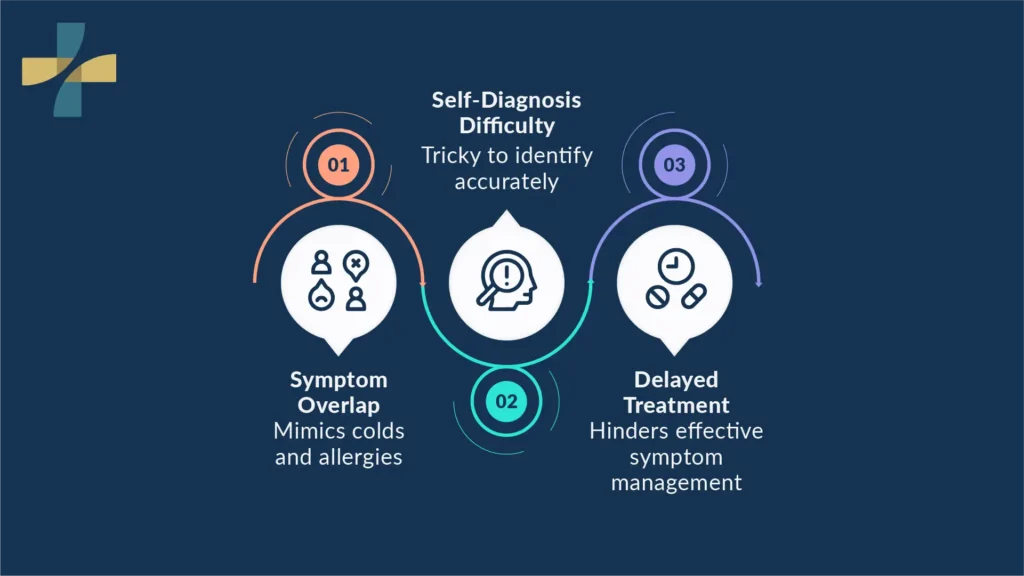
Recognizing sinus infection symptoms early can help you get the right treatment faster, whether that means simple home care or a visit to your doctor. Sinus infections, medically known as sinusitis, affect millions of adults every year, and their symptoms often overlap with colds and allergies, making them tricky to identify on your own.
In this guide, we’ll break down exactly what sinus infection symptoms look like, how they differ from a common cold or seasonal allergies, and when your symptoms may signal something that needs medical attention.
Not sure if it’s a sinus infection or something else? NV Med Center can help you get an accurate diagnosis fast.
What Are the Most Common Sinus Infection Symptoms?
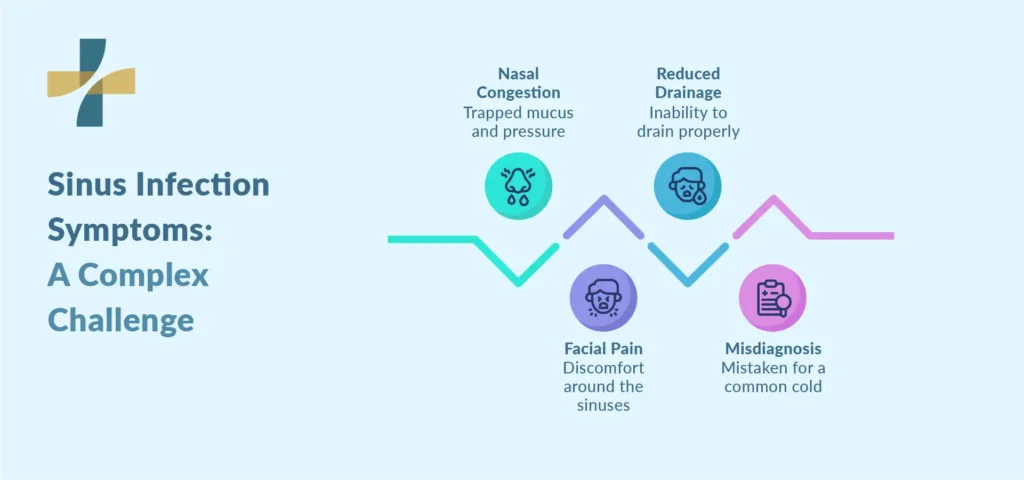
Sinus infection symptoms in adults typically develop when the delicate tissues lining your sinuses become inflamed, swollen, and unable to drain properly. This creates a buildup of pressure and trapped nasal congestion and mucus that leads to a very specific set of uncomfortable acute sinusitis symptoms.
Most people with sinusitis experience a combination of nasal and facial symptoms rather than just one isolated issue. Understanding the full pattern helps you catch these signs early instead of mistaking them for “just a cold.”
Congestion, facial pressure, mucus, and postnasal drip
Nasal congestion is often the first sign, making it hard to breathe through your nose. This is usually accompanied by facial pressure or pain around your forehead, cheeks, and eyes that can feel like a dull, constant ache.
Thick, discolored thick mucus (yellow or green) and postnasal drip that annoying, ticklish trickle of mucus down the back of your throat are also hallmark signs of a flare-up. Many people also notice a reduced sense of smell, bad breath, fatigue, a throbbing sinus headache, and a mild cough that seems to worsen the moment their head hits the pillow at night.
Example Case: Maria, 34, noticed pressure building behind her eyes for three days straight, along with thick yellow mucus and a sore throat from postnasal drip.
- Persistent facial pressure that worsened when bending forward
- Thick nasal discharge lasting more than a week
- Mild fever and fatigue by day four
Sinus Infection vs Cold vs Allergies: How Symptoms Differ
One of the biggest challenges patients face is telling sinus headache symptoms and general sinus issues apart from a common cold or allergies, since all three share nasal congestion and sneezing.
The key differences lie in duration, mucus color, and additional symptoms like facial pain or fever.
Cold vs sinus infection parameters show that colds typically peak within 3 to 5 days and improve on their own within 7 to 10 days, with clear, watery runny nose discharge. Allergies tend to cause itchy eyes, sneezing fits, and clear discharge that flares up around triggers like pollen or dust, without any fever.
Sinus infections, on the other hand, often bring thicker, colored thick mucus, facial pressure sinus infection symptoms that worsens with movement, and discomfort that either last longer than 10 days or seem to improve before suddenly getting worse again.
Example Case: John assumed his stuffy nose was just a lingering cold, but after 12 days with worsening facial pain and green mucus, he realized it had progressed into a sinus infection.
- Cold: Clear mucus, improves within a week
- Allergies: Itchy or watery eyes, no fever, tied to specific triggers
- Sinus infection: Colored mucus, facial pressure or facial pain, lasts 10+ days or worsens after initial improvement
Viral vs Bacterial Sinus Infection Symptoms
Not all sinus infections are created equal, and understanding whether yours is a viral infection or a bacterial sinus infection symptoms flare-up is crucial for making the right treatment decisions.
Viral sinus infections are far more common and usually accompany a cold. They tend to peak around day 3-5 and gradually improve within 7-10 days without needing antibiotics.
Bacterial sinus infection symptoms, however, often follow a “double worsening” pattern you start feeling better, then suddenly get worse again with intensified facial pain, high fever above 102°F, and thick discolored discharge. According to the American Academy of Otolaryngology, only about 2% of viral sinus infections actually progress to bacterial infections that require antibiotics.
Example Case: After a week of typical cold symptoms, David felt like he was recovering until day 9, when his fever spiked to 103°F and facial pain became severe on one side, prompting a doctor visit that confirmed a bacterial sinus infection.
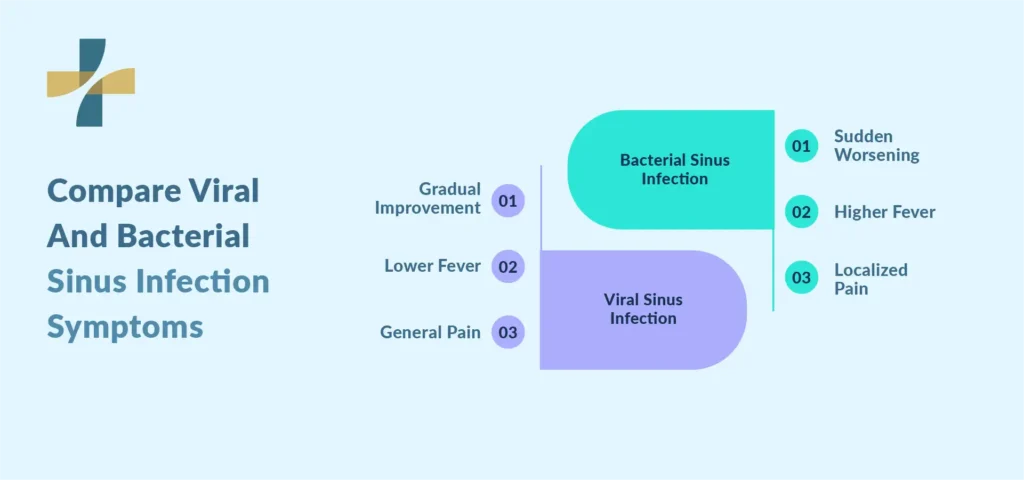
- Viral: Gradual improvement.
- Bacterial: Sudden worsening after initial improvement, higher fever, and localized pain.
When Sinus Infection Symptoms Last Longer Than 10 Days
When sinus infection symptoms stubbornly hang on for more than 10 days without any sign of letting up, it is a strong clinical indicator that your infection has shifted from a simple viral issue to a bacterial one.
While a viral infection is self-limiting, a bacterial sinus infection often requires a professional medical evaluation to prevent it from turning into chronic sinusitis. If you are experiencing relentless nasal congestion, constant headaches, or facial pain that refuses to budge, finding a qualified doctor for sinus infection symptoms is the safest way to get an accurate diagnosis and prevent further complications like a needed ENT referral.
Home Care, Medical Care, and When Antibiotics May Be Considered
For mild or early-stage sinus issues, home care can provide significant relief. Flooding your system with fluids, using a saline nasal spray, and breathing in steam from a warm shower can help break up thick mucus.
However, if your symptoms are severe, or if you are dealing with a confirmed bacterial infection, medical intervention becomes necessary. While viral infections do not respond to antibiotics, bacterial cases might require a prescription to clear completely. If you are struggling with severe nasal congestion and facial pressure, you don’t have to wait it out. You can easily schedule an online visit for nasal congestion and facial pressure to consult with a provider and get the right sinus infection treatment delivered straight to you.
How NV Med Center Can Help With Sinus Symptoms
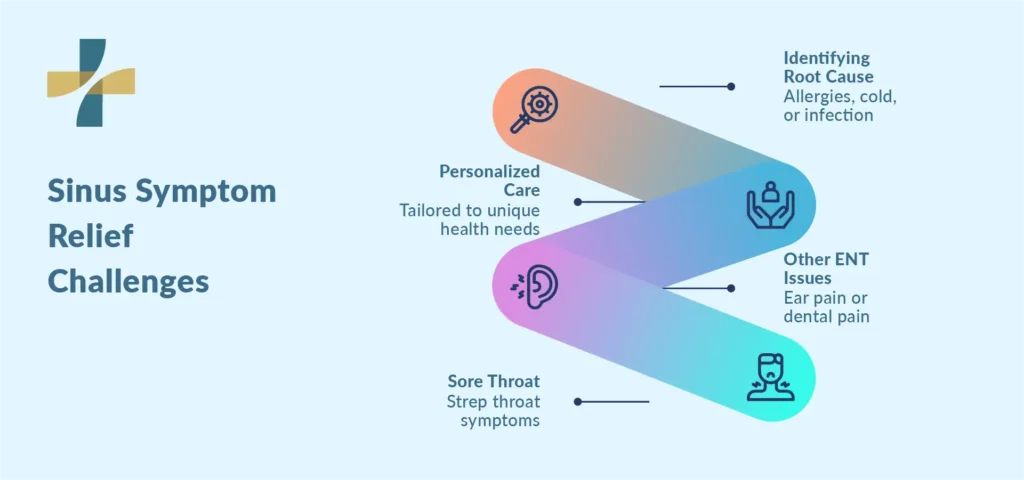
At NV Med Center, we understand how exhausting and disruptive sinus issues can be. Our experienced medical team is dedicated to helping you find lasting relief by identifying the root cause of your symptoms whether they stem from allergies, a cold, or a true bacterial infection. We offer comprehensive, personalized care tailored to your unique health needs.
If you are ready to stop dealing with the endless pressure and get back to breathing comfortably, we invite you to book a sinus symptom appointment with us today.
Note: Sometimes, sinus pain can be linked to other respiratory or ENT issues. If you are also experiencing ear pain or dental pain, you can read more about ear infection symptoms on our blog. Or, if you have an accompanied sore throat, check out our guide on strep throat symptoms to learn more.
FAQs
1-How do I know if my symptoms are from a cold or a sinus infection?
A cold usually peaks within 3 to 5 days and starts getting better, completely clearing up within 7 to 10 days. A sinus infection typically lasts longer than 10 days without any improvement, or it may seem to get better before suddenly returning with worse facial pressure, thick discolored mucus, and a fever.
2-Will a sinus infection go away on its own without antibiotics?
Yes, most sinus infections are viral and will resolve on their own within a week or two. Supportive care like hydration, saline rinses, and rest are usually enough. Antibiotics are only prescribed by a doctor if a bacterial infection is suspected or confirmed.
3-Can allergies cause a sinus infection or nasal polyps?
Yes. Severe allergies cause chronic swelling and inflammation in your nasal passages, which can block your sinuses and prevent them from draining. Over time, chronic inflammation can also lead to benign growths called nasal polyps. This trapped mucus and physical blockage create the perfect environment for bacteria to grow, potentially leading to a secondary bacterial sinus infection.