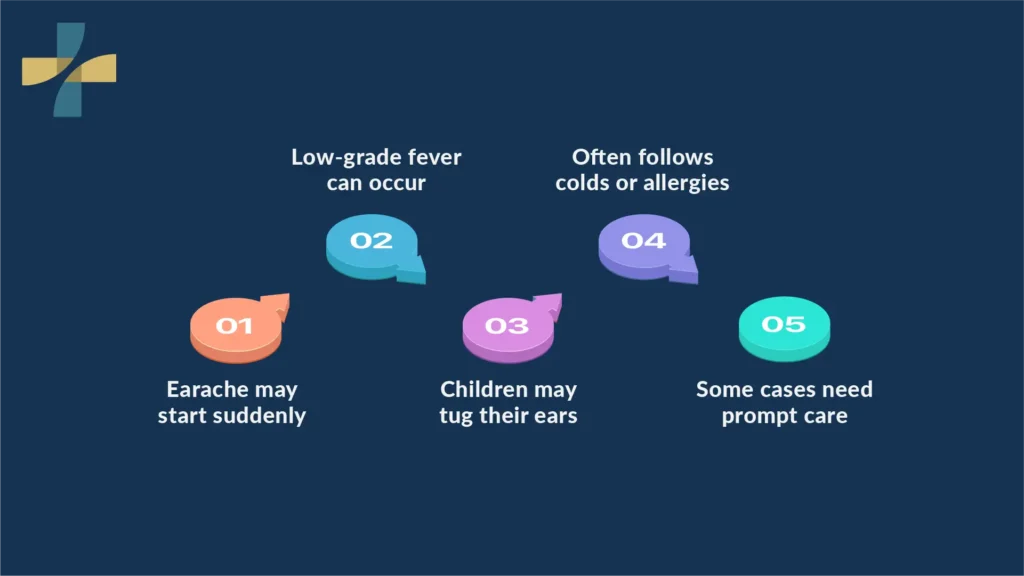
A sudden earache, a low-grade fever, or a child tugging at their ear can leave you wondering what’s really going on. Recognizing ear infection symptoms early helps you decide whether home care is enough or whether it’s time to call a doctor.
Ear infections, medically known as otitis media, are one of the most common reasons people of all ages visit a doctor or urgent care clinic. They often develop after a cold or flu, sinus congestion, or allergies, and while many mild cases resolve on their own, others need prompt treatment to prevent complications like hearing loss or a ruptured eardrum.
If you or your child are dealing with ear pain right now, NV Med Center offers same-day evaluations to identify the cause and get you relief fast.
What Are the Most Common Ear Infection Symptoms?
Ear infections typically develop in the middle ear, behind the eardrum, often after fluid builds up due to a cold, sinus infection, or allergies. The symptoms of ear infection can range from mild discomfort to intense, disruptive pain.
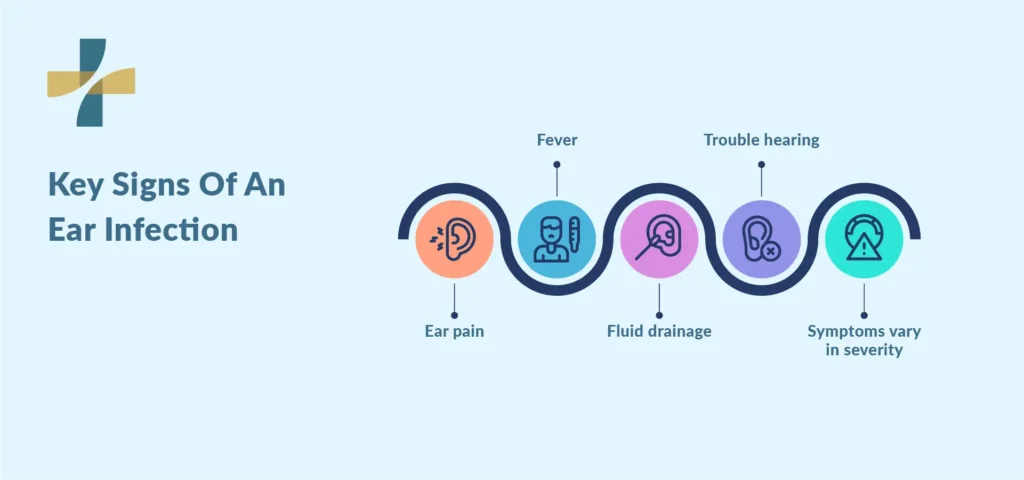
The four hallmark middle ear infection symptoms to watch for are ear pain, fever, fluid drainage, and trouble hearing. These symptoms may appear alone or together, and their severity often reflects how advanced the bacterial infection has become.
Ear pain, fever, drainage, and hearing changes
Ear pain is usually the first and most noticeable symptom. It can range from a dull ache to a sharp, throbbing pain that worsens when lying down.
Fever in the ear infection often accompanies a middle ear infection, especially in children, signaling that the body is actively fighting off the infection.
Fluid draining from ear canals or pus discharge may indicate a ruptured eardrum, which sounds alarming but often relieves pressure and reduces pain.
Hearing loss ear infection signs, Trouble hearing, or a feeling of fullness in the ear happen when fluid buildup blocks normal sound transmission through the middle ear.
Example Case: A 34-year-old patient noticed muffled hearing and mild ear pain after a week-long cold. Within two days, a low-grade fever and slight drainage appeared, prompting a same-day clinic visit for evaluation and treatment.
- Persistent earache lasting more than a day
- Fever pain and fever above 100.4°F (38°C)
- Yellow, cloudy, or bloody fluid from the ear canal
- Sudden hearing changes or ear fullness
Ear Infection Symptoms in Adults vs Children
While the underlying cause of otitis media symptoms is similar across age groups, how symptoms present can differ significantly. Recognizing these differences helps caregivers and adults respond quickly and appropriately.
In ear infection symptoms in adults, signs tend to be more localized and easier to describe, such as sharp ear pain, temporary hearing loss, or a feeling of pressure deep in the ear. Adults may also experience dizziness or balance issues if the inner ear becomes involved.
In ear infection symptom in children, especially infants and toddlers, who can’t verbalize pain ear infection symptoms in kids present as behavioral changes. Common indicators include tugging ear or pulling at the ear, excessive crying, trouble sleeping, fussiness, and reduced appetite.
Example Case: A 3-year-old was repeatedly pulling at her right ear and refusing to lie down at bedtime. Her pediatrician diagnosed acute otitis media based on eardrum inflammation and visible fluid buildup seen through an otoscope.
- Adults: sharp pain, muffled hearing, dizziness, ear fullness
- Children: tugging ear, irritability, fever, poor sleep, balance issues, pediatric care needs
Ear Infection vs Sinus Infection: Overlapping Symptoms
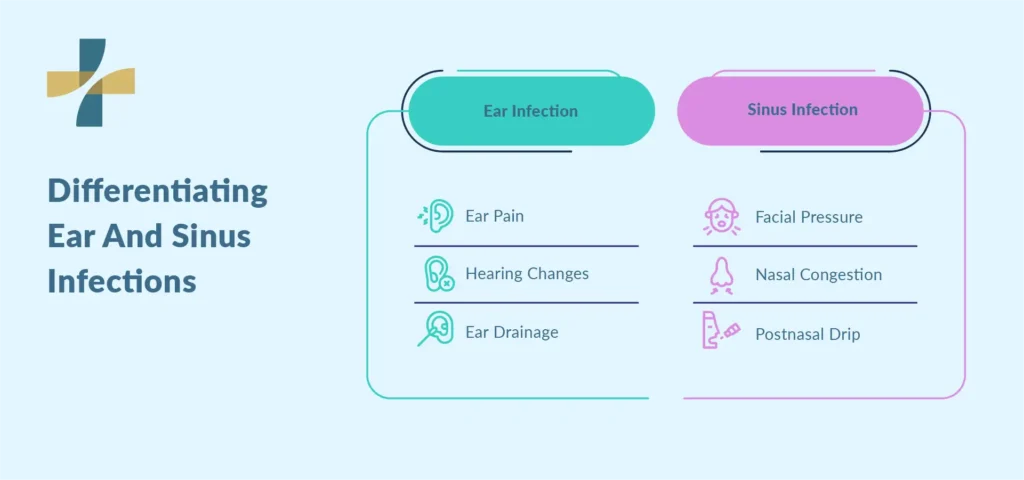
Ear infections and sinus infections often occur together because they share a connected drainage system through the Eustachian tube. This overlap makes it tricky to tell the two apart without a proper exam.
Both conditions can cause facial pressure, headache, and fatigue. However, ear infections more specifically cause ear pain, hearing changes, and sometimes drainage from the ear canal, while sinus infections tend to bring nasal congestion, thick postnasal drip, and pain across the cheeks or forehead.
If you are experiencing facial pain without ear discomfort, exploring sinus infection symptoms can help clarify your condition, just as checking strep throat symptoms is essential if severe throat pain accompanies your illness.
According to clinical research from the American Academy of Otolaryngology, a large majority of sinus infections involve some degree of Eustachian tube dysfunction, which explains why ear symptoms so often tag along with sinus issues.
Example Case: A patient with a week-long sinus infection developed sudden ear pressure and mild hearing loss. An exam revealed fluid buildup behind the eardrum secondary to blocked Eustachian tubes from sinus congestion, rather than a separate ear infection.
How Doctors Diagnose an Ear Infection
Diagnosing an ear infection starts with a physical exam using an otoscope, a specialized lighted instrument that allows a doctor to look directly at the eardrum.
During the exam, a healthcare professional looks for signs of inflammation, redness, or a bulging eardrum, which indicates fluid pressure in the middle ear. In some cases, a pneumatic otoscope is used to puff a small amount of air against the eardrum to see if it moves normally. If fluid has accumulated, the eardrum will remain stiff. This precise evaluation ensures you receive the correct treatment, whether that involves antibiotics for a bacterial issue or a period of watchful waiting and pain relief for a viral clearance.
When Ear Infection Symptoms Need Medical Care
While some mild ear aches clear up through viral watchful waiting, certain urgent symptoms require professional assessment. You should know when to see a doctor for ear infection clearance to avoid long-term complications.
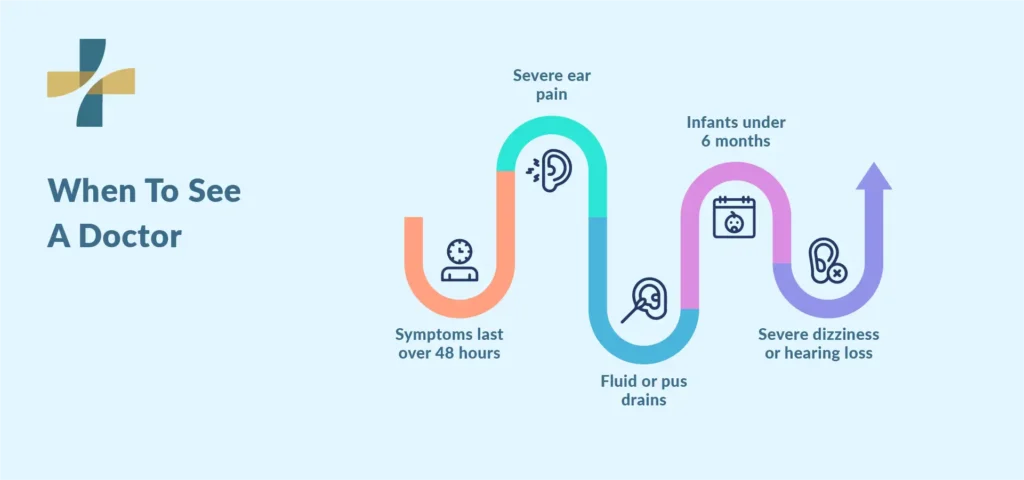
Medical care is necessary if symptoms last more than 48 hours, if the pain becomes severe, or if you notice fluid or pus draining from the ear canal. For infants under six months old, any sign of an ear infection requires immediate pediatric care. Adults experiencing severe dizziness, total hearing loss, or swelling behind the ear should also seek prompt medical attention. If you are uncertain about the severity of your condition, consulting a doctor for ear pain ensures you receive an accurate diagnosis and a safe recovery plan.
How NV Med Center Helps With Ear Pain and Infection Assessment
At NV Med Center, we provide comprehensive medical evaluations to help you manage ear discomfort safely and effectively. Whether you require an expert child ear infection assessment for your toddler or treatment for adult ear pressure, our medical team is fully equipped to diagnose your symptoms using advanced otoscopic technology.
We prioritize your comfort and peace of mind by offering both in-person evaluations and flexible options. Ready to get fast relief? You can book an appointment for ear pain directly through our clinic to see a provider today.
Frequently asked questions about ear infections
1-What are the first symptoms of an ear infection?
Ear pain (earache) is usually the first and most noticeable symptom. It can range from a dull ache to a sharp, throbbing sensation that often worsens when lying down, sometimes accompanied by a low-grade fever.
2-What are ear infection symptoms in adults?
In adults, ear infection symptoms tend to be localized. Common signs include sharp ear pain, temporary hearing loss, muffled hearing, a feeling of pressure or fullness deep in the ear, and occasionally dizziness or balance issues.
3-What are ear infection symptoms in children?
Since kids often cannot verbalize pain, ear infection symptoms in children present through behavioral signs. Watch for ear tugging or pulling, excessive crying, trouble sleeping, increased irritability, fussiness, and a reduced appetite.
4-Can an ear infection cause hearing loss or fluid drainage?
Yes. Fluid draining from the ear occurs if the fluid pressure causes a ruptured eardrum, which often brings sudden pain relief. Fluid buildup behind the eardrum also blocks normal sound transmission, leading to temporary hearing loss or ear fullness.
5-When should I see a doctor for ear infection symptoms?
You should see a doctor if ear pain lasts more than 48 hours, becomes severe, or is accompanied by fluid drainage or a high fever. For infants under six months, any signs of an ear infection require immediate pediatric care.
6-Can sinus infection symptoms cause ear pain?
Yes. Because the sinus cavities and the middle ear are connected through the Eustachian tube, congestion and postnasal drip from a sinus infection can block this tube, creating pressure and causing secondary ear pain.