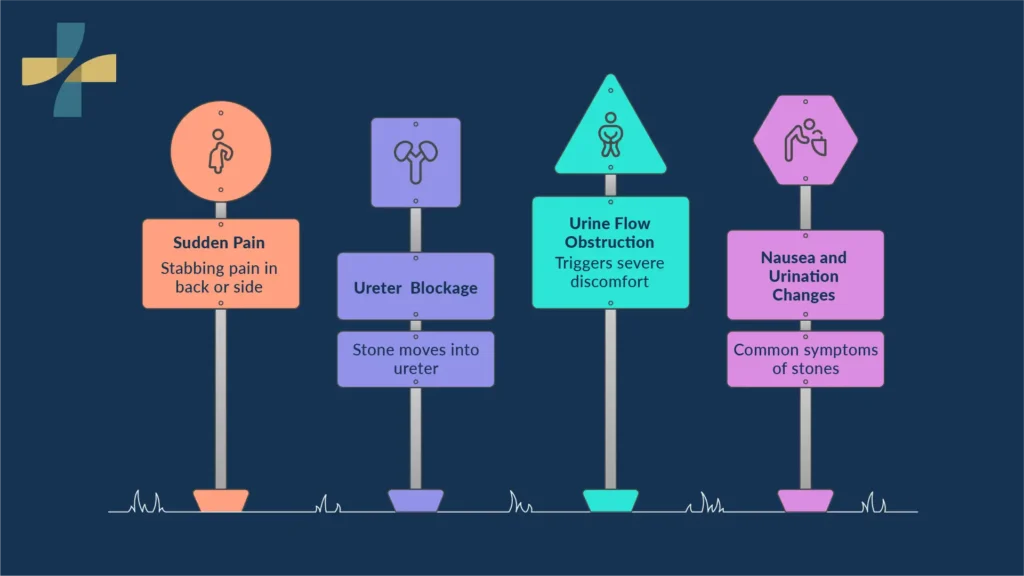
That sudden, stabbing pain in your back or side that seems to come out of nowhere is one of the most common ways people first discover they have a kidney stone. Kidney stones symptoms can range from mild discomfort to some of the most intense pain a person can experience, and knowing what to look for can help you get the right care faster.
Symptoms of kidney stones form when minerals and salts, often calcium oxalate due to dehydration or diet crystallize inside the kidneys, and they don’t always cause problems right away. Kidney stone symptoms in adults typically show up once a stone starts moving into the ureter, the tube connecting the kidney to the bladder, where it can block urine flow and trigger severe discomfort, nausea, and urination changes.
If you’re experiencing unexplained back or side pain, NV Med Center can help evaluate your symptoms and determine the cause. You can book an appointment for urinary symptoms with our team today.
What Are the Most Common Kidney Stones Symptoms?
Kidney stones don’t always announce themselves early. Many small stones pass unnoticed, but larger ones or those blocking the ureter often cause a recognizable set of warning signs.
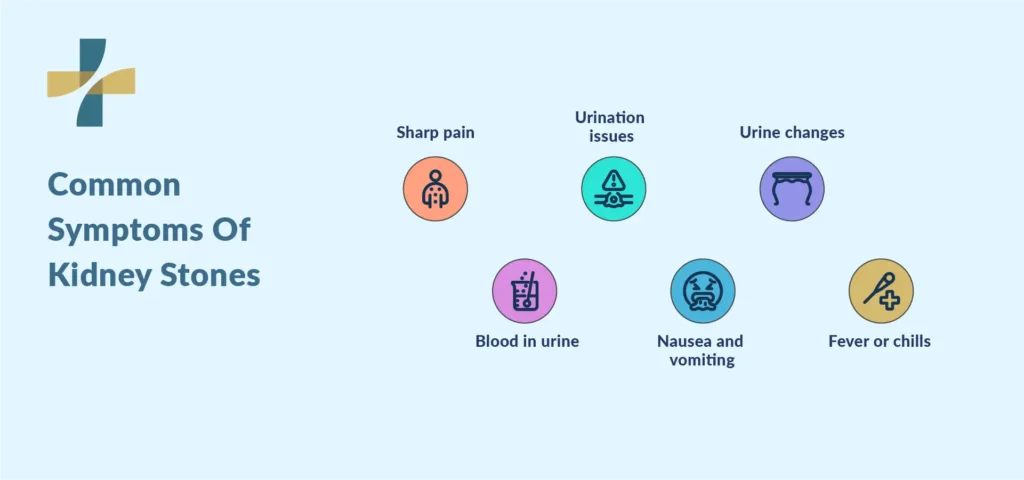
The most frequently reported signs of kidney stones include:
- Sharp, cramping pain in the back, side, lower abdomen, or groin
- Blood in urine (hematuria), which may appear pink, red, or brown
- Painful urination or a persistent urge to urinate
- Kidney stone nausea and vomiting
- Cloudy or foul-smelling urine
- Kidney stone fever or chills if a secondary kidney infection is present
Sharp back, side, lower abdomen, or groin pain
This kidney stone pain, often called renal colic, tends to come in waves as the stone moves through the urinary tract. It can start suddenly and intensify over minutes, sometimes radiating from the flank down toward the groin.
Example Case: A 42-year-old man wakes up at 3 a.m. with intense pain radiating from his lower back to his groin. It comes in waves, each lasting 20-30 minutes, and is accompanied by nausea. This pattern is classic for a ureter stone moving through the urinary tract.
- Pain often shifts location as the stone travels
- Severity does not always match stone size; small stones can hurt intensely
Kidney Stone Pain Location: Back, Side, Groin, or Abdomen
Where you feel pain often depends on where the stone is located. Understanding your kidney stone pain location can help you describe your symptoms more accurately to a healthcare provider.
Pain in the upper back or side (flank pain) usually indicates the stone is still in the kidney. Because of anatomical pathways, kidney stones symptoms in men can radiate down into the testicles, while kidney stones symptoms in women may affect the labia.
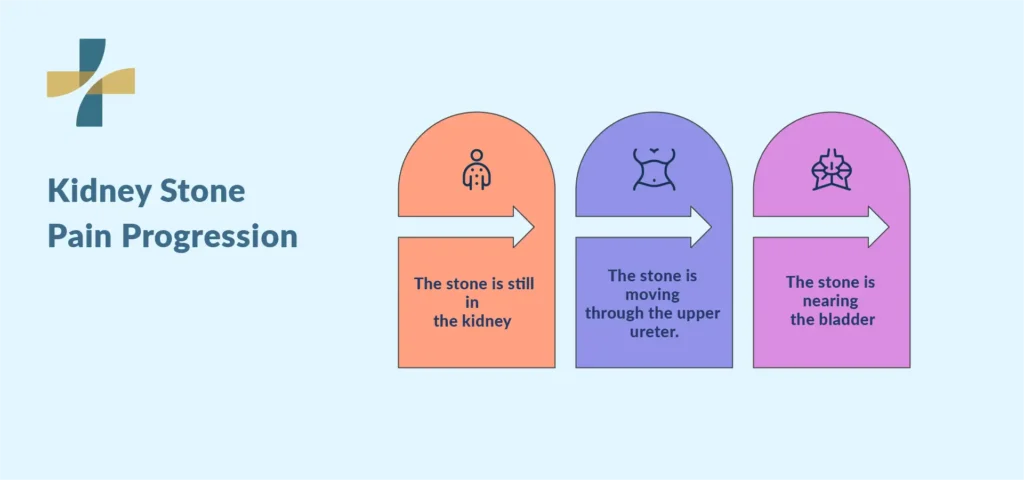
Kidney stone pain location generally follows this pattern:
- Flank or upper back: stone in the kidney
- Side or mid-abdomen: stone moving through the upper ureter
- Lower abdomen or groin: stone nearing the bladder
Kidney Stones Symptoms vs Lower Back Pain or UTI
It’s easy to confuse kidney stone symptoms with a pulled muscle, general lower back pain, or a urinary tract infection, since all three can cause discomfort in similar areas.
Muscular lower back pain is usually dull, constant, and worsens with movement or specific positions. In contrast, renal colic caused by a stone tends to be sharp, cyclical, and completely unaffected by changing positions—it can hit just as hard while lying completely still.
A UTI often causes painful urination and urgency, similar to a localized bladder stone, but typically presents without the severe, radiating flank pain. However, a flank pain kidney stone, and a UTI can occur simultaneously. If you notice a sudden spike in body temperature alongside urinary changes, it should never be ignored.
Example Case: A woman experiences burning during urination and assumes it’s just a UTI. When sharp pain develops in her side and a noticeable tint of blood in her urine appears, she seeks care, and imaging confirms a kidney stone with a secondary infection.
Emergency Symptoms: Fever, Vomiting, or Trouble Urinating
Some kidney stone emergency symptoms signal a medical emergency that requires immediate attention, not a wait-and-see approach.
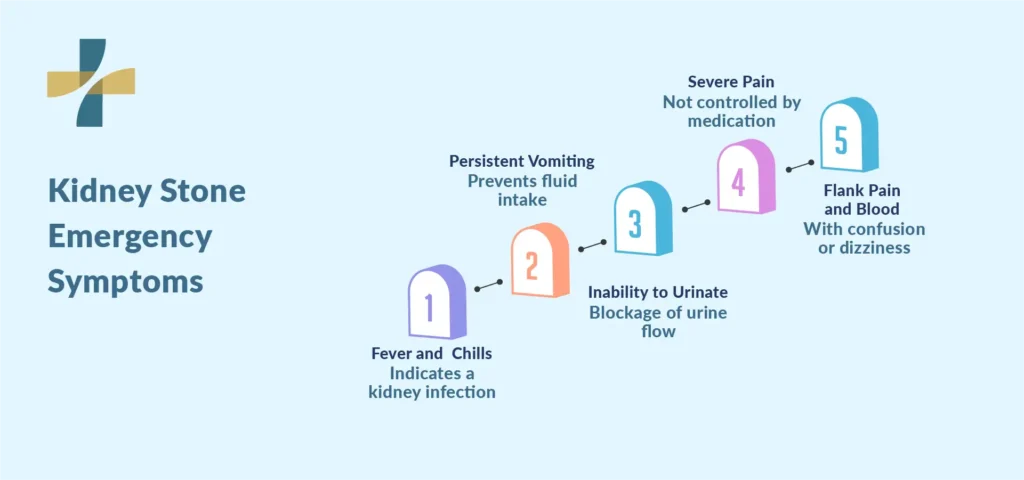
Seek emergency care right away if you experience:
- Fever above 100.4°F (38°C) with chills, which may indicate a kidney infection
- Persistent vomiting that prevents you from keeping fluids down
- Inability to urinate at all
- Severe, unrelenting pain that isn’t controlled by over-the-counter medication
- A severe presentation of flank pain and blood in urine accompanied by confusion or dizziness
According to the National Kidney Foundation, a kidney stone combined with fever can signal a urinary tract infection trapped behind the blockage, a condition that can quickly become dangerous without prompt treatment.
Example Case: A patient with a known kidney stone develops a fever of 101.5°F and chills overnight. Recognizing this as a critical warning sign of an obstructed kidney infection rather than standard renal colic, they immediately head to the emergency department for specialized emergency care.
How Doctors Diagnose Kidney Stones
To accurately identify a stone and distinguish it from other abdominal conditions, medical professionals rely on targeted diagnostic testing. This process ensures you receive the correct treatment pathway and avoids misdiagnosing conditions with overlapping symptoms.
The primary tools used for a definitive diagnosis include:
- Advanced Imaging: A low-dose non-contrast CT scan is the gold standard for detecting stones. It reveals the exact size, shape, and kidney stone pain location within the urinary system. Ultrasounds are also used, particularly for pregnant women or to avoid radiation.
- Urinalysis: A basic urine test checks for the presence of microscopic hematuria (blood in urine kidney stone indicators), high mineral concentrations, or signs of an active urinary tract infection.
- Blood Testing: Blood draws help evaluate overall kidney function, check for elevated white blood cell counts (indicating infection), and analyze levels of calcium or uric acid to pinpoint the underlying cause of stone formation and prevent recurrence.
How NV Med Center Can Help With Urinary or Flank Pain Assessment
Experiencing sudden flank pain kidney stone flare-ups, or unexpected changes in your urinary habits can be both alarming and debilitating. At NV Med Center, our experienced medical providers specialize in the comprehensive evaluation, rapid diagnosis, and management of acute and chronic urinary tract issues.
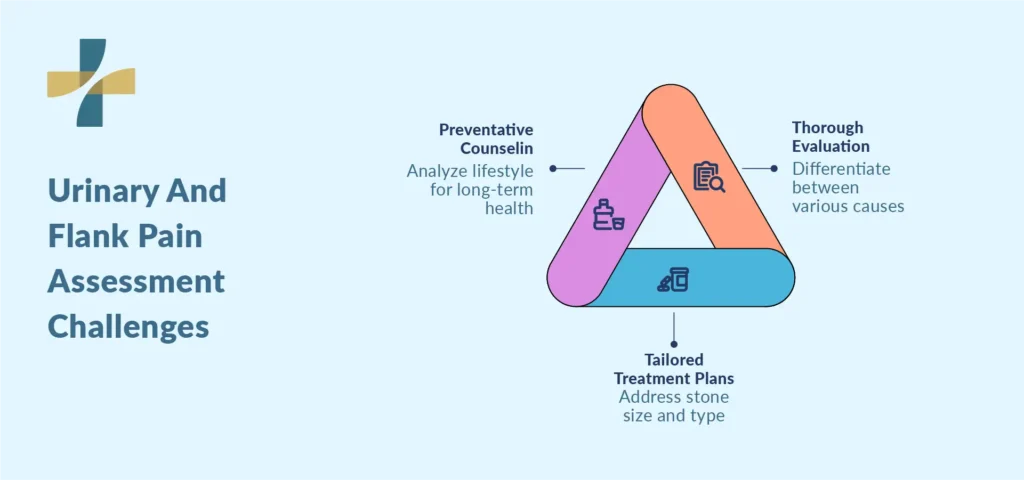
When you visit our clinic for an assessment, we provide:
- Thorough Evaluation: We track your specific symptom progression, differentiating between musculoskeletal strain, common UTIs, and true renal blockages.
- Tailored Treatment Plans: Depending on the size of the stone, we offer medical therapies to help relax the ureter for natural passage, pain management strategies, and clear protocols for stone recurrence prevention.
- Preventative Counseling: We analyze lifestyle factors to protect your long-term health, helping answer vital dietary questions such as how much water you should drink daily to remain properly hydrated and prevent mineral crystallization.
FAQ
1-What does kidney stone pain feel like?
Kidney stone pain, often referred to as renal colic, is typically described as a sharp, stabbing, or intense cramping sensation. Unlike a typical muscle ache, it comes in sudden waves and cannot be eased by changing body positions or resting.
2-Can a kidney stone cause a fever?
A standard kidney stone does not cause a fever on its own. If you develop a kidney stone fever or chills, it is a critical warning sign that a kidney infection is trapped behind the stone blockage, which requires emergency medical attention.
3-How do I know if my back pain is a kidney stone or a pulled muscle?
Muscular lower back pain is typically characterized by a dull, constant ache that intensifies when you move, bend, or twist your body. Kidney stone symptoms are localized to the flank or lower abdomen, hit in unpredictable waves, and are often accompanied by nausea or changes in your urine.