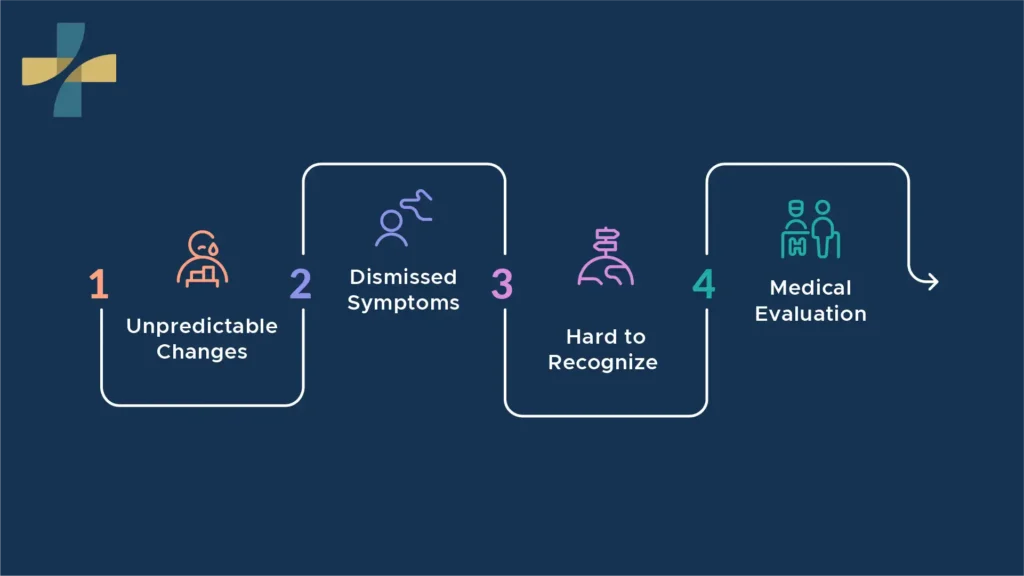
If you have been waking up drenched in sweat, feeling unusually irritable, or noticing your periods have become unpredictable, it is completely natural to wonder whether it is time to see a menopause doctor in North Vancouver. So many women dismiss these changes as nothing more than daily stress or the inevitable signs of aging. However, gaining a clear understanding of what your body is experiencing can fundamentally transform your day-to-day comfort and overall well-being.
Perimenopause and menopause bring a wide range of physical and emotional changes, and they are not always easy to recognize. While some symptoms are mild enough to manage on your own, others clearly signal that your body needs a proper medical evaluation. Knowing the difference empowers you to get targeted, compassionate support right when you need it most.
If any of this sounds familiar, our family physicians at NV Med Center offer dedicated family doctor menopause care in North Vancouver to help you understand your symptoms and options.

Common symptoms people notice during perimenopause and menopause
Perimenopause can begin years before your periods actually stop, frequently starting throughout your 40s, though it is by no means unusual to notice subtle shifts even earlier. During this transition, hormone levels fluctuate unpredictably, resulting in a broad spectrum of symptoms that look and feel different for every individual.
Some of the most frequently reported symptoms include:
- Hot flashes and night sweats
- Irregular periods (heavier, lighter, longer, or skipped cycles)
- Sleep disturbances and insomnia
- Mood changes, irritability, or anxiety
- Vaginal dryness and discomfort during sex
- Brain fog or difficulty concentrating
- Fatigue and low energy
- Joint aches and headaches
Example Case: A 46-year-old North Vancouver resident noticed her periods had become erratic over six months, alternating between very light and unusually heavy. She also started waking up several times a night drenched in sweat. Rather than waiting for things to escalate, she began tracking her symptoms for a few weeks and booked an appointment with a menopause doctor in North Vancouver to rule out underlying issues and discuss manageable solutions.
- Because symptoms often overlap with other health conditions, an experienced physician’s evaluation is invaluable.
- Keeping a detailed symptom log (noting frequency, severity, and triggers) gives your doctor the exact insights needed to build a tailored care plan.
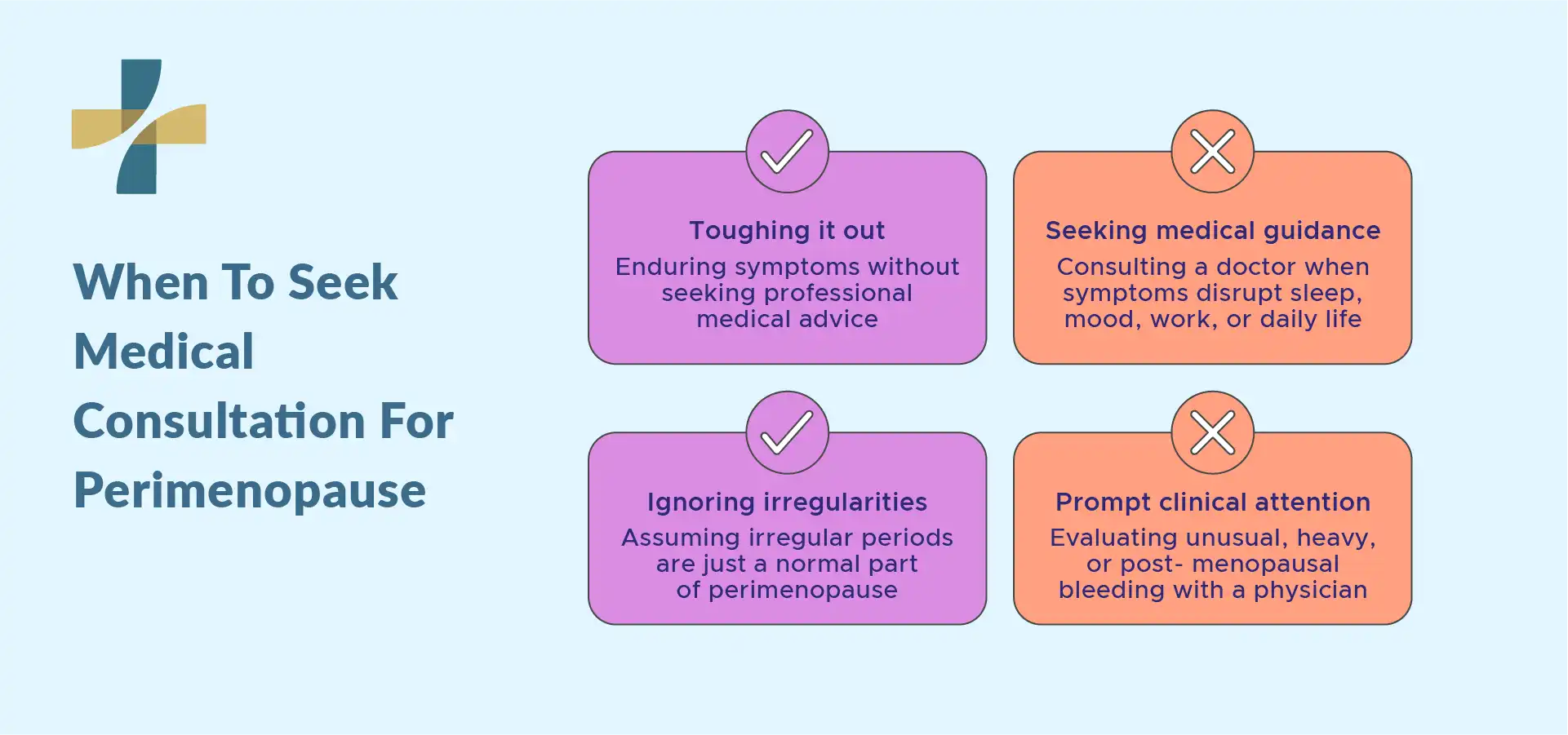
When symptoms are worth discussing with a doctor
Not every hot flash requires a doctor’s visit, but when specific patterns begin disrupting your life, booking a perimenopause consultation is far better than simply toughing it out.
Symptoms affecting sleep, mood, work, sex, or daily life
When symptoms start interfering with your quality of life, that is your body’s clear signal to seek professional medical guidance. This includes:
- Night sweats disrupting sleep multiple times a week
- Mood swings or anxiety affecting relationships or work performance
- Vaginal dryness making intimacy painful or uncomfortable
- Fatigue that does not improve with rest
- Difficulty concentrating that impacts job performance
A dedicated practitioner or a menopause doctor in North Vancouver can help determine whether lifestyle adjustments, medication, or hormone therapy may offer relief, depending on your health history and preferences. If you would like to keep your broader health screenings on track during midlife, you can also explore our guide on Women’s Preventive Health Exams.
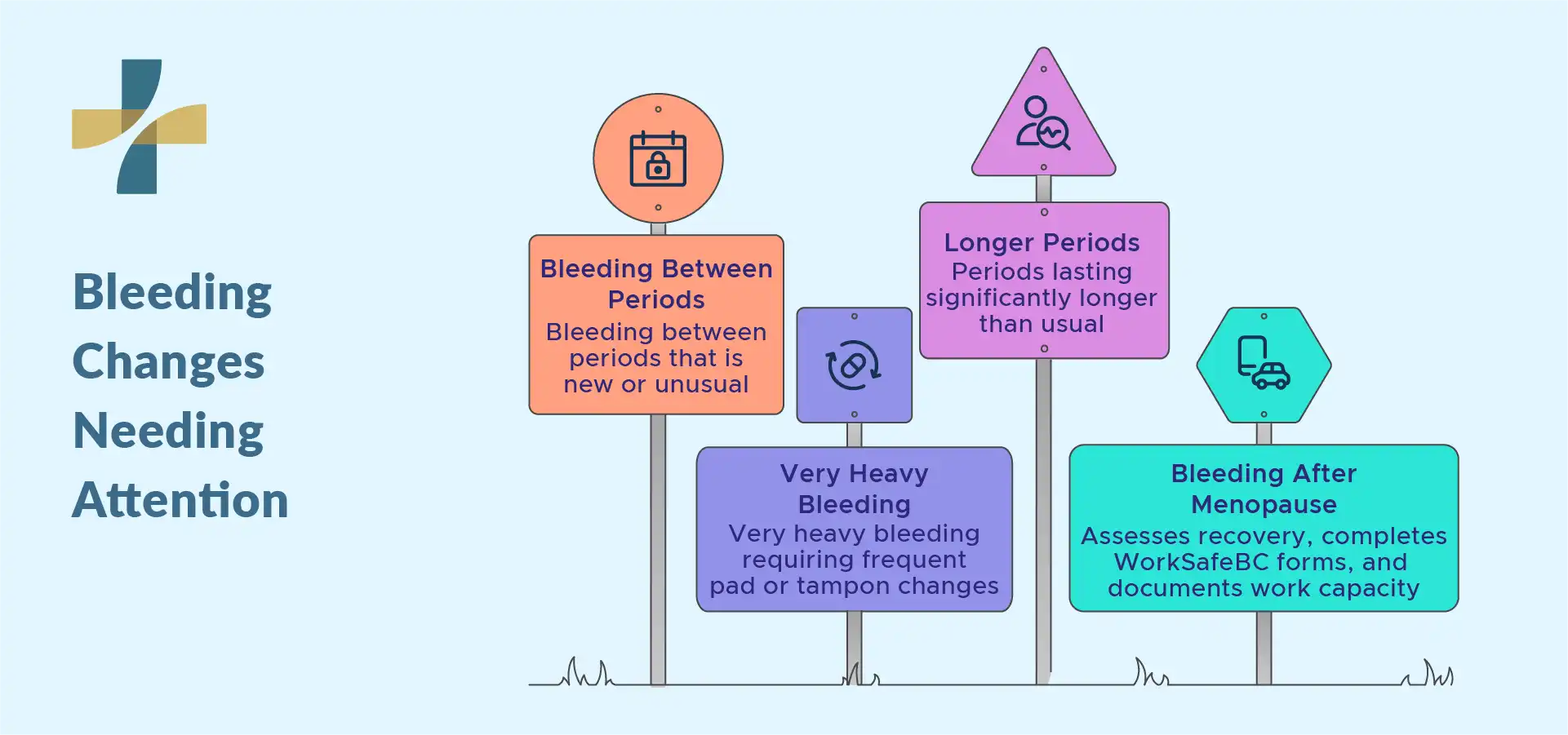
Bleeding changes that should not be ignored
Irregular periods are common during perimenopause, yet certain changes in bleeding demand prompt clinical attention:
- Bleeding between periods that is new or unusual
- Very heavy bleeding requiring frequent pad or tampon changes
- Periods lasting significantly longer than usual
- Any vaginal bleeding after menopause has been confirmed (12 months without a period)
Example Case: A 52-year-old woman who had not had a period in 14 months experienced sudden spotting. She contacted her family doctor the same week. While the cause turned out to be benign, her doctor emphasized that any bleeding after menopause should always be evaluated to rule out more serious conditions. For official clinical guidance on menopausal health, you can also review patient resources provided by HealthLink BC.
What your doctor may ask about
When you book an appointment for menopause symptoms, your physician will likely ask detailed questions to build a complete picture of your health. Expect questions such as:
- When did your symptoms start, and how have they changed?
- What is your menstrual cycle pattern over the last several months?
- How are sleep issues, mood shifts, or hot flashes affecting your daily routine?
- What does your personal and family medical history look like, including history of cardiovascular health or bone density concerns? (If you are visiting our clinic for the first time, take a look at What to Expect at Your First Family Physician Visit to help you prepare.)
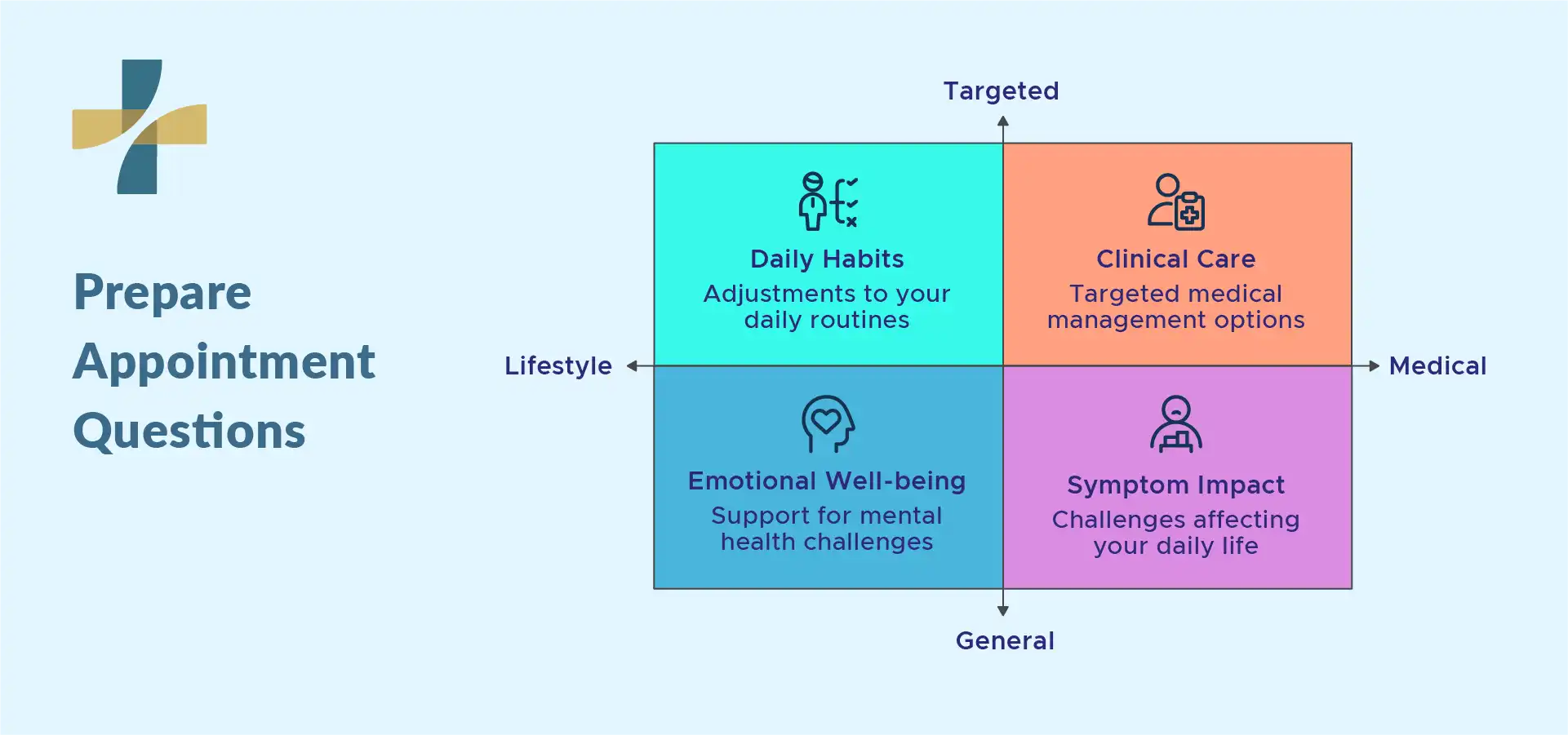
Treatment and lifestyle questions to prepare
Preparing thoughtful questions before your appointment turns a quick consultation into a proactive step toward regaining control over your comfort. During your visit, your physician will walk you through personalized treatment pathways, which may range from evidence-based lifestyle modifications to targeted medical management.
To make your discussion as effective as possible, consider noting whether you want to explore hormone replacement therapy (HRT), which daily routines you can realistically adjust, and whether persistent sleep or mood issues are creating challenges at work. If emotional distress or persistent anxiety has been overwhelming lately, your family doctor can also connect you with dedicated support through Essential Family Doctor Services for Mental Health and Anxiety Support.
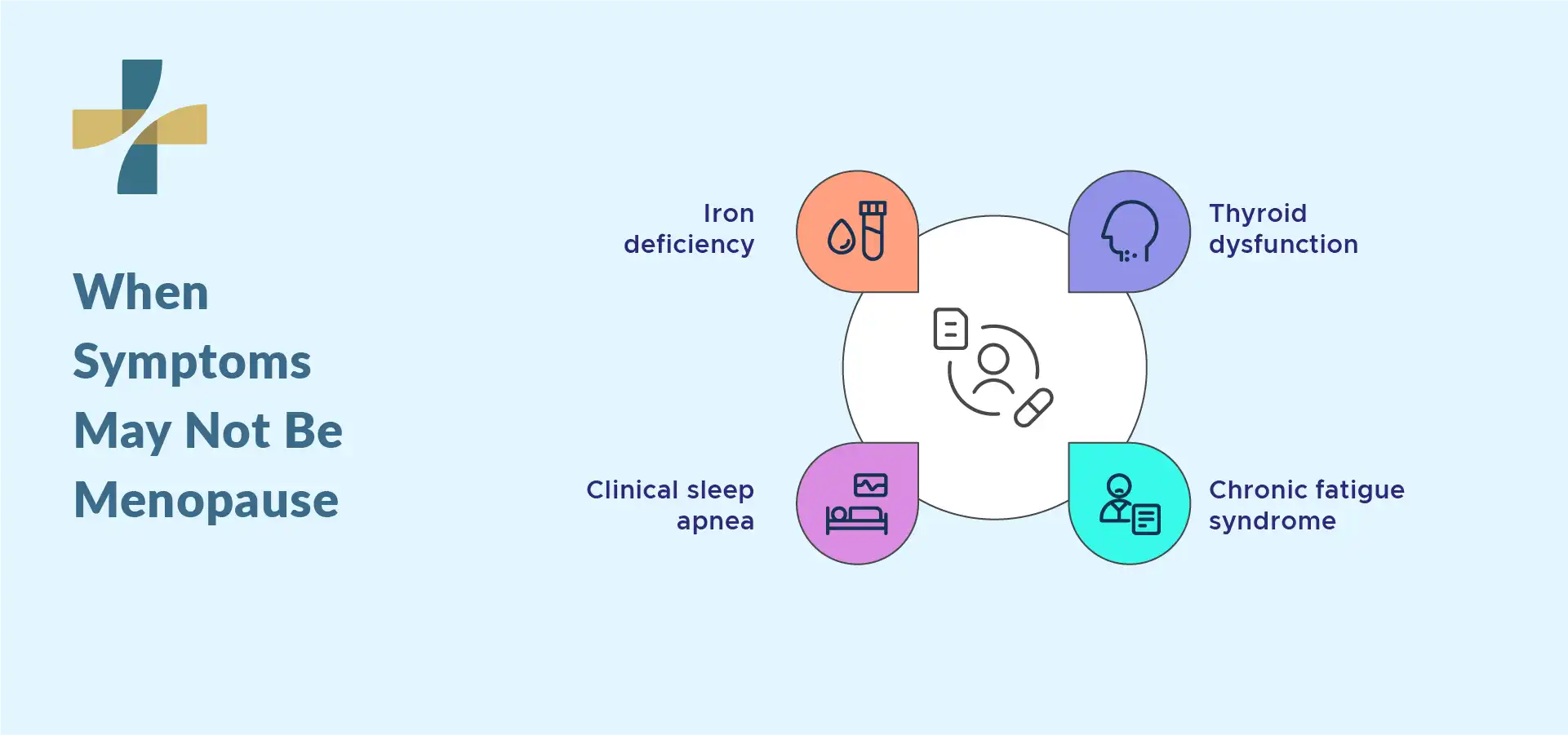
When symptoms may not be menopause
It is important to remember that not every midlife health change stems directly from declining estrogen. Conditions like thyroid dysfunction, chronic fatigue syndrome, clinical sleep apnea, or iron deficiency can easily mirror perimenopausal symptoms.
This is why a comprehensive medical review is essential; it ensures you do not inadvertently brush off a treatable thyroid condition or nutritional deficiency as “just aging.” If ongoing fatigue or sluggishness is holding you back, it may be worth reading about Vitamin Deficiency Symptoms That Require Medical Attention and discussing comprehensive blood testing with a perimenopause consultation.
FAQ
1- When should I talk to a doctor about menopause symptoms?
You should reach out to a healthcare professional as soon as symptoms begin interrupting your sleep, emotional balance, work focus, or personal relationships. You do not need to wait until your periods stop completely before seeking advice and relief.
2- Can a doctor diagnose menopause without blood tests?
Yes, in most cases. According to the North American Menopause Society (NAMS), a clinician can usually diagnose perimenopause or menopause based on your age, menstrual cycle history, and reported clinical symptoms, though blood tests may be ordered to rule out other medical issues.
3- What symptoms should not be ignored?
Abnormally heavy menstrual flows, postmenopausal bleeding of any amount, sudden severe pelvic pain, or unexplained weight loss should always be evaluated by a physician without delay.
4- What should I bring to a menopause appointment?
Bring a simple log of your period dates and symptom patterns, a complete list of your current prescription medications and supplements, your medical history, and a written list of questions regarding treatment options.
5- Can menopause symptoms be managed without hormones?
Absolutely. Many individuals achieve meaningful relief through non-hormonal prescription treatments, targeted dietary changes, stress management techniques, and evidence-based lifestyle adjustments that your doctor can customize for you.
6- Can online visits help with menopause questions?
Virtual visits are wonderful for discussing initial symptoms, reviewing lab results, or completing a menopause medication review. However, physical examinations or specific diagnostic tests may still require a brief in-person appointment.