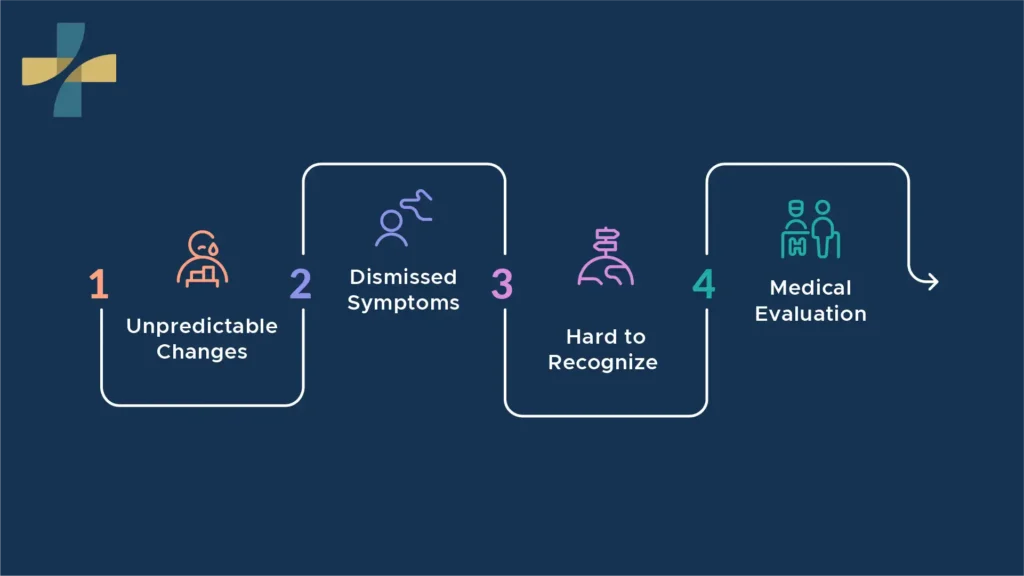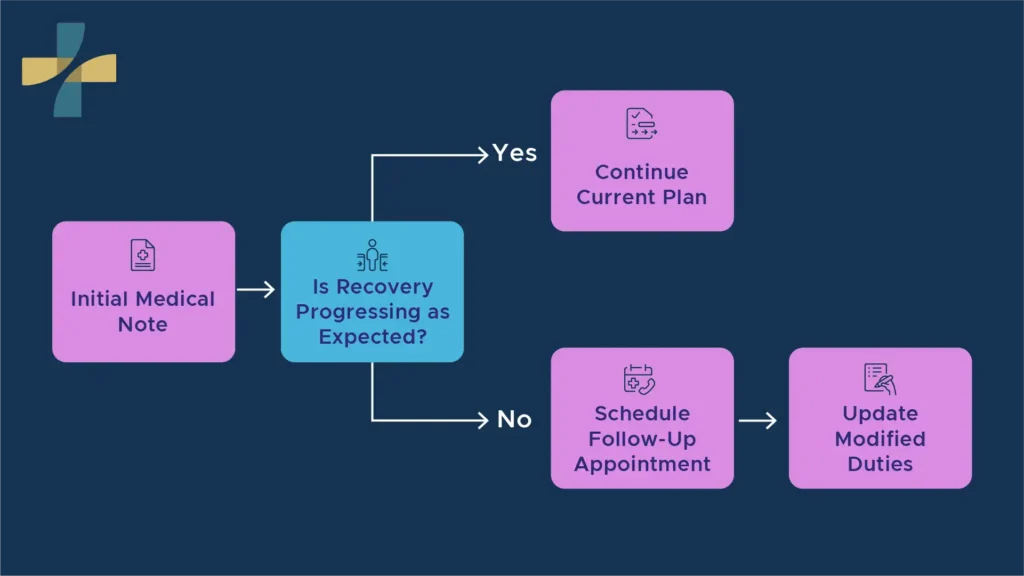
Recovering from a workplace injury rarely follows a straight line. One week you may feel ready for modified duties, and the next, a task that seemed manageable triggers pain or fatigue you did not expect. This is exactly why a WorkSafeBC return-to-work doctor note often needs to be revisited rather than treated as a one-time document.
Many workers assume that once they receive an initial medical note, their return-to-work plan is locked in. In reality, these plans are meant to evolve alongside your recovery. Knowing when to schedule a workplace injury follow-up doctor visit can make the difference between a smooth transition back to work and a setback that prolongs your recovery.
If you are recovering from a workplace injury and unsure whether your current medical note still reflects your condition, NV Med Center’s family physicians can help you review your return-to-work plan and provide updated modified duties medical documentation.

What return-to-work planning is meant to support
A return-to-work plan is not simply paperwork for your employer or WorkSafeBC. It is a structured way to match your current physical and mental capacity with appropriate work tasks. Understanding workplace injuries and how WorkSafeBC forms help is essential for navigating your claim smoothly.
The goal is to support safe, gradual reintegration, not to rush recovery or ignore ongoing symptoms. A well-documented plan protects workers from re-injury while giving employers clear guidance on what duties are appropriate.
Example Case:
A warehouse worker recovering from a shoulder injury was initially cleared for light lifting only. As his strength improved over several weeks, his return-to-work plan was adjusted twice, each time based on updated medical documentation.
- Initial note: no lifting over 5 lbs, no overhead reaching
- Follow-up note (week 4): lifting to 15 lbs, limited overhead reaching
- Follow-up note (week 8): full duties cleared
When a follow-up doctor appointment may be useful
A WorkSafeBC follow-up appointment is not an overreaction. It is often the most practical way to keep your return-to-work plan accurate and realistic as your condition changes. Getting a proper WorkSafeBC medical assessment in Vancouver ensures that your health care provider evaluates your progress accurately.
Workers and employers both benefit when documentation reflects what is actually happening, not what was true weeks ago.
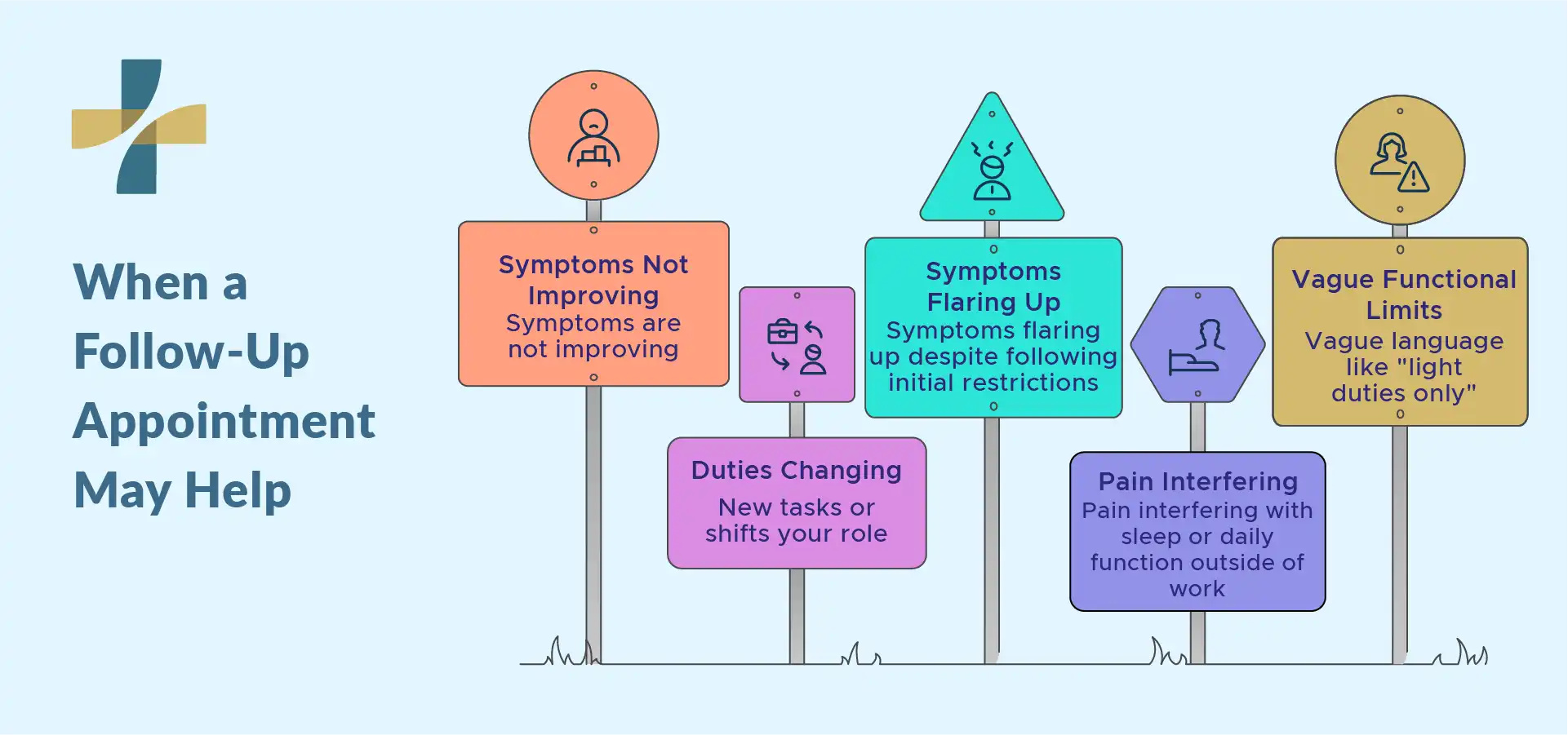
Symptoms are not improving, or duties are changing
If injury symptoms are not improving, such as persistent pain, swelling, fatigue, or mobility issues, this is a clear signal to seek medical reassessment from a workplace injury doctor in North Vancouver. Similarly, if your employer introduces new tasks or shifts your role, your existing return-to-work medical note in BC may no longer apply.
Example Case:
An office worker with a wrist injury was initially cleared for typing with breaks every 30 minutes. When her role shifted to include more manual filing, her symptoms worsened, prompting a follow-up visit to update her restrictions.
- New duties introduced that were not part of the original assessment
- Symptoms flaring up despite following initial restrictions
- Pain interfering with sleep or daily function outside of work
Functional limits need clearer documentation
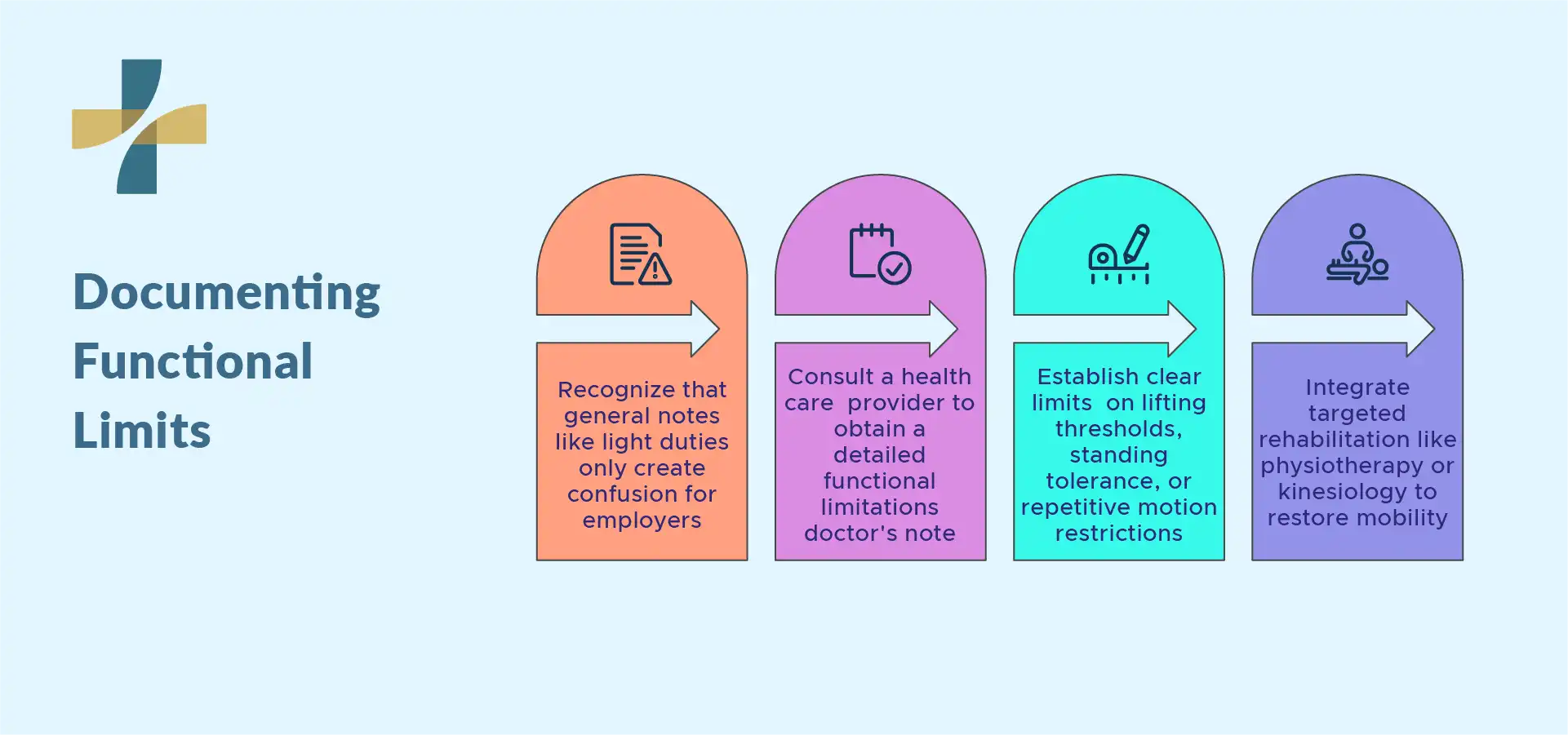
Sometimes the original note is too general for employers to apply practically. Vague language like “light duties only” can create confusion about what a worker can and cannot safely do.
A follow-up appointment allows your health care provider to issue a detailed functional limitations doctor’s note that defines specific boundaries, such as lifting thresholds, standing tolerance, or repetitive motion restrictions. In many cases, combining clinical care with targeted rehabilitation like physiotherapy or active recovery through kinesiology helps restore mobility faster. You can explore the top 5 reasons to choose our physiotherapy services in Vancouver to see how structured rehabilitation supports your recovery.
What to bring to the appointment
Being prepared helps your health care provider give you a more accurate and useful assessment. This also reduces the need for additional follow-up visits.
Consider bringing the following:
- Your original WorkSafeBC claim number and relevant forms
- Previous medical notes or Form 11 documentation
- A written description of your current job duties
- Notes on specific tasks that trigger symptoms
- Any physiotherapy, active rehabilitation, or specialist reports received since your last visit
Example Case:
A construction worker brought a simple log of daily symptoms and tasks attempted over two weeks. This allowed his physician to pinpoint exactly which movements were problematic, leading to a more precise WorkSafeBC return-to-work doctor’s note than a general description could have provided.
What a medical note can and cannot do
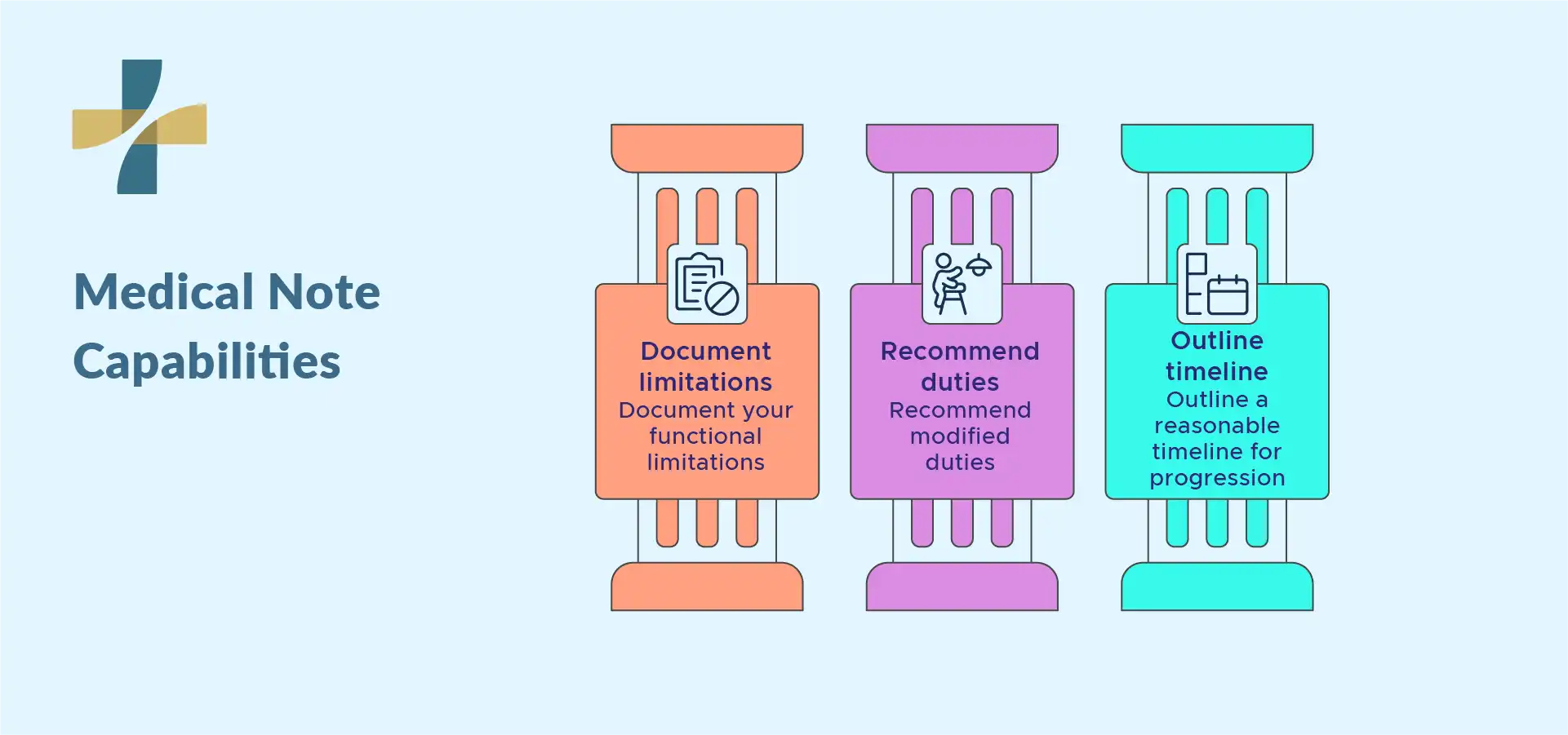
A WorkSafeBC return to work doctor note can document your functional limitations, recommend modified duties, and outline a reasonable timeline for progression. According to WorkSafeBC, this documentation plays a central role in guiding safe return-to-work decisions between workers, employers, and health care providers. For injuries involving motor vehicle accidents rather than workplace incidents, a specialized ICBC medical assessment is required instead.
What a medical note cannot do is guarantee that an employer will have suitable modified work available, or force a workplace to create a role that does not exist. It is a clinical opinion, not an employment guarantee.
Example Case:
A retail employee received a note restricting prolonged standing to under two hours per shift. While the note clearly outlined the limitation, it was still up to the employer to determine whether a seated role was feasible within the store.
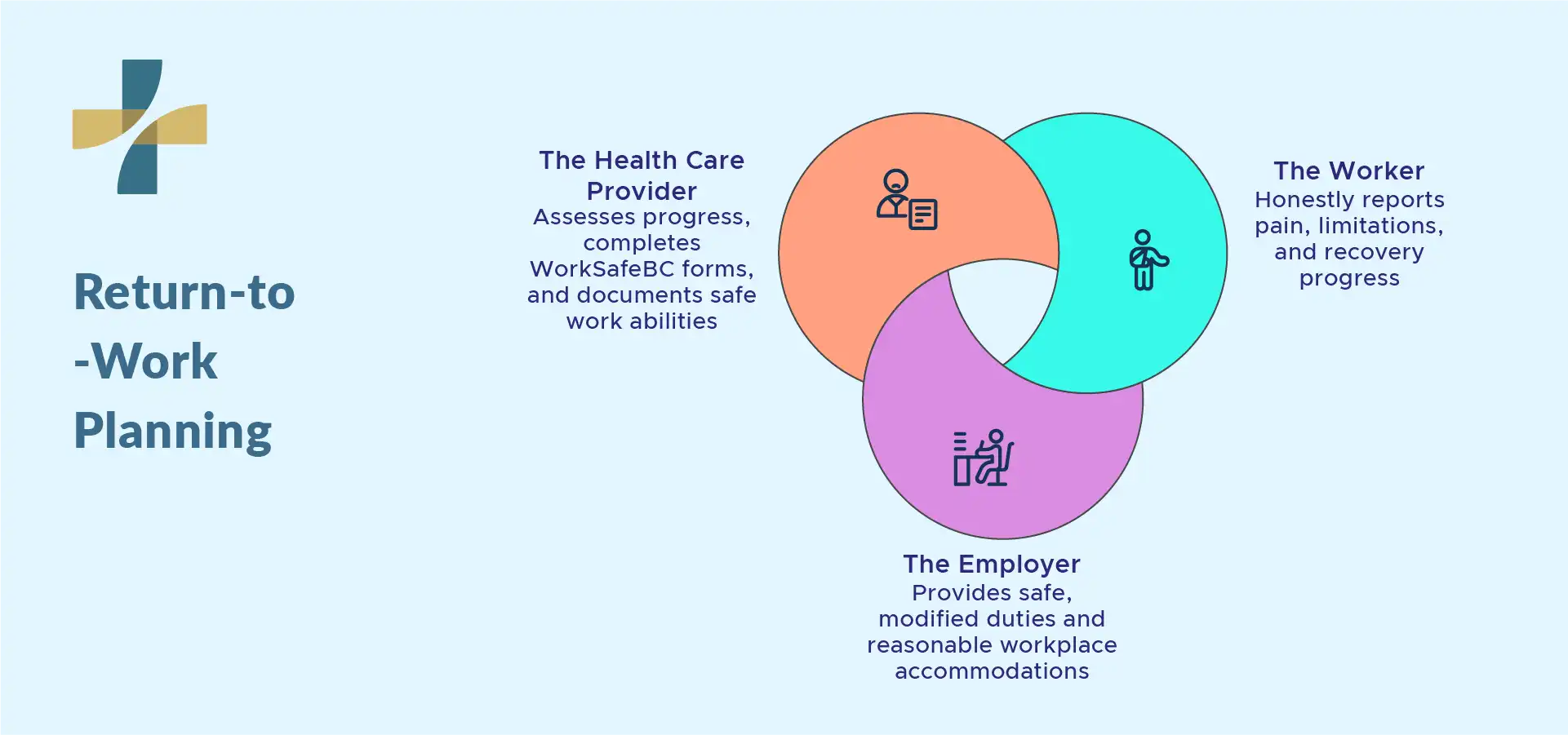
How workers, employers, and health providers fit into the process
Successful return-to-work planning works best as a collaborative, three-way conversation between the injured worker, the employer, and the attending health care provider.
- The Worker: Communicates open and honest feedback about daily pain levels, physical limitations, and recovery progress.
- The Employer: Provides suitable modified duties, safe working environments, and reasonable workplace accommodations based on medical recommendations.
- The Health Care Provider: Evaluates clinical progress, fills out required WorkSafeBC forms or Form 11, and provides objective documentation regarding what the worker can safely perform.
When emotional stress or anxiety from a workplace injury affects your overall well-being, accessing professional clinical counselling can be an essential part of a holistic recovery plan.
Frequently Asked Questions
1-Does WorkSafeBC always require medical approval to return to work?
WorkSafeBC states it does not require medical approval for a worker to return, but a written plan can help update providers if needed. Having a clear doctor’s note for return to work ensures all parties are aligned on safety restrictions.
2-When should I book a follow-up doctor appointment?
Book if symptoms worsen, duties change, restrictions are unclear, pain continues, or documentation needs updating. Obtaining an updated WorkSafeBC return-to-work doctor note prevents premature re-injury on the job.
3-What should I bring to the appointment?
Bring claim details, injury timeline, job duties, employer return-to-work plan, symptoms, previous notes, and treatment updates. Providing complete medical documentation allows your physician to issue accurate guidelines.
4-Can a doctor write modified duties?
A doctor can document clinical findings and functional limits, but workplace duties are usually planned with employer and WorkSafeBC involvement. The goal is establishing safe employer accommodation and realistic modified duties.
5-What if symptoms get worse after returning?
Stop ignoring it. Document symptoms and book follow-up or seek urgent care depending on severity. Your recovery may require an adjusted treatment plan, additional physiotherapy referrals, or modified pain management strategies.
6-Can an online visit handle WorkSafeBC notes?
Some follow-up discussions may start online, but physical injuries often require in-person assessment. You can schedule convenient telehealth consults through our online visits to discuss initial symptom changes before coming in for a physical examination.