Running low on a medication you’ve taken for months or years shouldn’t feel complicated. But if you’ve ever tried to book a prescription refill appointment in BC only to be told you need a full visit instead of a quick renewal, you’re not alone. Many patients assume refills are automatic, until a pharmacist or physician flags something that needs a closer look first.
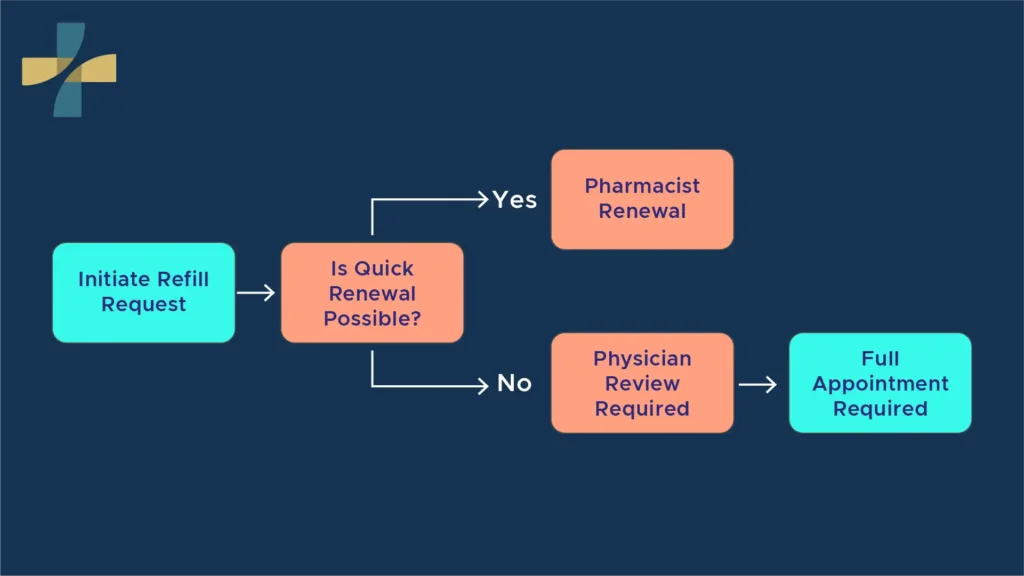
The truth is, not all refill requests are treated the same way. Some medications can be renewed quickly by a pharmacist, while others legally require a doctor to review your history, symptoms, and lab results before approving another round. Understanding this difference can save you time, prevent appointment delays, and keep your treatment plan safe and up to date.
If you’re due for a medication review appointment, you can book a same-week visit with a family physician at NV Med Center through our online doctor visit for refill portal or contact us directly.

Why some refills need more than a renewal request
A prescription isn’t just a piece of paper; it’s an ongoing clinical decision. When a doctor first prescribes a medication, they’re basing that decision on your symptoms, test results, and health history at that specific point in time.
Months later, your situation may have changed. High blood pressure symptoms can shift, kidney function can decline, new medications can interact, or side effects can appear that you haven’t mentioned to anyone yet. Booking a regular prescription refill appointment in BC gives your doctor the chance to confirm the medication is still the right fit.
In BC, physicians are also bound by College of Physicians and Surgeons of BC prescribing guidelines, which require periodic reassessment for many drug categories, especially those with higher risk profiles or long-term use implications. This ongoing evaluation plays a core role in how general practitioners help manage chronic conditions over time.
Example Case: A patient on blood pressure medication for three years requests a routine refill. Her pharmacist notices she hasn’t had bloodwork done in over a year and recommends she book with her family doctor before the next renewal.
- Lab results and monitoring overdue (kidney function, electrolytes)
- Medication dose unchanged despite weight loss
- No recent blood pressure readings on file
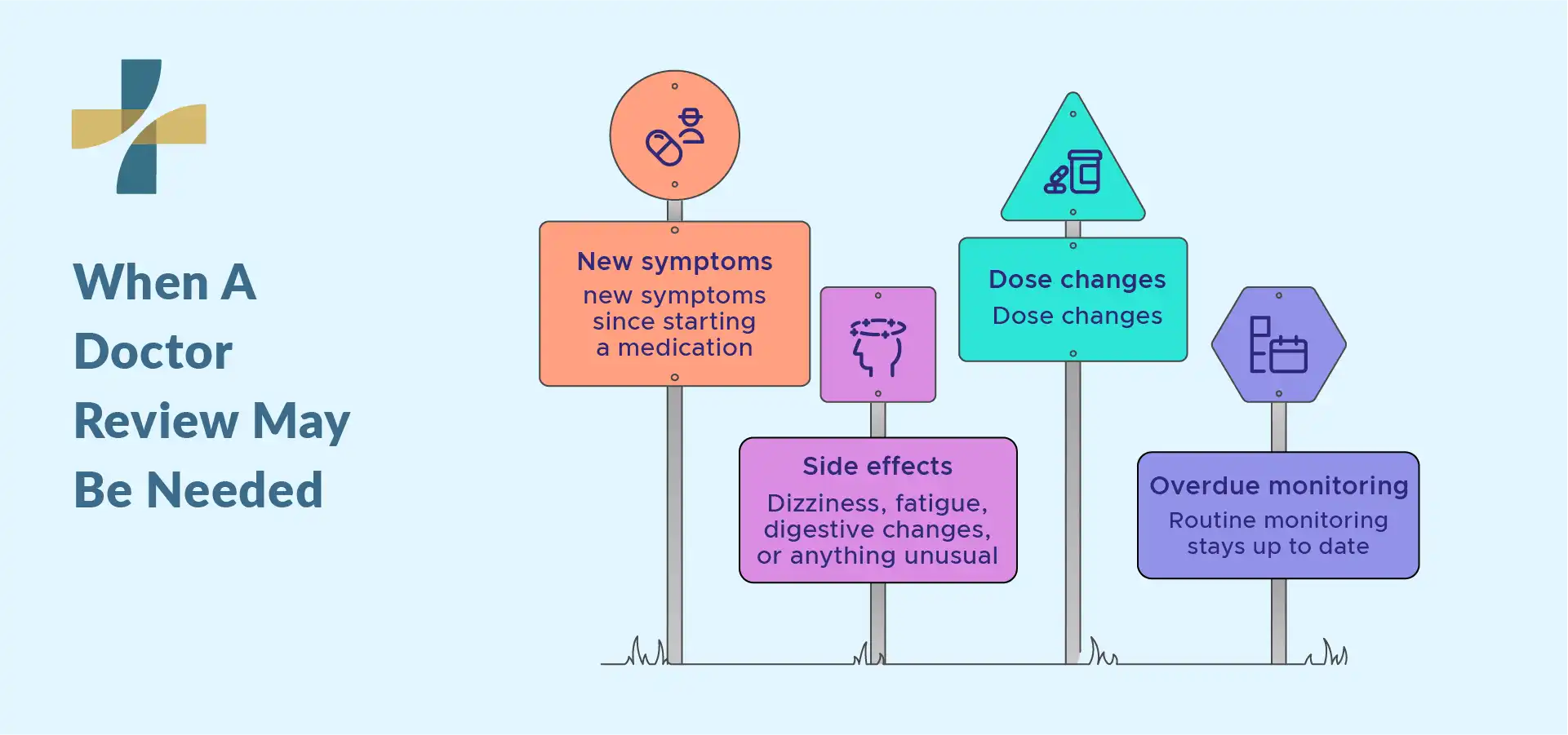
Situations where a doctor review may be needed
Not every refill triggers a full appointment, but certain red flags almost always do. Knowing these in advance helps you anticipate whether a quick pharmacist renewal will be enough, or whether you should book a family physician prescription review.
New symptoms, side effects, dose changes, or overdue monitoring
If you’ve noticed new symptoms since starting a medication dizziness, fatigue, digestive changes, or anything unusual this is a signal that your doctor needs to reassess, not just renew. It is essential to understand what blood tests are included and why they matter during annual physical exams to ensure your routine monitoring stays up to date.
Doctors use these check-ins to confirm the medication is working as intended and not causing harm that’s gone unreported. When managing long-term health, integrating chronic disease management into your routine prevents unforeseen complications.
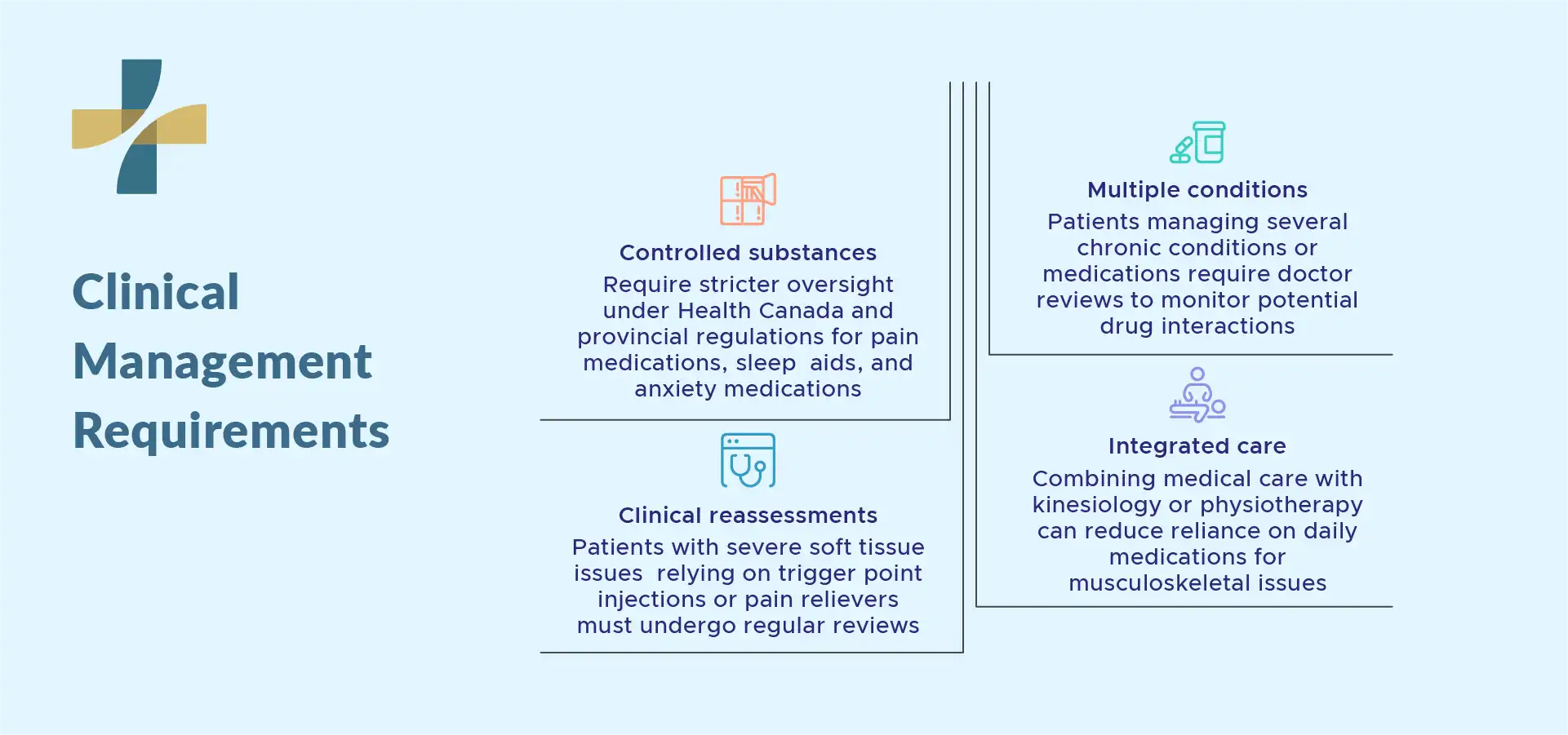
Controlled medications, complex conditions, or multiple prescriptions
Controlled substances, including many pain medications, sleep aids, and certain anxiety medications, require stricter oversight under Health Canada and provincial regulations. Patients suffering from severe soft tissue issues who rely on trigger point injections for pain management or controlled pain relievers must undergo regular clinical reassessments to maintain safe prescribing.
Patients managing multiple chronic conditions or taking several medications simultaneously also benefit from a doctor review, since drug interactions become more likely as prescription lists grow. If you are dealing with musculoskeletal issues or recovering from an injury, combining your medical care with kinesiology services or specialized physiotherapy care can reduce your reliance on daily medications.
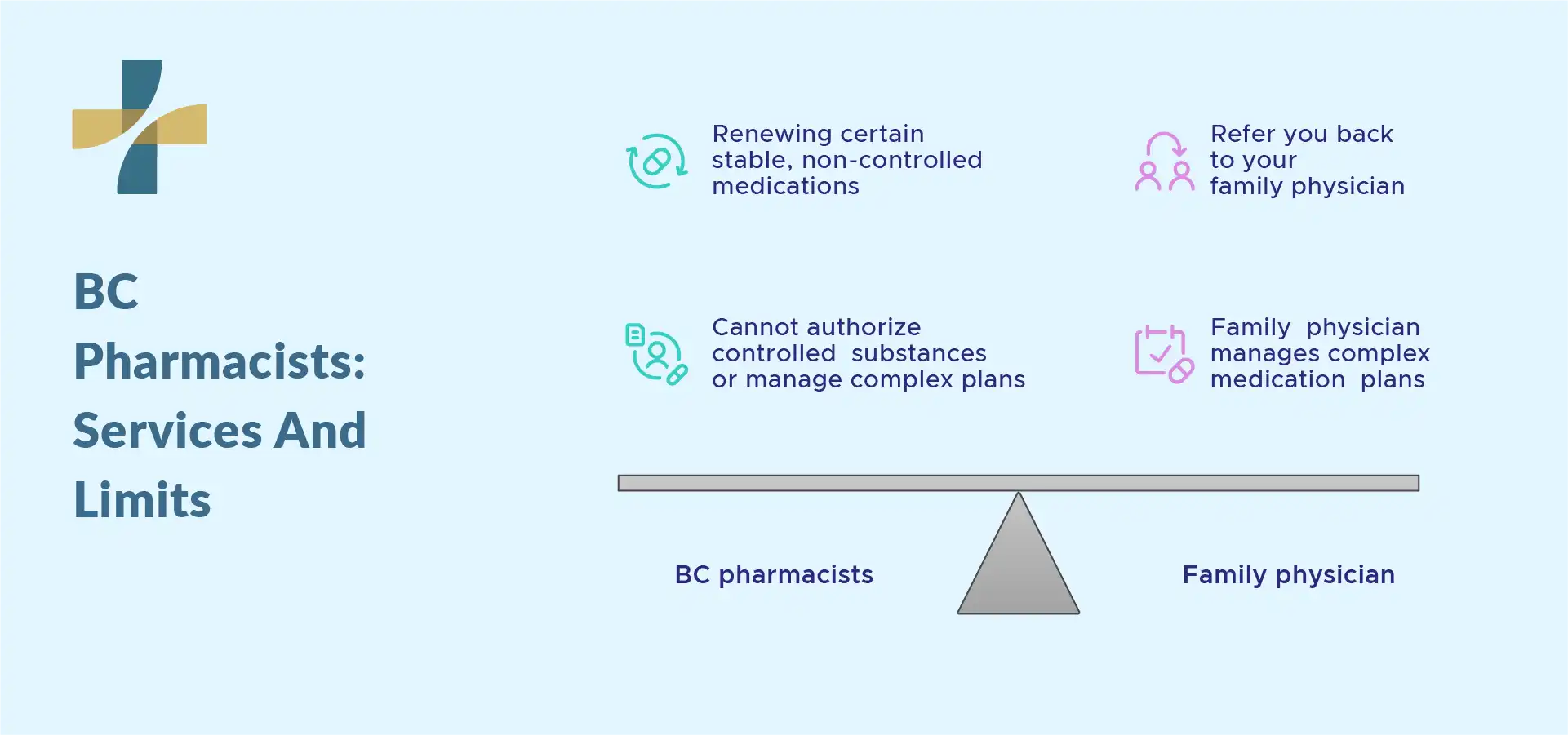
What pharmacists in BC may help with
BC pharmacists have expanded prescribing authority, and in many cases, they can provide specialized pharmacist services in BC without requiring an immediate doctor’s visit. This includes:
- Renewing certain stable, non-controlled medications for continuity of care
- Adjusting minor dosing for specific condition categories
- Prescribing for select minor ailments
- Providing short-term emergency supplies when a refill is urgently needed
However, pharmacists typically cannot authorize controlled substances, make changes based on new symptoms, or manage complex, multi-condition medication plans. In these cases, they’ll usually refer you back to your family physician.
What to prepare before your appointment
A prescription refill appointment in BC moves faster when you arrive prepared. Experienced patients often bring a comprehensive medication history log to streamline the review process.
To get the most out of your visit, make sure to compile:
- An updated list of all current medications, including dosages and over-the-counter supplements.
- A short log of any recent side effects, blood pressure readings, or symptom changes.
- Your current pharmacy contact details so your physician can transmit the prescription directly.
- Any questions regarding long-term side effects or requests for a follow-up appointment.
Being organized allows your doctor to focus directly on evaluating your progress, ensuring safe prescribing practices while saving you time.
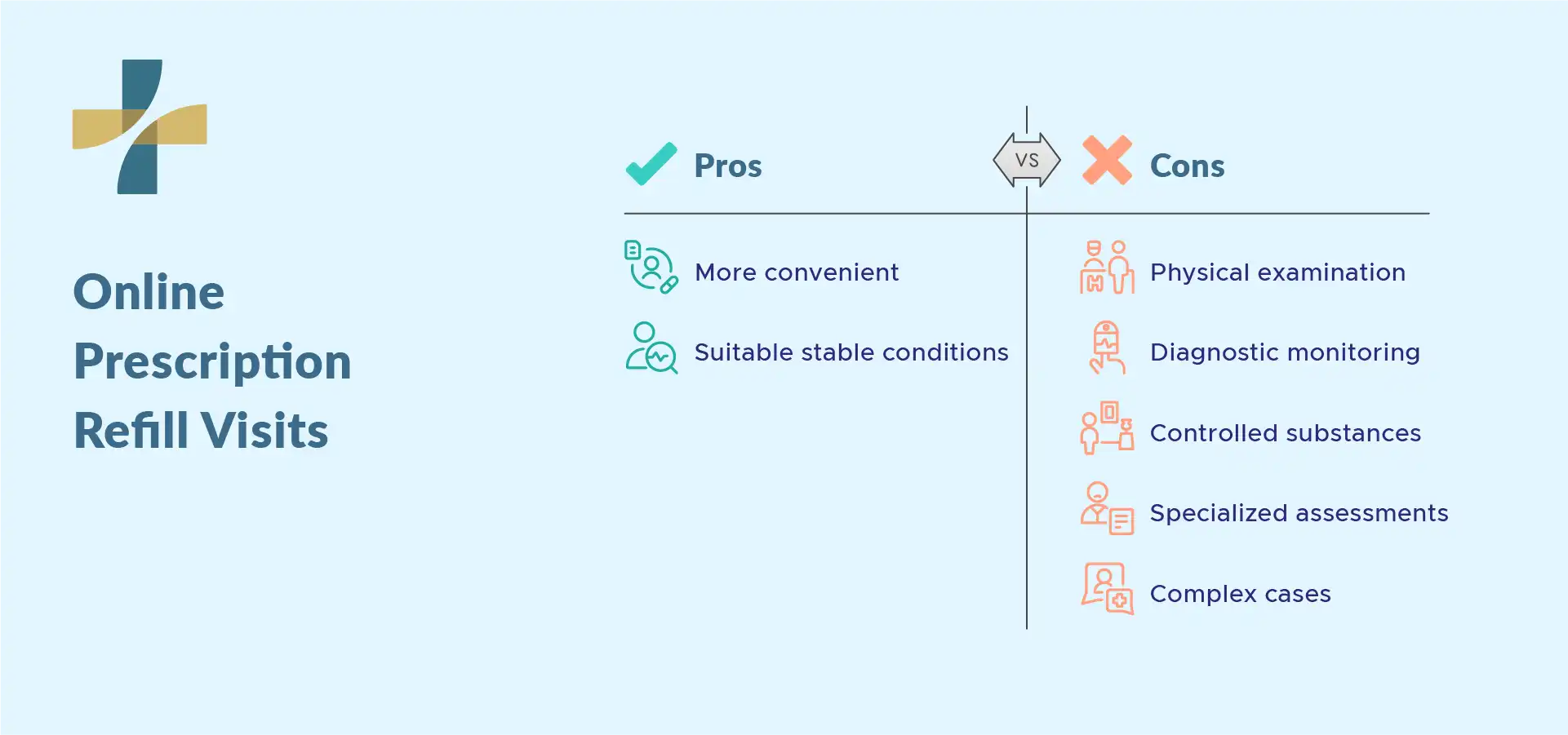
When an online visit may or may not be suitable
Virtual care has made securing a prescription refill appointment significantly more convenient for BC residents. An online visit for a prescription refill is typically ideal if your condition is stable, your routine bloodwork is up to date, and you aren’t experiencing new or worsening side effects.
However, virtual care has clear boundaries. An online visit is generally not suitable if:
- You require a physical examination (such as abdominal checks or listening to heart sounds).
- You need specialized diagnostic monitoring, such as scheduling Holter monitoring for arrhythmia.
- You are requesting renewals for controlled substances that require in-person identity verification and physical assessments.
- You are seeking specialized forms or assessments, such as an ICBC medical assessment following a motor vehicle accident.
For complex cases, in-person family physician care remains the safest and most thorough option.
Need to schedule your next refill? Book your appointment with our team at NV Med Center today to access comprehensive family physician care, convenient online visits, and integrated health services in North Vancouver.
FAQ
1. When does a prescription refill need a doctor review?
A review may be needed if symptoms have changed, monitoring is overdue, the dose has changed, side effects have appeared, or the medication is complex. Booking a dedicated prescription refill appointment in BC ensures your doctor can verify that your current dosage remains safe and effective.
2. Can pharmacists renew prescriptions in BC?
Yes. According to HealthLinkBC, pharmacists can renew or change some prescriptions and help review and manage medications for stable, non-controlled conditions.
3. Can an online visit handle a refill?
Sometimes. An online doctor visit works well for stable, routine medications. However, the doctor may require an in-person exam or updated lab tests before authorizing a renewal.
4. What should I bring to a refill appointment?
Bring medication names, doses, pharmacy details, side effects, recent lab results, blood pressure readings if relevant, and your complete refill history to ensure a smooth evaluation.
5. Are all medications refillable online?
No. Controlled substances, high-risk drugs, and medications requiring active clinical monitoring cannot be refilled online and require an in-person evaluation.
6. Why might a doctor refuse a simple refill?
A doctor may refuse a quick refill if they need to confirm safety, effectiveness, drug interactions, an updated diagnosis, or whether the medication is still appropriate for your health status.