Noticing a tender lump on your neck, under your jaw, or in your armpit can be unsettling. Swollen lymph nodes are one of the most common reasons people search for answers online, often late at night, worried about what the bump might mean.
The good news is that in the vast majority of cases, swollen lymph nodes are a sign your immune system is doing exactly what it’s supposed to do: fighting off an infection. Still, understanding the difference between a harmless reaction and something that needs medical attention is important for your peace of mind and your health.
This guide breaks down what swollen lymph nodes are, why they happen, and when it’s time to get checked out by a professiona
If you’re currently dealing with a painful, persistent, or painful swollen lymph nodes situation, our team at NV Med Center can help you get answers quickly. You can easily book a doctor appointment for swollen lymph nodes directly through our clinic to ensure accurate diagnostic oversight.
What Are Swollen Lymph Nodes?
Lymph nodes are small, bean-shaped structures that are part of your lymphatic system, which plays a key role in your body’s immune defense. You have hundreds of them located throughout your body, including clusters in your neck, under your jaw, in your armpits, and in your groin.
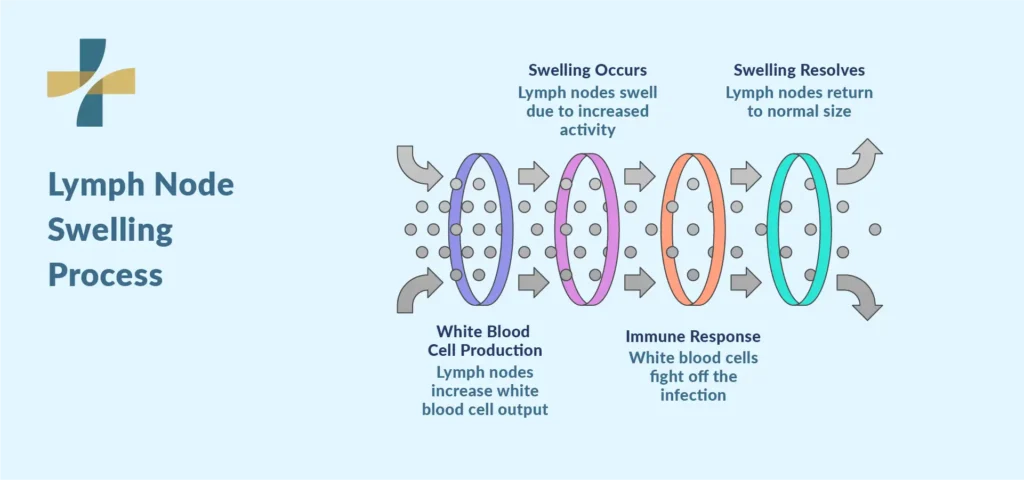
When your body detects an infection, injury, or illness nearby, these nodes can swell as they produce more white blood cells to fight it off. This swelling, medically known as lymphadenopathy, is essentially a visible sign of your immune system at work.
Most swollen lymph nodes are soft, movable, and tender to the touch, and these neck lumps typically shrink back to normal size within two to three weeks once the underlying cause resolves.
Example Case: A 28-year-old with a sore throat and fever notices a tender lump nodes under the jaw swollen cluster. Her doctor confirms it is a reactive node responding to standard strep throat symptoms, and it resolves within a week of antibiotic treatment.
- Lymph nodes act as filters, trapping bacteria, viruses, and abnormal cells.
- Swelling near the affected area often points directly to the primary cause.
Common Causes of Swollen Lymph Nodes in the Neck, Armpit, or Groin
The location of your swollen lymph nodes often gives clues about what’s causing them. Neck and jaw swelling is frequently linked to throat, ear, or dental infections. Armpit nodes swelling can relate to arm or hand infections, while groin nodes swelling often connects to lower body or genital infections.
Viral infections, bacterial infections, and local inflammation
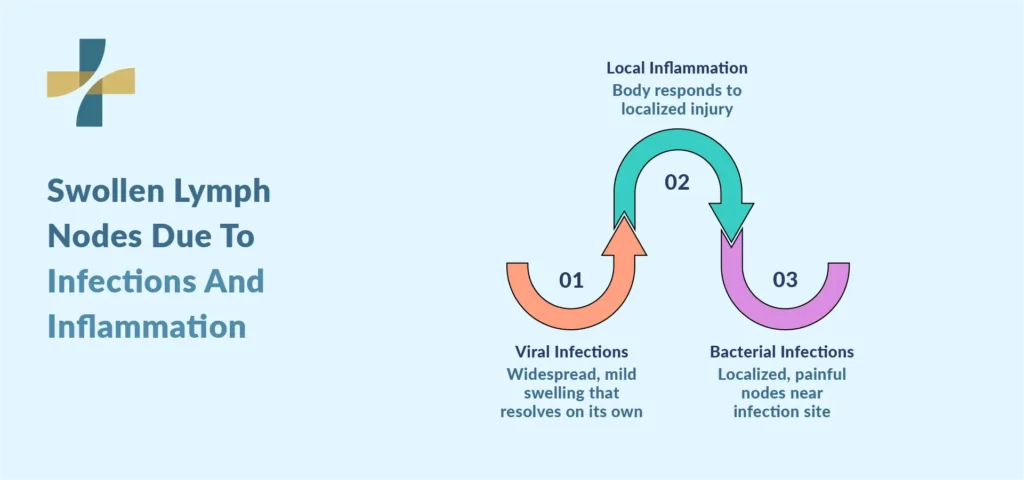
- Viral causes: Viral infections such as the common cold, flu, mononucleosis, or COVID-19 are among the most frequent triggers of swollen glands. These infections cause widespread, mild swelling that typically resolves on its own.
- Bacterial causes: Bacterial infections, including strep throat, skin infections, or dental abscesses, often cause more localized, painful lymph nodes near the infection site. These may require antibiotics to fully clear.
- Inflammatory causes: Local inflammation from cuts, insect bites, or skin irritation near a node cluster can also trigger swollen lymph nodes, as the body responds to the localized injury.
Example Case: A construction worker develops a cut on his hand that becomes infected. Within days, he notices swollen, painful lymph nodes under his armpit, a direct response to the spreading infection.
- Viral causes: colds, flu, mono, COVID-19
- Bacterial causes: strep throat, skin infections, dental infections
- Inflammatory causes: cuts, bites, localized skin irritation
Swollen Lymph Nodes and Sore Throat, Ear Infection, or Sinus Symptoms
It’s extremely common for swollen lymph nodes under the jaw or in the neck to appear alongside a sore throat, ear infection, or sinus infection. This happens because these areas share nearby lymphatic drainage pathways.
If you have a sore throat with swollen glands, strep throat, or a viral pharyngitis, it is often the culprit. An ear infection, particularly in children, can cause tender nodes just behind the ear or along the jawline. Similarly, sinus infection symptoms may lead to mild swelling in the upper neck as the body actively responds to congestion and localized inflammation.
In most of these cases, the swelling subsides as the primary infection clears, usually within one to two weeks, especially with appropriate treatment such as rest, fluids, or antibiotics when necessary.
When Should You Worry About Swollen Lymph Nodes?
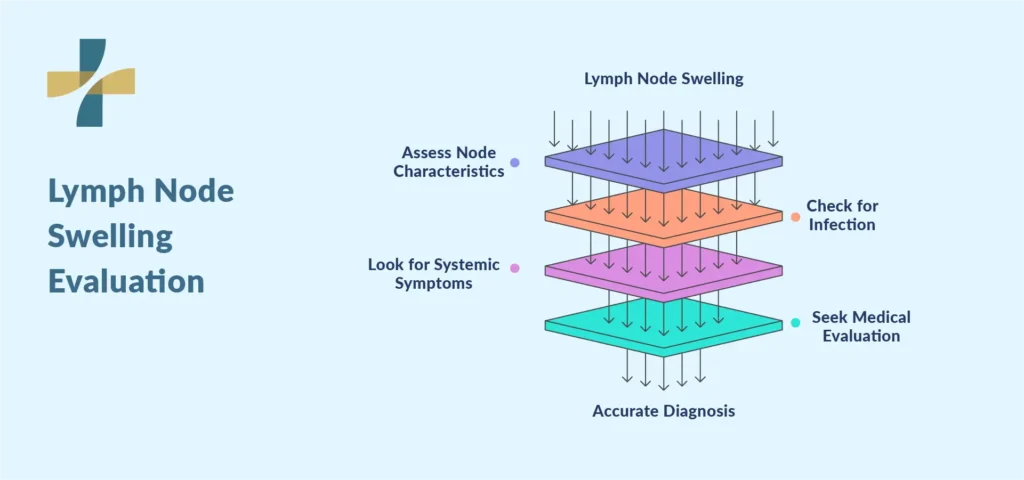
While most instances of lymphadenopathy symptoms are entirely harmless, certain clinical signs warrant closer medical evaluation. According to leading healthcare guidelines, lymph nodes that are hard, fixed in place, rapidly growing, or persist longer than two to four weeks should be checked by a physician.
Other warning signs include:
- Swelling without any obvious signs of a cold or respiratory infection.
- Unexplained weight loss occurs alongside the swelling.
- Persistent, drenching night sweats.
- A prolonged, low-grade fever that does not break.
- Nodes that feel completely hard, rubbery, or immovable under the skin.
While these signs can sometimes indicate an underlying autoimmune disease, a severe chronic condition, or a potential cancer risk, an accurate diagnostic confirmation can only be determined through a professional medical evaluation.
How Doctors Evaluate Swollen Lymph Nodes
When you present with an unexplained neck lump or chronic swelling, a medical provider will perform a systematic clinical review. The process typically includes:
- Medical History Review: Your doctor will ask about the duration of the swelling, whether you have had a recent virus or bacterial issue, and check for systemic symptoms like fever or fatigue.
- Physical Examination: The physician will gently palpate the nodes to check their size, texture, mobility, and level of tenderness.
- Diagnostic Testing: If the underlying swollen lymph nodes causes remain unclear, your care team may order blood tests, imaging studies (such as an ultrasound), or recommend a specialized biopsy to examine the tissue cells directly under a microscope.
How NV Med Center Can Help With Persistent Swelling
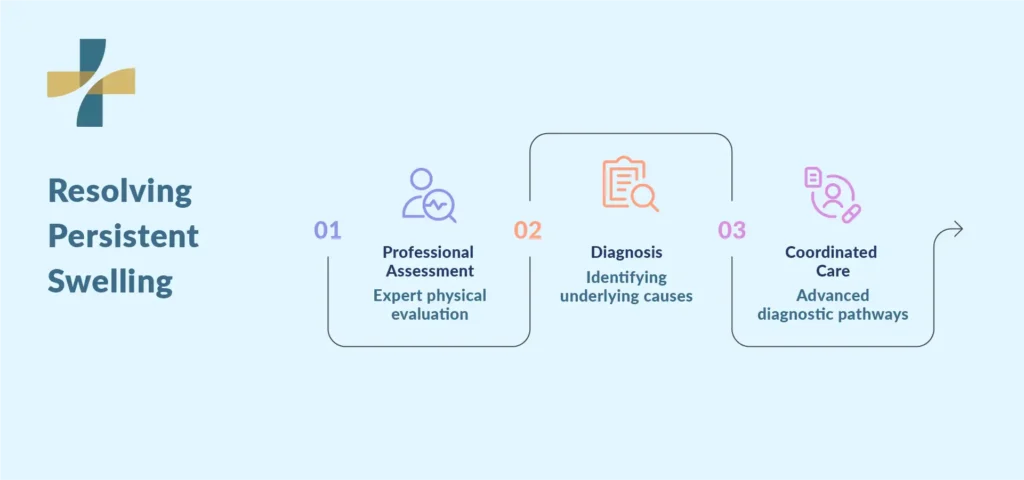
If you are experiencing prolonged swelling or are unsure about a new lump, you do not have to guess the cause. At NV Med Center, our professional Family Physician Care team provides expert, comprehensive physical assessments to give you total peace of mind. We specialize in evaluating chronic lymphadenopathy, diagnosing underlying respiratory issues like an ear infection (internal future link), and coordinating advanced diagnostic pathways whenever required.
Protect your long-term health and eliminate the stress of the unknown. Schedule a comprehensive evaluation with our dedicated medical team today.
FAQs
1-Can a sinus infection cause swollen lymph nodes in the neck area?
Yes. Because the sinus cavities drain through the deep channels of the head and neck, a severe or lingering sinus issue frequently triggers an immune response in the nearby neck nodes, causing temporary swelling and tenderness until the congestion clears.
2-What is the main difference between general lymphadenopathy and painful lymph nodes?
Lymphadenopathy is a broad medical term used to describe any disease or swelling affecting the lymph nodes. Painful lymph nodes, on the other hand, specifically refer to nodes that are tender to the touch, which is typically a positive indicator that the node is actively fighting a temporary bacterial or viral threat.
3-How long should I wait before seeking a persistent neck lump evaluation?
If a lump or a cluster of swollen glands remains noticeably enlarged, completely hard, or fails to decrease in size after four weeks, you should schedule a professional Family Physician Care assessment to rule out chronic conditions or advanced health risks.