If you’ve been scrolling through skincare content lately and keep seeing the term “baby Botox,” you’re definitely not imagining things. Searches for baby Botox Vancouver have climbed steadily as more adults in their 20s and 30s ask whether starting Botox for prevention can actually stop deep wrinkles before they form, rather than just trying to erase them years later.
It’s a completely fair question. For decades, cosmetic injectables were something people only considered once heavy lines were already etched into their skin. Now, a growing number of patients want to know if a smaller, earlier approach often called microdose Botox might help them maintain smooth skin down the road, and whether that’s actually backed by dermatological science or just clever social media marketing.
This guide breaks down what baby Botox and preventative Botox actually mean, how they differ from traditional treatments, what clinical evidence says about timing, and what you should ask before booking your first Botox appointment.
If you’re ready to discuss whether preventative treatments make sense for your skin, explore our Beauty & Rejuvenation Care services at NV Med Center to see how a personalized medical consultation works.

What baby Botox and preventative Botox mean
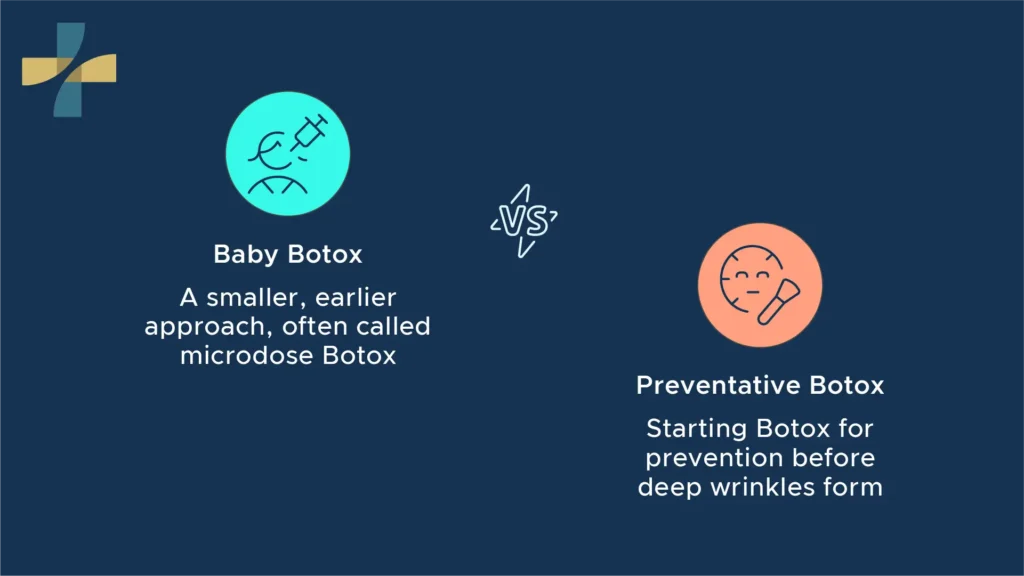
Baby Botox refers to using a smaller, more conservative dose of Botox (or another FDA- and Health Canada-approved neuromodulator) than what is typically injected during a traditional treatment. The goal isn’t to freeze your facial expressions completely—it’s to gently soften targeted muscle contractions just enough to keep your skin from creasing repeatedly.
Preventative Botox is a closely related, slightly broader approach. It involves starting preventative Botox Vancouver treatments before deep, permanent wrinkles settle in, with the goal of slowing down early aging and preserving natural-looking results.
In day-to-day clinical practice, the two terms often overlap, especially when treating forehead lines, frown lines between the brows (glabellar lines), and crow’s feet. (If you’re completely new to injectables, our guide on Botox for Beginners: What First-Time Patients Should Know covers the basics of how your first session feels.)
Example Case: A 27-year-old patient notices faint horizontal lines on her forehead only when she raises her eyebrows, with completely smooth skin at rest. This is a classic candidate profile for baby Botox, an early, low-dose intervention designed to protect the skin rather than perform a heavy correction.
- Lower units injected compared to a standard full-face treatment
- Targets expression-related movement before creases permanently set in
- Most commonly used on the forehead, between the brows, and around the eyes
How preventative Botox is meant to work
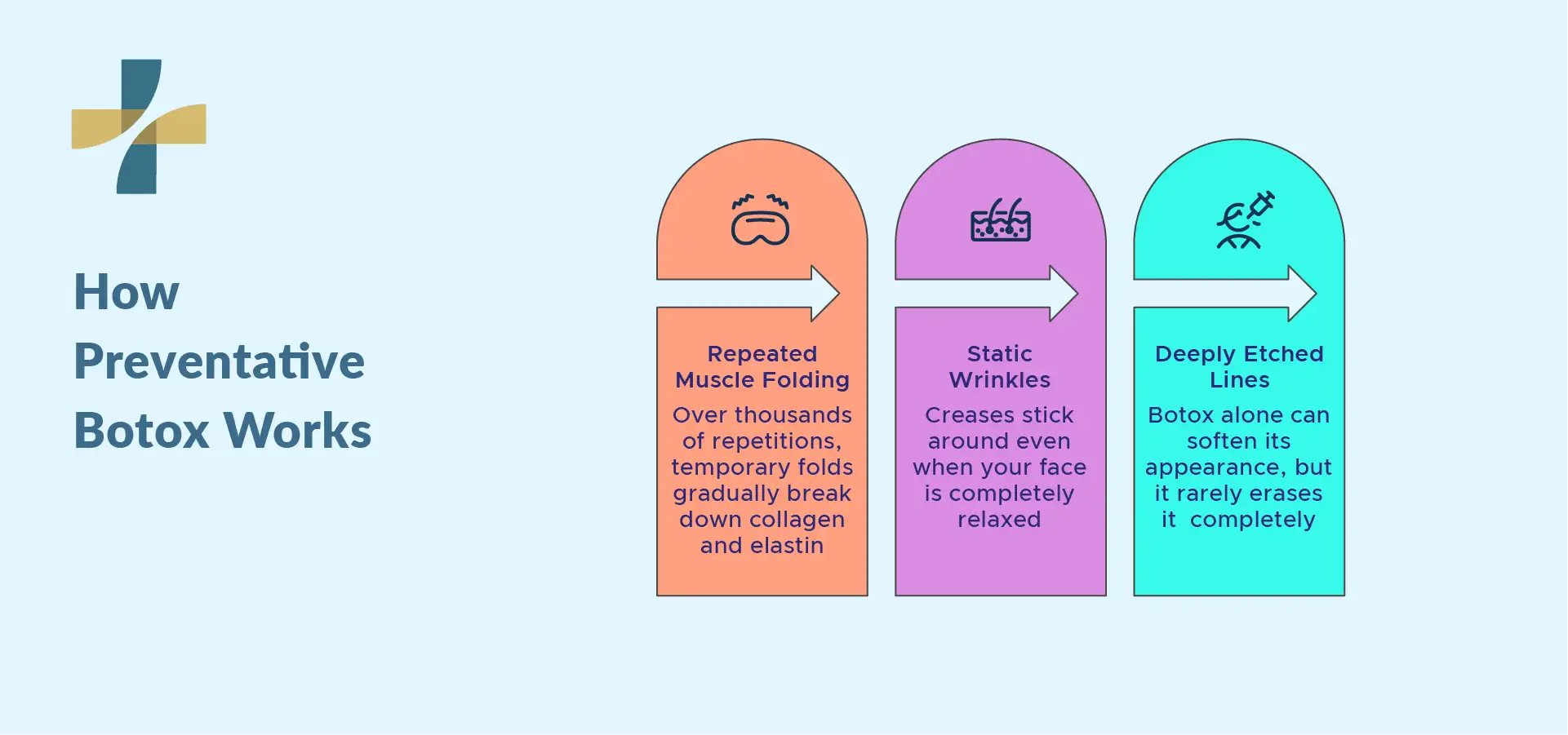
Every time you squint at a screen, frown in concentration, or raise your eyebrows, the underlying muscles pull on your skin. Over thousands of repetitions, those temporary folds gradually break down collagen and elastin in the same spots. Eventually, those creases stick around even when your face is completely relaxed.
Neuromodulators work by temporarily blocking nerve signals to specific facial muscles, reducing the intensity of their contractions. According to clinical insights published by the American Academy of Dermatology on botulinum toxin therapy, limiting repetitive muscle folding gives your skin a break, slowing the transition from temporary creases to deep-set wrinkles.
Dynamic lines vs lines that are already etched in
Understanding the difference between these two types of lines is the easiest way to tell if preventative treatment is right for you:
- Dynamic wrinkles only appear when your face is moving, like crow’s feet when you laugh or forehead lines when you look surprised.
- Static wrinkles remain visible in the mirror even when your facial muscles are completely at rest.
Does preventative Botox work? Yes, primarily because it targets dynamic wrinkles before they become static. Once a line is deeply etched into the skin, Botox alone can soften its appearance, but it rarely erases it at that stage; providers often recommend combining injectables with skin-resurfacing options like Microneedling in Vancouver for Face & Scalp to rebuild lost collagen.
What age to start Botox: is there a right time?
When patients ask at what age they should start Botox, the honest medical answer is that there is no magic birthday. Skin aging depends heavily on your genetics, daily sun protection habits, overall skincare routine, and how expressive your facial muscles naturally are. Still, there are clear patterns across different decades.
Botox in your 20s
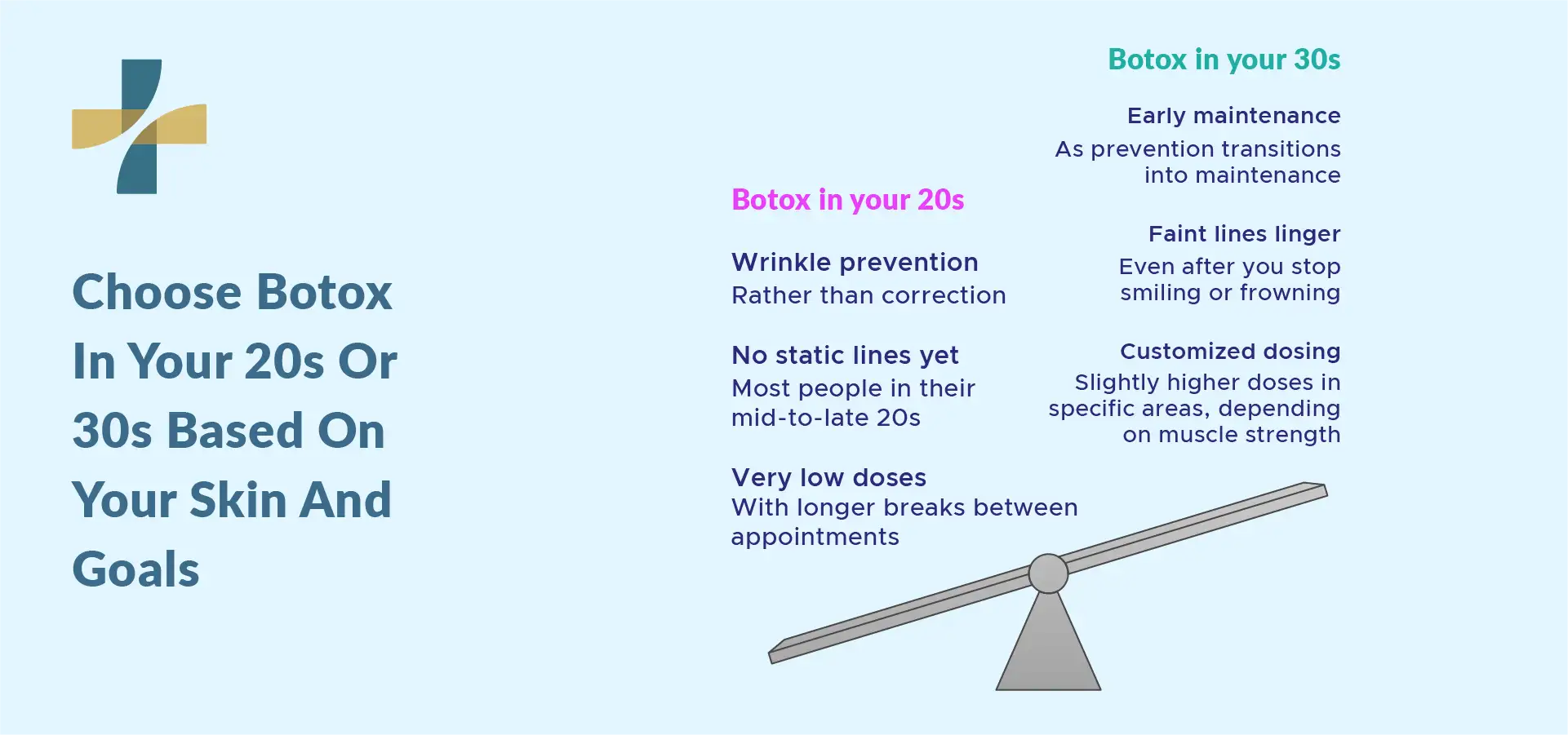
Choosing Botox in your 20s is almost exclusively about wrinkle prevention rather than correction. Most people in their mid-to-late 20s don’t have static lines yet, meaning treatments involve very low doses and longer breaks between appointments.
If you are considering preventative Botox in your 20s, realistic expectations are key: the goal is keeping your skin smooth for the future, not dramatically changing how you look today. In fact, if you have zero lines even when making expressions, a reputable injector will likely tell you to hold off and focus on daily SPF and medical-grade skincare instead.
Botox in your 30s
By the time you explore Botox in your 30s, natural collagen production has begun to dip by about 1% per year, and faint lines often linger even after you stop smiling or frowning. This is the decade when preventative care naturally transitions into early maintenance.
Treatment in your 30s may require slightly higher, customized dosing in specific areas depending on your muscle strength. Many patients also pair light neuromodulators with other targeted treatments; you can learn how different injectables compare in our Step-by-Step Guide to the Botox & Filler Process.
Baby Botox vs standard Botox: what’s the difference?
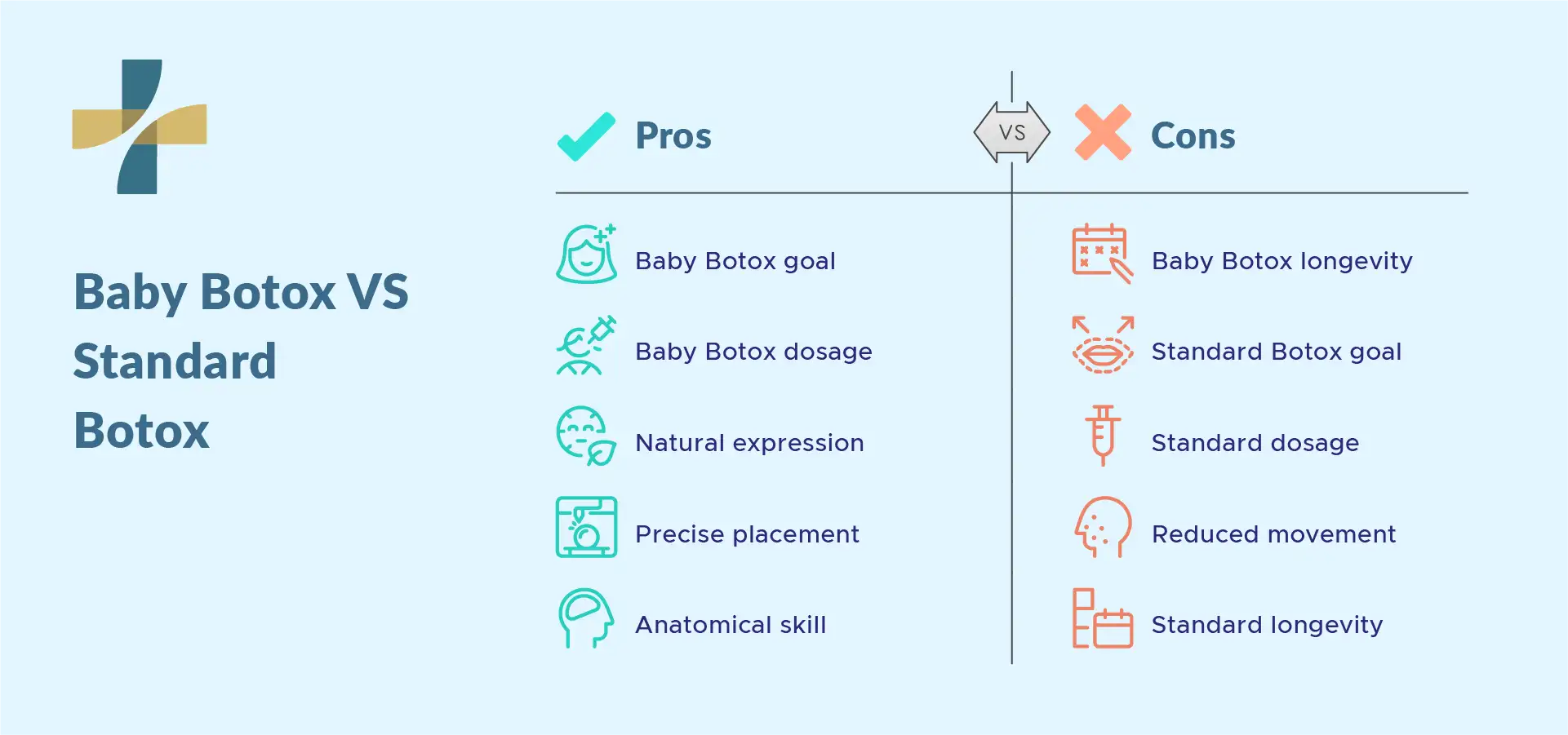
When comparing baby Botox vs regular Botox, the core difference comes down to dosing, injection precision, and the final aesthetic goal—not a different type of medication. Both treatments use the exact same purified botulinum toxin formula; what changes is how your injector customizes the units to match your facial anatomy.
| Feature | Baby Botox (Microdose) | Standard Botox |
| Primary Goal | Preventative care and subtle softening of fine lines | Smoothing moderate-to-deep existing wrinkles |
| Typical Dosage | Lower units (often 10–25 units total depending on area) | Standard clinical units (typically 20–50+ units) |
| Facial Movement | Preserves full natural expression with slight softening | Significantly reduces muscle movement in treated zones |
| Longevity | Usually lasts 2 to 3 months | Typically lasts 3 to 4 months |
| Best Candidate | Patients in their 20s–30s with mild dynamic wrinkles | Patients with visible static lines or strong muscle pull |
Because microdosing relies on placing tiny droplets across precise muscle points, it actually requires just as much anatomical skill as a full-dose treatment to ensure balanced, symmetrical results.
What to expect: results, timing and how often
One of the biggest misconceptions about baby Botox results is expecting them to show up before you leave the clinic. Neuromodulators take time to bind to nerve receptors:
- Days 3 to 5: You will start noticing a subtle softening in muscle tension.
- Day 14: Full results settle in, leaving skin smoother while keeping your natural expressions intact.
Because smaller doses are used, the effects wear off a little faster than traditional injections. If you’re wondering how often to get baby Botox, most patients schedule maintenance appointments every 2.5 to 3 months, though some who use it strictly for early prevention only come in two or three times a year. (To keep your skin healthy between visits, check out our Top 5 Reasons to Choose NVMed Center Botox & Filler Services in Vancouver.
Safety considerations to discuss with your provider
While microdose Botox is minimally invasive, it is still a prescription medical procedure that carries potential risks if performed improperly. Clinical reviews in the Journal of Cosmetic Dermatology on botulinum toxin safety emphasize that proper dosing and anatomical placement are critical for avoiding unwanted side effects.
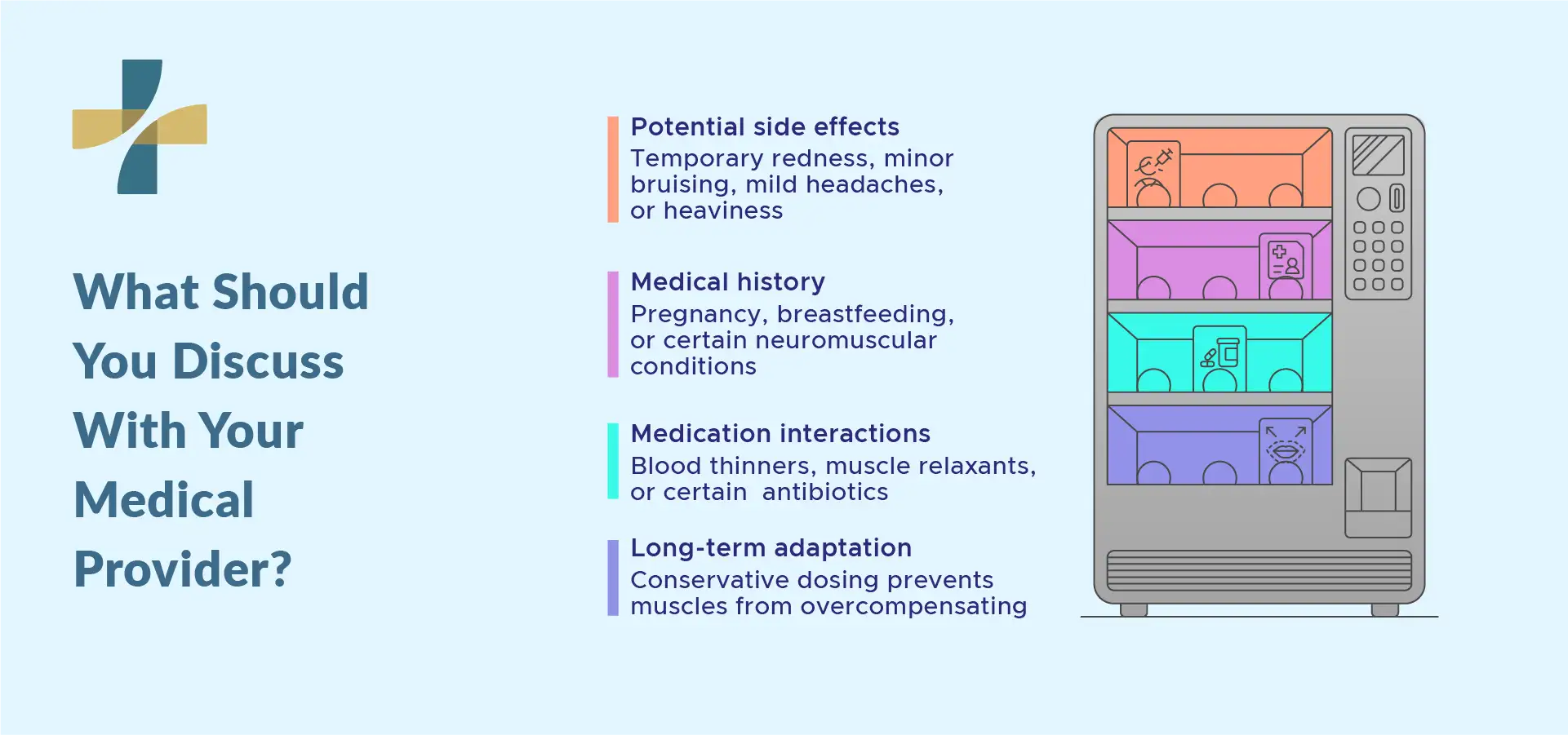
Before starting any injectable plan, make sure to discuss the following with your medical provider:
- Potential side effects: Temporary redness, minor bruising at the injection site, mild headaches, or, if injected incorrectly, temporary eyelid or brow heaviness.
- Medical history and contraindications: Neuromodulators are not recommended if you are pregnant, breastfeeding, or living with certain neuromuscular conditions.
- Medication interactions: Inform your clinician if you take blood thinners, muscle relaxants, or certain antibiotics, as these can increase bruising or alter how the product works.
- Long-term muscle adaptation: Consistent, conservative dosing prevents muscles from overcompensating in other areas of the face, which is why choosing an experienced medical clinic matters far more than chasing the lowest price per unit.

How to book a consultation in Vancouver and what to ask
Choosing where to get baby Botox Vancouver treatments should start with a proper medical evaluation rather than a rushed walk-in appointment. At a physician-led clinic, your provider will assess your facial muscle strength at rest and in motion before recommending a single unit.
When you book your appointment, you can easily reach out through our Contact Us page or schedule via our Online Visits portal for an initial discussion. Bring these questions to your consultation:
- Are my lines currently dynamic or static, and am I genuinely a good candidate for preventative dosing?
- How many total units do you recommend for my facial anatomy, and which specific muscles will you target?
- What kind of follow-up policy do you offer if a slight touch-up is needed after two weeks?
- How does this treatment fit alongside my daily skincare routine and long-term anti-aging goals?
Preparing for your visit? Read our checklist on How to Prepare for Your First Beauty & Rejuvenation Appointment so you know exactly what to avoid 48 hours beforehand.
FAQ
1. What is baby Botox?
Baby Botox is a personalized injectable technique that uses smaller, micro-dosed units of a neuromodulator (such as Botox) to gently relax facial muscles. Unlike traditional doses aimed at freezing deep wrinkles, it softens dynamic expression lines while keeping your natural facial movement intact.
2. What is the difference between baby Botox and regular Botox?
The medication itself is identical; the difference lies in the dosage and goal. Regular Botox uses higher unit counts to smooth out established, moderate-to-severe wrinkles, whereas baby Botox uses lighter doses focused on early prevention and subtle refinement.
3. At what age should you start Botox?
There is no mandatory starting age, as skin aging varies by genetics and sun exposure. Most patients consider preventative Botox between their mid-20s and mid-30s—specifically when faint lines begin lingering on the forehead or around the eyes even after their face relaxes.
4. How often is baby Botox done?
Because lower unit doses metabolize slightly faster than full treatments, baby Botox results typically last between 2 and 3 months. Depending on your muscle strength and goals, maintenance sessions are usually scheduled every 3 to 4 months.
5. Is preventative Botox worth it?
For patients who have strong facial expressions and are starting to see early dynamic lines form, preventative Botox is often worthwhile because it slows down deep collagen creasing before static wrinkles become permanent. However, if you have no visible expression lines yet, daily sunscreen and a consistent skincare routine are more cost-effective first steps.