Last Updated: June 2026
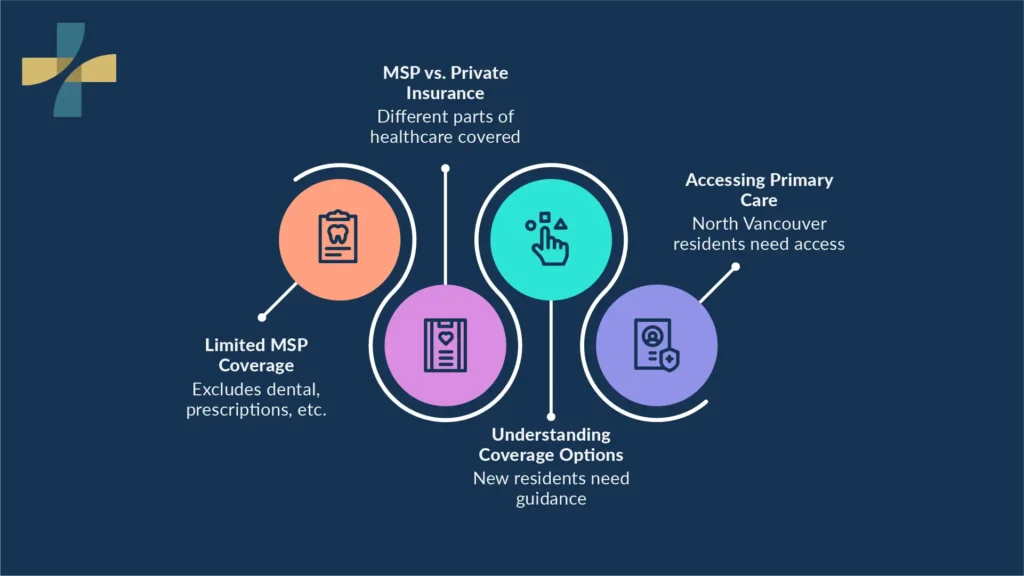
MSP coverage BC is the province’s public health insurance program. For eligible residents, BC Medical Services Plan coverage generally includes medically necessary doctor visits, hospital care, specialist referrals, and many diagnostic tests. However, MSP does not typically cover services such as routine dental care, most prescription medications, glasses, contact lenses, massage therapy, or many extended health services.
If you are wondering what MSP covers, the short answer is that it helps pay for essential healthcare delivered through British Columbia’s public healthcare system. Many patients are surprised to learn that MSP coverage services and private insurance often cover different parts of healthcare.
Whether you recently moved to British Columbia, are new to Canada, or want to better understand your health insurance BC options, this guide explains what is covered by MSP, common exclusions, when additional coverage may be helpful, and how North Vancouver residents can access primary care.
What Is Usually Covered by MSP?
Many BC residents want to know whether a healthcare service will be covered by MSP or whether they may need to pay out of pocket. In general, MSP covers many medically necessary healthcare services, including doctor visits, hospital care, specialist referrals, and many diagnostic tests. However, some healthcare costs may still require private insurance or direct payment.
The table below provides a quick overview of services that are usually covered, usually not covered, or may depend on medical necessity or eligibility.
| Usually Covered by MSP | Usually Not Covered by MSP | Sometimes Covered or Depends on Eligibility |
| Family doctor visits | Routine dental care | Certain physiotherapy services for eligible patients |
| Walk-in clinic visits | Most prescription medications | Some medically necessary eye exams |
| Specialist visits with a referral | Glasses and contact lenses | Certain hospital-based dental or oral surgery procedures |
| Hospital care | Massage therapy | Supplementary benefits for qualifying residents |
| Medically necessary blood tests | Acupuncture | Certain vision services based on age or medical condition |
| Many diagnostic tests and imaging | Many counselling and extended health services | Other services subject to provincial eligibility requirements |
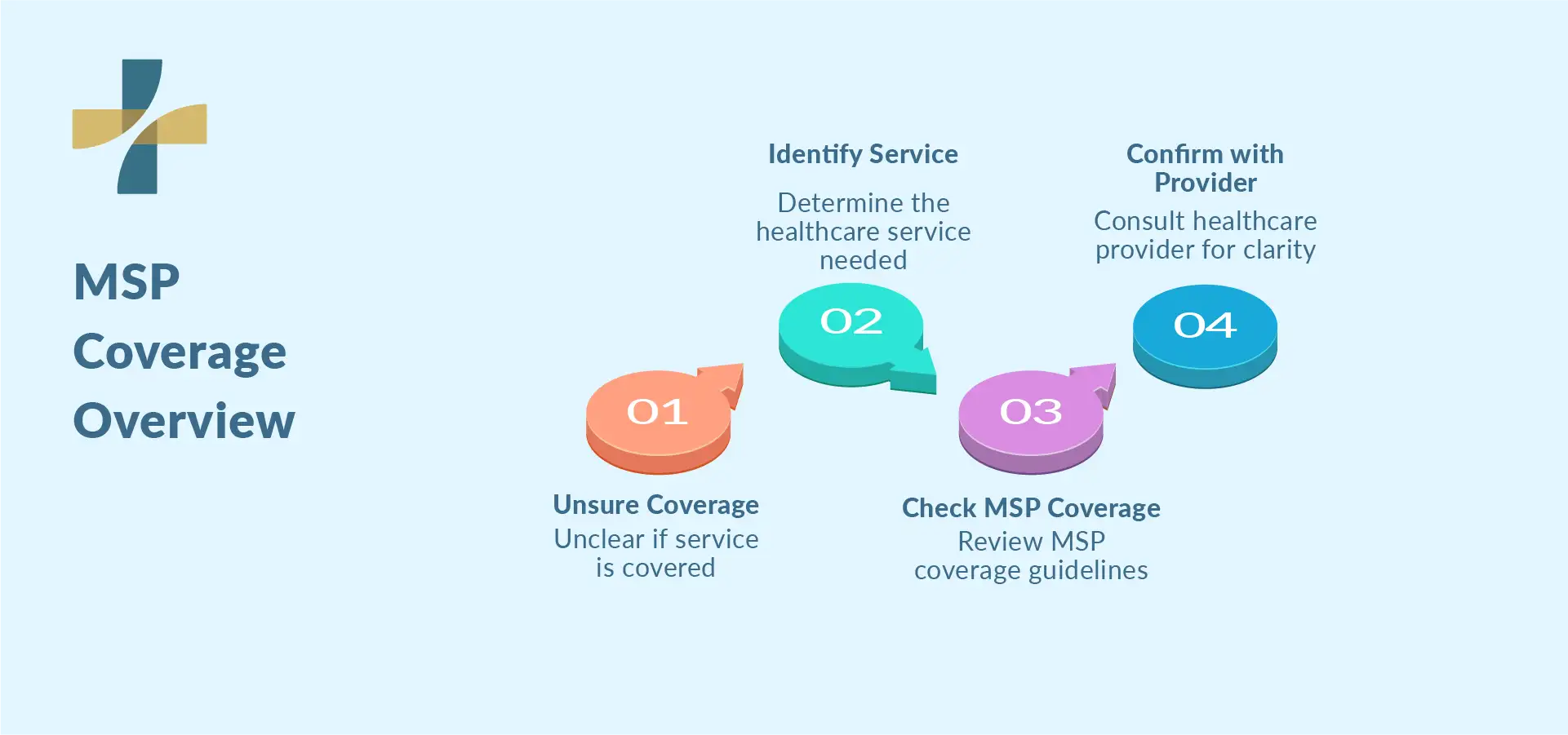
Coverage rules can vary depending on your medical needs, eligibility, and the type of service provided. If you are unsure whether a specific service is covered, it is best to confirm with your healthcare provider or review the latest information from the BC Medical Services Plan.
What Is MSP Coverage BC and How Does It Work?
MSP coverage BC is the province’s public health insurance program. It helps eligible residents access medically necessary healthcare services without paying directly for most covered care at the time of their visit. This includes many family doctor appointments, specialist referrals, hospital services, and diagnostic tests.
MSP, or the Medical Services Plan, is administered by the Government of British Columbia and forms the foundation of public healthcare BC residents use every day. Most healthcare providers who participate in MSP bill the program directly, so patients typically do not receive a bill for covered services.
For example, if you visit a family doctor for an illness, receive a referral to a specialist, or need blood work ordered as part of your care, those services may be covered when they are medically necessary. However, MSP coverage services do not include every healthcare expense, which is why some residents also have private insurance for additional services such as prescription medications, dental care, vision care, or physiotherapy.
Who Is Eligible for MSP Coverage in British Columbia?
Most residents of British Columbia may qualify for MSP coverage if they make BC their primary home and meet provincial residency requirements.
Eligible individuals may include:
- Canadian citizens
- Permanent residents
- Certain work permit holders
- Certain study permit holders
- Refugees and protected persons
- New residents moving to British Columbia from another province or country
If you recently moved to BC, are new to Canada, or hold a temporary permit, it is important to confirm your eligibility and complete MSP enrollment as soon as possible. Coverage does not always begin immediately, and some new residents may experience a waiting period before MSP becomes active.
During this period, temporary private health insurance may help cover healthcare costs until MSP coverage begins. If you are unsure whether your MSP is active, you can verify your status through the Government of British Columbia’s Medical Services Plan program.
Eligibility requirements can change over time, so it is always a good idea to review the latest MSP information before relying on coverage.
How Do Patients Access Healthcare Through MSP?
Once enrolled in MSP, patients typically access covered healthcare services using their BC Services Card. Most participating healthcare providers bill MSP directly, so patients generally do not pay out of pocket for covered services at the time of their visit.
Depending on their healthcare needs, patients may access care through:
- A family doctor
- A nurse practitioner
- A walk-in clinic
- Virtual care services
- Specialist referrals
- Hospital and emergency services
For example, a patient with a persistent skin condition may first see a family doctor or nurse practitioner. If specialist care is needed, the provider can refer the patient to a dermatologist, and the referral pathway is generally covered when medically necessary.
Understanding how to access care can help patients receive the right treatment sooner and avoid confusion about what services MSP may cover.
What Primary Care Services Does MSP Cover?
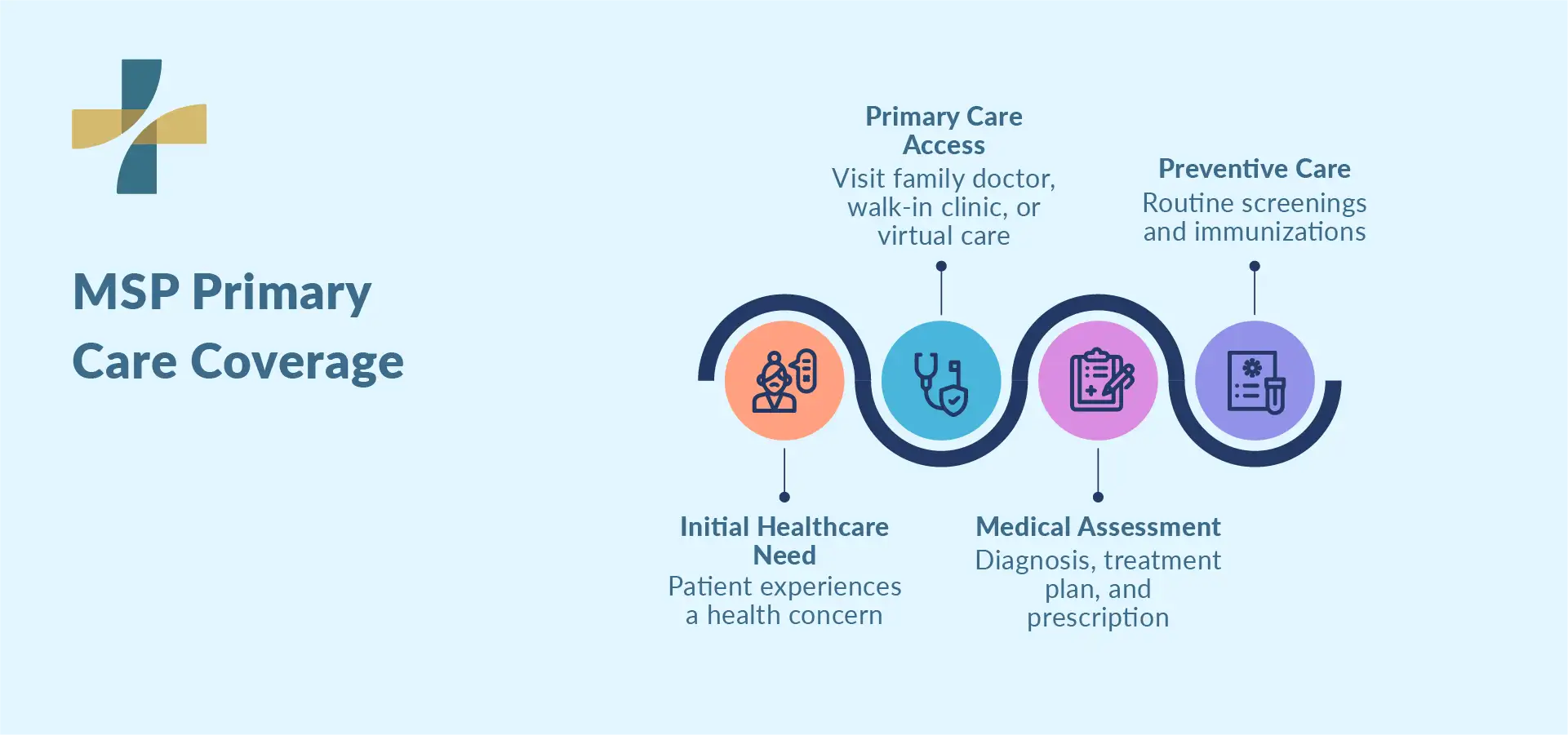
MSP coverage BC includes many primary care services that help patients manage illnesses, monitor chronic conditions, receive preventive care, and access specialist referrals when needed. For many residents, primary care is the first point of contact for healthcare concerns and ongoing health management.
Does MSP Cover Family Doctor Visits?
Yes. MSP generally covers medically necessary visits to a family doctor.
Common reasons for a visit may include:
- Illness assessments
- Follow-up appointments
- Chronic disease management
- Prescription reviews
- Preventive health discussions
- Referrals to specialists
For example, if you visit a family doctor for high blood pressure, diabetes, recurring headaches, or another medical concern, the appointment is typically covered by MSP. However, any medications prescribed during the visit may require PharmaCare, private insurance, or out-of-pocket payment.
Does MSP Cover Walk-In Clinics and Virtual Care?
Yes. MSP generally covers medically necessary visits to participating walk-in clinics and virtual care providers.
These services may help with:
- Minor illnesses
- Prescription renewals
- Follow-up care
- Medical advice
- Referrals to specialists
Virtual appointments can be a convenient option when an in-person visit is not necessary or readily available.
Does MSP Cover Preventive Care?
Some preventive services may be covered when they are medically necessary or provided through public health programs. However, not every routine screening, wellness service, or complete physical examination is automatically covered by MSP.
Preventive care may include certain medically necessary assessments, chronic disease monitoring, and immunisations offered through public health programs.
If you are unsure whether a specific preventive service is covered, it is best to speak with your healthcare provider before booking the appointment.
What Medical Services Are Covered Beyond Primary Care?
MSP covers more than family doctor visits. When medically necessary, BC Medical Services Plan coverage may also include specialist consultations, hospital care, and many diagnostic tests ordered as part of a patient’s treatment plan.
Does MSP Cover Specialist Referrals?
Yes. MSP generally covers medically necessary specialist visits when a family doctor or nurse practitioner provides a referral.
Specialists may include:
- Dermatologists
- Cardiologists
- Endocrinologists
- Gastroenterologists
- Orthopedic specialists
- Internal medicine physicians
For example, if a patient visits a family doctor for a persistent skin condition and is referred to a dermatologist, both the initial appointment and specialist referral pathway may be covered when medically necessary.
Patients who are unsure about the referral process can learn more about referrals for specialist visits and when they are required.
Does MSP Cover Hospital Care?
Yes. Hospital care is one of the core MSP benefits BC residents receive.
Covered services may include:
- Emergency department visits
- Inpatient hospital care
- Medically necessary surgeries
- Physician services provided during hospitalization
- Other medically necessary hospital treatments
Coverage depends on the patient’s medical needs and the type of care being provided.
Does MSP Cover Blood Tests and Diagnostic Imaging?
Many medically necessary laboratory tests and diagnostic services are covered when ordered by a physician or nurse practitioner.
Examples may include:
- Blood tests
- Laboratory work
- Ultrasounds
- X-rays
- Certain diagnostic imaging procedures
- Specialist-directed testing
For example, if a doctor orders blood work to investigate fatigue or monitor a chronic condition, the testing is often covered by MSP. Similarly, diagnostic imaging may be covered when it is medically necessary to diagnose or manage a health condition.
What Is Covered by MSP and What Is Not Covered?
Many patients are surprised to learn that MSP does not cover every healthcare expense. While MSP covers many medically necessary healthcare services, some treatments and healthcare products may require private insurance, supplementary benefits, or out-of-pocket payment.
Does MSP Cover Prescription Medications?
In most cases, MSP does not cover prescription medications obtained from a pharmacy. However, some residents may qualify for assistance through PharmaCare or other government programs based on their circumstances.
For example, a visit to a family doctor for high blood pressure may be covered by MSP, but the medication prescribed afterwards may not be fully covered.
Does MSP Cover Dental Care?
Routine dental care is generally not covered by MSP. This includes services such as cleanings, fillings, examinations, and orthodontic treatment.
However, some medically necessary dental or oral surgery procedures performed in a hospital may be covered when they form part of a patient’s medical treatment.
Does MSP Cover Vision Care?
Routine eye exams are not covered for every adult in British Columbia. However, some medically necessary eye examinations and certain vision services may be covered depending on a patient’s age, medical condition, or eligibility for specific programs.
Glasses and contact lenses are generally not covered by MSP.
Does MSP Cover Physiotherapy, Massage Therapy, or Counselling?
Services such as physiotherapy, massage therapy, chiropractic care, acupuncture, and many counselling services are not typically covered for all residents through MSP.
Some patients may qualify for supplementary benefits or other programs that provide limited coverage. Many people rely on private insurance or workplace benefits to help pay for these services.
For example, a patient who books a massage therapy appointment will usually need private insurance or out-of-pocket payment because massage therapy is not typically covered through MSP.
If you are considering treatment through one of these providers, it is a good idea to confirm coverage before booking an appointment.
Do You Need Private Insurance if You Already Have MSP?
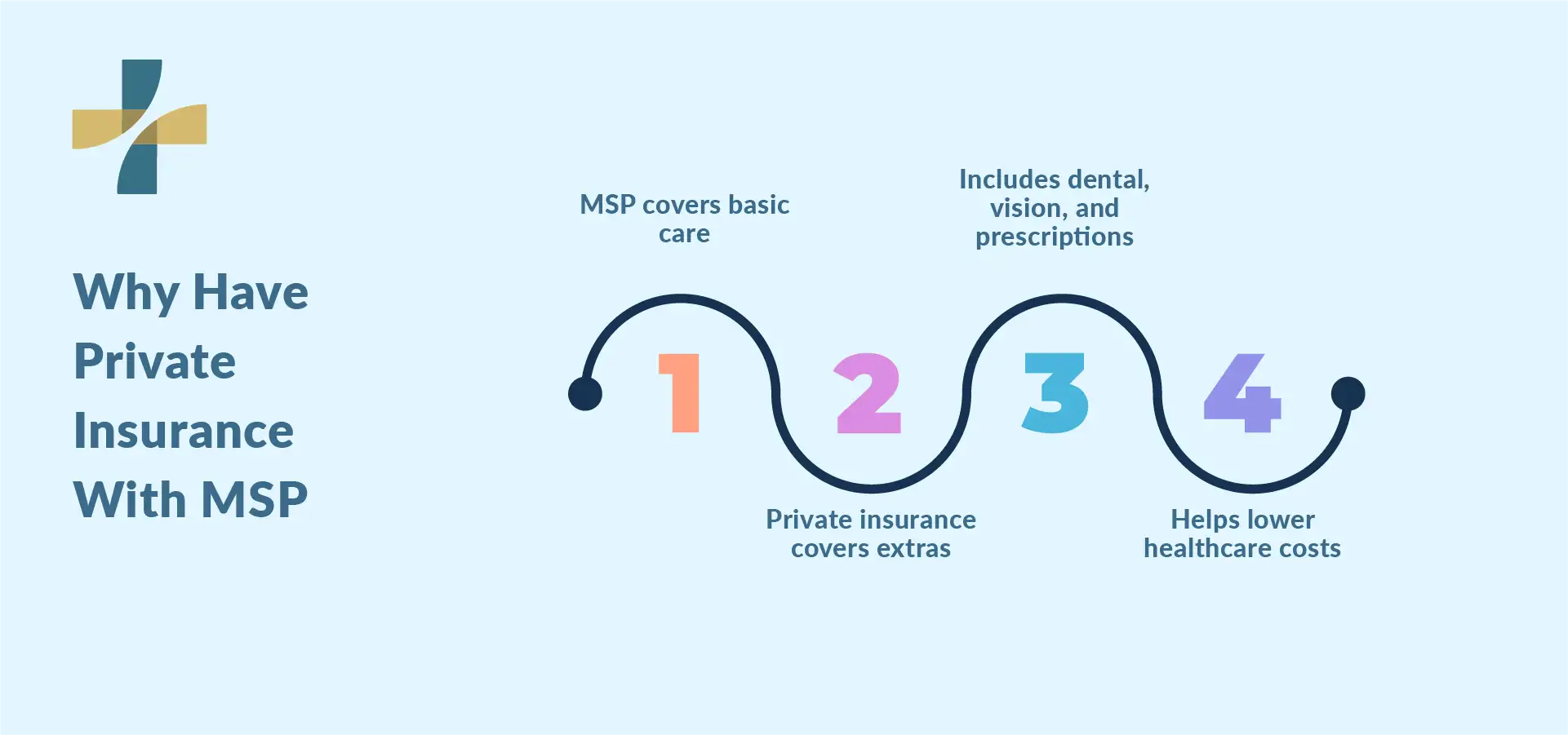
MSP provides the foundation of public healthcare that BC residents rely on, but it does not cover every healthcare expense. This is why many people also have private insurance or extended health benefits.
In simple terms:
- MSP generally covers medically necessary healthcare services such as doctor visits, hospital care, specialist referrals, and many diagnostic tests.
- Private insurance helps pay for services MSP does not usually cover.
What Private Insurance May Cover
Depending on the plan, private insurance may help pay for:
- Prescription medications
- Dental care
- Vision care
- Glasses and contact lenses
- Physiotherapy
- Massage therapy
- Counselling and other extended health services
For example, a patient may have an MSP-covered appointment with a family doctor but still use private insurance to help pay for prescription medications, physiotherapy, or dental treatment recommended as part of their care.
Understanding the difference between MSP and private insurance can help you plan for healthcare costs and avoid unexpected expenses.
What Are the Most Common MSP Coverage Mistakes?
Many misunderstandings about MSP coverage happen because patients assume a service is covered without confirming it first. Understanding a few common misconceptions can help you avoid unexpected healthcare expenses.
Common MSP Coverage Mistakes
Assuming Prescription Medications Are Covered
MSP generally does not cover prescription medications obtained from a pharmacy. Patients may need PharmaCare, private insurance, or out-of-pocket payment to help cover these costs.
Assuming Dental Care Is Included
Routine dental services such as cleanings, fillings, and orthodontics are generally not covered by MSP, although some medically necessary procedures performed in a hospital may be covered.
Expecting Routine Eye Care to Be Covered
Many adults are surprised to learn that routine eye exams, glasses, and contact lenses are not typically covered by MSP. Some exceptions may apply based on age, medical need, or eligibility.
Seeing a Specialist Without a Referral
Many specialist services require a referral from a family doctor or nurse practitioner before MSP coverage applies.
Not Confirming Coverage After Moving to BC
New residents should complete MSP enrollment and verify when their coverage begins. Some individuals may experience a waiting period before MSP becomes active.
Checking coverage before receiving care can help reduce confusion and make it easier to plan for potential healthcare costs.
How Can North Vancouver Residents Access MSP-Covered Care?
Understanding MSP coverage is only part of the process. Knowing where to go for care can help North Vancouver residents receive the right treatment when they need it.
If You Already Have a Family Doctor
Your family doctor should usually be your first point of contact for non-emergency healthcare needs. They can provide ongoing primary care, manage chronic conditions, order diagnostic tests, review medications, and refer you to specialists when needed. Regular family physician care can also help support preventive health screenings, chronic disease management, and continuity of care over time.
If You Do Not Have a Family Doctor
Residents who are looking for a family doctor or nurse practitioner can register through the Health Connect Registry. This provincial program helps connect eligible patients with available primary care providers. While waiting to be matched with a provider, patients may use walk-in clinics or virtual care services for appropriate non-emergency healthcare needs.
If you are establishing care for the first time, it may help to understand what to expect during your first family doctor visit in North Vancouver.
If You Need Same-Day Care
Walk-in clinics and virtual care providers may be appropriate for:
- Minor illnesses
- Mild infections
- Prescription renewals
- Follow-up care
- Non-emergency medical concerns
These services can help when you need medical advice or treatment but do not require emergency care.
If Your Condition Is Urgent or Serious
If your condition requires prompt medical attention but is not immediately life-threatening, an Urgent and Primary Care Centre (UPCC) may be an appropriate option. UPCCs can help with concerns that cannot wait for a regular appointment but do not require an emergency department visit.
If Your Condition Is an Emergency
If you are experiencing severe symptoms, chest pain, difficulty breathing, signs of a stroke, serious injury, or another medical emergency, call emergency services or go directly to the nearest emergency department.
What Should You Do Next?
If you are new to British Columbia, unsure whether your MSP coverage is active, or trying to establish ongoing primary care, start by confirming your MSP enrollment status and ensuring you have access to a BC Services Card. Establishing care with a primary healthcare provider can make it easier to access preventive care, specialist referrals, and ongoing health management.
How NV Med Center Helps North Vancouver Residents With MSP-Covered Primary Care
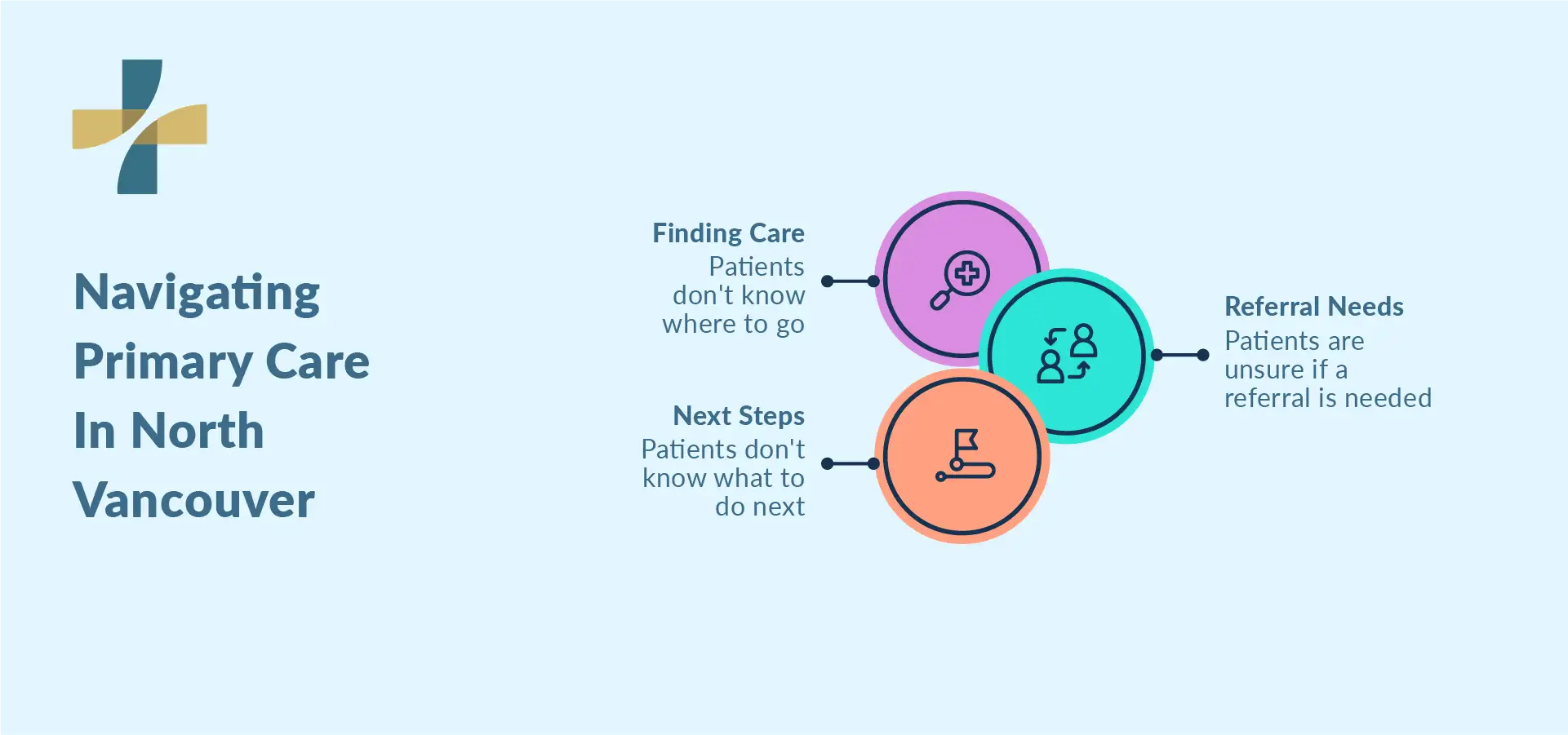
Understanding MSP coverage is important, but many patients also need help determining where to go for care, whether a referral is needed, and what their next step should be.
NV Med Center supports North Vancouver residents by providing access to primary care services that may be covered through MSP when medically necessary. Patients commonly visit for:
- Family doctor appointments
- Walk-in support, where available
- Chronic disease management
- Prescription reviews
- Preventive health discussions
- Diagnostic testing coordination
- Specialist referrals
- Ongoing healthcare follow-up
- Virtual care services, when appropriate
Having a regular healthcare provider can make it easier to manage ongoing medical concerns, monitor chronic conditions, coordinate referrals, and access preventive care throughout the year.
If you are unsure whether your healthcare concern is covered by MSP, need help accessing primary care, or are looking for guidance on the next step in your healthcare journey, scheduling an appointment with a healthcare provider can help you better understand your options and available services.
Frequently Asked Questions About MSP Coverage BC
Does MSP Cover Walk-In Clinic Visits in BC?
Yes. MSP generally covers medically necessary visits to participating walk-in clinics. Patients typically do not pay directly for covered services when the clinic bills MSP.
Does MSP Cover Virtual Doctor Appointments?
Many medically necessary virtual appointments are covered when provided through participating healthcare providers. Coverage may depend on the service being provided and the provider’s billing arrangements.
Does MSP Cover Prescription Medications?
In most cases, MSP does not cover prescription medications obtained from a pharmacy. Some residents may qualify for assistance through PharmaCare or other government programs, while others rely on private insurance.
Does MSP Cover Physiotherapy or Massage Therapy?
These services are not typically covered for all BC residents through MSP. Some patients may qualify for limited supplementary benefits, but many people use private insurance or pay out of pocket for these services.
Does MSP Cover Blood Tests and Diagnostic Imaging?
Many medically necessary blood tests, laboratory services, and diagnostic imaging procedures are covered when ordered by a physician or nurse practitioner as part of a patient’s care.
Do I Need a Referral for a Specialist Under MSP?
In most cases, yes. Specialist visits are generally covered when a family doctor or nurse practitioner determines that specialist care is medically necessary and provides a referral.
What Should I Do if I Do Not Have a Family Doctor in North Vancouver?
Residents who do not have a family doctor can register through the Health Connect Registry to be matched with a primary care provider. While waiting, walk-in clinics and virtual care services may help with appropriate non-emergency healthcare needs.
Do New BC Residents Get MSP Coverage Right Away?
Coverage does not always begin immediately. New residents should complete MSP enrollment as soon as possible and confirm when their coverage becomes active. Some people choose temporary private health insurance while waiting for MSP coverage to begin.
This article is intended for educational purposes. MSP coverage rules, eligibility requirements, and healthcare programs may change over time. Patients should confirm current coverage details through official British Columbia healthcare resources or speak directly with their healthcare provider regarding their specific situation.
References
For the most current MSP eligibility, coverage, and healthcare access information, consult official British Columbia healthcare resources: