A walk-in clinic in North Vancouver can usually treat common non-emergency issues such as UTIs, cold and flu symptoms, minor injuries, prescription renewals, and preventive care. Severe symptoms such as chest pain, signs of stroke, or breathing difficulties usually require emergency care instead.
Walk-in clinic services in North Vancouver help patients manage many non-emergency medical concerns, including infections, minor injuries, prescription renewals, preventive care, and some mental health concerns. Many patients use walk-in care when they cannot see their regular doctor quickly, do not yet have a family physician, or need timely medical advice for a non-emergency concern.
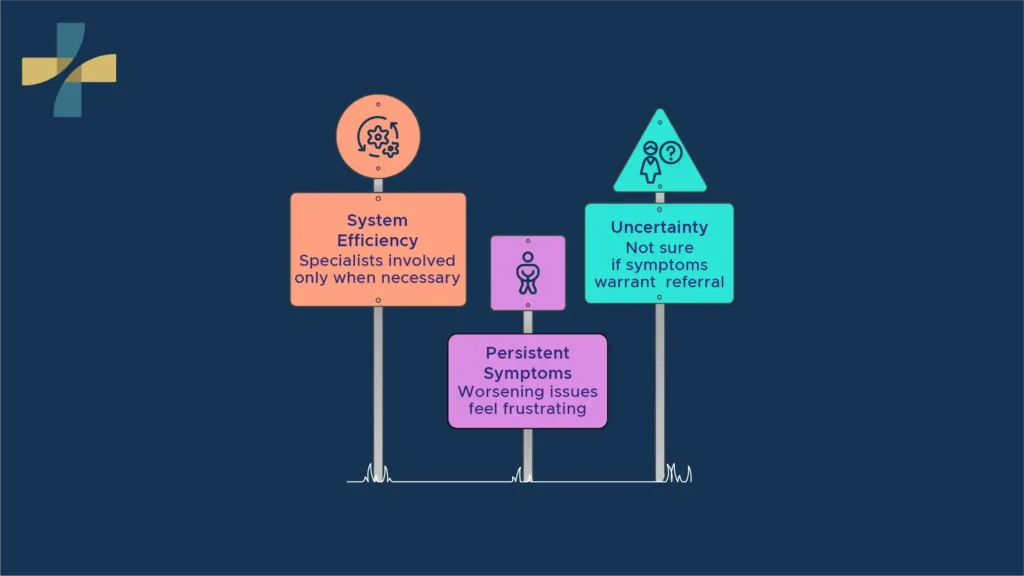
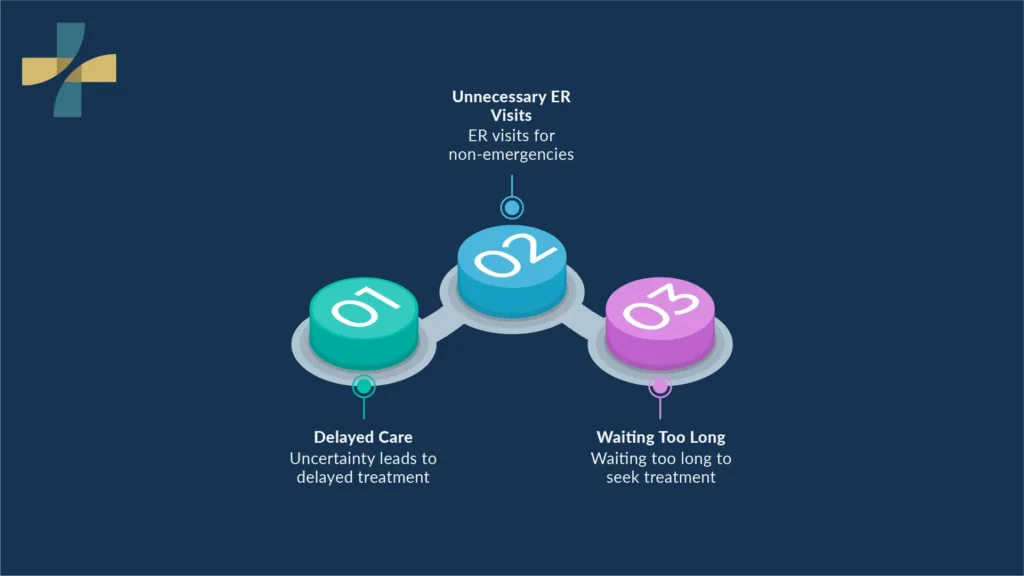
Many people are unsure whether their symptoms are serious enough for the emergency room or manageable through a walk-in clinic. That uncertainty often leads to delayed care, unnecessary ER visits, or waiting too long to seek treatment. In North Vancouver, walk-in clinics help fill that gap by providing accessible care for common health concerns without requiring a referral.
Quick Guide: When a Walk-In Clinic Can Help vs. When to Go to the ER
| Walk-In Clinic Can Usually Help With | Go to ER / Call 911 For |
| UTI symptoms | Chest pain |
| Cold and flu symptoms | Signs of stroke |
| Strep throat | Severe breathing trouble |
| Ear infections | Severe allergic reaction |
| Pink eye | Major trauma |
| Mild rashes | Severe head injury |
| Prescription renewals | High fever in infants under 3 months |
| Minor sprains | |
| Mild burns |
Most walk-in clinics in North Vancouver are designed for non-emergency medical concerns that still need timely attention. If your symptoms involve infection, mild illness, minor injury, prescription concerns, or routine medical questions, a walk-in physician can often assess the issue and guide the next step.
If you are ever unsure where to go, HealthLink BC’s 8-1-1 nurse line provides free guidance from registered nurses 24 hours a day.
Finding a family doctor in North Vancouver remains difficult for many residents. According to the BC Ministry of Health, more than 600,000 British Columbians have been connected to a primary care provider since 2023, but many patients still rely on walk-in clinics for timely care. Patients who are still looking for ongoing family physician care often rely on walk-in clinics while waiting to establish long-term primary care access.
What Is a Walk-In Clinic and How Does It Work in North Vancouver?
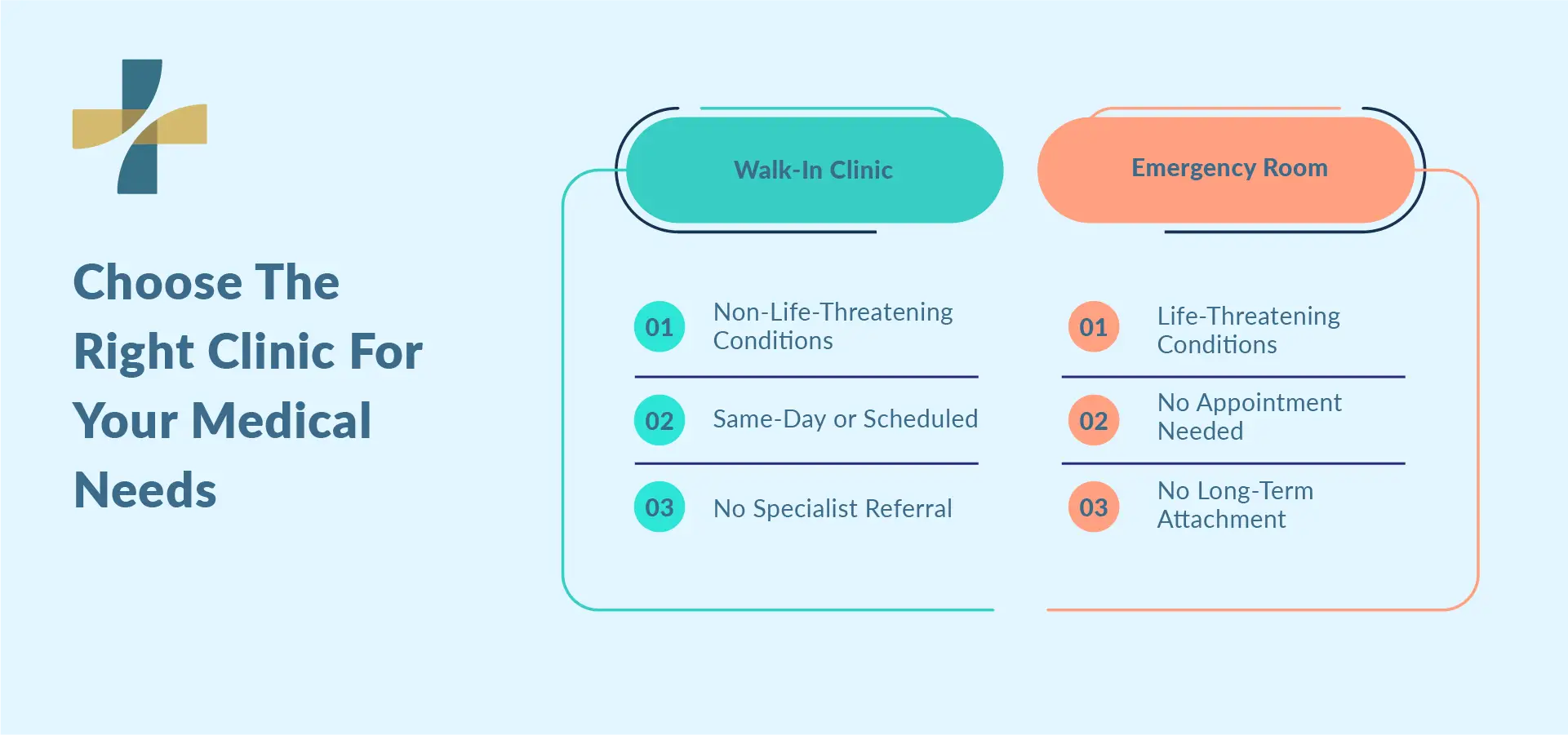
A walk-in clinic provides medical care for non-life-threatening conditions without requiring a specialist referral or long-term physician attachment. Depending on clinic availability, patients may be seen through same-day or scheduled appointments, either in person or virtually when appropriate for the condition.
Walk-in clinics are often the middle ground between a family doctor and the emergency room. They are designed for concerns that should not wait weeks for care, but also do not require emergency intervention.
Patients commonly use walk-in services when:
- they develop symptoms that are getting worse
- they cannot access their regular doctor quickly
- they are visiting from outside the area
- they need a prescription review or renewal
- they want medical advice before symptoms become more serious
Many North Vancouver patients are not always sure whether their condition deserves urgent attention. It is common for someone to delay care because they are trying to avoid the ER or hoping symptoms will improve on their own. Walk-in clinics help patients assess symptoms earlier, before infections, dehydration, pain, or mobility issues become harder to manage.
At integrated clinics like NV Med Center, a visit may also lead to referrals for imaging, physiotherapy, counselling, or follow-up care when medically appropriate.
If you are uncertain whether your symptoms are appropriate for a walk-in clinic, the HealthLink BC 8-1-1 nurse line can help guide your next step.
What Illnesses Can Walk-In Clinic Services Treat?
Walk-in clinic services commonly treat mild to moderate illnesses that need medical attention but are not considered emergencies. Physicians can assess symptoms, recommend treatment, prescribe medication when clinically appropriate, and arrange follow-up or testing if needed.
Common illnesses treated at walk-in clinics include:
- cold and flu symptoms
- sinus infections
- sore throat and suspected strep throat
- ear infections
- urinary tract infections (UTIs)
- pink eye
- mild respiratory infections
- skin rashes and hives
- stomach illness and digestive symptoms
- mild fevers
- seasonal allergy flare-ups
Many patients book a walk-in visit when symptoms begin interfering with work, sleep, hydration, or daily activities.
UTIs are one of the most common reasons patients seek prompt medical assessment, especially when symptoms become painful or progressively worse. Earlier evaluation may help reduce the risk of complications.
Walk-in care may also help patients decide whether further testing or escalation is needed. In some cases, physicians may recommend lab work, imaging, urgent care referral, or emergency evaluation, depending on symptom severity and medical history.
What Injuries Can a Walk-In Clinic Treat?
Walk-in clinics can assess many minor injuries that do not appear immediately life-threatening. This may include sprains, strains, mild burns, cuts, sports injuries, and injuries where a physician may recommend imaging or referral for further evaluation.
Common injuries assessed through walk-in clinic services include:
- sprains and soft tissue injuries
- muscle strains
- minor sports injuries
- cuts and superficial wounds
- mild burns
- insect bites
- minor workplace injuries
- possible injuries requiring imaging assessment
North Vancouver walk-in visits commonly increase during hiking, skiing, cycling, and recreational sports seasons when minor musculoskeletal injuries become more common.
In many cases, the priority is determining whether the injury can be managed conservatively or whether imaging, urgent care, or emergency treatment may be necessary.
Walk-in physicians can assess symptoms, perform a physical examination, order imaging when appropriate, and guide patients toward the right level of care. More serious injuries, unstable fractures, severe bleeding, major trauma, or injuries involving loss of consciousness usually require urgent care or emergency department evaluation instead.
Patients involved in motor vehicle collisions may also require medical documentation, symptom assessment, or follow-up care. ICBC medical assessments may help support injury documentation and recovery planning after an accident.
What Conditions Usually Cannot Be Treated at a Walk-In Clinic?
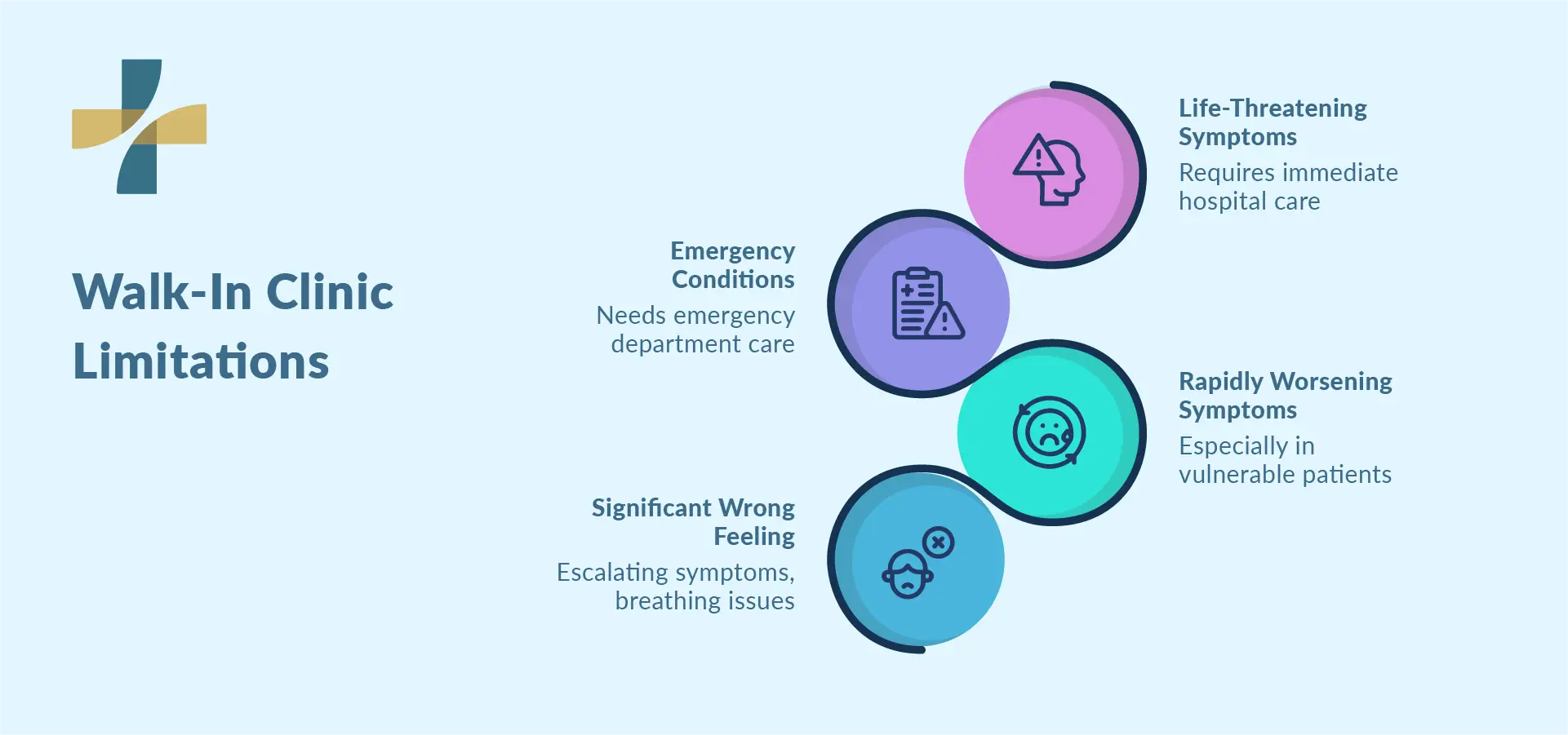
Walk-in clinics are not designed for medical emergencies or conditions that require immediate hospital-level care. Patients experiencing potentially life-threatening symptoms should call 911 or go to the nearest emergency department immediately.
Conditions that usually require emergency care include:
- chest pain or pressure
- signs of stroke
- severe shortness of breath
- major trauma
- severe bleeding
- severe allergic reactions
- severe abdominal pain
- significant head injuries
- seizures
- psychiatric emergencies involving immediate safety concerns
This may also apply when symptoms are rapidly worsening, especially in infants, older adults, or medically vulnerable patients.
If something feels significantly wrong, symptoms are escalating quickly, or breathing, consciousness, or neurological function are affected, emergency assessment is the safer choice.
Can a Walk-In Clinic Help With Preventive Care and Routine Health Checks?
Yes. Walk-in clinics often provide preventive care services and routine health assessments, especially for patients who do not currently have access to a regular family physician.
Depending on the visit, physicians may provide:
- routine health evaluations
- blood pressure checks
- prescription review
- preventive screenings
- lab requisitions
- immunizations
- travel vaccine consultations
- referrals for additional testing when appropriate
This type of visit may be especially helpful if:
- you have not had a recent medical checkup
- you are waiting to find a family doctor
- you need updated prescriptions
- you want guidance on ongoing health concerns before symptoms worsen
Some patients also look for longer-term support with preventive health planning or physician-guided wellness management. Weight loss and preventive health programs may provide additional structured follow-up depending on the patient’s goals and medical needs.
Does a Walk-In Clinic Treat Mental Health Concerns?
Walk-in clinics may help with initial mental health assessment, symptom discussion, medication review when clinically appropriate, and referral coordination for additional support services.
Patients commonly seek walk-in care for:
- anxiety symptoms
- low mood
- burnout
- sleep disruption
- stress-related physical symptoms
- concerns about emotional well-being
Many people are unsure where to start when mental health symptoms begin affecting work, relationships, sleep, or daily functioning. A walk-in visit can help identify immediate concerns and determine whether counselling, ongoing follow-up, medication review, or additional mental health support may be appropriate.
Integrated clinics may help coordinate follow-up care more efficiently when additional support is needed. Patients may also be connected with clinical counselling services when appropriate.
Mental health emergencies involving suicidal thoughts, psychosis, inability to stay safe, or immediate psychiatric crisis require emergency services or urgent psychiatric evaluation.
Walk-In Clinic vs. Emergency Room: When Should You Go Where?
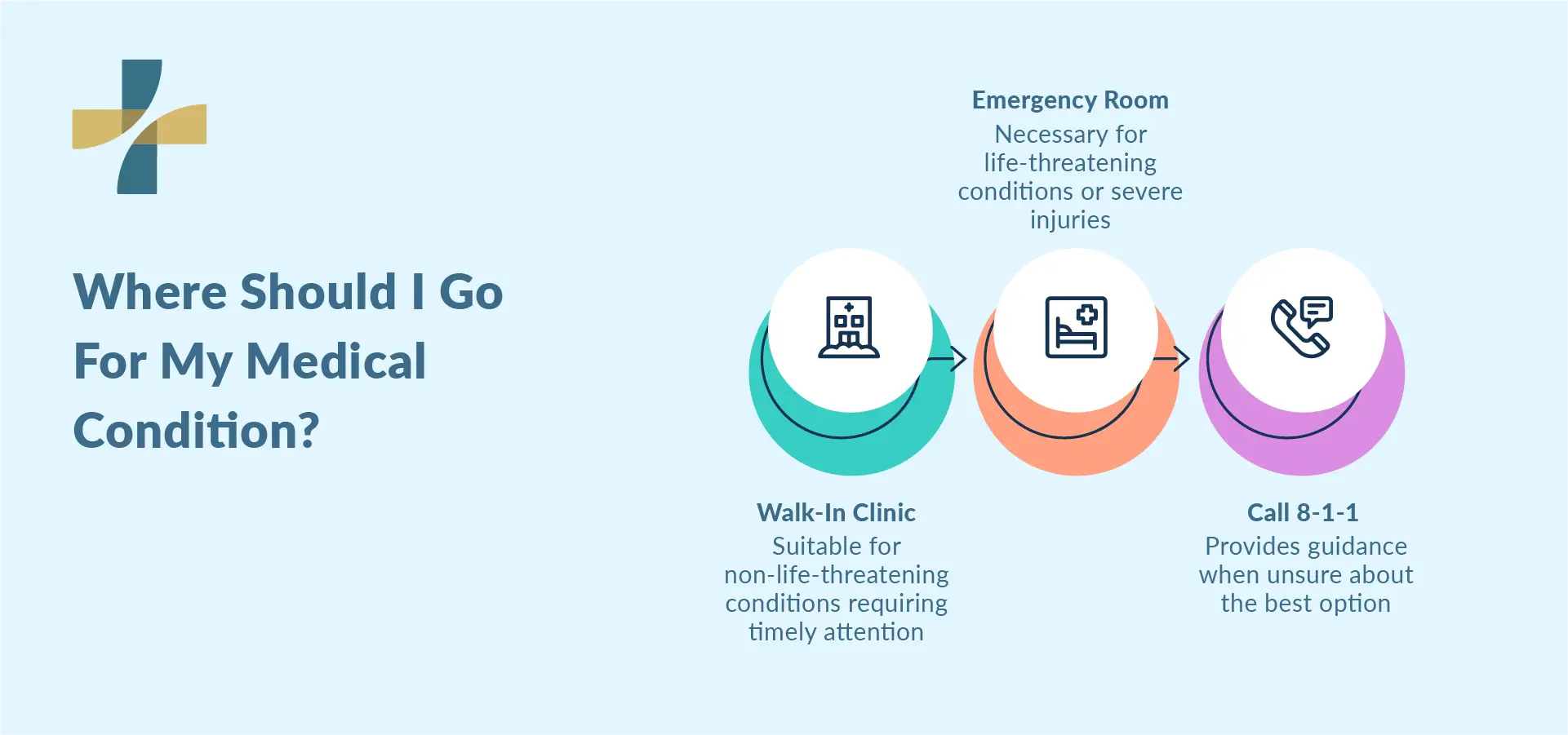
Walk-in clinics are designed for non-life-threatening conditions that still need timely medical attention. Emergency rooms are designed for conditions that may threaten life, breathing, neurological function, or immediate physical safety.
| Condition | Walk-In Clinic | Emergency Room |
| Cold or flu symptoms | Yes | No |
| Ear infection | Yes | No |
| UTI symptoms | Yes | No |
| Pink eye | Yes | No |
| Mild rash | Yes | No |
| Prescription renewal | Yes | No |
| Minor sprain | Yes | No |
| Mild burn | Yes | No |
| Chest pain | No | Yes |
| Difficulty breathing | No | Yes |
| Signs of stroke | No | Yes |
| Severe head injury | No | Yes |
| Severe allergic reaction | No | Yes |
| Major trauma | No | Yes |
Patients often feel uncertain when symptoms fall somewhere in the middle. If symptoms are becoming rapidly worse, involve breathing difficulties, neurological changes, fainting, severe pain, or major injury, emergency evaluation is usually the safer choice.
If you are not sure where to go, calling 8-1-1 can help clarify the safest next step.
Can You See a Walk-In Doctor Virtually in North Vancouver?
Yes. Virtual walk-in appointments may be appropriate for some non-emergency concerns, depending on your symptoms and whether a physical examination is required.
Virtual care may work well for:
- prescription renewals
- minor illness discussions
- lab result follow-ups
- referral discussions
- some mental health check-ins
- medication review appointments
Patients often choose virtual care when:
- they are unable to travel
- they are managing mild symptoms from home
- they have work or childcare responsibilities
- they want medical advice before deciding whether in-person care is necessary
Some conditions still require hands-on assessment and are usually better evaluated in person. This may include:
- injuries
- abdominal pain
- wound assessment
- possible fractures
- neurological symptoms
- ICBC assessments
- conditions requiring physical examination
A physician may recommend transitioning from virtual to in-person care if symptoms cannot be safely assessed remotely.
Patients looking for remote medical support can book a virtual care appointment when appropriate for their condition.
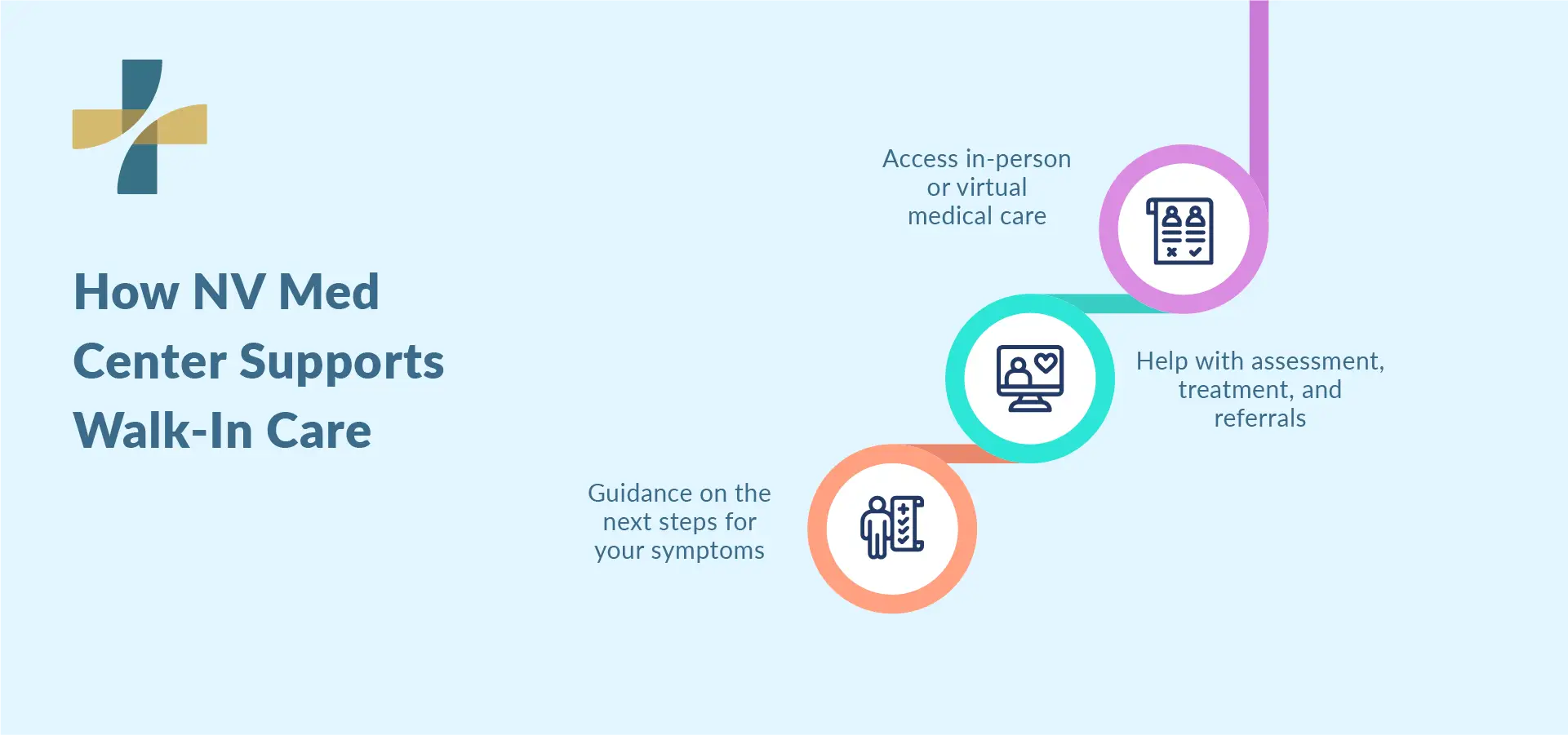
How NV Med Center Helps North Vancouver Residents Access Walk-In Care
Walk-in clinics help many North Vancouver residents access medical care sooner for non-emergency concerns that should not be ignored or delayed. This includes illness assessment, injury evaluation, preventive care, prescription review, mental health support, and follow-up coordination when additional care is needed.
For many patients, the biggest benefit is not only convenience. It is knowing where to start when symptoms appear, uncertainty builds, or access to ongoing primary care feels limited.
At NV Med Center, patients can access in-person or virtual care depending on the condition and appointment availability. Visits may include assessment, treatment recommendations, referrals, diagnostic planning, or guidance on whether additional medical care is needed.
If you are unsure whether your symptoms are appropriate for walk-in care, booking an evaluation can help clarify the next step and determine whether further testing, referral, urgent care, or ongoing follow-up may be recommended. Patients can book an appointment online for virtual or in-person care based on availability and medical needs.
Frequently Asked Questions About Walk-In Clinic Services in North Vancouver
What conditions can a walk-in clinic treat?
Walk-in clinics usually treat non-emergency conditions such as infections, minor injuries, prescription concerns, preventive care needs, and some mental health issues. Life-threatening symptoms should go to the ER.
Can a walk-in clinic help with infections like UTIs or strep throat?
Yes. Walk-in clinics frequently assess infections such as UTIs, strep throat, sinus infections, ear infections, and pink eye. Physicians can evaluate symptoms, recommend testing when needed, and prescribe treatment if clinically appropriate.
Can walk-in doctors prescribe medication?
Licensed physicians at walk-in clinics can prescribe medication when medically appropriate. This may include antibiotics, inhalers, allergy medication, topical treatment, or prescription renewals.
Can a walk-in clinic treat injuries?
Walk-in clinics can assess many mild to moderate injuries, including sprains, strains, cuts, mild burns, and suspected injuries requiring further evaluation. Physicians may order imaging or refer patients to urgent care or the emergency department when needed.
What is the difference between a walk-in clinic and the emergency room?
Walk-in clinics treat non-life-threatening conditions that still require timely medical attention. Emergency rooms are intended for severe symptoms such as chest pain, stroke symptoms, severe breathing difficulty, major trauma, or significant head injuries.
Are walk-in clinic visits covered by MSP in BC?
Medically necessary physician visits are generally covered under BC’s Medical Services Plan for eligible residents. Some services, including forms, uninsured procedures, travel vaccines, allied health services, or other non-insured services, may involve additional fees depending on the visit and treatment provided.