Feeling unusually tired, achy, or catching every cold that goes around? Low levels of calciferol (the active form of vitamin D) could be part of the picture. Understanding vitamin D benefits is one of the simplest ways to take control of your long-term health, since this single nutrient influences your bones, muscles, nerves, and immune system all at once.
Despite its importance, vitamin D deficiency is remarkably common. Millions of people spend most of their day indoors, live in areas with limited sun exposure, or simply don’t get enough vitamin D through diet alone. The good news is that identifying a deficiency risk early and correcting it is straightforward once you know what to look for.
Not sure where your levels stand? You can book a preventive health check or visit a Family Physician Care center to get full clarity on your essential nutrient levels.
What Does Vitamin D Do for Your Body?
Vitamin D, often called the “sunshine vitamin,” works more like a hormone than a typical nutrient. Your body naturally produces it when skin is exposed to sunlight, but you can also absorb it through fortified foods and supplements.
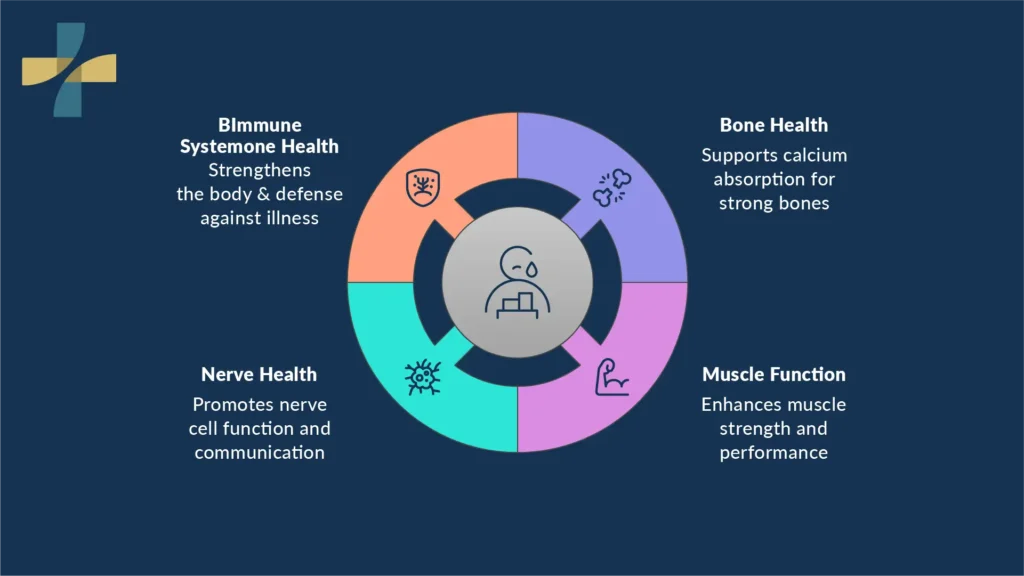
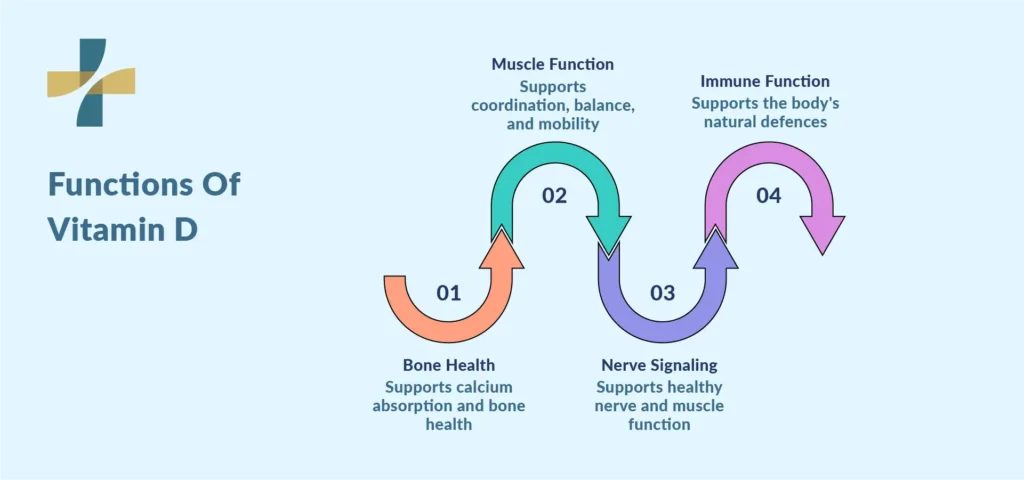
Bone health, calcium absorption, muscles, nerves, and immune function
The primary role of vitamin D for bone health lies in facilitating efficient calcium absorption. Without adequate vitamin D and calcium working together, your body cannot absorb these essential minerals properly, leading to weakened bone structure over time.
Beyond supporting bone health, maintaining optimal vitamin D levels powers several critical functions:
- Muscle function and coordination significantly lower fall risks and support mobility in older adults.
- Proper nerve signaling and neuromuscular balance throughout the body.
- Immune health and immune function aid your body’s defense mechanism against seasonal infections and regulate inflammation.
- Protection against long-term bone density loss reduces the likelihood of developing osteoporosis.
Example Case: A 55-year-old woman experiencing frequent muscle cramps and fatigue discovered through routine bloodwork that her vitamin D level was significantly below normal. After starting a supplement and increasing outdoor time, her energy and muscle symptoms improved within a few months.
- Low vitamin D is linked to reduced calcium absorption and weaker bones
- Adequate levels ensure robust immune function and faster recovery from seasonal illnesses.
Vitamin D Deficiency Symptoms and Risk Factors
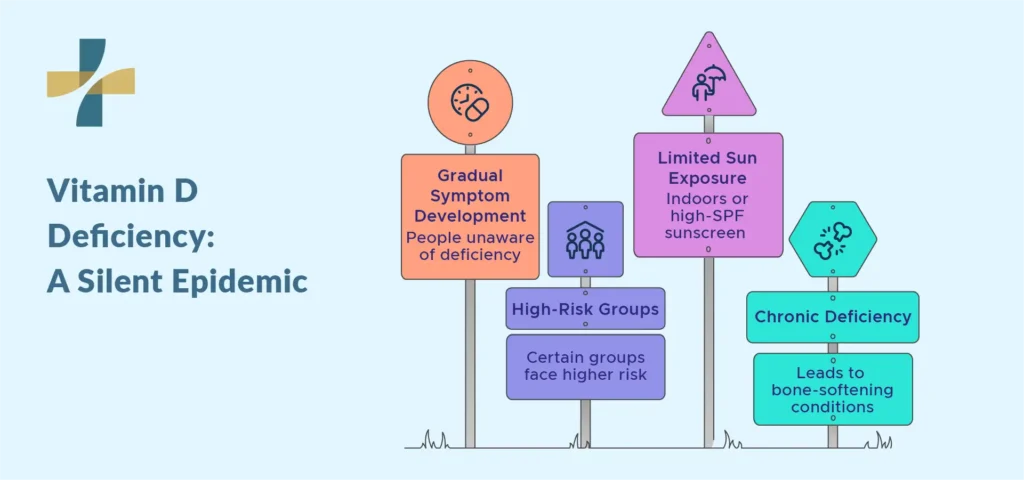
Because vitamin D deficiency symptoms often develop gradually, many people live with low levels for years without realizing it. Recognizing early signs like persistent fatigue, bone pain, muscle weakness, mood swings, and frequent colds is key to preventing long-term damage.
Certain groups face a significantly higher deficiency risk, including:
- Older adults, whose skin naturally becomes less efficient at producing vitamin D from sunlight.
- People with dark skin as higher melanin levels, require longer sun exposure to synthesize adequate amounts.
- Individuals living in northern climates, especially during the gloomy winter months.
- People with kidney disease, malabsorption issues, or obesity.
- Those who spend most of their days indoors or continuously wear high-SPF sunscreen.
Clinical Reference: Research published in the Journal of Clinical Endocrinology & Metabolism highlights that nearly 1 in 4 adults suffer from inadequate vitamin D levels, with rates spiking dramatically during winter.
If left untreated, severe chronic deficiency can lead to painful bone-softening conditions such as rickets in children or osteomalacia in adults.
Best Vitamin D Sources: Sunlight, Foods, and Supplements
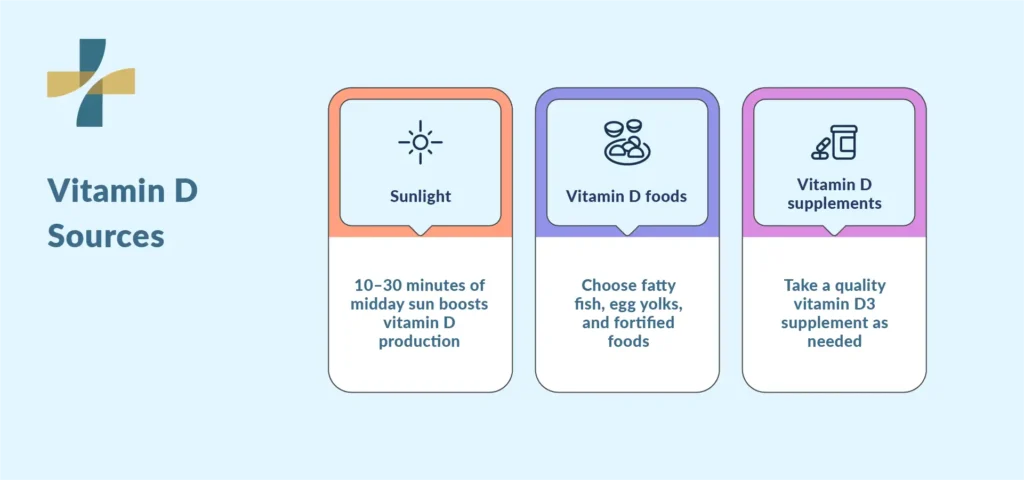
Maintaining optimal levels usually requires a multi-faceted approach. Here are the three main vitamin D sources:
Sunlight
Spending 10 to 30 minutes in direct midday sunlight a few times a week stimulates your skin to produce natural vitamin D. However, season, latitude, skin tone, and sunscreen use can impact how much your body actually generates.
Vitamin D foods
While natural food options are somewhat limited, incorporating vitamin D foods into your regular diet is an excellent habit. Top sources include:
- Fatty fish (salmon, mackerel, sardines)
- Cod liver oil and egg yolks
- Fortified foods such as milk, plant-based dairy alternatives, orange juice, and cereals
- UV-exposed mushrooms and beef liver
Vitamin D supplement options
When sun exposure and food intake aren’t enough, taking a high-quality vitamin D supplement (particularly Vitamin D3) is the most consistent method to maintain ideal blood concentrations without exceeding safe upper limit boundaries to avoid toxicity.
Example Case: A vegetarian office worker who rarely goes outdoors added a daily vitamin D3 supplement and fortified plant milk to her routine after her doctor flagged low levels, restoring her numbers to a healthy range within three months.
Should You Get a Vitamin D Blood Test?
The only accurate way to evaluate your overall nutrient standing is by getting a dedicated vitamin D blood test (the 25-hydroxyvitamin D test). Since symptoms like fatigue and muscle aches overlap with many other health conditions, guessing can lead to improper dosing or unaddressed underlying issues.
Routine laboratory screenings are often integrated into an annual physical exam blood tests routine, or included during women’s preventive health screening sessions. Checking your blood parameters allows your primary physician to recommend an exact dosage tailored to your unique baseline.
Can Too Much Vitamin D Be Harmful?
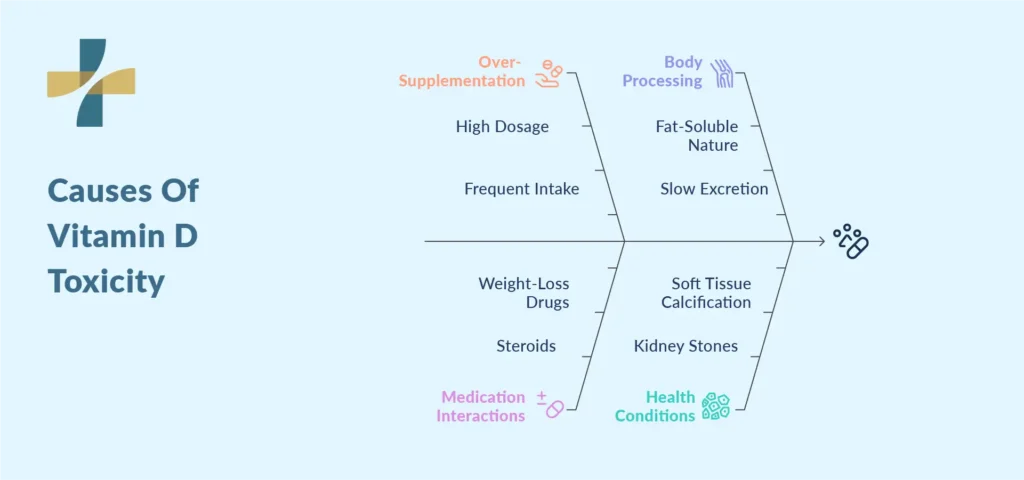
While maintaining adequate levels is vital, vitamin D is a fat-soluble vitamin, meaning excess amounts accumulate in the body rather than passing through urine. Extremely high intake from over-supplementation can push you past the safe upper limit, leading to toxicity (hypercalcemia).
High blood calcium levels can cause nausea, frequent urination, kidney stones, and soft tissue calcification. It is also important to note potential medication interactions, as certain steroids, weight-loss drugs, and cholesterol-lowering medications can alter how your body processes vitamin D. Always consult a professional before starting high-dose supplements.
How NV Med Center Can Help With Preventive Blood Tests
At NV Med Center, we believe proactive care is the foundation of long-term wellness. Knowing your exact nutrient numbers takes the guesswork out of supplementation and helps prevent chronic bone or immune issues before they start.
Whether you are looking to run targeted lab work or combine it with preventive blood tests for nutrients, our medical team provides clear results and personalized treatment plans. If you are experiencing symptoms or want to evaluate your general baseline, this blog and our experienced healthcare providers are here to guide you every step of the way.
FAQs
What are the main vitamin D benefits for health?
Vitamin D improves calcium absorption for strong bones and teeth, boosts immune function against infections, supports muscle performance, and helps regulate mood and energy levels.
What are common vitamin D deficiency symptoms?
Common vitamin D deficiency symptoms include chronic fatigue, frequent infections, bone and joint pain, muscle weakness, slow wound healing, and mood changes.
What foods contain vitamin D?
Top vitamin D foods include fatty fish (salmon, mackerel), cod liver oil, egg yolks, UV-exposed mushrooms, and fortified foods like milk, plant milks, and cereals.
Should I take a vitamin D supplement every day?
Yes, a daily vitamin D supplement (typically 600–2,000 IU) is often recommended, especially during winter or if you have limited sun exposure, to maintain healthy blood levels.
Can too much vitamin D be harmful?
Yes. Taking high doses over long periods can lead to toxicity (hypercalcemia), causing high blood calcium, kidney stones, nausea, and heart issues. Stay below the 4,000 IU/day upper limit unless prescribed.
When should I ask a doctor for a vitamin D blood test?
Ask for a vitamin D blood test if you experience unexplained fatigue or bone pain, fall into a high-risk group (older adults, dark skin, low sun exposure), or want to check your levels during an annual checkup.