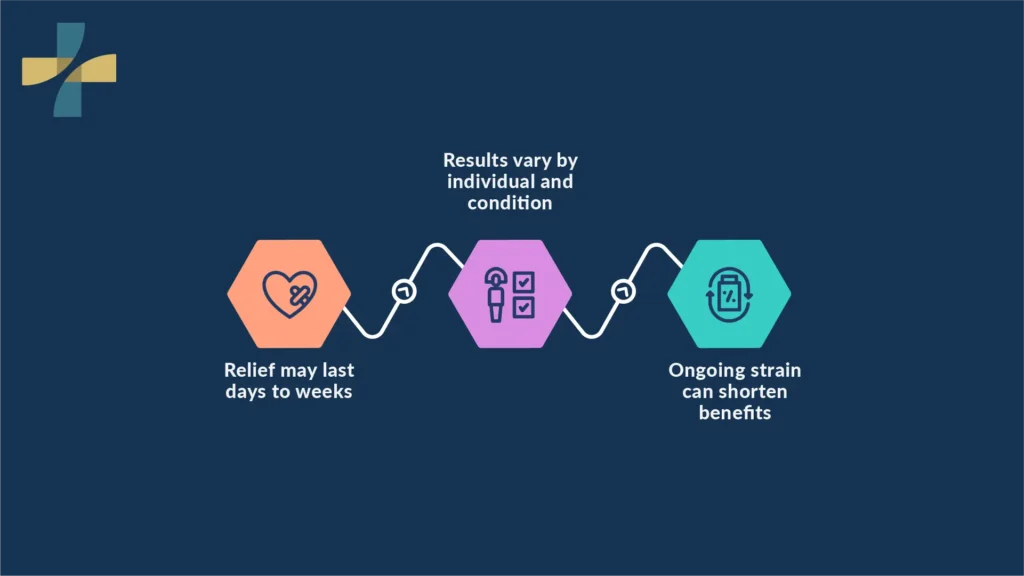
Trigger point injections typically provide pain relief lasting between 3–7 days and 2–4 weeks, with some patients experiencing longer-lasting improvement in certain cases.
The exact duration depends on how long the trigger points have been present, the underlying cause of the muscle pain, and whether contributing factors such as posture, repetitive strain, or muscle overuse continue after treatment.
Because trigger point injections are used to manage muscle tension rather than permanently remove its cause, results can vary significantly between individuals.
What Are Trigger Point Injections?
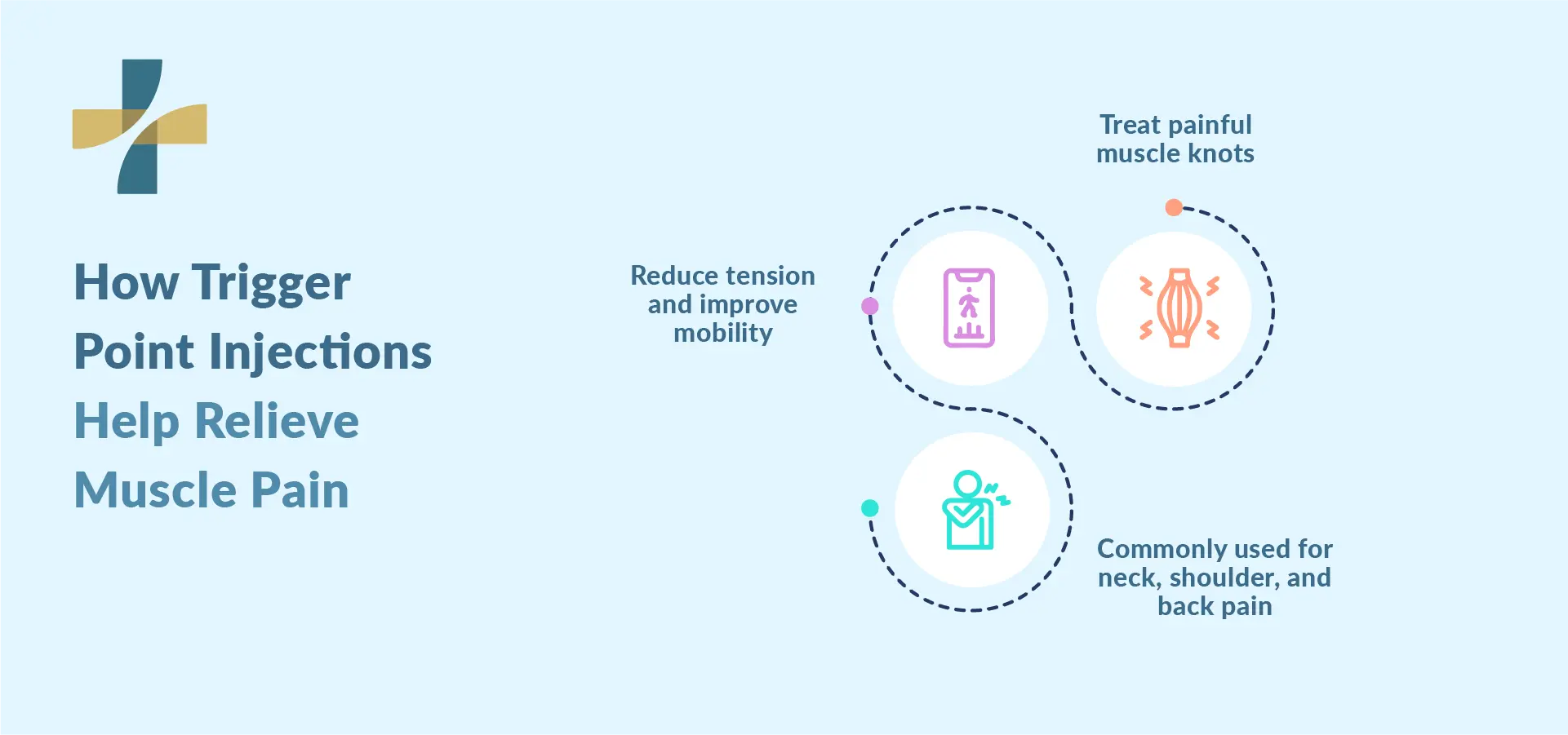
Trigger point injections are a treatment used to relieve painful muscle knots (trigger points).
A small needle is inserted into the affected muscle, and the injection may contain:
- Local anaesthetic (such as lidocaine)
- Saline solution
- Anti-inflammatory medication (in some cases)
The goal is to reduce muscle tightness, improve mobility, and interrupt pain signals from the affected area.
Trigger points commonly occur in the neck, shoulders, upper back, and lower back, often linked to repetitive strain, stress, or muscle overuse.
How Long Do Trigger Point Injections Last?
Relief duration varies widely between individuals.
Most patients experience:
- 1–3 days: soreness or numbness from the injection
- 3–7 days: early reduction in muscle tightness
- 1–4 weeks: noticeable pain relief in many cases
- Several weeks to months: longer relief in some patients
The key point is that trigger point injections address muscle tension, but results depend on whether the underlying cause continues after treatment.
This timeline is intended as a general guide. Actual results may vary depending on the medication used, the severity of the condition, and individual response to treatment.
Muscle Injection Relief Time (What Patients Actually Feel)
The muscle injection relief time has two phases:
1. Immediate Phase (0–48 hours)
- Local anaesthetic may temporarily reduce pain
- Mild soreness is common
- This does not reflect full treatment results
2. Recovery Phase (3 days–several weeks)
- Gradual reduction in muscle tightness
- Improved movement and flexibility
- More stable pain relief develops over time
Why Trigger Point Injection Results Vary
The same treatment can produce different outcomes because muscle pain has multiple causes.
Common factors include:
- Duration of the trigger point
- Whether pain is acute or chronic
- Posture and movement patterns
- Activity levels after treatment
- Stress and muscle tension load
Long-standing muscle knots generally take longer to respond than recent injuries.
If symptoms persist, worsen, or continue to return despite treatment, it may be helpful to understand when to see a pain specialist to determine whether further diagnostic evaluation or alternative therapies are needed.
What Affects Pain Relief Duration?
Several clinical and lifestyle factors influence how long trigger point injection results last. These factors determine how the muscle responds after treatment and whether tension is likely to return.
Underlying cause of pain
If the trigger point is caused by ongoing issues such as repetitive strain, poor posture, or workplace ergonomics, symptoms may gradually return after treatment unless the root cause is addressed.
Severity and duration of the trigger point
Long-standing or chronic muscle knots often involve deeper tissue tightness and altered movement patterns, which can make them slower to respond and more likely to recur.
Activity level after treatment
Returning to high-strain or repetitive activities too soon can place stress on the treated muscle and reduce the overall duration of relief.
Supportive care and rehabilitation
Physiotherapy, stretching, and strengthening exercises may help improve muscle balance and reduce the likelihood of trigger points returning, which can contribute to longer-lasting results.
Do Trigger Point Injections Work Immediately?
Some patients feel immediate relief due to the local anaesthetic.
However:
- This effect is temporary
- True improvement usually develops over days
- Mild soreness for 24–48 hours is normal
Early relief does not always indicate a final treatment outcome.
Patients who are considering treatment for the first time may also find it helpful to understand what to expect during their first trigger point injection, including how the procedure is performed and what recovery typically feels like.
How Often Can Trigger Point Injections Be Repeated?
There is no fixed schedule for repeat injections.
A healthcare provider may consider repeating treatment based on:
- Symptom return
- Functional improvement
- Response to the first injection
- Overall treatment goals
Some patients require only one session, while others may need a short series combined with rehabilitation.
Are Trigger Point Injections Permanent?
Trigger point injections are not usually permanent.
They treat muscle tightness but not always the underlying cause, such as:
- Poor posture
- Repetitive movement
- Chronic muscle overload
Long-term results are more likely when injections are combined with rehabilitation and movement correction.
Effectiveness of Trigger Point Injections
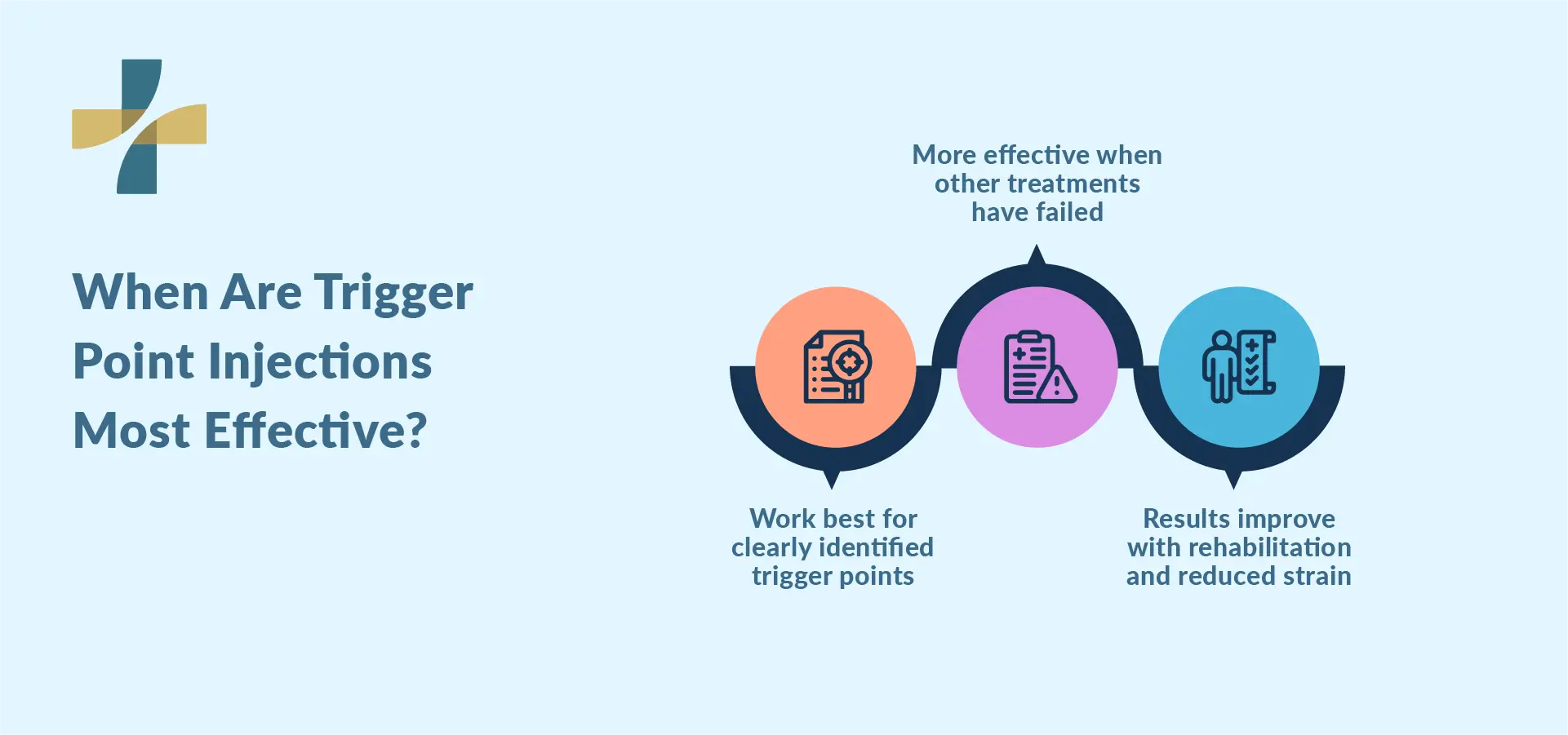
Trigger point injections are generally most effective when:
- Trigger points are clearly identified
- Pain is localised to specific muscles
- Conservative treatments have not worked
They are less effective when:
- Muscle strain continues after treatment
- No rehabilitation plan is in place
Side Effects and Safety
Trigger point injections are generally considered safe when performed by a qualified healthcare provider. Most side effects are mild, temporary, and related to the needle entering the muscle tissue.
Common and expected side effects
These usually resolve within 24 to 48 hours and may include:
- Soreness at the injection site
- Mild bruising
- Temporary muscle tenderness
- Slight swelling or discomfort when moving the area
These effects are similar to what some patients experience after deep tissue massage or muscle strain.
Less common risks
In rare cases, some patients may experience:
- Local infection at the injection site
- Increased or prolonged pain
- Allergic reaction to the medication used in the injection
These complications are uncommon but may require medical evaluation if they occur.
When to seek medical attention
Patients should contact a healthcare provider if they experience:
- Severe or worsening pain after treatment
- Fever or chills
- Increasing redness or swelling
- Discharge or signs of infection at the injection site
Prompt assessment can help rule out complications and ensure proper recovery.
Who Benefits Most?
Trigger point injections are most appropriate for patients with:
- Confirmed myofascial trigger points
- Persistent muscle pain affecting movement
- Symptoms not improving with conservative care
- Pain interfering with daily activity or sleep
They are used when muscle dysfunction is clearly contributing to symptoms.
For patients experiencing ongoing or complex muscle pain that does not improve with conservative care, further assessment at a pain management clinic may help identify more advanced treatment options and structured pain control strategies.
Treatment Approach in Practice
Trigger point injections are usually part of a broader care plan.
This may include:
- Physiotherapy
- Stretching and strengthening
- Ergonomic adjustments
- Movement correction strategies
This combined approach helps reduce the recurrence of muscle knots.
Clinical Evidence and Guidance
Clinical guidance from StatPearls notes that trigger point injections are an established treatment for symptomatic myofascial trigger points and are most effective when used as part of a broader treatment plan that addresses the underlying cause of muscle pain.
The review also explains that combining injections with rehabilitation strategies such as physiotherapy, stretching, and movement correction may improve overall outcomes rather than relying on injections alone.
Overall, available evidence supports trigger point injections as a symptom-relief option, while longer-term improvement depends on addressing the underlying cause of muscle tension.
NV Med Center Approach
At NV Med Center, trigger point injections are used as part of a clinical assessment for patients experiencing persistent muscle pain.
During an initial consultation, a healthcare provider typically:
- Reviews symptoms and pain patterns
- Assesses muscle tightness and movement limitations
- Identifies possible contributing factors, such as posture or repetitive strain
Based on this assessment, a treatment plan may include trigger point injections alongside other supportive care options if needed.
The goal is to reduce muscle pain while also identifying factors that may contribute to recurring trigger points, so patients can make informed decisions about ongoing management.
Conclusion
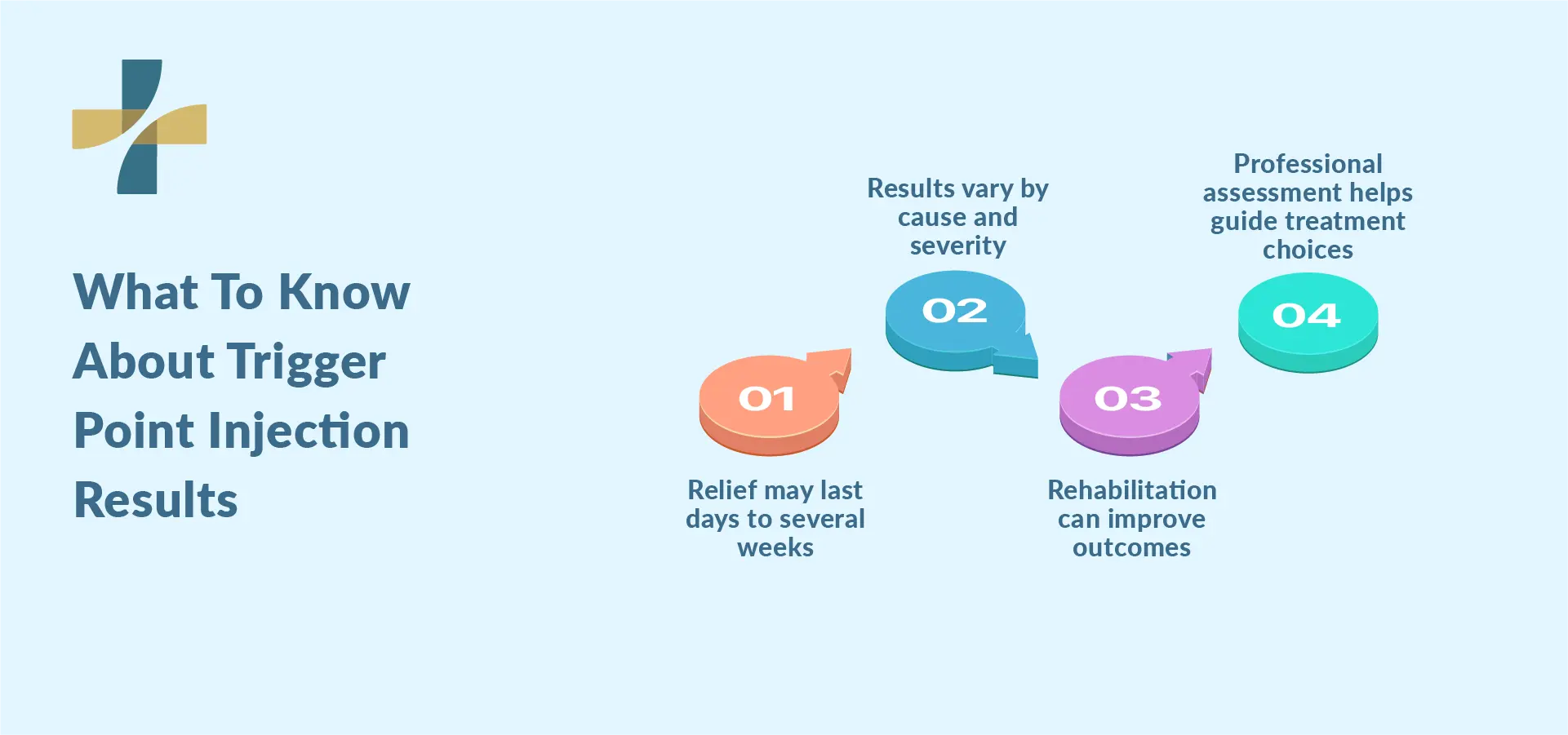
Trigger point injections typically provide pain relief lasting 3–7 days up to 2–4 weeks, with some patients experiencing longer improvement depending on the severity and underlying cause. Results are influenced by the severity of the muscle knot, underlying causes, and whether rehabilitation is included in the treatment plan.
A healthcare provider can help determine whether trigger point injections are appropriate and how they fit into a longer-term pain management strategy. If ongoing muscle pain, tightness, or restricted movement is impacting your quality of life, booking a professional assessment can help determine whether trigger point injections are the right treatment option for you.
FAQs
How long does soreness last after trigger point injections?
Mild soreness after trigger point injections typically lasts 24 to 48 hours. It is a normal response to the needle and muscle stimulation and usually improves on its own without treatment. Gentle movement and light stretching may help reduce discomfort.
Can I exercise after trigger point injections?
Light movement is usually encouraged after treatment, but intense exercise should generally be avoided for 24 to 48 hours. High-strain activity too soon may irritate the treated muscle and temporarily reduce the effectiveness of the injection.
What should I do if trigger point injections don’t work?
If there is little or no improvement, a healthcare provider may reassess the diagnosis, adjust the treatment approach, or recommend additional therapies such as physiotherapy or other pain management options. Response can vary depending on how long the trigger point has been present.
Why do trigger point injections sometimes stop working?
Relief may reduce over time if the underlying cause of muscle tension continues, such as poor posture, repetitive strain, or chronic muscle overuse. In these cases, injections may need to be combined with rehabilitation strategies to improve long-term results.
Is it normal for pain to return after treatment?
Yes. Pain can return if the underlying trigger for muscle tension is still present. Trigger point injections treat the affected muscle but do not permanently remove contributing factors like movement patterns or daily strain.