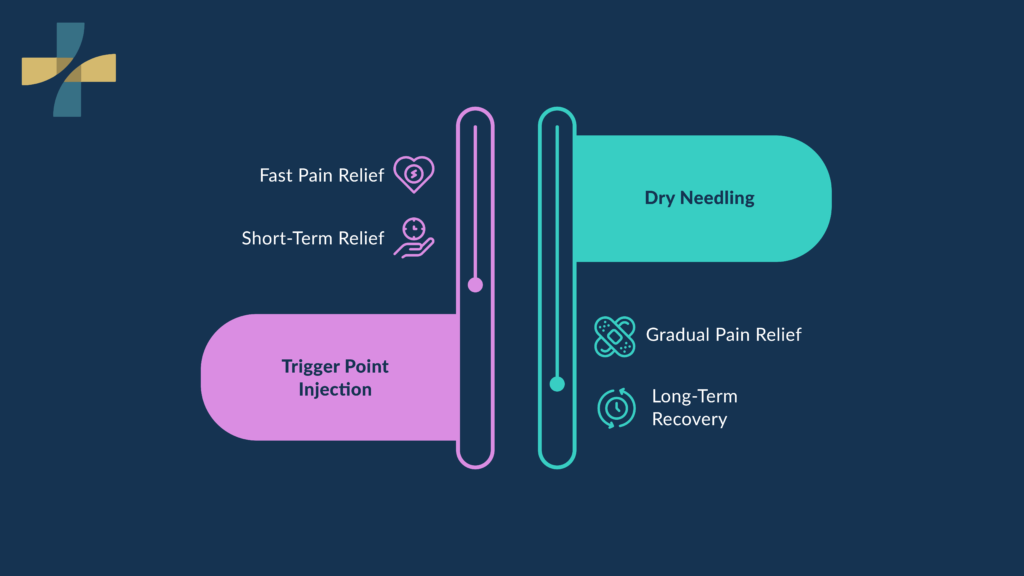
Trigger point injection vs dry needling is one of the most searched comparisons for muscle pain relief today. The right choice depends on how severe your pain is, how long you have had it, and how your body responds to treatment. Some options work fast. Others focus on long-term recovery.
In Vancouver, more patients are choosing minimally invasive procedure options instead of surgery. This shift is seen in sports medicine, rehab clinics, and pain centres. Athletes like LeBron James have helped bring attention to recovery therapies like physiotherapy and dry needling. This guide explains how each option works and how to choose the best pain relief option for your condition.
What Is The Difference Between Trigger Point Injection Vs Dry Needling?
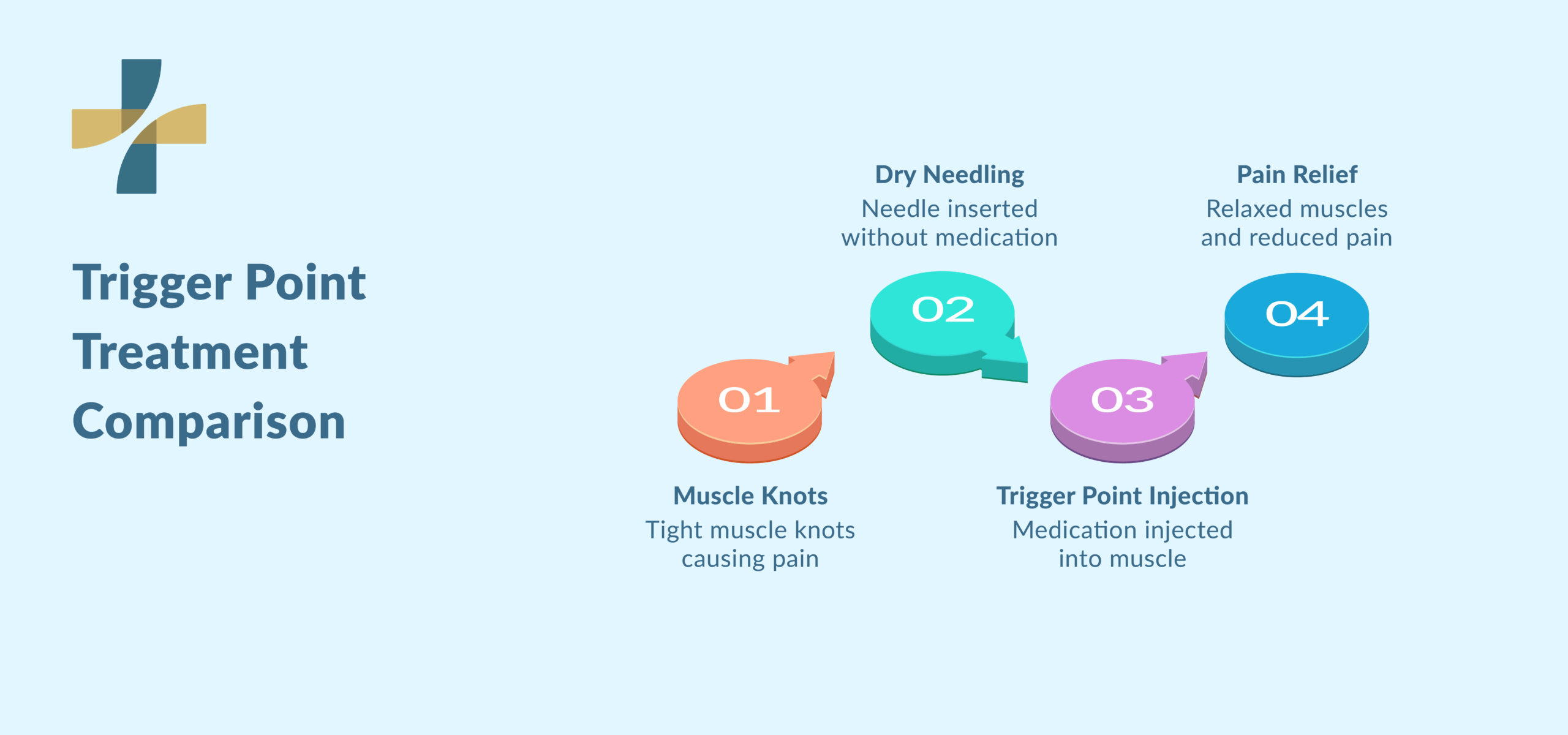
Trigger point injection vs dry needling differs in what is delivered into the muscle and how fast pain relief occurs. Dry needling uses a thin needle without medication. Trigger point injections use anaesthetic or anti-inflammatory medication to relax muscle knots and reduce pain more quickly.
Both treatments target myofascial trigger points. These are tight muscle knots that cause local pain and referred pain. They are common in the neck, shoulders, and lower back.
How each treatment works
- Dry needling
- Uses a thin needle to stimulate the muscle
- Causes a twitch response
- Helps release tension over time
- Trigger point injection
- Injects medication into the muscle
- Reduces inflammation and pain signals
- Relaxes the muscle faster
Which works faster
| Treatment | Speed of Relief | Mechanism |
| Trigger Point Injection | Fast (24 to 72 hours) | Chemical + mechanical |
| Dry Needling | Gradual | Mechanical |
A common situation is a patient with shoulder pain who cannot lift their arm without sharp discomfort. They may have already tried physiotherapy exercises but stopped because the pain was too intense. In this case, a trigger point injection can reduce the pain enough to allow proper movement and make therapy effective again.
When Should You Choose Trigger Point Injection Over Other Treatments?
The best time to choose trigger point injection is when pain does not improve with conservative therapy such as stretching, massage, or medication. It is often used when muscle pain limits movement or blocks progress in rehabilitation.
Trigger point injections are commonly used in interventional pain management for fast symptom control.
Signs you may need a trigger point injection
- Severe muscle spasm
- Pain that limits movement
- Pain not improving with conservative therapy
- Difficulty participating in physiotherapy
Common conditions treated
- Myofascial pain syndrome
- Tension headaches
- TMJ-related muscle pain
For example, someone with lower back pain from poor sitting posture may feel relief after an injection, but the pain often returns if the underlying issue is not corrected. Physiotherapy helps strengthen muscles and improve posture, so the same problem does not keep coming back.
Is Dry Needling Or Physiotherapy Better For Long-Term Recovery?
Dry needling and physiotherapy are better for long-term recovery because they address the root cause of pain. They improve movement, posture, and muscle strength, which helps lower the recurrence rate of chronic pain conditions.
These treatments are often used together.
Role of physiotherapy
- Improves posture
- Builds muscle strength
- Corrects movement patterns
Dry needling vs injection therapy
- Dry needling supports muscle recovery
- Injection therapy provides faster relief
An example is an athlete with recurring shoulder pain who benefits more from physiotherapy and dry needling than repeated injections alone.
How Does Radiofrequency Ablation vs Trigger Point Injection Compare?
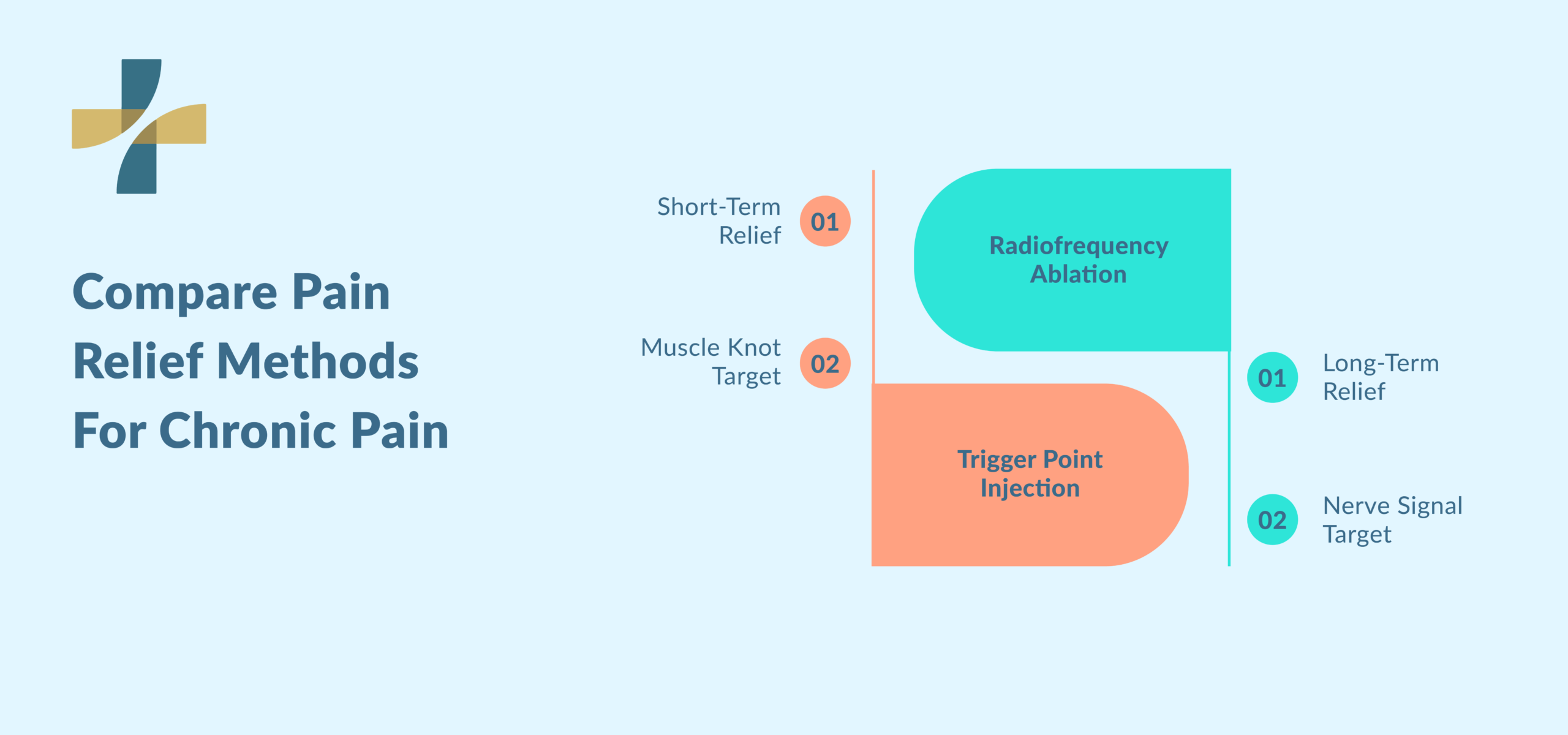
Radiofrequency ablation vs trigger point injection differs in depth and duration of pain relief. Trigger point injections treat muscle knots directly and provide short-term relief. Radiofrequency ablation targets nerve signals and offers longer-lasting results for chronic pain.
RFA is used when other treatments do not provide enough relief.
Key differences
| Treatment | Target | Duration | Use Case |
| Trigger Point Injection | Muscle | Short-term | Muscle knots |
| RFA | Nerves | Long-term | Chronic pain |
When RFA is considered
- Chronic back or neck pain
- Failed response to injections
- Long-standing nerve pain
A patient with long-term back pain may go through several steps. They may begin with physiotherapy, then try injections for faster relief. If pain keeps returning every few weeks, RFA may be considered to provide longer-lasting control.
What Are The Best Trigger Point Injection Alternatives In Vancouver?
Trigger point injection alternatives include dry needling, physiotherapy, massage therapy, acupuncture, and RFA. The best option depends on the cause of pain, its severity, and how your body responds to treatment.
Many patients use a combination of treatments.
Conservative therapy options
- Physiotherapy
- Massage therapy
- Stretching programs
Interventional options
- Trigger point injection
- Radiofrequency ablation
- Botox injections
TPI vs. Botox for muscle pain
- Botox lasts longer
- Trigger point injection works faster
- Botox is used for resistant cases
A systematic review published on PubMed found that botulinum toxin may reduce muscle-related pain in some patients, though results vary depending on the condition and treatment approach.
This is why Botox is not typically the first option and is often considered only after other treatments have not provided enough relief.
Some patients prefer to start without injections. For example, a person with mild neck stiffness after exercise may improve with physiotherapy and stretching alone. Others with more severe pain may not get enough relief from conservative therapy and may need injection therapy earlier.
Which Treatment Works Best For Chronic Muscle Pain And Spasms?
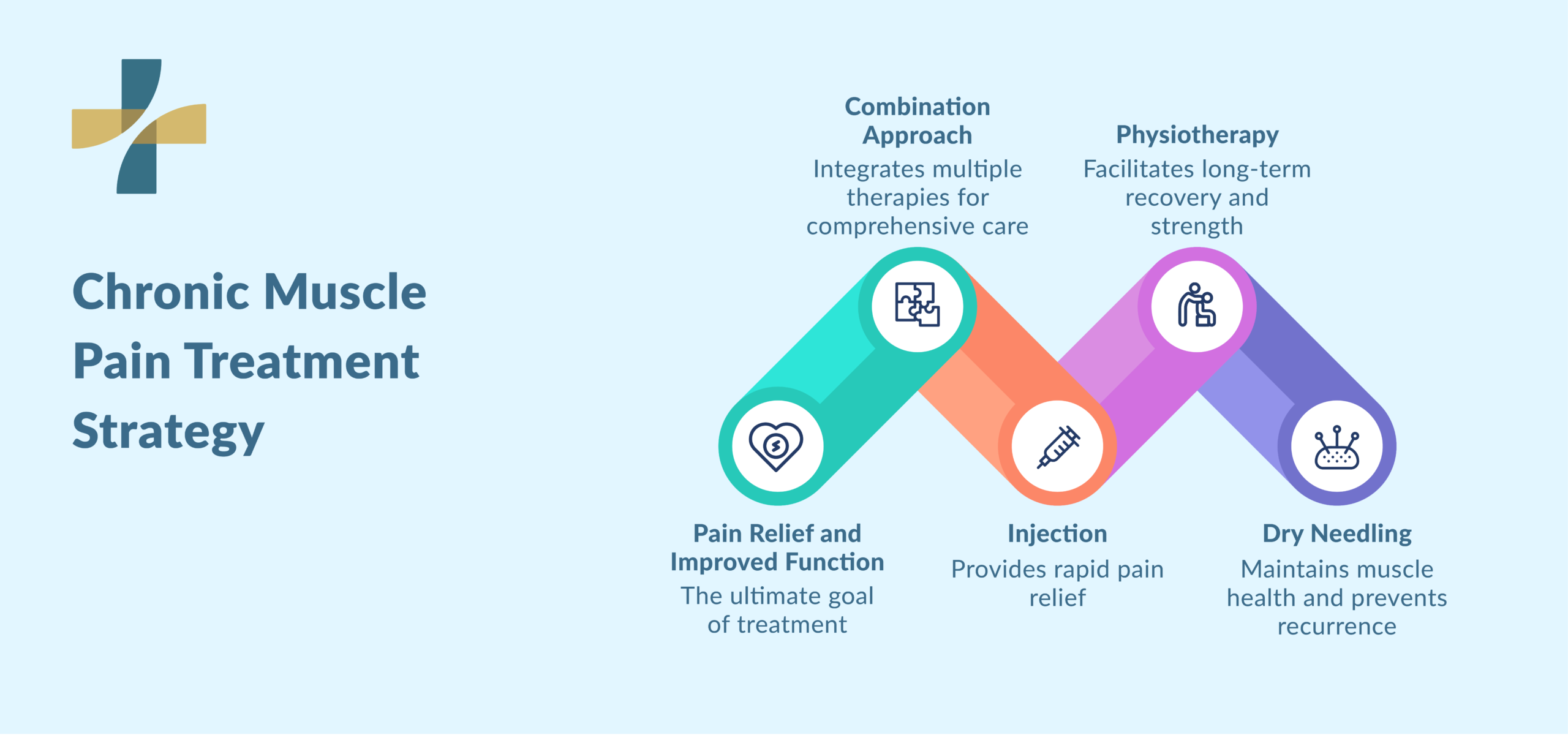
The best pain relief option for chronic muscle pain depends on the cause of the condition. Most patients benefit from a personalized pain treatment plan that combines different therapies to reduce pain and improve function.
A single treatment rarely solves long-term issues.
Combination approach
- Injection for fast relief
- Physiotherapy for long-term recovery
- Dry needling for muscle maintenance
Why combination work
- Targets both symptoms and cause
- Reduces recurrence rate
- Improves function
Supporting data
Research from the National Institutes of Health shows that up to 85 percent of people experience myofascial pain at some point. This highlights the need for structured treatment plans rather than one-time fixes.
What Should You Expect During A Pain Management Consultation In Vancouver?
A pain management consultation includes a full review of your symptoms, movement, and medical history. The provider identifies myofascial trigger points and recommends a personalized pain treatment plan based on your condition.
This is the first step before choosing any treatment.
What happens during assessment
- Physical exam
- Trigger point identification
- Movement testing
Questions to ask
- What is causing my pain
- Which treatment is best for me
- How long will recovery take
Patients can book a pain management consultation in Vancouver or request a TPI assessment from NV Med to begin treatment planning.
How Do You Choose The Best Pain Relief Option For Your Condition?
The best way to choose between trigger point injection vs dry needling and other options is to match the treatment to your pain type, severity, and goals. Acute pain often needs fast relief, while chronic pain needs long-term solutions.
A structured approach helps avoid unnecessary treatments.
Decision framework
- Acute pain → injection therapy
- Chronic pain → physiotherapy and rehab
- Severe cases → interventional pain management
Treatment comparison table
| Treatment | Best For | Speed | Duration |
| TPI | Severe muscle knots | Fast | Short-term |
| Dry Needling | Muscle dysfunction | Medium | Medium |
| Physiotherapy | Root cause | Slow | Long-term |
| RFA | Chronic nerve pain | Slow | Long-term |
What Are The Risks, Side Effects, And Recovery Times For Each Option?
Most treatments for myofascial trigger points are safe and have a low risk. Common side effects include mild soreness, bruising, or temporary discomfort. Recovery time varies depending on the treatment.
Understanding recovery helps set clear expectations.
Recovery overview
- Trigger point injection
- Soreness for 24 to 72 hours
- Avoid heavy activity briefly
- Dry needling
- Mild soreness
- Quick return to normal activity
- RFA
- Longer recovery
- Gradual improvement
When to seek medical advice
- Fever or swelling
- Severe pain increase
- Signs of infection
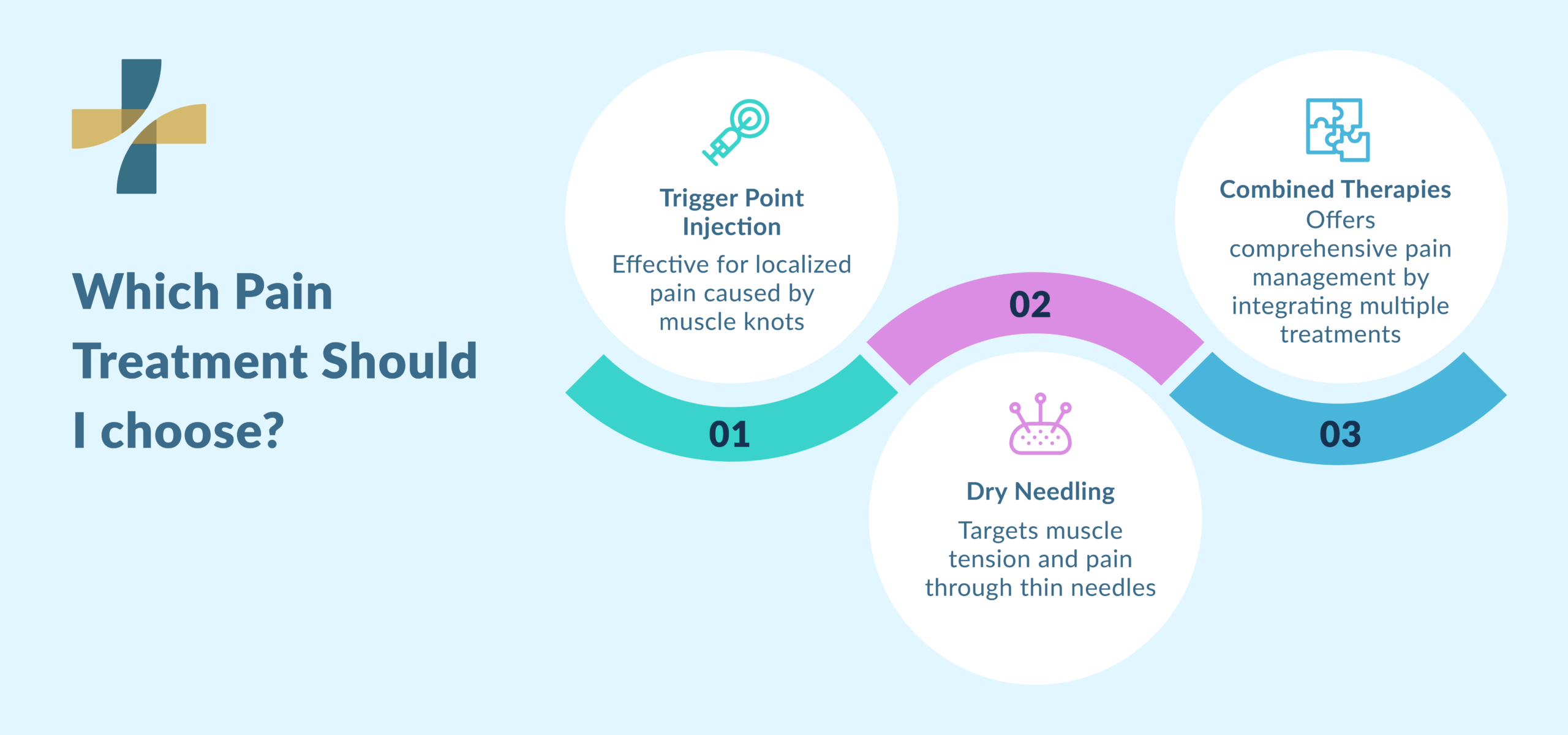
How NV Med Center Helps You Choose The Right Pain Treatment
Trigger point injection vs dry needling is not about choosing one treatment for all cases. The best results come from matching the treatment to your condition and combining therapies when needed. A structured plan helps reduce pain, improve movement, and lower recurrence.
At NV Med Center, care is based on a personalized pain treatment plan that fits your needs and goals. The team focuses on accurate assessment, clear guidance, and evidence-based treatment options. Book your appointment today to start your recovery.
FAQs
Is trigger point injection better than dry needling?
Trigger point injection is better for fast pain relief. Dry needling is better for gradual improvement and muscle recovery. The best option depends on your condition and treatment goals.
How long does a trigger point injection last?
Most patients feel relief within 24 to 72 hours. Pain relief usually lasts about one month, though results vary. Some patients need repeat treatments for ongoing benefit.
Can you combine physiotherapy with injections?
Yes, combining physiotherapy with injections is common. Injections reduce pain so you can move better, while physiotherapy improves strength and function.
What is the fastest pain relief option?
Trigger point injections are one of the fastest options. They target muscle knots directly and reduce pain quickly, often within a few days.
Is radiofrequency ablation better than injections?
Radiofrequency ablation is used for chronic pain when injections do not last long enough. It provides longer relief but is usually not the first treatment option.