Last updated: June 25, 2026
Content developed with input from NV Med Center’s team to reflect clinic-specific information about dermal filler consultations, treatment planning, and patient guidance.
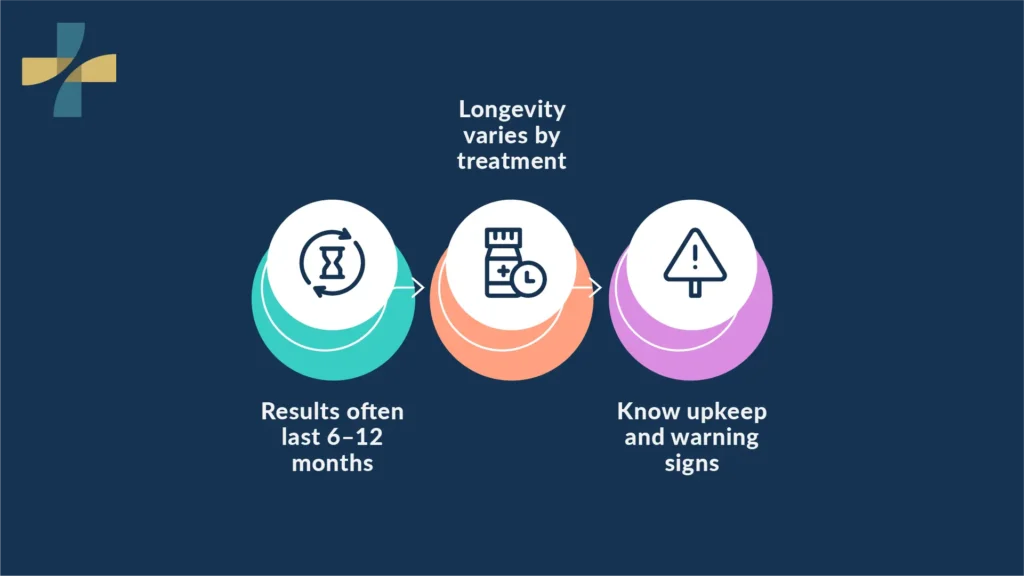
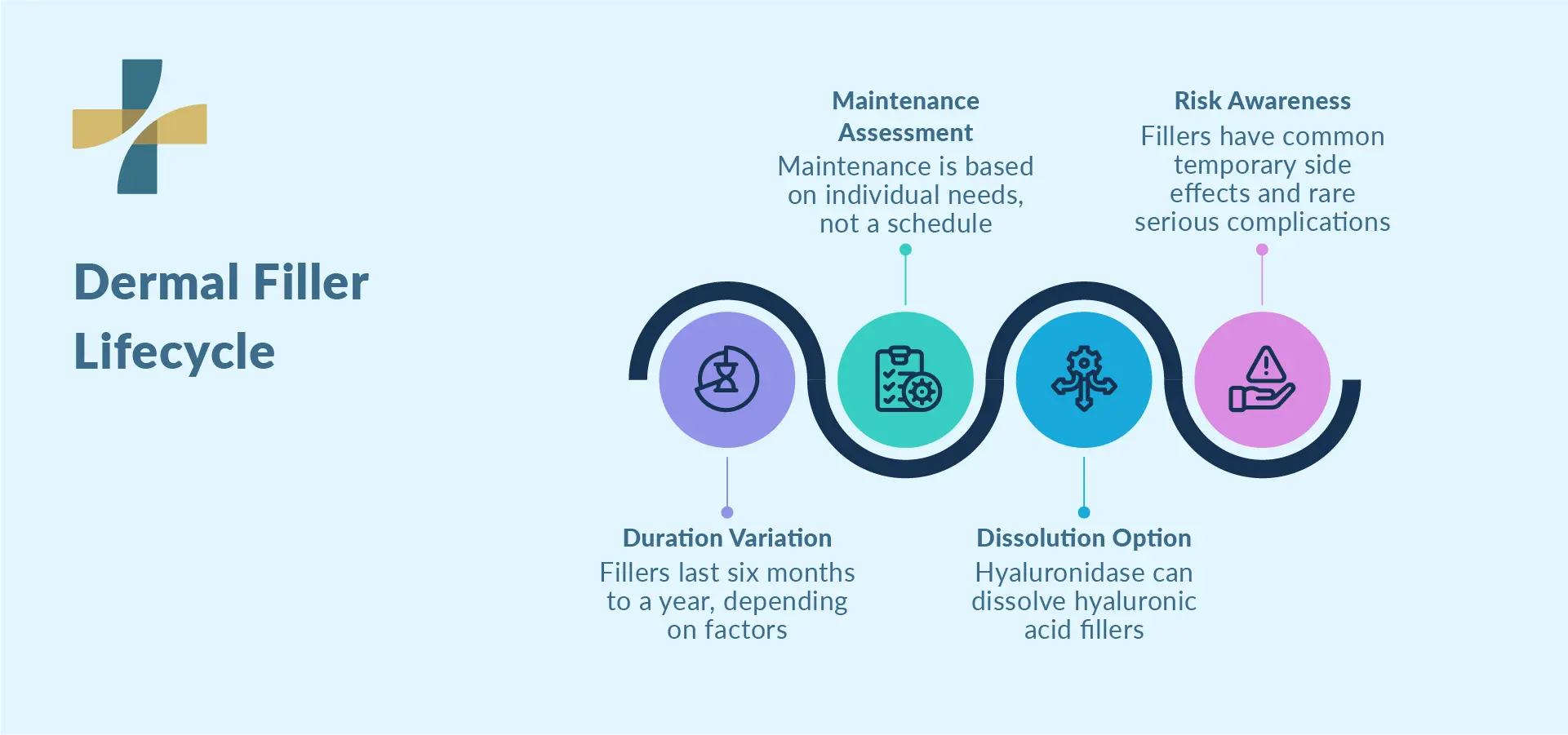
If you are wondering how long dermal fillers last, many hyaluronic acid filler results remain visible for about six months to a year. Some products, treatment areas, and patients may experience results that last longer.
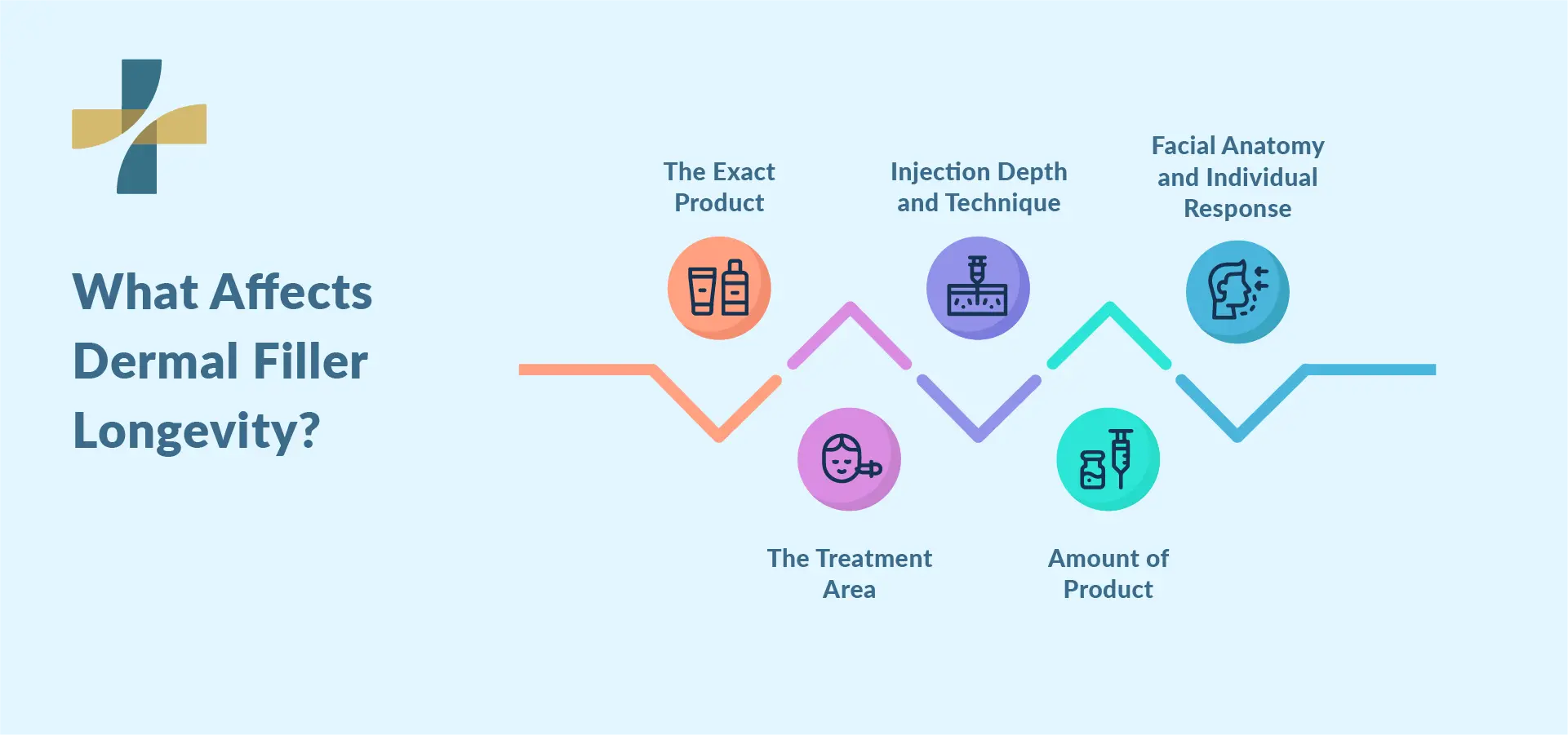
Dermal filler duration depends on the exact product, treatment area, amount used, injection depth, technique, facial anatomy, and individual response. The result usually fades gradually rather than disappearing on one specific date.
For patients in North Vancouver, understanding the expected timeline, possible side effects, maintenance needs, and urgent warning signs can support a safer and more informed treatment decision.
Medical disclaimer: This article provides general educational information and does not replace medical advice. A qualified healthcare professional must assess your medical history, facial anatomy, treatment suitability, and individual risks before recommending dermal filler treatment.
Quick Summary
| Question | Direct answer |
| How long do dermal fillers last? | Many hyaluronic acid fillers last about six months to a year, although some may remain visible longer. |
| Do all fillers last the same amount of time? | No. Duration varies by product, treatment area, amount, technique, anatomy, and individual response. |
| Do lip fillers last less than cheek fillers? | They often do, but the exact timeline depends on the product and patient. |
| When should fillers be maintained? | Maintenance should follow an individual reassessment rather than a fixed schedule. |
| Can fillers be dissolved? | Hyaluronidase may be used to dissolve hyaluronic acid fillers only. |
| Are dermal fillers risk-free? | No. Temporary side effects are common, and rare but serious complications can occur. |
How Long Do Hyaluronic Acid Dermal Fillers Last?
Hyaluronic acid fillers often remain visible for several months. Some people notice gradual fading around six months, while others continue to see results for a year or longer.
These estimates should not be treated as guaranteed timelines. Current Health Canada guidance on cosmetic injections states that hyaluronic acid filler effects may last from six months to a year or more.
The American Academy of Dermatology’s filler guidance provides a general estimate of four to twelve months for hyaluronic acid gel. However, the expected duration should always be discussed using the exact product recommended for the patient and treatment area.
Estimated Results by Treatment Area
| Treatment area | General expectation |
| Lips | Results often remain visible for several months. Lip movement and the use of softer formulations may contribute to a shorter result. |
| Cheeks | Results may remain visible longer than lip filler, depending on the product, injection depth, anatomy, and treatment goal. |
| Chin and jawline | Duration varies according to product selection, amount used, placement, facial structure, and level of correction. |
| Nasolabial folds | Results depend on facial movement, treatment depth, product formulation, and individual response. |
No general duration estimate is provided for under-eye filler. This area requires careful assessment because anatomy, skin quality, swelling, previous treatment, and product placement can affect both suitability and risk. Under-eye filler is not appropriate for every patient.
What Are Dermal Fillers?
Dermal fillers are injectable treatments used to restore selected areas of volume, support facial contours, and soften certain lines and folds.
Many temporary facial fillers are made with hyaluronic acid, a substance naturally found in the body that attracts and retains moisture. Different formulations are designed with varying levels of firmness and flexibility to suit particular facial areas.
Dermal fillers may be considered for goals such as:
- Adding or shaping lip volume
- Supporting cheek contours
- Improving chin or jawline definition
- Restoring selected areas of facial volume
- Softening certain facial folds
- Improving facial balance
A filler that is suitable for the cheeks may not be suitable for the lips or another treatment area. The clinician should select the product based on the patient’s anatomy, treatment goals, medical history, and the approved use of the product.
Patients can confirm whether the proposed product has an active Canadian medical device licence through Health Canada’s Medical Devices Active Licence Listing.
Hyaluronic Acid Fillers and Collagen-Stimulating Treatments Are Different
Hyaluronic acid fillers and collagen-stimulating injectable treatments should not be given the same results timeline.
The hyaluronic acid fillers place a gel beneath the skin to add volume or support. A visible change may appear immediately, although swelling can affect the early appearance.
Collagen-stimulating treatments work more gradually. Their visible effects may develop over several weeks or months as the tissues respond to treatment. They may also require a planned series of appointments rather than one immediate correction.
The two categories also differ in reversibility. Hyaluronidase may be used to break down hyaluronic acid filler in selected situations, but it does not dissolve collagen-stimulating products.
Because these treatments work differently, patients should ask which category is being recommended, how the result is expected to develop, and what options are available if they are unhappy with the outcome.
What Affects Dermal Filler Longevity?
Several connected factors influence how long dermal filler results remain visible. Even two patients treated in the same area may experience different timelines.
The Exact Product
Hyaluronic acid fillers vary in firmness, flexibility, concentration, and intended placement. A softer product designed for a highly mobile area may behave differently from a firmer formulation used for structural support.
The Treatment Area
The lips move frequently during speaking, eating, drinking, and facial expressions. The cheeks, chin, and jawline have different movement patterns and may require another formulation, placement depth, or treatment approach.
Movement may influence how long the result remains noticeable, but it is only one part of the treatment timeline.
Injection Depth and Technique
The filler must be placed at a depth and location suited to the patient’s anatomy and treatment goal. Injector knowledge of facial anatomy and blood vessel locations also plays an important role in safety.
Amount of Product
Using more filler does not automatically create a longer-lasting or better result. The amount should be selected according to the treatment area, existing volume, facial structure, and desired degree of correction.
Facial Anatomy and Individual Response
Skin quality, bone structure, soft tissue, age-related changes, previous treatments, and individual biological response may all affect the visible result.
Smoking, sun exposure, weight changes, and skin ageing may influence overall facial appearance. However, they should not be treated as confirmed reasons that filler itself will always break down faster.
How Long Do Lip Fillers Last?
Hyaluronic acid lip filler often remains visible for about six to twelve months, although individual results may fade sooner or last longer.
The exact duration depends on:
- The specific product
- The amount placed
- Lip anatomy
- Injection technique
- Facial movement
- Previous lip treatments
- Individual response
The lips may appear fuller immediately after treatment, but swelling can affect the early result. Temporary bruising, tenderness, firmness, or mild unevenness may also occur while the area settles.
Patients should wait for the follow-up period recommended by their injector before judging the final result or requesting more product. NV Med Center’s guide to lip filler and dermal filler differences provides additional information about lip-specific treatment planning.
How Long Do Cheek Fillers Last?
Cheek filler may remain visible longer than lip filler for some patients, but this is not guaranteed.
The cheeks usually have different movement and structural needs than the lips. A clinician may also select a different formulation, amount, injection depth, or placement technique.
Instead of applying one fixed timeline to every cheek treatment, the injector should identify the proposed product and explain its estimated duration during the consultation.
Patients should also understand that the result may change gradually. A small amount of support may still be visible even after the initial correction begins to soften.
What are the Dermal Filler Results Timeline?
Hyaluronic acid fillers may produce an immediate visible change. However, swelling can make the treated area look fuller, firmer, or less even during the first few days.
| Time after treatment | What may happen |
| Immediately after treatment | A visible change may be present, although swelling can affect the appearance. |
| First few days | Swelling, redness, bruising, tenderness, or temporary firmness may occur. |
| One to two weeks | Many temporary effects improve, making the result easier to assess. Some patients may take longer. |
| Following months | The result may remain noticeable before gradually softening or becoming less visible. |
| Follow-up period | The clinician can assess healing, symmetry, remaining filler, and whether further treatment is appropriate. |
Temporary swelling, tenderness, and occasional bruising often improve within seven to fourteen days, according to the American Academy of Dermatology’s dermal filler FAQs.
This timeline applies to hyaluronic acid fillers. Collagen-stimulating treatments may develop more gradually and require their own product-specific treatment and assessment schedule.
Maintenance, Touch-Ups, and Gradual Fading
There is no universal dermal filler maintenance schedule. Another injection should not be recommended only because a certain number of months has passed.
A maintenance assessment should consider:
- How much of the previous result remains
- Current facial anatomy and symmetry
- Changes in medical history or medication
- Previous side effects
- Current treatment goals
- Whether more filler is appropriate
- The risks of adding more products
Hyaluronic acid filler usually becomes less noticeable gradually rather than disappearing on one exact date. Some patients return when they notice a meaningful reduction in volume, while others allow the result to fade without additional treatment.
Temporary filler can often be reassessed when the original concern begins to return. The clinician should still examine the area before recommending a touch-up.
Repeated appointments do not always require the same amount of product. Adding filler without checking what remains may increase the risk of overcorrection or an unnatural result.
Can Hyaluronic Acid Fillers Be Dissolved?
Hyaluronidase may be used to reduce or dissolve hyaluronic acid filler in selected situations. It is not a universal reversal treatment for all filler types.
A qualified healthcare professional may consider hyaluronidase when:
- An adjustment to hyaluronic acid filler is appropriate
- A lump or placement concern is related to hyaluronic acid filler
- A patient wants selected filler reduced
- A vascular complication involving hyaluronic acid filler is suspected
The enzyme works by breaking down hyaluronic acid, as explained in the Cleveland Clinic’s guide to dissolving filler.
Possible effects of hyaluronidase treatment may include:
- Swelling
- Bruising
- Tenderness
- Pain
- Itching
- Rash
- Skin discolouration
- Allergic reaction
Hyaluronidase should only be discussed and administered by a qualified healthcare professional. It does not dissolve collagen-stimulating or other non-hyaluronic acid filler materials.
What Are the Main Dermal Filler Side Effects?
Common temporary side effects may include:
- Swelling
- Bruising
- Redness
- Tenderness
- Pain or mild discomfort
- Itching
- Temporary firmness
- Short-term unevenness
Some reactions may last longer or require further assessment. The adverse reactions listed in Health Canada’s cosmetic injection safety information include nodules, abscesses, infection, skin discolouration, allergic reactions, and improper placement.
Less common or delayed concerns may include:
- Persistent lumps or nodules
- Infection
- Inflammatory reactions
- Movement or migration of filler
- Unwanted contour changes
- Allergic reactions
- Open or draining wounds
- Tissue damage
Patients should contact their injector when symptoms are worsening, unexpected, or not improving within the timeframe discussed during aftercare.
When Do Dermal Filler Symptoms Require Emergency Care?
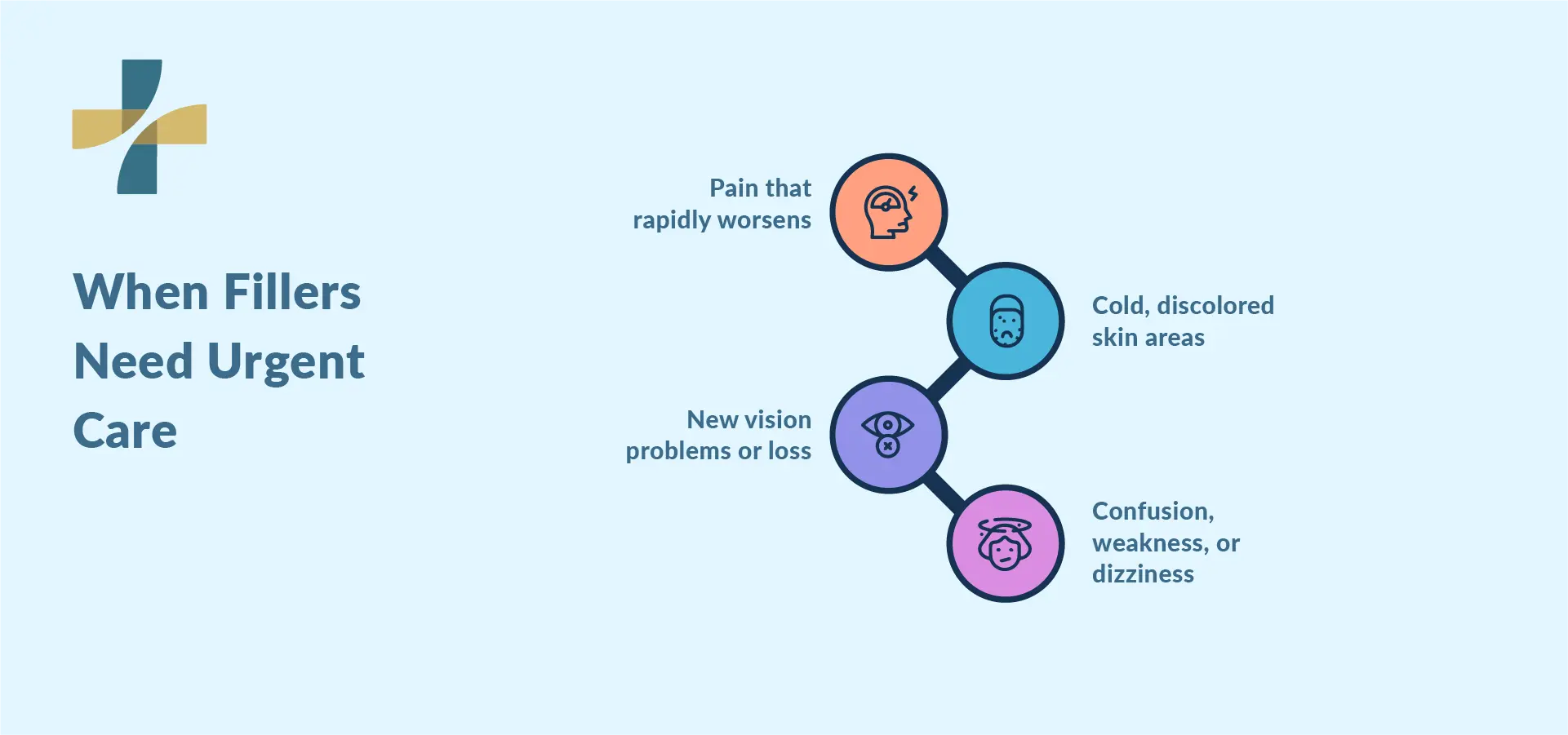
A rare but serious complication can occur when filler enters or compresses a blood vessel and limits blood flow. Possible consequences include skin injury, tissue death, vision problems, blindness, or stroke.
Contact the injector immediately and obtain urgent medical assessment for:
- Severe, unusual, or worsening pain
- White or blanched skin
- Grey, blue, purple, dusky, or mottled discolouration
- Skin that feels unusually cold
- Rapidly worsening swelling
- New or unusual neurological symptoms
Sudden vision changes, reduced vision, vision loss, facial weakness, difficulty speaking, severe headache, confusion, dizziness, or difficulty walking require emergency medical attention. The FDA’s dermal filler safety guidance advises patients to seek immediate care for unusual pain, vision changes, white, grey, or blue skin, or possible signs of a stroke.
Call 911 or go to the nearest emergency department immediately for sudden vision symptoms, vision loss, or stroke-like symptoms.
Do not wait for a routine appointment, online booking response, or email reply when emergency symptoms occur.
Pregnancy, Breastfeeding, Medications, and Medical History
Patients should discuss pregnancy, plans for pregnancy, breastfeeding, medications, supplements, allergies, active infections, previous filler, and relevant medical conditions during their consultation.
The safety of dermal filler products during pregnancy and breastfeeding is unknown, according to the FDA’s information for dermal filler patients.
The treating clinician should discuss whether treatment is appropriate based on:
- The exact proposed product
- Manufacturer guidance
- Available safety information
- Current medications
- Allergies and medical history
- Individual risks
- Alternative treatment options
Patients should also report active skin inflammation, infection, bleeding disorders, severe allergies, and previous reactions before treatment.

Dermal Fillers in North Vancouver: What to Expect From Your Consultation
A safe dermal filler consultation should involve more than selecting an area or deciding how much volume to add. The provider should review the patient’s health, assess facial anatomy, explain the proposed product, and discuss both expected results and possible risks.
NV Med Center’s Beauty and Rejuvenation team includes Lida Jahanfar, International Medical Graduate and Certified Medical Aesthetics Specialist, and Payman Fazel, International Medical Graduate, Aesthetician and Rejuvenation Expert.
Patients should be told which professional will perform their treatment before providing consent. The treating professional should explain their role, qualifications, filler-specific training, and experience with the proposed facial area.
What Should Be Covered Before Treatment?
A dermal filler consultation should include:
- Review of current and previous medical conditions
- Discussion of medications and supplements
- Review of allergies
- Previous cosmetic treatments
- Assessment of active skin concerns or infections
- Facial anatomy assessment
- Discussion of treatment goals
- Identification of the proposed product
- Expected result range and limitations
- Common and serious risks
- Alternative options
- Emergency warning signs
- Informed consent
NV Med Center’s Botox and filler treatment process describes a consultation that reviews medical history, facial structure, goals, and treatment suitability before treatment planning.
What Follow-Up Is Available?
Patients should receive clear written aftercare instructions and know when a routine follow-up is recommended.
Before leaving the clinic, patients should understand:
- When their follow-up will occur
- Who will complete the follow-up
- How to report unexpected effects
- Whether same-day assessment is available
- How to contact the clinic during operating hours
- What to do when the clinic is closed
- When urgent or emergency care is required
Follow-up should be used to assess healing, symmetry, side effects, and the remaining result. It should not automatically lead to more filler.
How Are Urgent Concerns Handled?
NV Med Center can be reached by telephone at (604) 969-2999. The clinic’s contact information states that email is intended for general, non-urgent questions and should not be used for personal medical advice.
Patients should follow the urgent contact instructions provided by their injector. Severe pain, skin blanching, unusual discolouration, cold skin, or other possible blood-flow concerns require immediate contact with the injector and urgent medical assessment.
Sudden vision changes, vision loss, or stroke-like symptoms require emergency care. Call 911 or go directly to the nearest emergency department.
How Long Do Dermal Fillers Last? Key Takeaway
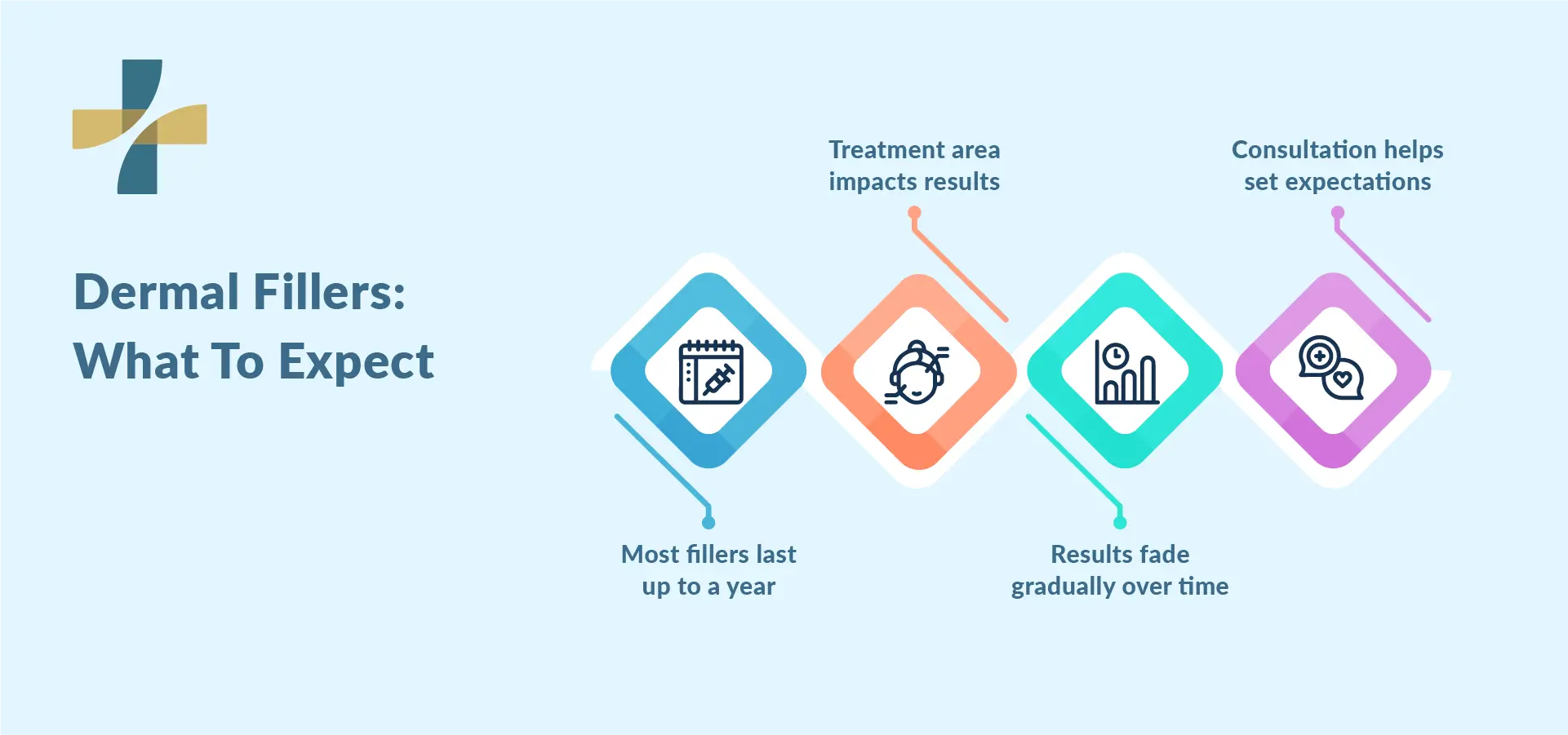
Hyaluronic acid dermal fillers commonly remain visible for about six months to a year, although some products and treatment areas may last longer.
The actual duration depends on the product, treatment area, amount used, injection technique, facial anatomy, and individual response. Timelines should always be treated as estimates rather than guarantees.
A personalised consultation should explain the proposed product, estimated duration, provider qualifications, possible side effects, maintenance options, reversibility, follow-up care, and emergency plan.
For consultation, treatment planning, or non-urgent follow-up, patients can explore NV Med Center’s Beauty and Rejuvenation Care services and book an assessment.
Frequently Asked Questions
How long do fillers last?
Hyaluronic acid fillers commonly remain visible for about six months to a year. Some products and treatment areas may produce results that last longer, but the duration varies between patients.
Does duration depend on the filler type?
Yes. Different filler categories work and break down differently. Hyaluronic acid fillers and collagen-stimulating treatments should not be given the same results or maintenance timeline.
Do lip fillers last less than cheek fillers?
Lip filler may fade sooner because the lips move frequently and often require a softer formulation. However, this is not guaranteed. Product choice, amount, technique, anatomy, and individual response also affect duration.
When should fillers be maintained?
There is no fixed maintenance schedule. Treatment should be reconsidered after an assessment of the remaining filler, facial anatomy, previous response, medical history, and current goals.
What are the main side effects?
Common side effects include swelling, bruising, redness, tenderness, itching, discomfort, and temporary firmness or unevenness. Less common but serious complications include infection, vascular blockage, tissue damage, vision loss, and stroke.
Can fillers be dissolved?
Hyaluronidase may be used to reduce or dissolve hyaluronic acid filler in selected situations. It does not dissolve collagen-stimulating or other non-hyaluronic acid products and should only be administered by a qualified healthcare professional.