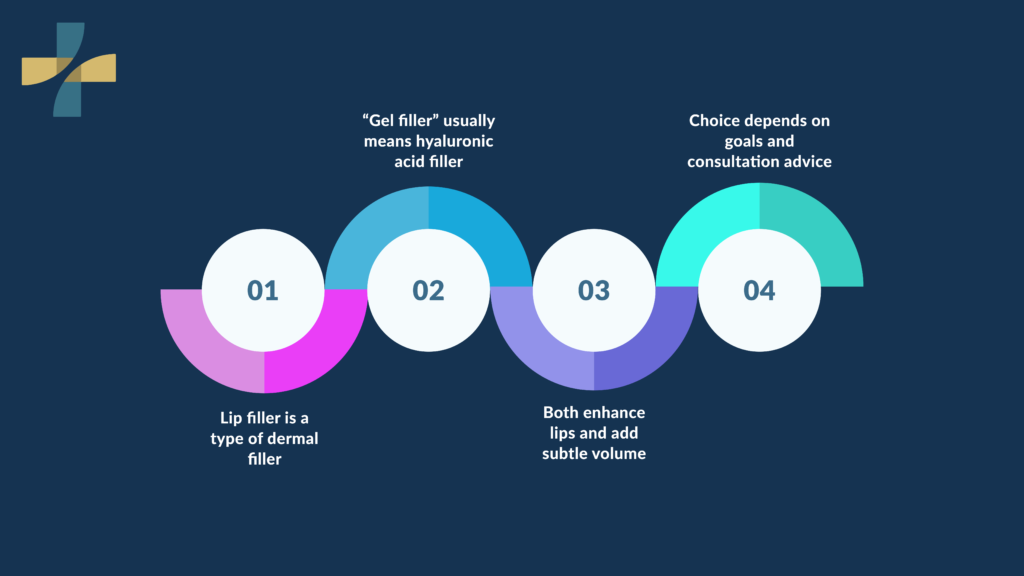
Searches for lip filler vs dermal filler have increased as more people look for subtle lip enhancement instead of dramatic changes. Social media trends from public figures like Kylie Jenner have increased awareness, but they have also created confusion around terms like “gel filler.” Many patients are unsure if lip fillers are different from dermal fillers or if “gel filler” is something separate.
This guide explains what these terms actually mean, how hyaluronic acid lip filler works, and how to choose the right treatment. It also covers safety, results, and what to expect so you can make a clear decision before booking a lip filler consultation in Vancouver.
Is “gel filler” the same as Dermal Filler?
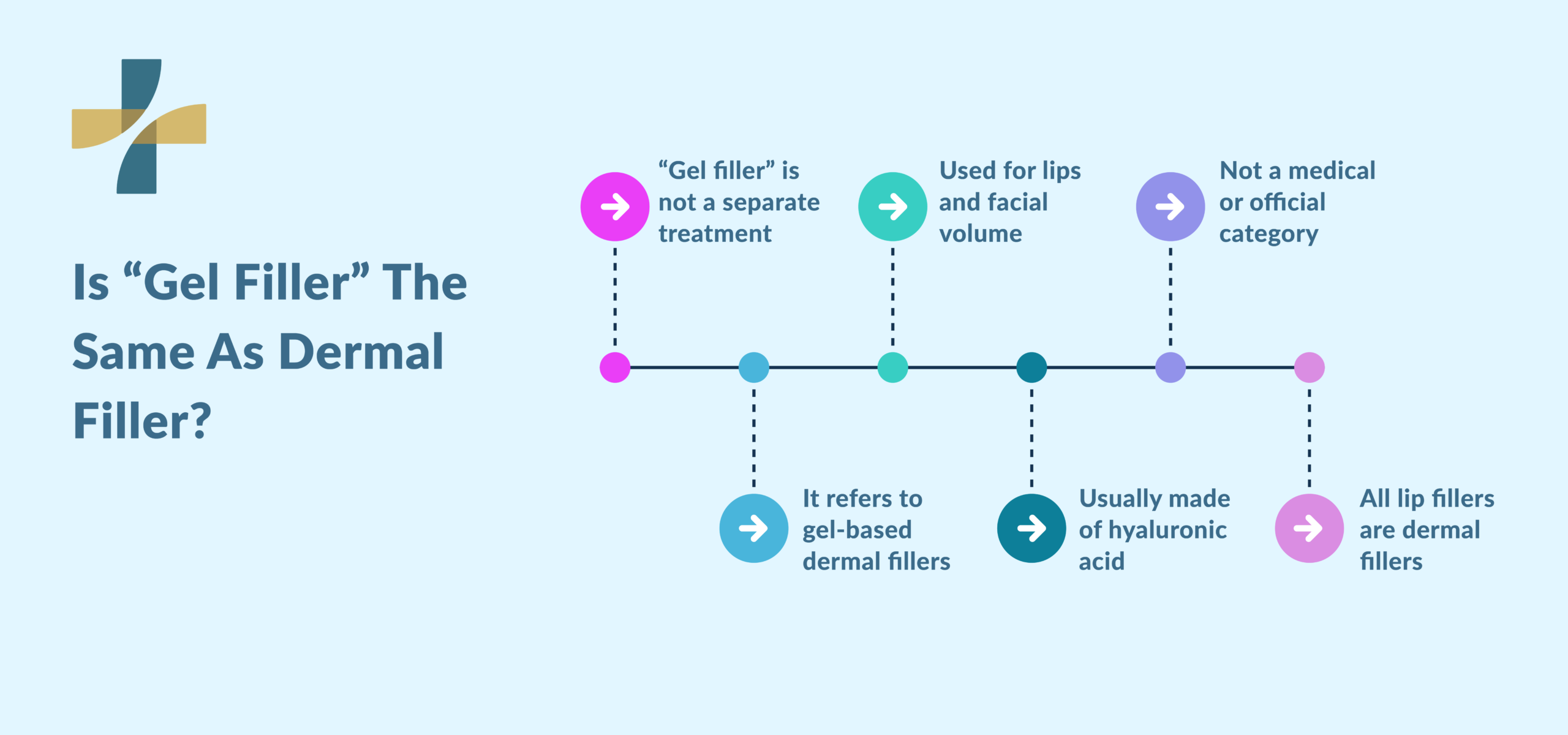
Gel filler is not a separate treatment. It is a general term used to describe most dermal fillers, which are gel-based substances injected under the skin. In practice, lip fillers and facial fillers are both types of gel-based dermal fillers used for different areas.
Most modern fillers are made as smooth gels so they can be placed precisely under the skin. This includes HA filler products used for lips, cheeks, and other areas. The term “gel filler” is often used in marketing or social media, which leads many people to think it is a different category.
What “gel-based filler” actually means
- A soft gel substance injected under the skin
- Designed to add volume and shape
- Includes hyaluronic acid lip filler and other materials
- Not a different treatment type
Why does the term cause confusion
- Used loosely in clinics and online
- Not a medical classification
- Often misunderstood by patients
Clear point: all lip fillers are dermal fillers, but not all dermal fillers are used for lips.
Are Lip Fillers a Type of Dermal Filler?
Yes, lip fillers are a type of dermal filler designed specifically for the lips. They are usually made from hyaluronic acid and are formulated to be softer and more flexible, so they move naturally with speech and facial expression.
Lip tissue moves constantly. This requires a different formulation compared to fillers used in the cheeks or jawline. Lip filler gel technology focuses on flexibility, hydration, and smooth integration into the tissue.
How lip fillers are designed differently
- Softer consistency than other fillers
- Designed for movement and compression
- Allows subtle enhancement rather than stiffness
Common goals of lip filler treatment
- Lip augmentation and volume
- Smoother lip lines
- Improved symmetry
- Better hydration and shape
Many patients today prefer natural results. The goal is not oversized lips but balanced proportions that match the face.
What is the Difference Between Lip Filler vs Dermal Filler?
The main difference between lip filler and dermal filler is the treatment area and formulation. Lip fillers are used only for lips and are softer, while dermal fillers are used across the face and vary in thickness depending on the area.
Dermal fillers are used to restore structure and support, while lip fillers focus on movement and detail.
Comparison table
| Feature | Lip Fillers | Dermal Fillers |
| Purpose | Lip enhancement | Volume restoration and contour |
| Areas | Lips only | Cheeks, jawline, chin, folds |
| Texture | Soft and flexible | Varies from soft to firm |
| Movement | High flexibility | Depends on the area |
| Duration | 6–12 months | 9–24 months |
Example scenarios
- Patient wants fuller lips → lip filler
- Patient wants cheek definition → dermal filler
- Patient wants both balance and volume → combination treatment
This is where consultation matters. A provider chooses the right product based on anatomy, not just preference.
How Does Lip Filler Gel Technology Actually Work?
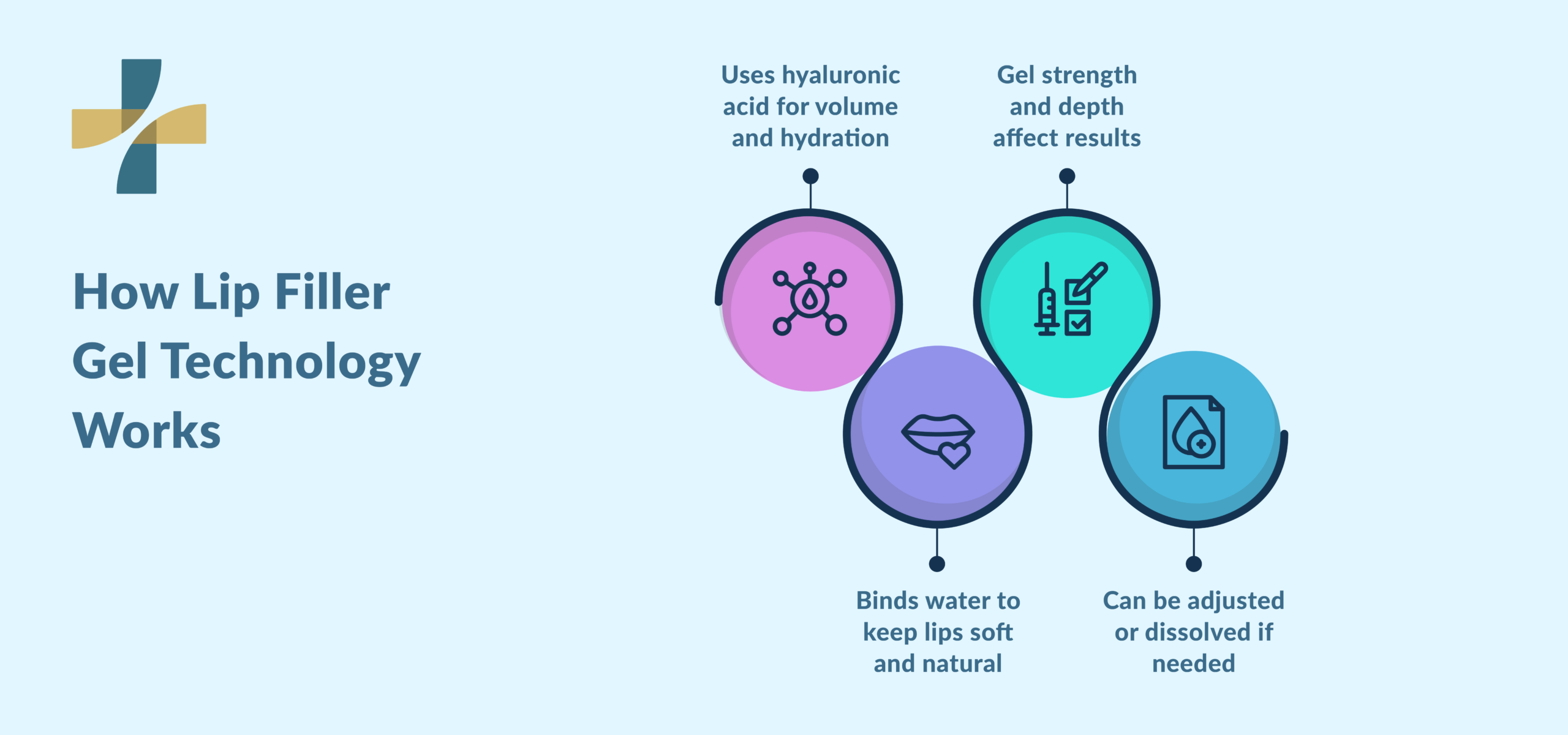
Lip filler gel technology uses hyaluronic acid to add volume and attract water under the skin. This allows controlled shaping while keeping the lips soft and natural in feel.
Hyaluronic acid occurs naturally in the body. It binds water and supports tissue hydration. This is why HA fillers are widely used for lip augmentation.
What is hyaluronic acid lip filler
- A naturally occurring substance
- Helps retain moisture
- Provides smooth, controlled volume
- Can be reversed if needed
Why do different gels behave differently
- Cross-linking affects firmness
- Injection depth changes the results
- Product selection affects longevity
One key advantage is reversibility. If needed, dissolving filler using hyaluronidase can adjust or remove the result.

Which Option Gives More Natural Results and Better Longevity?
Lip fillers can provide natural results when the right product and technique are used. They usually last 6 to 12 months, while dermal fillers in other areas may last longer due to thicker formulas and less movement.
The lips break down filler faster because of constant movement. This is why maintenance treatments are common.
What affects natural results
- Injector skill
- Product choice
- Amount injected
- Lip structure
How long do lip fillers last
- Average: 6–12 months
- Faster breakdown than facial fillers
- Maintenance needed for consistency
According to data from the American Board of Cosmetic Surgery, most HA fillers last between 6 months and 2 years, depending on location and formulation.
What is the Typical Lip Filler Swelling Timeline and Recovery?
Lip filler swelling usually peaks within 24 to 48 hours and improves over several days. Most patients see stable results within one to two weeks as the filler settles and integrates into the tissue.
Swelling is a normal part of healing. Understanding the lip filler swelling timeline helps reduce concern during recovery.
Typical timeline
- Day 1–2: swelling and tenderness
- Day 3–5: swelling reduces
- Day 7–14: shape settles
What is normal
Mild bruising, slight unevenness early on, and temporary firmness are common after lip filler treatment. These effects usually settle within one to two weeks as the filler integrates and swelling reduces.
When to seek help
Severe pain, skin discolouration, or unusual swelling are not typical and should be assessed as soon as possible. These signs may indicate a complication that requires prompt medical attention.
What are the Safety Risks of Lip Fillers and How are They Managed?
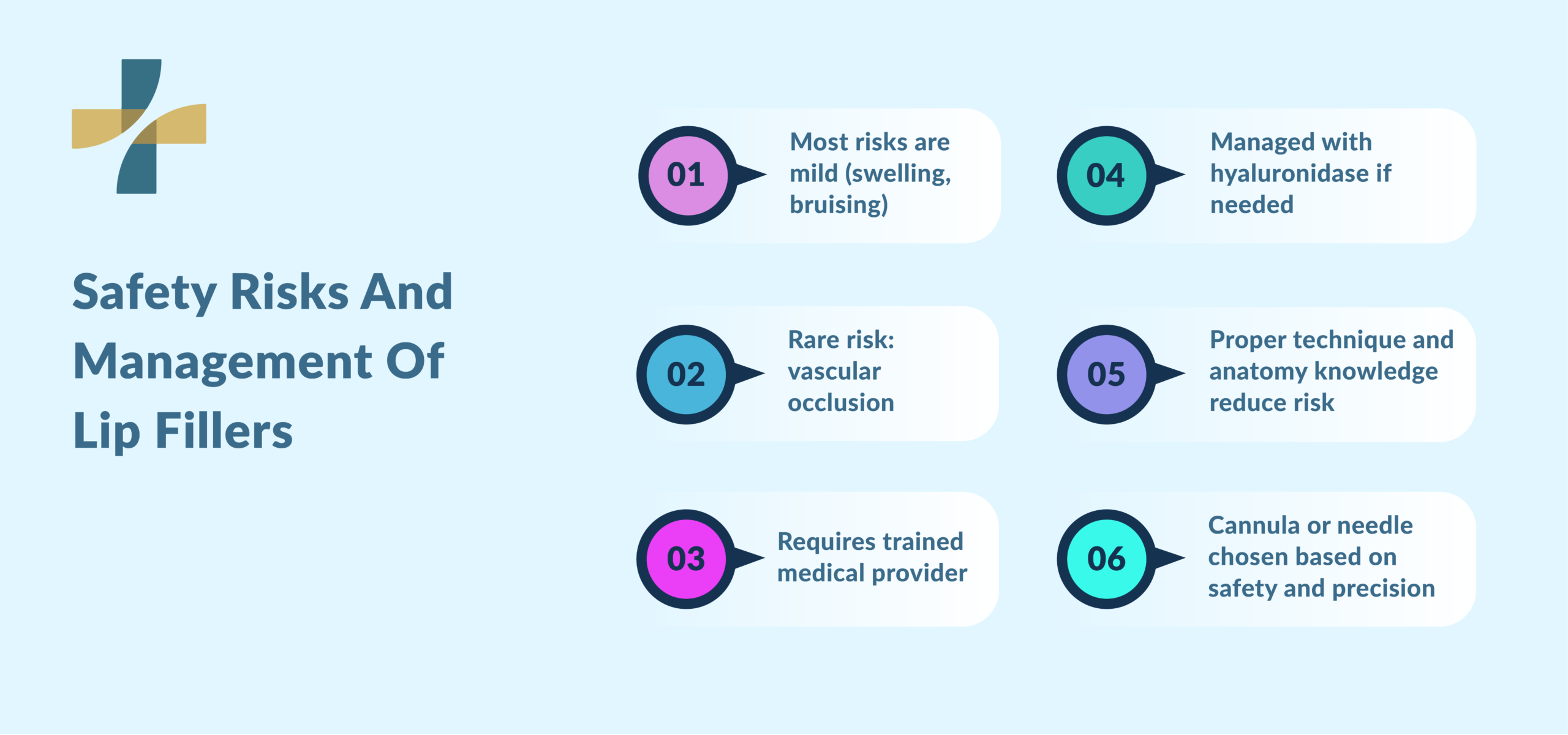
Lip filler safety risks are low when performed by trained medical providers, but complications can occur. These include swelling, bruising, and rare risks like vascular occlusion, which requires immediate treatment.
According to Harvard Health, dermal fillers are gel-like substances injected under the skin to restore volume and smooth lines.
Common side effects
Swelling, bruising, and temporary asymmetry are the most common side effects after lip filler treatment. These are usually mild and improve within a few days to two weeks as the lips heal and the filler settles.
Serious risks explained
Vascular occlusion risk occurs when filler blocks a blood vessel, which can reduce or stop blood flow to the surrounding tissue. This is rare but serious and requires immediate treatment by a trained medical provider.
Safety measures
- Use of hyaluronidase to dissolve filler
- Careful injection technique
- Knowledge of facial anatomy
Cannula vs needle
A cannula is a blunt-tipped tool that can reduce bruising and lower risk in certain areas, while a needle is sharper and allows more precise placement for detailed work. The choice depends on the treatment area, anatomy, and the level of control needed.
Safety depends heavily on provider training and experience.
How Do You Choose the Right Filler for Your Goals in Vancouver?
The best way to choose between lip filler and dermal filler is through a consultation. A provider evaluates your facial structure, lip shape, and goals to recommend the right treatment.
There is no single best filler. The right choice depends on your anatomy and desired outcome.
Decision framework
- Goal: subtle enhancement or volume
- Area: lips or full face
- Longevity expectations
- Maintenance plan
What happens during a lip filler consultation in Vancouver
A lip filler consultation includes a review of your medical history, a detailed facial assessment, and a discussion of your goals. The provider then creates a treatment plan based on your anatomy, desired results, and safety considerations. A structured consultation reduces risk and improves results.
If you are exploring your options, you can view available treatments under beauty rejuvenation care in Vancouver to understand how different aesthetic services are planned and combined.
Can You Combine Lip Fillers and Dermal Fillers for Better Results?
Yes, lip fillers and dermal fillers are often combined to create balanced results. Treating the surrounding areas can improve proportions and prevent overfilled lips. This approach focuses on overall facial harmony.
When a combination makes sense
Combining lip fillers and dermal fillers is helpful when there is volume loss in both the cheeks and lips, facial imbalance, or age-related changes. Treating multiple areas can create a more balanced and natural result.
Example case: A patient may choose subtle lip filler along with cheek support to improve overall facial proportions. This approach often leads to a more natural appearance rather than focusing on the lips alone.
What Should You Expect During a Lip Filler Treatment at a Medical Clinic?
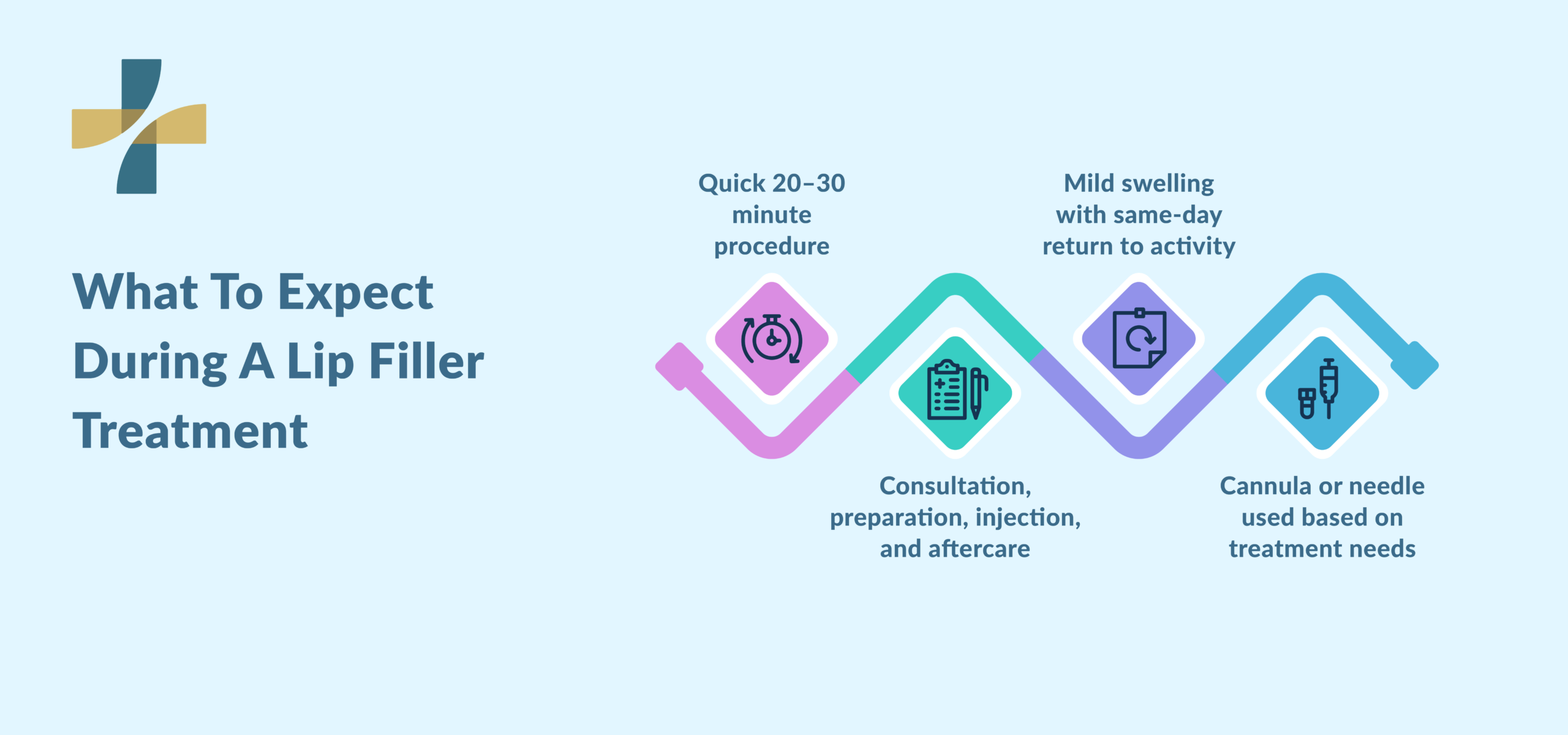
A lip filler treatment usually takes 20 to 30 minutes and involves precise injections using a needle or cannula. Most patients return to normal activity the same day, with mild swelling expected.
Step-by-step process
- Consultation – Your provider reviews your medical history, assesses your lips, and discusses your goals and treatment plan.
- Preparation – The area is cleaned, and a numbing agent may be applied to improve comfort during the procedure.
- Injection – The filler is carefully placed using a needle or cannula to shape and add volume to the lips.
- Aftercare – You receive guidance on managing swelling, avoiding pressure on the lips, and supporting proper healing.
Cannula vs needle
A cannula is a blunt-tipped tool that may lower the risk of bruising, while a needle allows more precise placement for detailed shaping. The choice depends on the treatment area, technique, and the level of accuracy required. The method depends on treatment goals and anatomy.
How NV Med Center Helps You Choose the Right Lip Filler Safely
Lip filler vs dermal filler comes down to understanding application, formulation, and safety. Lip fillers are specialised dermal fillers designed for movement, while “gel filler” is simply a general term. The right choice depends on your goals, anatomy, and how natural you want the result to look. A clear plan helps avoid overfilling and supports long-term results.
At NV Med Center, we provide medically based lip filler consultations in Vancouver focused on natural results and safety. Our team assesses your facial structure and recommends the right approach using proven techniques and approved products. Book lip fillers in NV Med today to discuss your options and achieve subtle enhancement with confidence.
FAQs
Is “gel filler” the same as dermal filler?
Yes, “gel filler” is a general term used to describe dermal fillers. Most modern fillers are gel-based, including lip fillers and facial fillers. The term is not a separate medical category.
Are lip fillers a type of dermal filler?
Yes, lip fillers are a type of dermal filler. They are designed specifically for the lips using softer formulations to allow natural movement and subtle shaping.
Which option looks more natural and lasts longer?
Lip fillers can look natural when done correctly, but usually last 6 to 12 months. Dermal fillers in areas like the cheeks may last longer due to less movement and thicker formulations.
What swelling or bruising is normal after lip filler?
Mild swelling and bruising are common after lip filler. Swelling usually peaks within 48 hours and settles over one to two weeks. Severe pain or skin changes should be checked immediately.
How do you choose the right filler in Vancouver?
The best way is through a consultation with a trained provider. They assess your anatomy, goals, and safety factors before recommending a treatment plan.