Most men don’t think about their health until something goes wrong, and by then, a preventable condition may have already progressed. A simple men’s health screening checklist, followed consistently as you age, can catch warning signs for heart disease, prostate issues, and other serious conditions long before symptoms appear.
The truth is, many men delay routine checkups due to busy schedules, discomfort with certain exams, or simply not knowing what tests men should get regularly. Taking a proactive approach doesn’t have to be overwhelming. This guide breaks down exactly which screenings matter at each stage of life, what they involve, and how your family physician care team plays a central role in keeping you healthy, active, and energized for the long term.
Not sure which screenings you’re due for? Book a consultation with a Family Physician at NV Med Center to get a personalized health plan.

Men’s Health Screening by Age
Preventive care isn’t one-size-fits-all. Your risk factors, family history, and lifestyle shift as you age, which means your men’s health screening checklist should evolve too. Here’s what a general doctor typically recommends at each life stage to maintain optimal wellness.
In Your 30s
Your 30s are the foundation-building years for lifelong health. Because many metabolic and cardiovascular conditions develop silently during early adulthood, the goal is establishing baseline metrics your doctor can track over time.
Core screenings in your 30s typically include:
- Blood pressure check (at least every 1–2 years) to catch early high blood pressure symptoms
- Cholesterol screening, especially if you have a family history of heart disease
- Blood sugar/diabetes screening, particularly if overweight or sedentary
- Testicular self-exam guidance and testicular exam guidelines awareness
- Body weight and BMI assessment (supported by our personalized weight loss program)
- Mental health and stress check-ins
Example Case: A 34-year-old North Vancouver resident with a sedentary desk job visits his family physician for a men’s health checkup appointment. Routine bloodwork reveals borderline high cholesterol, a finding that would have gone unnoticed without screening. With early dietary counselling, acupuncture for stress reduction, and a tailored follow-up plan, he avoids years of unmanaged risk.
In Your 40s and 50s
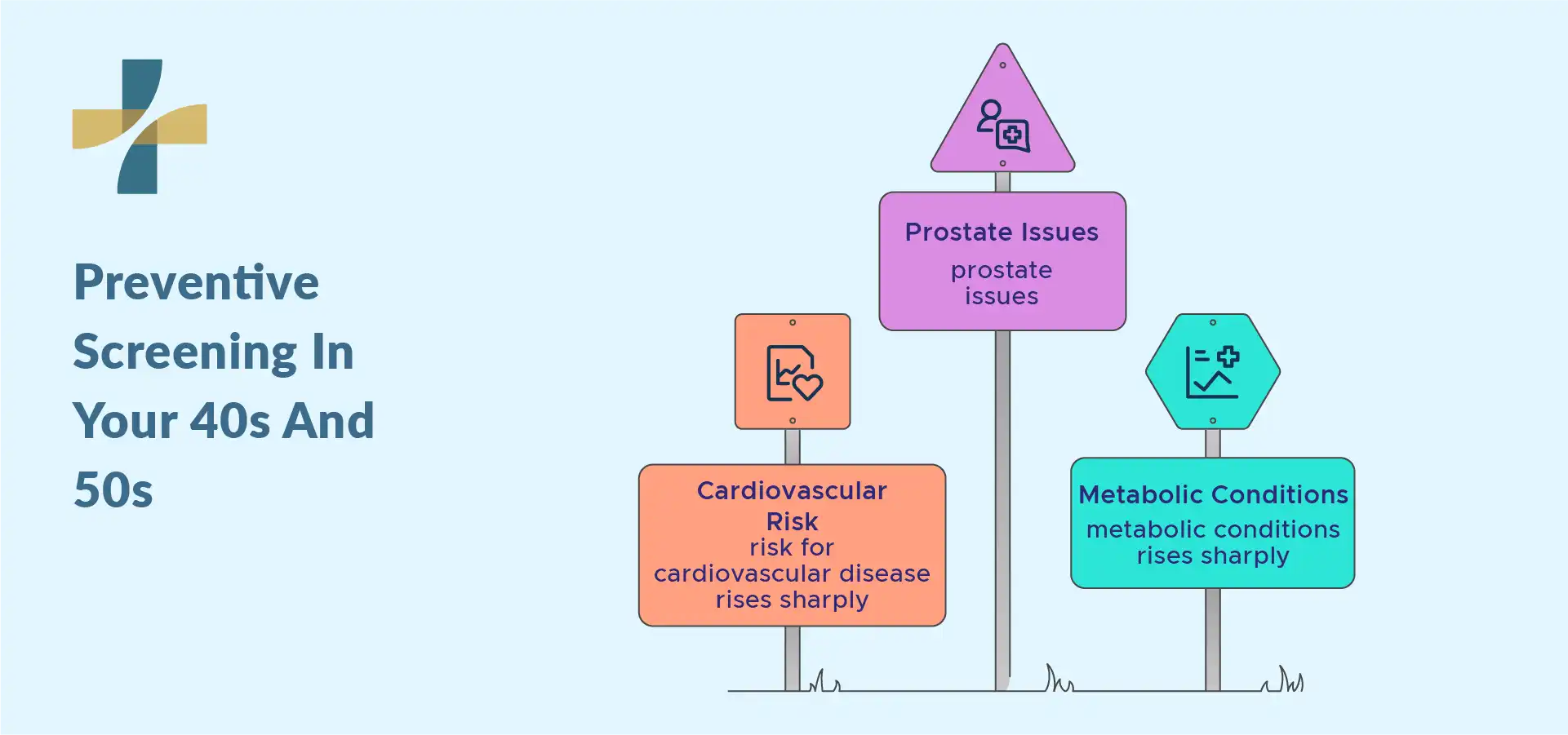
This is when preventive health screening for men becomes significantly more vital, as the risk for cardiovascular disease, prostate issues, and metabolic conditions rises sharply.
Key tests typically recommended in your 40s and 50s:
- Annual or biannual blood pressure and cholesterol screening as recommended by guidelines for men
- Diabetes screening every 3 years (or more frequently with risk factors)
- Prostate health discussion starting around age 45–50
- Colorectal cancer screening starting at 50 (or earlier with family history)
- Cardiovascular screening and risk assessment
- Vision, hearing, and physiotherapy joint mobility assessments
- Skin checks for unusual moles or lesions
Example Case: A 52-year-old patient visiting for a men’s annual physical Vancouver checkup mentions occasional fatigue. His doctor orders a cardiovascular risk panel alongside standard bloodwork, catching early signs of elevated risk that lifestyle changes and routine monitoring can manage before it becomes a serious cardiac event.
Prostate and Cardiovascular Screening
Among all men’s annual physical Vancouver visits, two screening categories deserve special attention: prostate health and cardiovascular risk. These are leading causes of major health complications in men over 45.
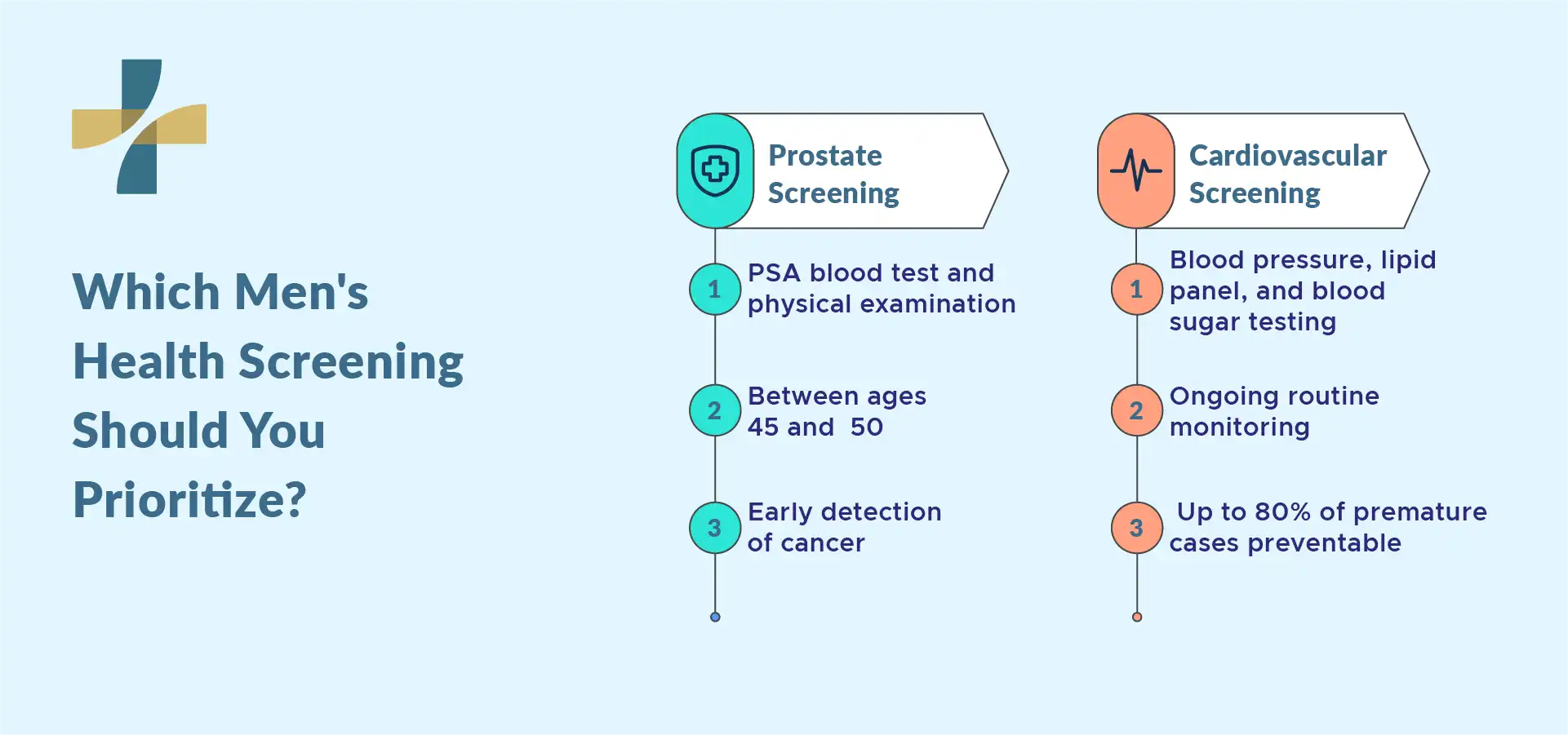
Prostate screening generally includes an open conversation with your doctor about your personal risk factors, followed by a PSA test bc (prostate-specific antigen) blood test and, when appropriate, a physical examination. Guidelines for prostate exam age bc generally suggest starting this conversation between ages 45 and 50, or earlier (around age 40) for men with a family history of prostate cancer or high baseline risk, as recommended by BC Cancer Guidelines.
Cardiovascular screening typically involves:
- Blood pressure monitoring
- Cholesterol (lipid) panel
- Blood sugar testing
- Discussion of lifestyle factors like smoking, diet, and physical activity
- Holter monitoring for arrhythmia for patients experiencing palpitations or irregular heartbeat symptoms, to assess cardiac rhythm over an extended period.
According to the Heart and Stroke Foundation of Canada, cardiovascular disease remains one of the leading causes of death among Canadian men. However, up to 80% of premature heart disease and stroke cases can be prevented through early detection, lifestyle modifications, and regular screening routines. Staying on top of your men’s health screening checklist is your most effective tool to safeguard your heart health.
Are These Screenings Covered by MSP?
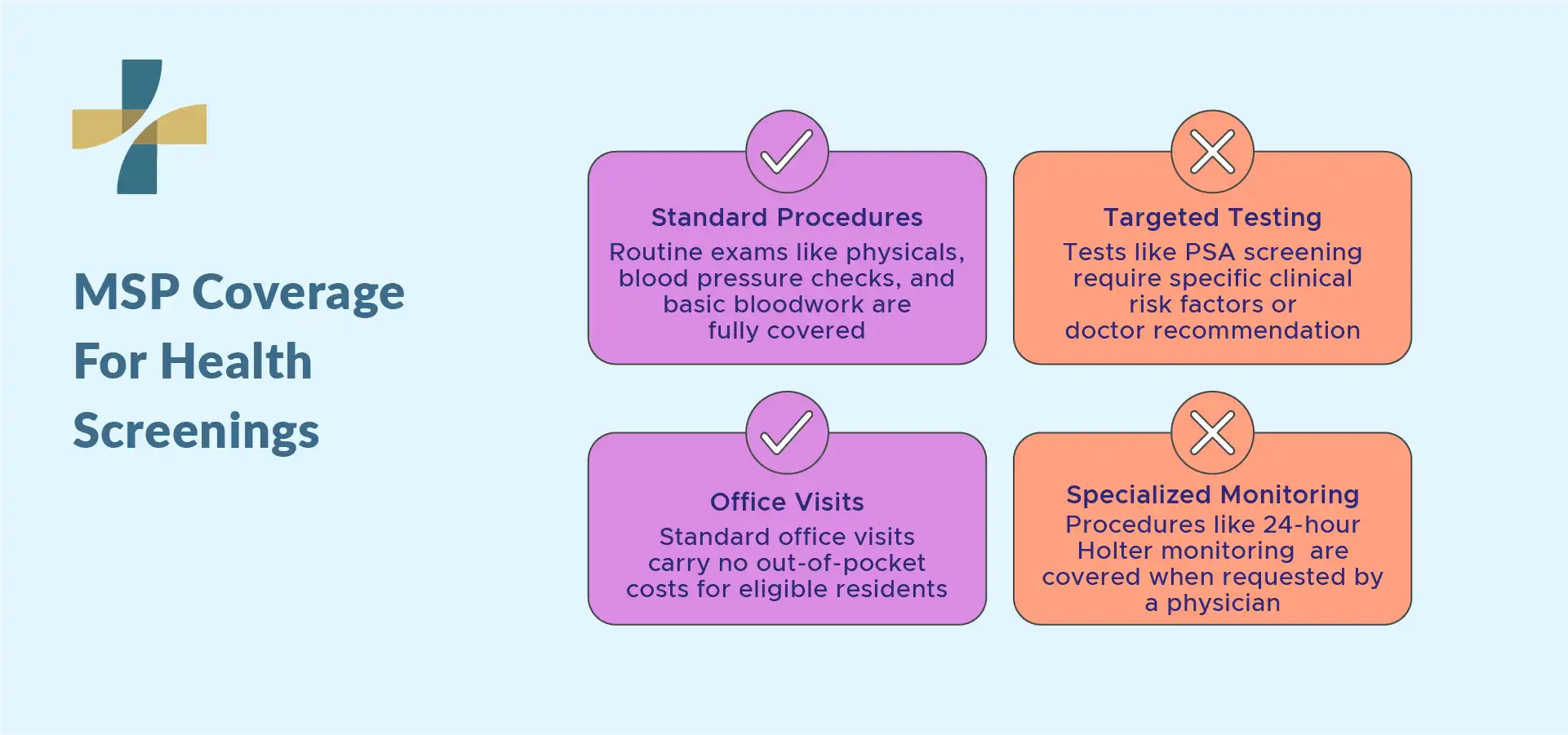
Yes, most essential preventive health screenings recommended by your general practitioner are fully covered under the Medical Services Plan (MSP) for eligible residents of British Columbia. Standard office visits, annual physical exams, routine blood pressure checks, diabetes screening, and medically necessary bloodwork (such as cholesterol panels and basic blood sugar tests) carry no out-of-pocket costs.
Certain targeted tests, such as routine PSA blood tests for prostate screening without specific symptoms, may have selective MSP coverage criteria depending on your clinical risk factors and doctor recommendation. Specialized assessments, including 24-hour Holter monitoring or diagnostic lab panels ordered for medical evaluation, are covered when requested by your physician. For detailed coverage criteria, you can consult HealthLink BC or discuss directly with our clinic staff.
Frequently Asked Questions
1. What health screenings should men get in their 30s, 40s, and 50s?
In your 30s, focus on establishing baseline metrics including blood pressure, cholesterol, blood sugar, BMI, and mental health check-ins. In your 40s and 50s, expand your men’s health screening checklist to include annual cardiovascular risk assessments, prostate health discussions (PSA tests), diabetes screening every 3 years, and colorectal cancer screening starting at age 50.
2. At what age should men start prostate screening?
Most Canadian health guidelines recommend starting prostate screening discussions with your family doctor between ages 45 and 50. However, if you have a family history of prostate cancer or additional risk factors, your physician may advise starting discussions as early as age 40.
3. Are men’s health screenings covered by MSP?
Yes, fundamental primary care services and preventive visits with a family physician are covered by MSP in British Columbia. This includes routine physical checkups, standard blood tests, and diagnostic procedures ordered by your doctor.