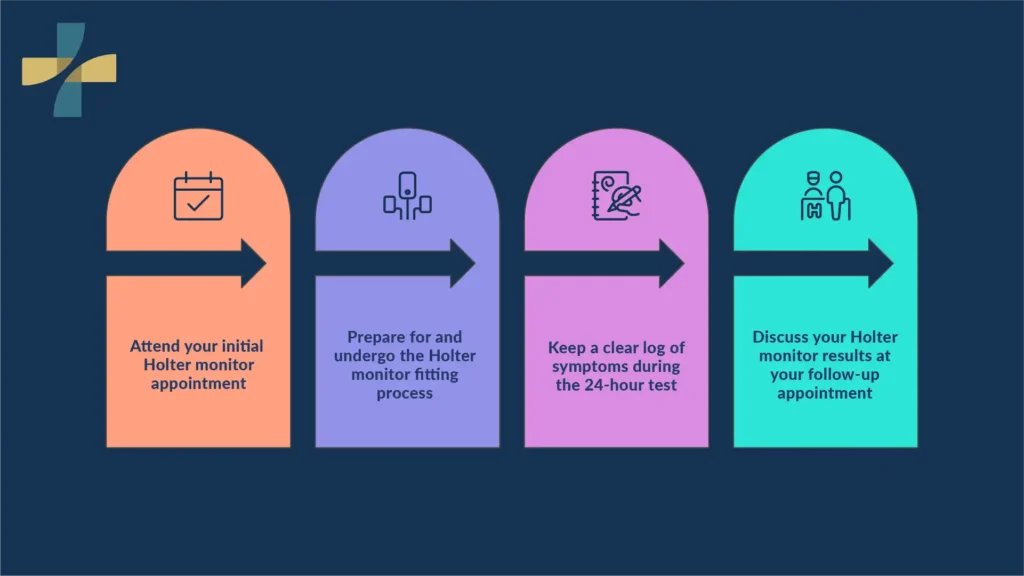
If your doctor recently recommended a heart rhythm assessment, it is completely natural to feel a bit uneasy and have questions. Knowing what to expect during Holter monitor test day, learning how to prepare for Holter monitor fittings, understanding whether you can shower, and figuring out what those results mean for your heart health are common, everyday concerns for first-time patients.
The reassuring news is that a 24 hour heart monitor test is entirely painless, non-invasive, and remains one of the most reliable diagnostic tools cardiologists rely on to catch irregular heartbeats that slip through during a brief office checkup. This comprehensive guide walks you through the entire experience from your initial Holter monitor appointment to the follow-up conversation about your Holter monitor results appointment so you can step into our clinic feeling confident, informed, and completely at ease.
Already have your appointment scheduled? Keep this guide handy so you know exactly what to bring, how to keep a clear symptom log, and what questions to ask your doctor.
Why your doctor may order a Holter monitor
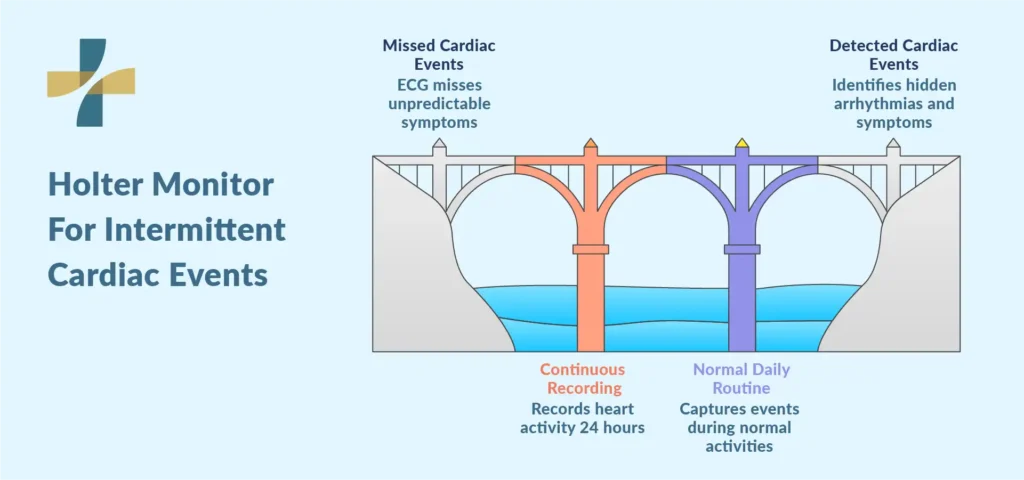
A standard in-office electrocardiogram (ECG) only captures a few seconds of your heart’s electrical activity. Because many arrhythmias, fluttering palpitations, or sudden dizzy spells come and go unpredictably, they are easily missed during a routine consultation.
A Holter monitor bridges this diagnostic gap by continuously recording your heart’s electrical activity over a full 24-hour or 48-hour monitoring window while you carry out your normal daily routine.
According to the American Heart Association, continuous ambulatory ECG monitoring is essential for detecting intermittent cardiac events. Whether you consult a general doctor or a family practitioner, physicians typically order a 24 hour Holter monitor test when patients experience:
- Unexplained palpitations, skipped beats, or a racing heart
- Dizziness, lightheadedness, or fainting episodes
- Unexplained fatigue or shortness of breath
- Monitoring existing arrhythmias or checking how well heart medication is working
Example Case: A 52-year-old patient experiencing occasional dizziness during her morning walks had a completely normal five-minute ECG at her clinic. Her physician recommended a Holter monitoring assessment at NV Med Center, which successfully captured a brief, hidden episode of atrial fibrillation during her routine walk, something a quick resting ECG would have missed entirely.
Uncontrolled hypertension can also trigger irregular heart rhythms. If you are experiencing symptoms alongside cardiac fluttering, read our guide on high blood pressure symptoms and when to see a general practitioner.
What happens before the monitor is attached
Understanding Holter monitor preparation is straightforward, and there is very little you need to worry about beforehand. While our clinical staff will provide specific guidance, here is what typically happens on the day of your visit.
We recommend wearing a comfortable, loose-fitting, two-piece outfit to your Holter monitoring clinic appointment, as your chest area needs to be easily accessible. Please avoid applying chest lotions, body oils, or powders on the day of your appointment, as these create a barrier that stops the Holter monitor electrodes from adhering securely to your skin.
During your Holter monitor before, during, and after process, a qualified technician will:
- Clean and, if needed, lightly shave small areas of your chest for better electrode contact
- Attach 3 to 7 small adhesive electrodes to your chest
- Connect the electrodes to a small recording device, usually worn on a belt, in a pouch, or around your neck
- Confirm the device is recording properly before you leave
Example Case: A first-time patient was nervous about the shaving step, worried it would be uncomfortable. In reality, only small coin-sized patches of chest hair were trimmed, and the entire attachment process took less than 10 minutes with zero discomfort.
Patient Tip: Wear a front button-up shirt to make your Holter monitor test setup smoother, and feel free to ask your technician to show you how to reattach a patch if an electrode happens to peel loose at home.
What wearing the monitor feels like during the day
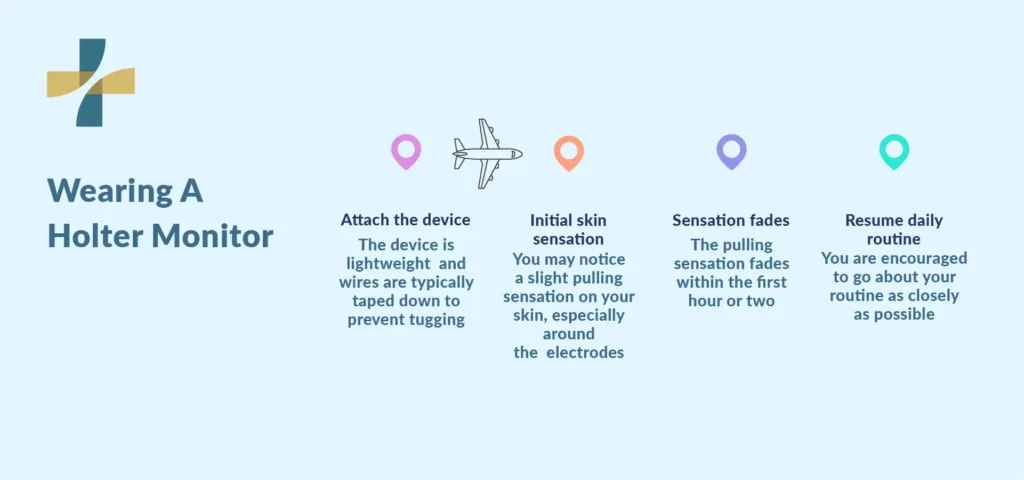
Most patients are surprised by how quickly they forget they’re wearing a Holter monitor. The device is lightweight, roughly the size of a small smartphone or deck of cards, and the wires are typically taped down to prevent tugging.
You may notice a slight pulling sensation on your skin, especially around the electrodes, but this fades within the first hour or two. The goal of the test is to capture your normal daily activity, so you’re encouraged to go about your routine as closely as possible.
Clothing, skin, showering, exercise, and sleep
To clear up any confusion regarding wearing a Holter monitor, let’s break down the practical rules for daily living:
- Clothing: Stick with loose, breathable tops that will not snag or press against the wires. Avoid tight sports bras or stiff waistbands that compress the chest unit.
- Skin Care: A subtle itch or minor skin redness beneath the adhesive pads can happen. Avoid scratching or pulling at the edges of the electrodes.
- Showering Restrictions: Can you shower with Holter monitor equipment attached? For standard devices, the answer is no. Traditional monitors and chest leads are not waterproof, so you must avoid showering, taking baths, or swimming during the test period. Instead, opt for a careful sponge bath, keeping the unit and chest wires completely dry.
- Exercise & Sweat: Light walking and routine household errands are great because your doctor wants to see how your heart responds to mild exertion. However, avoid intense workouts that cause heavy sweating, as moisture can loosen the electrodes.
- Sleep Routine: You can sleep in your usual position. Side sleepers often find it most comfortable to rest on their back or opposite side to prevent direct pressure on the chest monitor.
What to write in your symptom diary
Your Holter monitor symptom diary is just as critical as the electronic recording itself. While the unit logs every heartbeat, your written journal gives those numbers real-world clinical context.
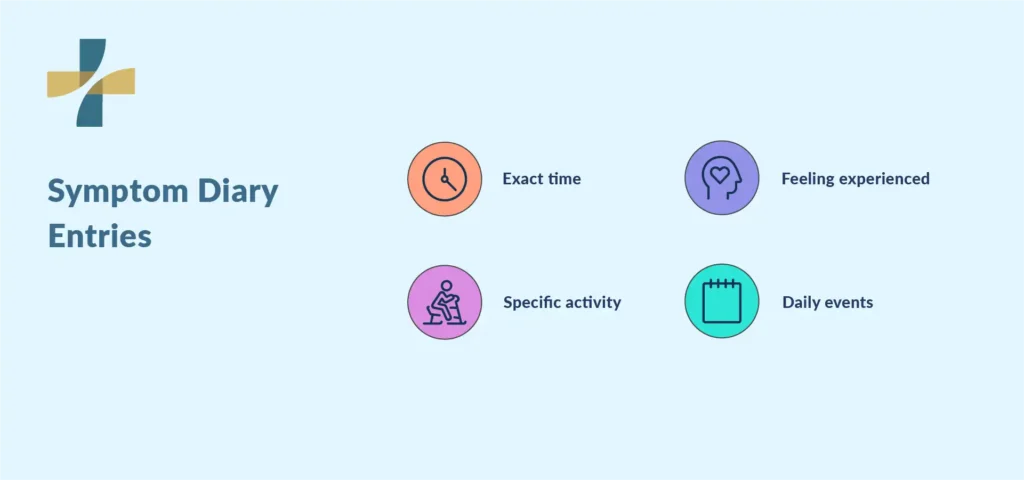
Whenever you feel a physical symptom, whether it is a flutter, chest tightness, skipped beat, or lightheadedness, write down:
- The exact time (matching the clock on your monitor unit).
- The specific activity you were doing (e.g., walking up stairs, drinking coffee, resting on the couch).
- The exact feeling you experienced and how long it lasted.
According to research indexed on the National Institutes of Health (NIH) PubMed database, precise patient symptom logs significantly improve diagnostic accuracy when interpreting ambulatory electrocardiograms.
If you have no noticeable symptoms during your 24-hour monitoring period, do not worry! Simply note major daily events like taking medication prescribed by your family doctor, eating meals, walking, and going to sleep.
What happens after the monitor is returned
When your monitoring period concludes, you will return the device, lead wires, and your completed diary to the clinic.
- Removing the Device: The technician will gently peel off the adhesive electrodes and detach the leads. You can clean off any remaining adhesive residue at home and resume showering normally right away.
- Data Analysis: The recorded data from your portable ECG unit is uploaded to specialized software. A trained technician and a cardiologist analyze your heart rhythm patterns, cross-referencing your electronic data directly with your Holter monitor symptom diary.
- Results Processing: A comprehensive diagnostic report is generated, highlighting your average heart rate, heart rate peaks and drops, and any detected rhythm abnormalities (such as PACs, PVCs, or pauses).
Questions to ask at your follow-up appointment
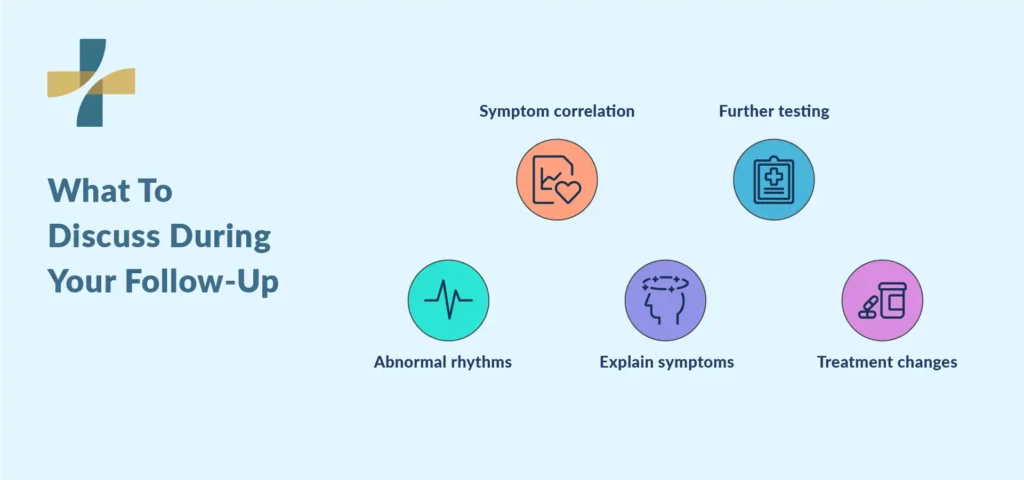
Once your physician reviews the diagnostic report, you will attend a Holter monitor results follow up session. Having a few focused questions ready will help you get the most out of your visit:
- “Did the monitor capture any abnormal heart rhythms or unexpected pauses while I was wearing it?”
- “How did the symptoms I logged in my diary correspond with my heart’s electrical activity at those exact moments?”
- “Do my results explain the dizziness, fatigue, or palpitations I have been feeling?”
- “Will I need further cardiac testing, such as an echocardiogram or a longer 7-day event monitor?”
- “Do these findings require any changes to my current medications or lifestyle routine?”
Take the Next Step for Your Heart Health
If your doctor has recommended 24 to 48-hour heart rhythm monitoring, getting clear answers should not be stressful. Our experienced team provides complete cardiac evaluations in a comfortable, patient-focused environment.
Book a Holter monitor appointment today at NV Med Center to get accurate insights into your heart rhythm and take charge of your cardiovascular well-being.
FAQ
1-What happens during a Holter monitor appointment?
Electrodes are placed on your chest and connected to a small device that records your heart rhythm while you continue normal activity.
2-Can I shower while wearing a Holter monitor?
Many Holter monitors should not get wet. Patients should follow the clinic’s instructions about bathing and showering.
3-Can I work while wearing a Holter monitor?
Many people can continue normal work unless their doctor gives different instructions.
4-What should I write in the diary?
Record palpitations, dizziness, chest discomfort, shortness of breath, activity, sleep, medication timing, and anything unusual.
5-When do I get Holter results?
Results are usually reviewed after the monitor is returned and the recording is interpreted. Timing varies by clinic and provider.
6-Is the test the same as an ECG?
No. An ECG records a short snapshot. A Holter monitor records continuously for a longer period.