A racing heart, a sudden skipped beat, or a fluttering sensation in your chest can be unsettling, especially when it happens without warning and disappears just as quickly. Many people searching for a Holter monitor for palpitations in North Vancouver are trying to make sense of symptoms that felt very real at home but seemed to vanish the moment they sat down in a doctor’s office.
This gap between what you experience and what a doctor can observe during a short appointment is exactly why longer-term heart rhythm monitoring exists. A Holter monitor gives your heart the chance to “speak” over a full day or two, rather than during the few brief minutes of a clinical exam.
If you’re currently experiencing unexplained palpitations, our North Vancouver clinic can help determine whether monitoring is the right next step. Speak with a family doctor about palpitations today at NV Med Center.
Why palpitations can be hard to assess in a short appointment
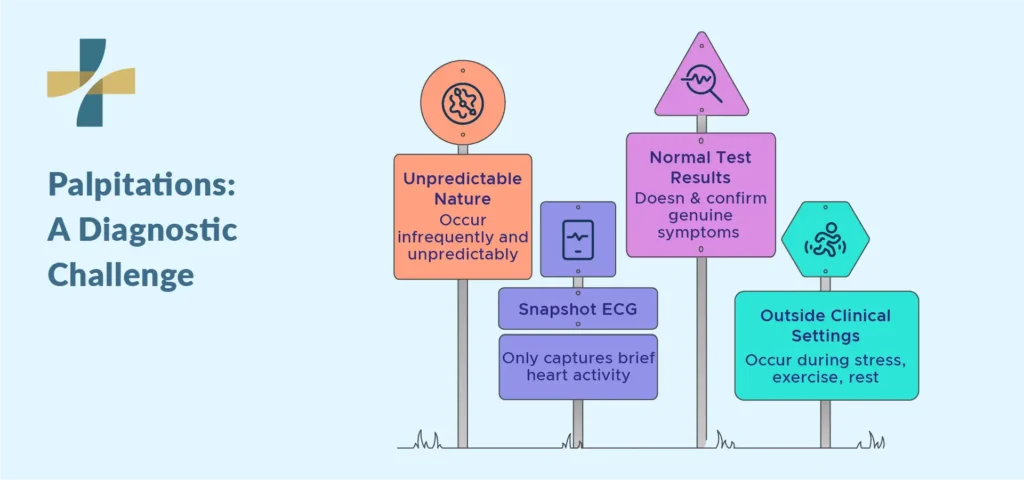
Palpitations are notoriously unpredictable. They may last only a few seconds, occur once a week, or appear only during specific activities like climbing stairs or lying down at night.
A standard office visit typically includes a brief physical exam and sometimes a resting ECG, which only captures a snapshot of your heart’s electrical activity. If your irregular heartbeat isn’t happening at that exact moment, the test can come back completely normal, even though your symptoms are genuine.
This is one of the most common frustrations patients describe when searching for an irregular heartbeat assessment. You know something feels wrong, but a single test doesn’t confirm it.
Example Case: A 42-year-old North Vancouver resident visits her family doctor after several episodes of heart fluttering during her morning commute. Her in-office ECG appears normal, but her doctor notes the pattern of episodes and recommends extended monitoring.
- A single ECG only reflects a few seconds of heart activity
- Palpitations often occur outside clinical settings, such as during stress, exercise, or rest
What a Holter monitor records over 24 to 48 hours
A Holter monitor is a small, portable device connected to your chest through several electrodes. It continuously records your heart rhythm and electrical activity as you go about your normal day, including work, exercise, sleep, and rest.
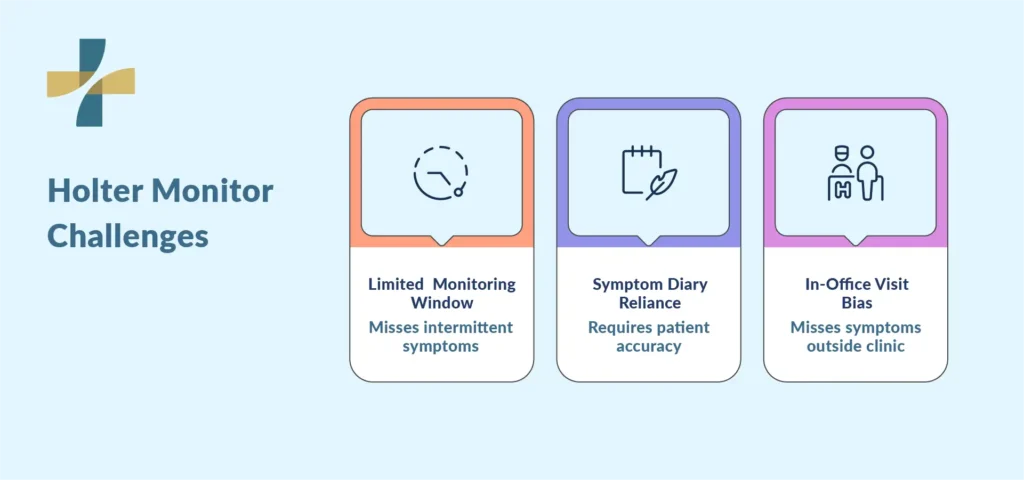
Unlike a one-time EKG, this extended window allows your doctor to see patterns that only appear intermittently. This is often described as the key difference in the EKG vs Holter monitor comparison that many patients ask about.
During the monitoring period, you will keep a symptom diary, noting when you feel palpitations, dizziness, or other sensations. This diary is later matched against the arrhythmia monitoring data to identify what was happening internally at that exact moment.
When intermittent symptoms require extended evaluation, getting Holter monitoring assessments for irregular heartbeat concerns through dedicated heart rhythm monitoring in North Vancouver ensures your doctor receives comprehensive data to guide your care
[INLINE IMAGE 1 HERE]
Example Case: A 55-year-old patient wears a 24-hour Holter monitor, which was provided by the North Vancouver clinic after reporting occasional dizziness. The device captures two brief episodes of irregular rhythm that did not occur during his in-office visit, giving his doctor clear diagnostic evidence.
Symptoms that may lead a doctor to recommend monitoring
Not every palpitation requires extended testing, but certain patterns raise the likelihood that a doctor will suggest a heart rhythm monitor in North Vancouver rather than relying on a single ECG.
Palpitations with dizziness, fainting, chest pain, or shortness of breath
When palpitations are paired with additional symptoms, doctors tend to take a more thorough diagnostic approach. These combinations may indicate that the heart’s rhythm is affecting blood flow or oxygen delivery, which is important to document clearly.
- Dizziness or lightheadedness during or after palpitations
- Fainting or near-fainting episodes
- Chest discomfort, pain, or pressure
- Unexplained shortness of breath, even at rest
Symptoms that come and go during normal daily activity
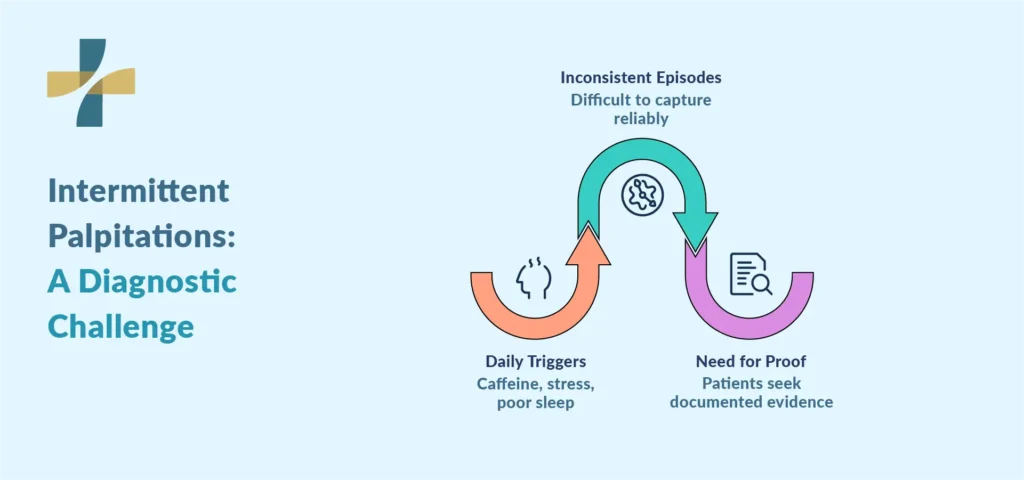
Some patients experience palpitations that are brief, unpredictable, and seemingly tied to daily triggers like caffeine, stress, poor sleep, or physical activity. Because these episodes are inconsistent, a longer recording period is often the only reliable way to catch them.
This pattern is one of the most frequent reasons patients search for an irregular heartbeat test near me, since they want documented proof of what they’re feeling.
What to prepare before speaking with a family doctor
Walking into an appointment with your family doctor, general practitioner, or general doctor with clear, organized information can significantly speed up the diagnostic process. Primary care physicians rely heavily on patient-reported patterns to determine whether Holter monitoring is appropriate.
Helpful details to prepare include:
- Timing & Frequency: When the palpitations started and how often they occur.
- Triggers & Context: What you were doing when they happened (resting, exercising, drinking coffee).
- Accompanying Symptoms: Whether you felt dizziness after palpitations, fainting, or chest discomfort.
- Family History: Any known arrhythmia or cardiovascular symptoms in your family history.
Having a detailed log allows your physician to decide whether a Holter monitor referral in North Vancouver or an in-office heart health check is the best next step. You can also read more patient guides on our NV Med Center Health Blog to prepare for your visit.
When should symptoms be treated as urgent?
While many palpitations turn out to be benign, certain cardiovascular symptoms require immediate medical evaluation rather than waiting for a routine family doctor appointment.
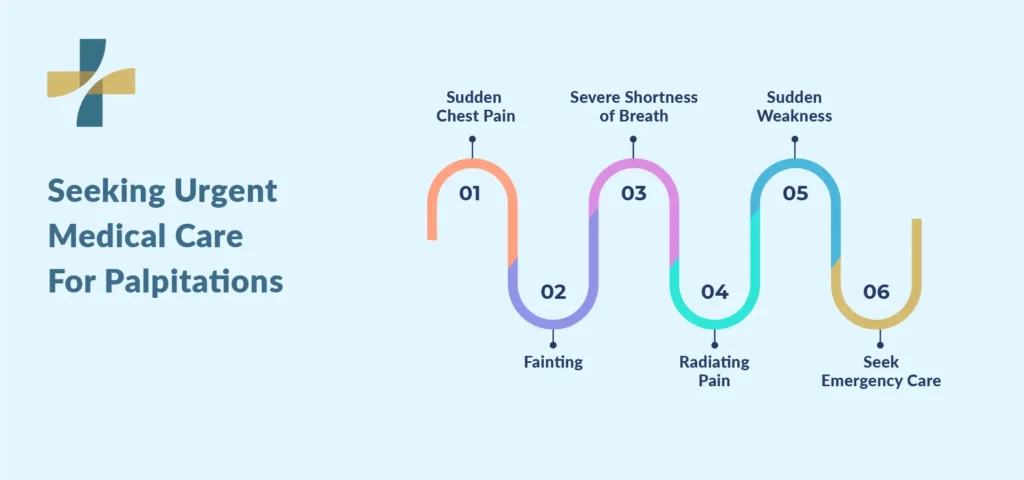
According to guidance from the Heart and Stroke Foundation of Canada, you should seek emergency medical attention if your irregular heartbeat is accompanied by:
- Sudden chest pain, pressure, or squeezing in your chest
- Fainting (syncope) or sudden loss of consciousness
- Severe, crushing shortness of breath
- Pain radiating to your jaw, neck, back, or arm
- Sudden weakness, numbness, or difficulty speaking
According to clinical resources, combining continuous arrhythmia monitoring with prompt emergency assessment for severe symptoms provides the safest pathway to diagnosing underlying conditions early. If you are unsure about the severity of your symptoms, always err on the side of caution and seek immediate emergency care.
For non-emergency concerns, evaluating your heart rhythm early can provide peace of mind. Book an appointment with NV Med Center today to speak with a doctor and find out if a Holter monitor North Vancouver assessment is right for you.
FAQ
1-When might a doctor recommend a Holter monitor for palpitations?
A doctor may recommend a Holter monitor when palpitations are frequent, unexplained, or not captured during a short office ECG.
2-Can a Holter monitor detect an irregular heartbeat?
It can record heart rhythm over a longer period, which may help detect rhythm changes that happen intermittently.
2-Is a Holter monitor painful?
No. The test is non-invasive. Sticky electrodes are placed on the chest and connected to a small recording device.
3-How long do you wear a Holter monitor?
Many Holter tests record for 24 to 48 hours, depending on the clinical reason for testing.
4-Should I keep a symptom diary?
Yes. Noting symptoms, activity, sleep, stress, caffeine, and timing can help the doctor compare symptoms with the recording.
5-When are palpitations urgent?
Palpitations with chest pain, fainting, severe shortness of breath, or sudden weakness should be treated as urgent and may require emergency care.
6-Can a general doctor order a Holter monitor test in North Vancouver?
Yes, a general doctor or general practitioner (GP) can conduct an initial evaluation for palpitations and order a Holter monitor assessment to continuously record your heart rhythm.