Last updated: June 25, 2026
Content developed with input from NV Med Centre’s team to reflect clinic-specific information about primary care access and healthcare navigation in British Columbia.
Few things worry parents more than seeing their child develop a fever. Parents may wonder whether they should monitor their child at home, call a doctor, contact HealthLink BC, or go directly to an emergency department.
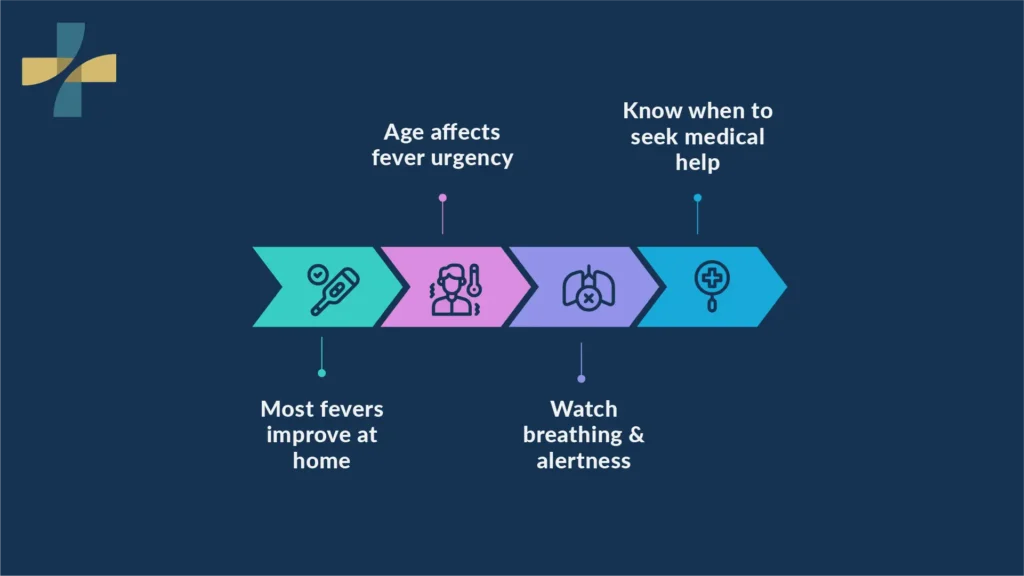
Most fevers in children are caused by common infections and improve with fluids, rest, comfort care, and time. However, a fever can require urgent medical attention based on the child’s age, breathing, hydration, alertness, behaviour, medical history, and other symptoms.
This guide explains fever in children, when to worry, how temperature thresholds differ based on the measurement method, and what parents can do safely at home.
Medical disclaimer: This article provides general health information only. It does not diagnose illness or replace advice from a qualified healthcare professional. Call 911 for a medical emergency or HealthLink BC at 8-1-1 for non-emergency health advice in British Columbia.
Quick Triage: What Should You Do About a Child’s Fever?
The number on the thermometer is only one part of the decision. Use the following three action levels to decide what to do next.
Call 911 or Go to the Emergency Department Now
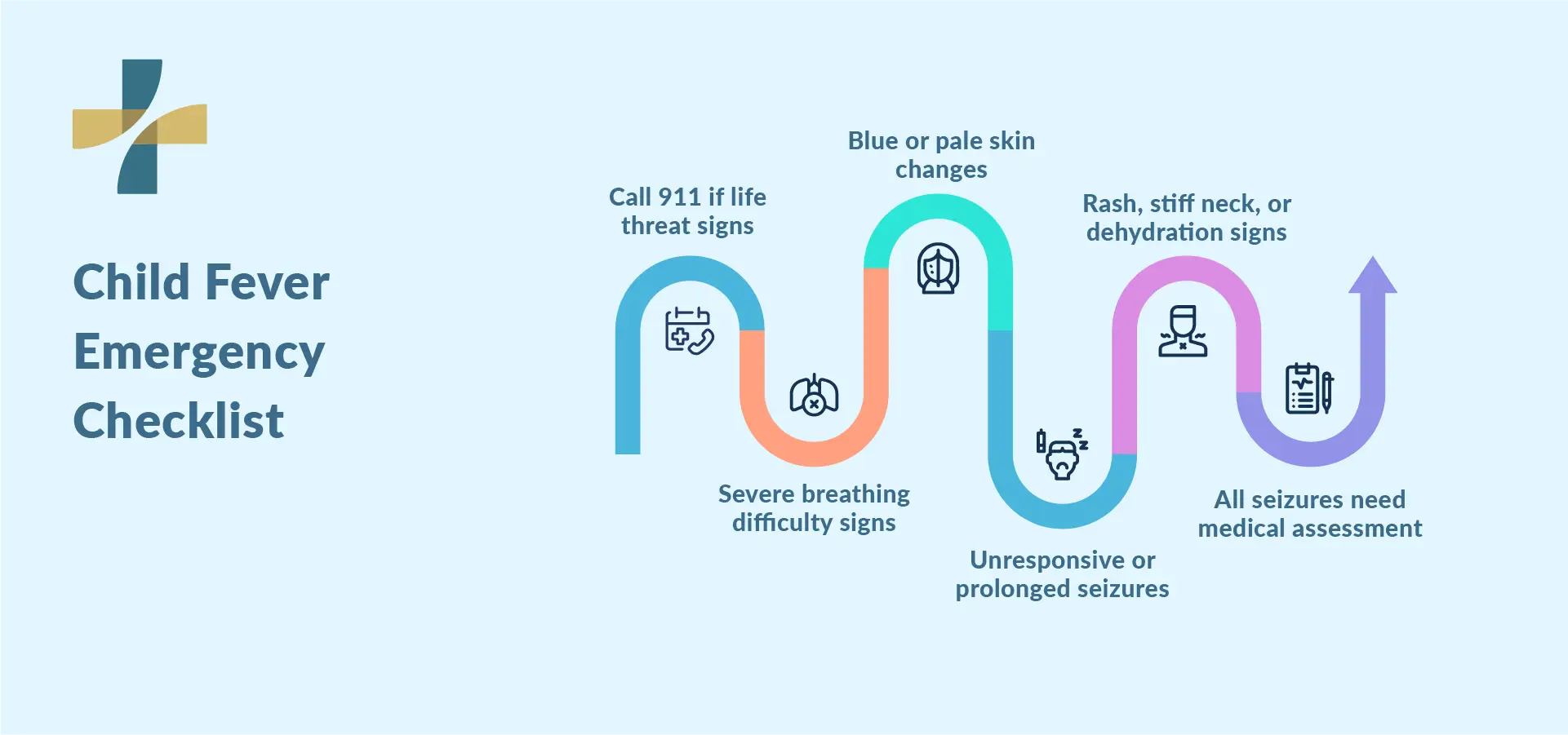
Call 911 when your child appears to have a life-threatening emergency or cannot be transported safely. Seek emergency care immediately if your child has:
- Severe difficulty breathing, including being unable to speak, cry, drink, or feed because of breathing problems
- Blue, grey, extremely pale, or mottled skin
- Severe sleepiness, unresponsiveness, confusion, or difficulty waking
- A seizure lasting longer than three minutes
- A seizure while younger than six months
- Two or more febrile seizures within 24 hours
- A stiff neck with severe headache, confusion, or marked light sensitivity
- A sudden rash with red or purple spots that do not fade when pressed
- Severe dehydration, such as being unable to drink, producing little or no urine, or becoming very weak and difficult to wake
- Signs of heatstroke, such as very hot skin, confusion, collapse, or a seizure after heat exposure
After any seizure, even one that stops quickly, the child should be medically assessed. HealthLink BC provides more detailed guidance on febrile seizures and when to call 911.
Contact a Doctor or HealthLink BC Today
Contact your healthcare provider or call HealthLink BC at 8-1-1 for advice today if:
- Your baby is younger than three months and has a rectal temperature of 38°C or higher
- Your baby is three to six months old and has a fever
- Your child is drinking less or urinating less than usual
- Your child has repeated vomiting or diarrhoea
- Your child is unusually irritable, lethargic, or not acting normally
- The illness is getting worse rather than gradually improving
- The fever improves, but then returns with new or worsening symptoms
- The fever lasts more than five days
- Your child recently travelled outside Canada
- Your child has a significant chronic medical condition or a weakened immune system
- You are unsure whether your child’s symptoms require in-person care
A baby younger than three months with a fever needs urgent medical assessment as soon as possible. This does not automatically mean calling 911. Call 911 only if the baby also has emergency warning signs, such as severe breathing difficulty, blue or grey skin, a seizure, unresponsiveness, or difficulty waking.
If prompt assessment is not available through your regular provider, follow the advice from 8-1-1 or go to an emergency department.
Monitor at Home
Home monitoring may be reasonable when your child:
- Is older than six months
- Is alert, responsive, and behaving reasonably normally
- Is drinking and urinating
- Is breathing comfortably
- Has no emergency warning signs
- Has mild symptoms that are stable or improving
- Has had a fever for fewer than five days
Continue checking your child’s breathing, hydration, alertness, behaviour, and symptoms. Seek advice sooner if anything worsens or you remain concerned.
What Is Considered a Fever in Children?
A fever is an increase in body temperature, usually caused by the immune system responding to an infection. The temperature that indicates fever depends on where and how it was measured.
According to the Canadian Paediatric Society, normal temperature ranges differ for rectal, oral, armpit, and ear readings. Parents should always tell the healthcare provider which method they used.
| Measurement method | Reading that can indicate a fever | Use and limitations |
| Rectal | 38°C or higher | Generally, the most accurate method for infants and young children |
| Ear | 38°C or higher | Quick, but positioning can affect the result and readings may be too low |
| Oral | Above 37.5°C | Generally more suitable for children older than five who can hold the thermometer correctly |
| Armpit | Above 37.5°C | Less accurate and mainly useful for screening |
For babies younger than three months, HealthLink BC treats a rectal temperature of 38°C or higher as a fever requiring urgent assessment. An armpit temperature of 37.5°C or higher in this age group should also be taken seriously.
Review the Canadian Paediatric Society’s guidance on fever and temperature taking and HealthLink BC’s instructions on how to take a child’s temperature.
Which Temperature Method Should Parents Use?
The most appropriate measurement method depends on the child’s age.
| Age | Preferred method | Possible alternative |
| Birth to 2 years | Rectal | Armpit |
| 2 to 5 years | Rectal | Ear or armpit |
| Older than 5 years | Oral | Ear or armpit |
Only take a rectal temperature if you feel comfortable and a healthcare professional has shown you how to do it safely. Do not use the same thermometer for both rectal and oral readings.
Ear and armpit readings can be less accurate. If the reading appears normal but your child feels hot and seems unwell, contact a healthcare provider or 8-1-1 for advice.
Touching the forehead is not a reliable way to confirm a fever. Use a digital thermometer whenever possible and follow the manufacturer’s instructions.
Fever in Babies Younger Than Three Months
A rectal temperature of 38°C or higher in a baby younger than three months requires urgent medical assessment. Young babies can become seriously ill quickly and may not show the same symptoms as older children.
Do not wait to see whether the fever improves at home. Contact your healthcare provider immediately for direction. If prompt medical assessment is unavailable, go to an emergency department.
A fever alone in this age group does not always require an ambulance. Call 911 if the baby has one of the emergency signs listed in the triage section, including breathing difficulty, blue or grey skin, a seizure, limpness, unresponsiveness, or difficulty waking.
Do not give fever medicine to a young baby before speaking with a healthcare professional unless you have already received specific instructions for that child.
Why Do Children Get Fevers?
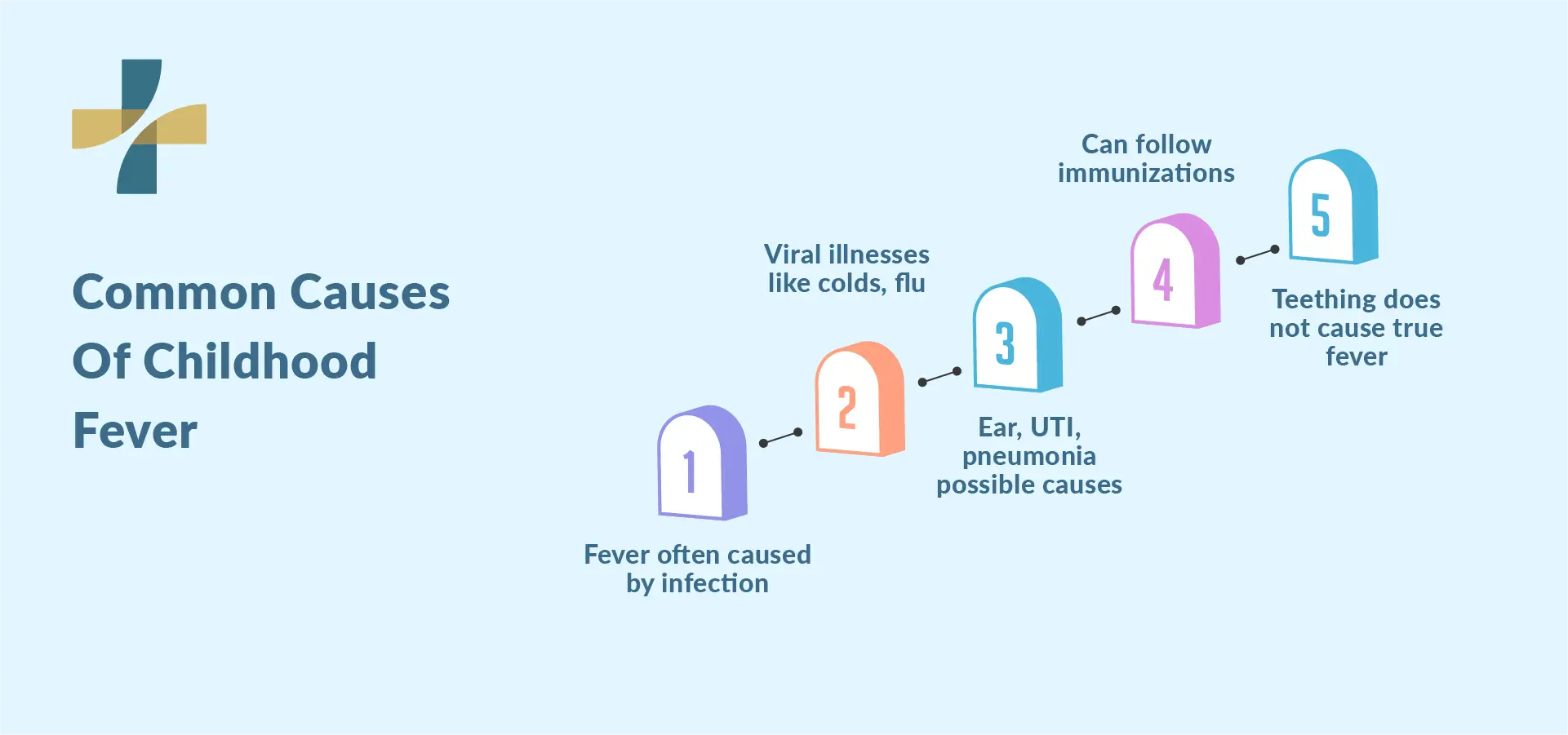
Fever is often part of the body’s response to an infection. Common causes include:
- Colds and other viral respiratory infections
- Influenza
- Ear infections
- Urinary tract infections
- Pneumonia
- Roseola and other childhood viral illnesses
- Reactions following some immunizations
Antibiotics do not treat viral infections. A healthcare professional may recommend antibiotics when a bacterial infection is diagnosed or strongly suspected.
Teething may cause discomfort, drooling, or changes in sleep, but it does not usually cause a true fever. A temperature that meets the fever threshold should not automatically be blamed on teething.
What Matters More Than the Temperature Number?
A high temperature does not always mean a child has a serious illness. A severe infection can also occur with a mild fever or no fever.
Pay closer attention to:
- How easily your child is breathing
- Whether they are drinking
- How often they urinate
- Whether they are alert and interacting
- Whether their behaviour is significantly different from normal
- Whether symptoms are improving or worsening
- The child’s age and medical history
Do not use whether the fever falls after medicine as the main test of how serious the illness is. Fever medicine may lower the temperature temporarily, but this response does not confirm whether the underlying illness is mild or serious.
How Long Can a Fever Last?
Many viral fevers in otherwise healthy children improve within three to four days. HealthLink BC advises contacting a healthcare provider when a fever lasts more than five days.
This five-day guidance is not a waiting period for every child. Younger babies and children with concerning symptoms need advice sooner.
Use the following age-based approach:
- Younger than three months: Seek urgent medical assessment for a rectal temperature of 38°C or higher. Do not wait several days.
- Three to six months: Contact a healthcare provider or 8-1-1 the same day for advice.
- Older than six months: Seek advice sooner if symptoms are worsening, hydration is poor, the child is unusually drowsy or irritable, or you are concerned. Contact a provider if the fever lasts more than five days.
Parents should also seek assessment if the child starts improving but then develops a new fever or becomes unwell again.
More detailed symptom guidance is available through HealthLink BC’s page on fever or chills in children age 11 and younger.
Children Who May Need Medical Advice Earlier
Some children need earlier medical guidance even when their symptoms initially appear mild.
Contact your child’s healthcare team or 8-1-1 promptly if your child has:
- A weakened immune system
- Cancer or treatment with chemotherapy or radiation
- An organ transplant
- No functioning spleen
- Significant heart, lung, kidney, metabolic, or neurological disease
- Cystic fibrosis, sickle cell disease, or congenital heart disease
- Regular steroid treatment or another medicine that suppresses the immune system
- A history of complex medical care
- Recent surgery or hospital treatment
- A care plan that gives specific instructions for fever
Follow the child’s existing specialist or emergency care plan when one has been provided.
What Is a Febrile Seizure?
A febrile seizure is a seizure associated with fever. It most often affects children between six months and five years of age.
During a febrile seizure, a child may:
- Become unresponsive
- Stiffen
- Shake their arms or legs
- Roll or turn their eyes
- Briefly lose consciousness
If a seizure occurs:
- Note the time it started.
- Place the child on a flat surface on their side.
- Move nearby hard or dangerous objects away.
- Do not hold the child down.
- Do not put food, medicine, fingers, or other objects in the child’s mouth.
- Keep the child on their side after the seizure stops.
Call 911 if the seizure lasts longer than three minutes, the child is younger than six months, the child has trouble breathing or turns blue, or two or more febrile seizures occur within 24 hours.
A child should be medically assessed after any seizure, even if it was brief and the child appears to recover.
Fever-reducing medicines may improve comfort, but they have not been shown to prevent febrile seizures.
Can Fever Cause Brain Damage?
Fevers caused by common childhood infections do not usually cause brain damage. The temperature number alone does not show how serious an illness is.
Heatstroke is different from an infection-related fever and requires emergency care. If your child develops any of the emergency warning signs listed in the triage section near the top of this guide, call 911 or seek emergency care immediately.
How to Care for a Child With a Fever at Home
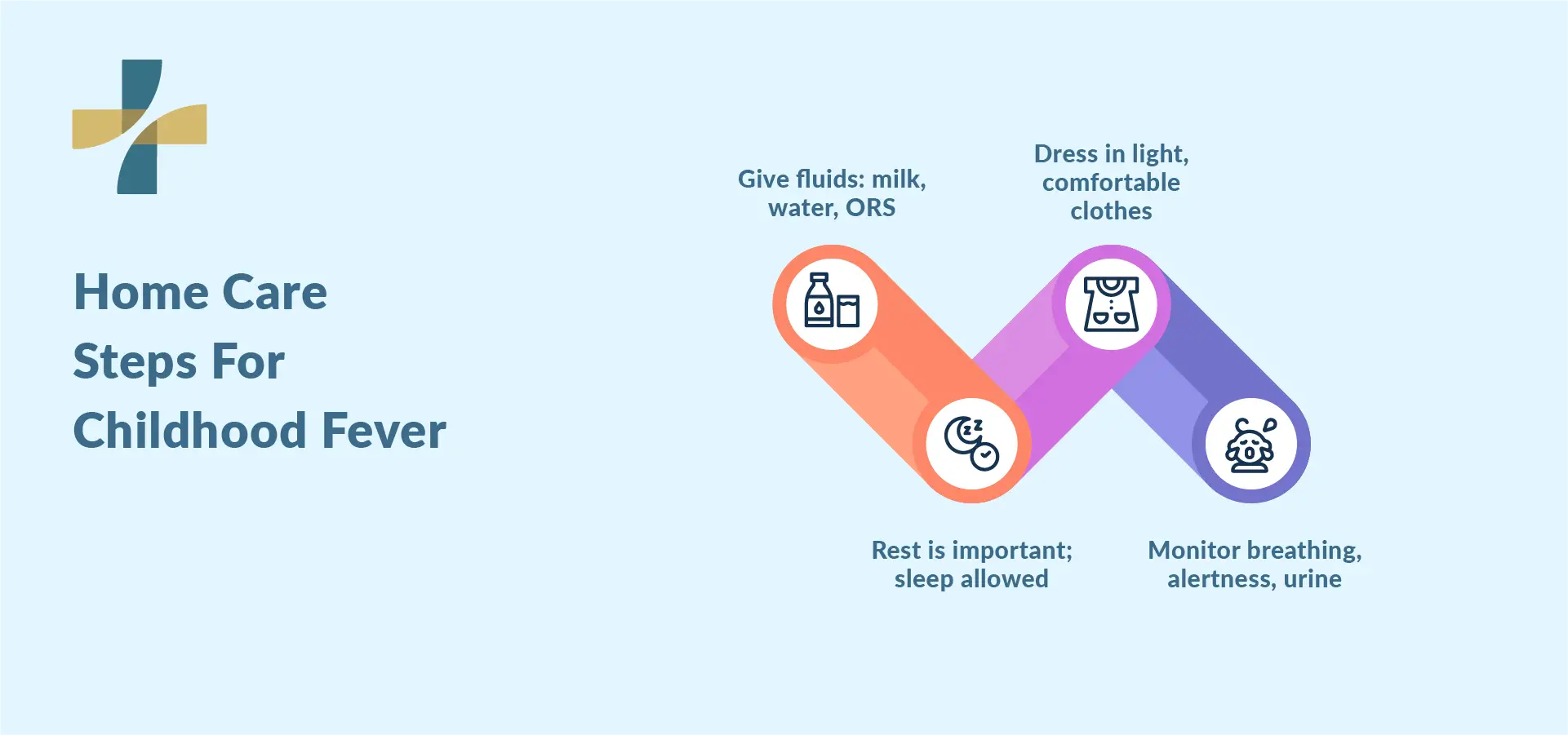
Home care should focus on hydration, rest, light clothing, comfort, and observation.
Offer Fluids Frequently
Fever can increase fluid loss. Offer fluids that are appropriate for your child’s age, such as:
- Breast milk
- Formula
- Water
- Milk
- Oral rehydration solution
Small, frequent amounts may be easier for a child who does not feel like drinking.
Watch for a dry mouth, fewer wet diapers or bathroom visits, no tears when crying, unusual tiredness, or difficulty drinking. Contact a healthcare provider if you notice signs of dehydration.
Allow Rest
Let your child sleep and rest as needed. Children do not have to remain in bed all day if they feel well enough for quiet activity.
A child who is sleeping comfortably does not usually need to be awakened only to lower the temperature. However, seek advice if the child is unusually difficult to wake or has other concerning symptoms.
Use Light Clothing
Dress your child in light, comfortable clothing. Remove extra blankets or heavy layers, but do not make the child so cold that they begin to shiver.
Sponge baths, alcohol rubs, ice, and cold baths are not recommended. They can cause discomfort and shivering without treating the illness causing the fever.
Continue Monitoring
Check your child periodically and watch:
- Breathing
- Fluid intake
- Urination
- Alertness
- Behaviour
- New symptoms
- Whether the illness is improving or worsening
Return to the triage section if your child develops a new warning sign.
Fever Medicine Safety
Fever medicine is not always necessary. It may be used to relieve pain and discomfort rather than simply bringing the thermometer reading back to normal.
Acetaminophen and ibuprofen are commonly used, but parents should follow the child’s weight-based dose on the product label or instructions from a healthcare professional.
Important safety points include:
- Speak with a healthcare professional before giving fever medicine to a baby six months old or younger.
- Do not give ibuprofen to a baby younger than six months without medical advice.
- Ibuprofen should generally only be used when the child is drinking reasonably well.
- Never give aspirin or acetylsalicylic acid, also called ASA, to anyone younger than 18 unless a doctor specifically prescribes it.
- Do not exceed the recommended dose.
- Use the dosing syringe, cup, or tool supplied with the medicine rather than a kitchen spoon.
- Check the “active ingredients” section on every label.
- Do not give a cold or flu product that contains the same active ingredient as a separate fever medicine.
- Do not alternate acetaminophen and ibuprofen unless a healthcare professional has told you to do so.
- Keep a written record of the medicine, dose, and time when more than one caregiver is involved.
HealthLink BC provides additional advice on safely giving over-the-counter medicines to children and explains why ASA should not be given to children or teenagers.
The seriousness of the illness should be judged by the child’s breathing, hydration, alertness, behaviour, age, and other symptoms, not by whether medicine lowers the fever.
Getting Medical Advice in North Vancouver
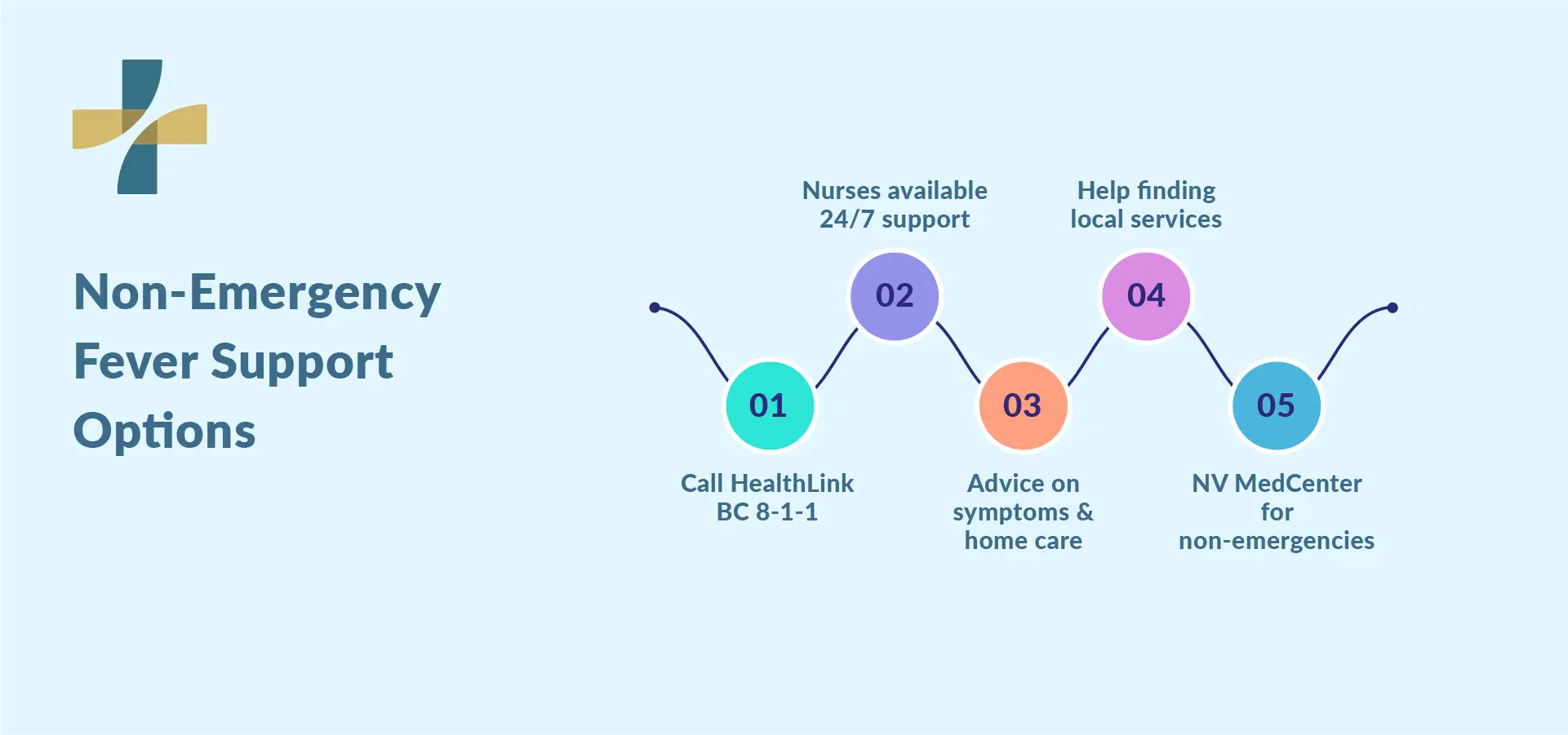
Parents in North Vancouver who are uncertain about a non-emergency fever can call HealthLink BC at 8-1-1. Nursing advice is available 24 hours a day, seven days a week.
A HealthLink BC nurse can discuss symptoms, suggest safe home care, and advise whether the child needs an in-person medical assessment. A navigator can also help families find appropriate healthcare services in their area.
NV MedCenter appointments should only be used for non-emergency assessment, follow-up, or reassurance. Clinic appointments and online visits are not alternatives to calling 911 or going to an emergency department when a child has emergency warning signs.
For non-emergency concerns, families can learn more about family physician care at NV MedCenter or book an appointment.
Conclusion
Seek urgent emergency help if your child develops any of the emergency warning signs listed near the top of this guide.
A baby younger than three months with a rectal temperature of 38°C or higher needs urgent medical assessment, even without other symptoms. For non-emergency concerns in British Columbia, call HealthLink BC at 8-1-1 for guidance.
NV MedCenter may provide non-emergency assessment, follow-up, or reassurance for children whose symptoms do not require emergency care.
Frequently Asked Questions
Fever in children: when should I worry?
Worry is warranted when a fever occurs in a baby younger than three months or is accompanied by breathing difficulty, poor hydration, unusual drowsiness, confusion, a seizure, a stiff neck, or a non-fading rash. The child’s age, alertness, breathing, hydration, and behaviour are often more important than the temperature alone.
What temperature is dangerous for a child?
There is no single temperature that defines a dangerous illness for every child. A rectal temperature of 38°C or higher in a baby younger than three months requires urgent medical assessment. In older children, symptoms and overall condition matter more than the number alone.
When should I call a doctor about my child’s fever?
Call a healthcare provider promptly for a baby younger than three months with a rectal temperature of 38°C or higher. Contact a provider or 8-1-1 the same day for a baby three to six months old, poor drinking, reduced urination, worsening symptoms, significant health conditions, or a fever lasting more than five days.
How long can a fever last in a child?
Many viral fevers improve within three to four days. Contact a healthcare provider if the fever lasts more than five days. Babies younger than six months need medical advice sooner, and no parent should wait five days when a child has concerning symptoms or is becoming more unwell.
What are the signs of serious illness with a fever?
Signs of serious illness may involve a child’s breathing, alertness, hydration, skin colour, neurological symptoms, or ability to respond normally. Review the full emergency warning-sign list in the triage section near the top of this guide and seek urgent help if any of those signs appear.
When should I take my child to the emergency room?
Go to the emergency department if your child develops any of the emergency warning signs listed in the triage section near the top of this guide. Call 911 when the situation appears life-threatening, or the child cannot be transported safely.
What can I safely do for a child’s fever at home?
Offer fluids frequently, allow rest, use light clothing, and watch breathing, hydration, urination, alertness, and behaviour. Fever medicine may be used for comfort when appropriate for the child’s age and weight. Do not use cold baths, sponge baths, alcohol rubs, aspirin, or duplicate medicines containing the same active ingredient.