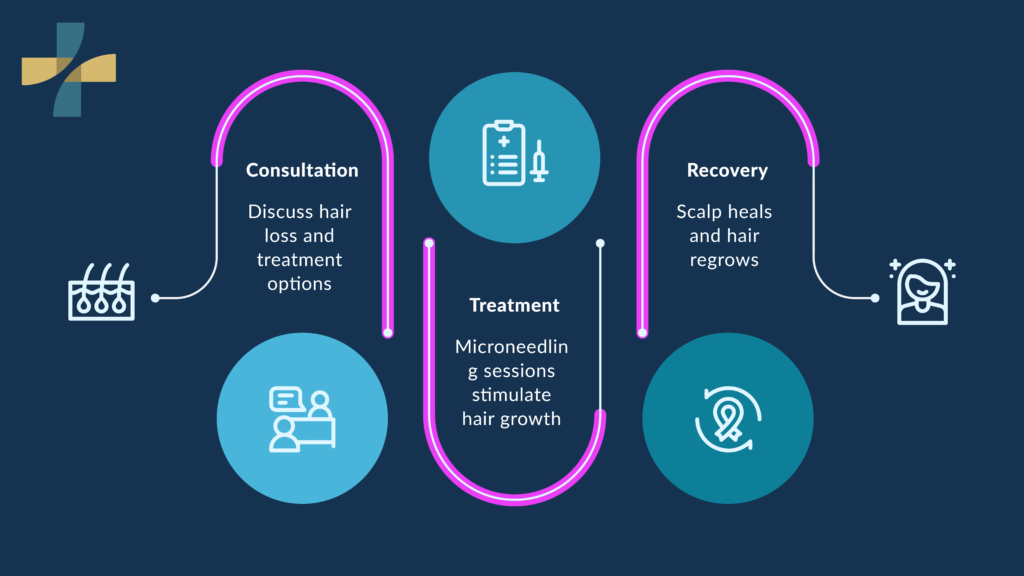
Hair thinning can feel slow at first, then suddenly hard to ignore. A wider part, more strands in the shower, or less volume at the crown can affect confidence and push people to look for non-surgical options. If you are searching for scalp microneedling in Vancouver, you likely want clear answers on who it may help, how long results can take, and what recovery is like.
This guide explains the treatment in plain language, stays focused on hair loss only, and shows when it makes sense to book a hair loss consultation Vancouver patients can trust.
What is Scalp Microneedling and How Does it Work for Hair Loss?
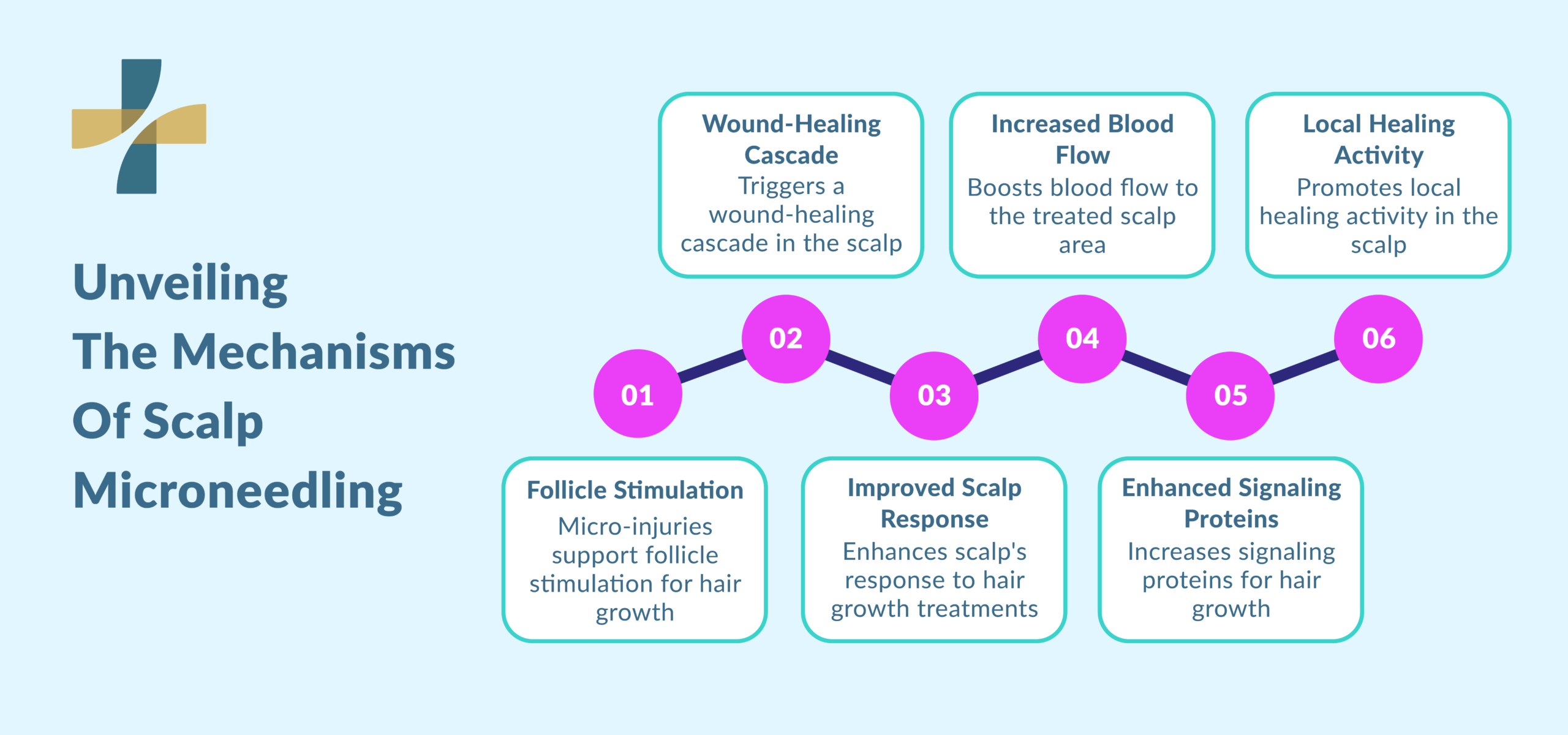
Scalp microneedling in Vancouver is a treatment that uses very small needles to create controlled micro-injuries in the scalp. These tiny channels may support follicle stimulation, trigger a wound-healing cascade, and improve how the scalp responds to hair growth treatments.
The goal is not to damage the scalp. The goal is to create a measured repair response. When the scalp repairs itself, blood flow, signalling proteins, and local healing activity can rise in the treated area. That is why microneedling for hair growth gets so much attention in hair restoration discussions.
This topic has also become more visible in public conversation. Mainstream medical publishers, clinics, and consumer brands now talk about microneedling, PRP, and other hair restoration options more often than they did a few years ago. That trend has made more people aware of treatment options, but it has also created confusion about what microneedling can and cannot do.
For pattern hair loss, the treatment is usually discussed as support for active follicles, not as a fix for long-standing smooth bald areas. Research in PubMed found that microneedling, especially when combined with other therapies, showed improvement in hair density and hair diameter in androgenetic alopecia studies.
A simple example helps. A person in Vancouver notices that their part line is getting wider and their ponytail feels thinner than it did last year. That person may still have active follicles that are underperforming. In that setting, scalp treatment may be worth discussing with a provider.
What the treatment aims to do
| Treatment goal | What it means in plain language |
| Follicle stimulation | Encouraging weaker follicles to become more active |
| Wound-healing cascade | Triggering a repair response after controlled micro-injury |
| Better topical support | Creating short-term channels that may improve product contact |
| Scalp health support | Improving the local environment around active follicles |
Who is a Good Candidate for Scalp Microneedling in Vancouver?
The best candidates for scalp microneedling at Vancouver clinics are adults with early to moderate thinning hair, pattern hair loss, or some forms of shedding where follicles are still active. It tends to be less helpful when follicles are no longer functioning or when the cause of hair loss needs a different medical plan.
The most common reason people ask about this treatment is microneedling for androgenetic alopecia. This is the medical term for male and female pattern hair loss. It often shows up as a widening part, recession at the temples, thinning at the crown, or lower overall volume. Research and clinic guidance both suggest that earlier treatment generally gives a better chance of improvement than waiting until the loss is advanced.
What Other Types of Hair Loss May Be Reviewed?
Scalp microneedling may also be reviewed for some cases of stress-related shedding, postpartum thinning, or traction-related hair loss. These cases still need a proper review because not every type of hair loss responds in the same way. A consultation matters because the scalp may need a diagnosis before any treatment plan makes sense.
Who Should Book a Consultation Before Scalp Microneedling?
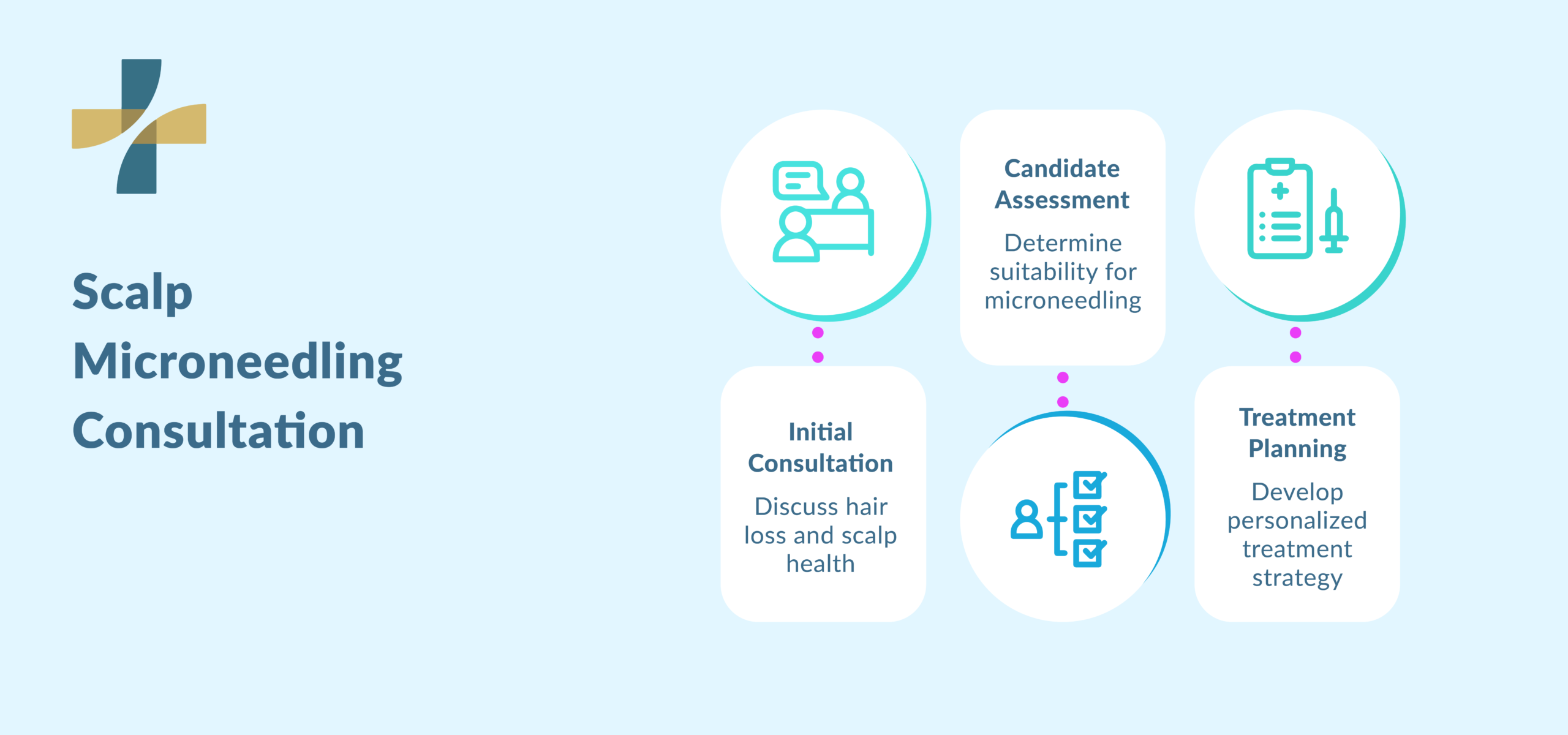
A consultation is the right next step for people with early pattern hair loss, diffuse thinning, ongoing shedding, or changes in scalp health that need a closer look. It is also important for people who may not be good candidates, including those with scarring alopecia, active scalp infection, uncontrolled skin inflammation, frequent infections, healing concerns, or medical issues that slow recovery.
A practical way to think about it is this:
- Early pattern hair loss often deserves a closer look
- Diffuse thinning may need both scalp treatment and medical review
- Long-standing smooth bald patches usually need a different discussion
- Good scalp health supports better treatment planning
- Realistic expectations matter from the start
One Vancouver patient may have six months of a widening part and increased hair fall after stress. Another may have a shiny bald patch that has not changed for years. Those are not the same clinical picture, and they should not be treated like they are.
What Does the Procedure Feel Like and What Happens at the Appointment?
Scalp microneedling usually feels like fast, light pricks across the scalp. Comfort steps can be adjusted based on the treatment plan, the area being treated, and the patient’s pain tolerance. Most visits are short, and many patients return to normal tasks the same day.
What Happens Before Scalp Microneedling Starts?
Before treatment, the appointment should begin with a history and scalp review. The provider looks at the pattern of hair loss, how long it has been going on, whether there is active shedding, and whether there are signs that point to a different cause.
What Happens During the Scalp Microneedling Procedure?
During the session, a microneedling device is passed over the areas of concern. Readers often ask about scalp microneedling needle depth, but depth is not something patients should try to choose on their own. Published reviews show that treatment settings can vary, and the right depth depends on the treatment goal, the scalp, and the provider’s judgment.
What Happens Right After the Procedure?
Right after treatment, the scalp may look pink or red and feel warm or mildly tender. Some patients may have pinpoint bleeding during the session, especially when deeper settings are used. Most of these reactions settle over a short period.
One patient may book a midday appointment and return to desk work with mild sensitivity. Another may plan a heavy gym session later that day and decide to move it because the scalp feels too tender. That is why planning and aftercare matter.
When Do Results Show, and How Many Sessions Are Usually Needed?
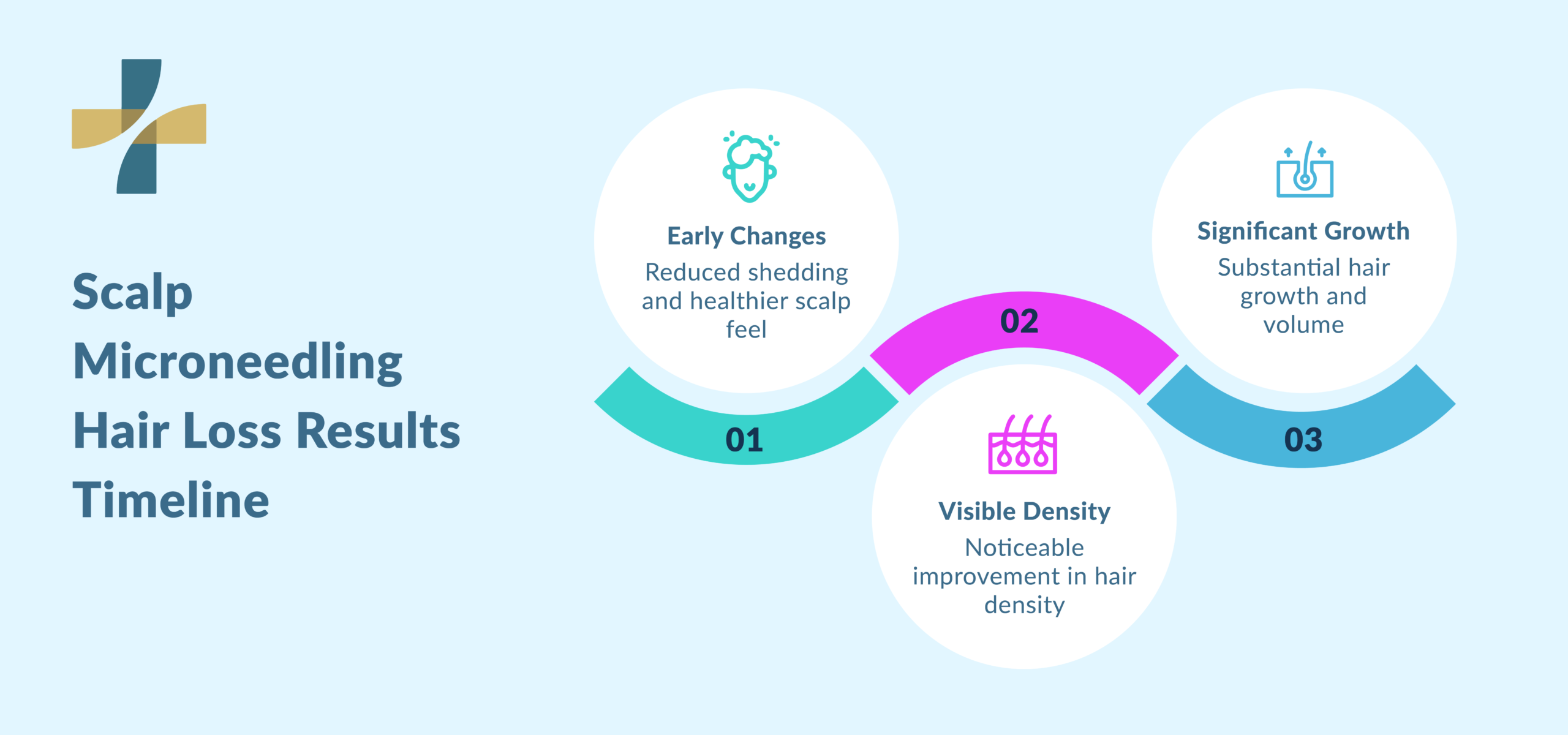
Results from scalp microneedling for hair loss are gradual. Early changes may include less shedding or a healthier-feeling scalp, while visible changes in hair density often take weeks to months. Most treatment plans involve repeated sessions rather than one-off treatment.
This is where competitor content gets one thing right. People want a timeline. They do not want vague promises. They want to know what may happen at week two, month two, and month four.
Typical treatment timeline
| Time period | What may happen |
| Weeks 1 to 2 | Redness, mild tenderness, short-term repair response, possible early shedding |
| Weeks 4 to 6 | Healing continues, scalp may feel calmer, visible regrowth may still be limited |
| Weeks 8 to 12 | Some patients may notice fine new hairs or less scalp show-through |
| 3 to 6 months | Better chance of visible changes in thickness and density with a consistent plan |
| Maintenance | Follow-up sessions may be discussed to support results |
Temporary increased hair fall can worry people. Some patients do notice more shedding early on. That does not always mean the treatment is failing. It can reflect a shift in the hair cycle, though each case needs context.
How Many Sessions Are Usually Needed for Hair Regrowth?
Most patients need a series of treatments rather than one session. The exact number depends on the type of hair loss, how early treatment starts, overall scalp health, treatment consistency, and whether other therapies are part of the plan.
Results can differ based on:
- The type of hair loss
- How early treatment starts
- Overall scalp health
- Treatment consistency
- Whether other therapies are added
- Whether underlying medical issues are addressed
A person with early androgenetic alopecia may notice less shedding by month two and better fullness by month four. A person with more advanced thinning may need more time, a different plan, or combination therapy.
Is Microneedling Better on Its Own or Combined with Minoxidil or PRP?
Microneedling can be used on its own, but some patients may do better when it is part of a broader plan. Microneedling with minoxidil or microneedling with PRP may be discussed based on the diagnosis, treatment history, and scalp health.
The evidence base is growing, and recent reviews support the idea that combination treatment can outperform one treatment alone in some androgenetic alopecia settings. A 2024 PubMed systematic review reported that combined microneedling therapy showed statistically significant gains in hair density and diameter compared with monotherapy. A 2025 review focused on microneedling plus minoxidil found stronger outcomes than minoxidil alone across included trials.
Quick comparison
| Approach | What it may offer | Main point |
| Microneedling alone | Scalp stimulation and support for active follicles | May suit some early-stage cases |
| Microneedling with minoxidil | Mechanical stimulation plus topical support | Timing after treatment matters |
| Microneedling with PRP | Scalp stimulation plus growth-factor-based medical treatment | Usually needs a provider-led plan |
Healthline also points out a practical safety issue here. Using minoxidil immediately after microneedling may increase burning, itching, or irritation, so the timing of restart should come from a clinician rather than guesswork.
A simple example is that one patient is already using topical minoxidil and wants to know whether microneedling may help support the plan. Another patient wants to avoid long-term daily topicals and asks if a clinic-based treatment series makes more sense. Those are both fair questions, but the answers should come from a scalp review, not online guesswork.
What are the Side Effects, Risks, and Safety Points to Know?
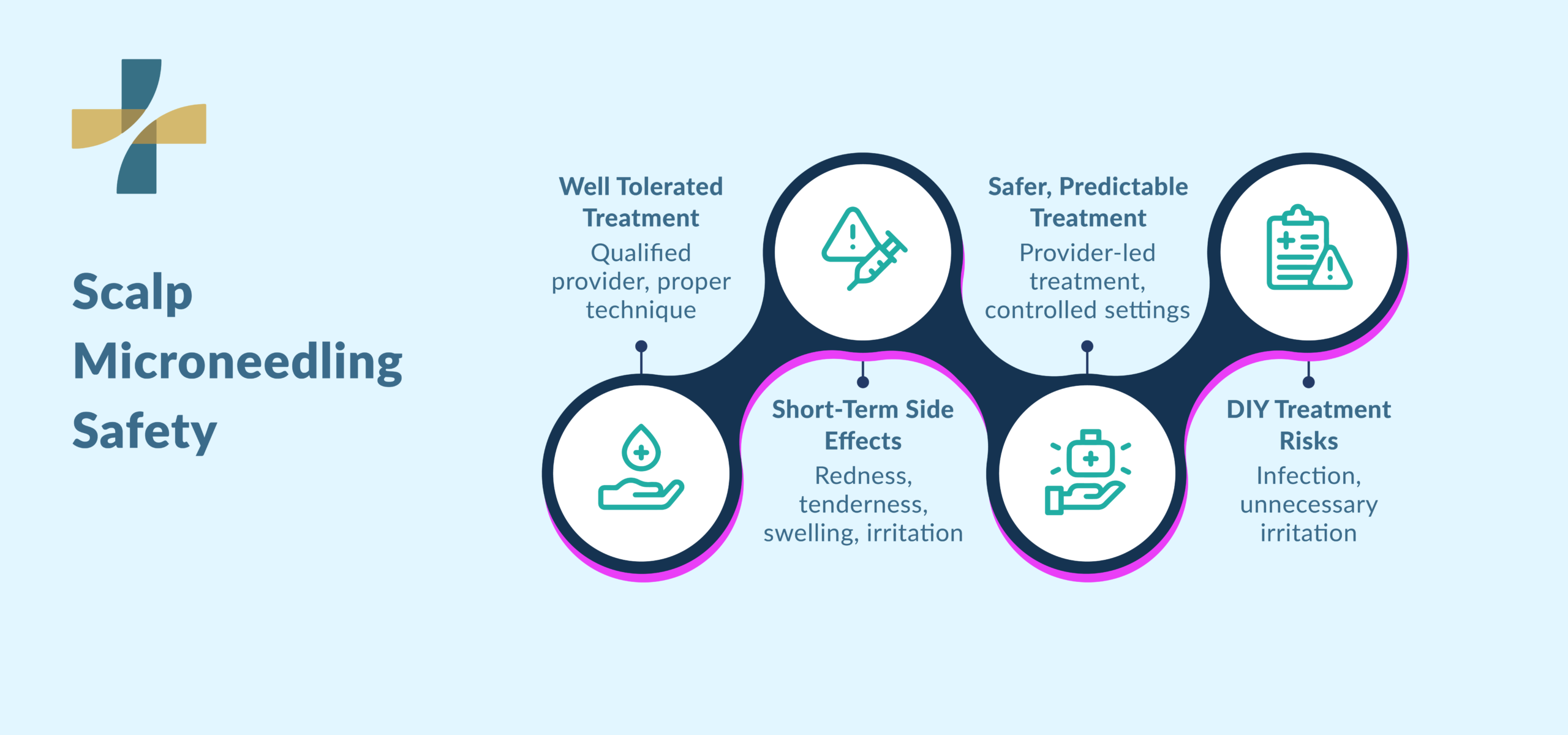
Scalp microneedling is often well tolerated when it is done by a qualified provider, but it can cause short-term redness, tenderness, swelling, and irritation. Safe treatment depends on proper technique, patient selection, and clear aftercare to reduce the risk of infection or unnecessary irritation.
The common short-term effects are usually mild. People may notice a warm scalp, redness, sensitivity to touch, or mild swelling. Some can have pinpoint bleeding during the session.
The main safety points are practical:
- Treatment should match the cause of hair loss
- A trained provider should select the device and setting
- The scalp should be clean and suitable for treatment
- Aftercare should be followed closely
- Active products should only be resumed on the advised schedule
That matters because DIY treatment often looks easy online. A person may buy a cheap roller, use too much pressure, and then apply a strong product straight away. Another person gets provider-led treatment with controlled settings and a clear recovery plan. The second path is safer and more predictable.

What Should You Do After Scalp Microneedling?
The best scalp microneedling aftercare keeps the scalp clean, calm, and protected while it heals. Patients should follow the provider’s advice on washing, exercise, sweating, sun exposure, and when to restart active products such as minoxidil or other scalp treatments.
The first 24 to 48 hours are usually the key window. The scalp may still feel warm or tender, so it helps to keep routines simple. That often means avoiding harsh shampoos, scratching, picking, and heavy sweating until the scalp settles.
Basic aftercare checklist
| Do | Avoid |
| Follow the clinic’s washing instructions | Scratching or rubbing the scalp |
| Keep the treated area clean | Sauna, steam room, or heavy sweat right away |
| Protect the scalp from strong sunlight | Strong actives without approval |
| Ask when to restart minoxidil or other products | Layering random serums after treatment |
People often underestimate how much aftercare affects comfort. A patient who goes straight to hot yoga after a session may feel far more irritated than someone who keeps the rest of the day simple. A patient who restarts active products too soon may also end up with more burning than expected.
What Affects the Cost of Scalp Microneedling in Vancouver, and When Should You Book?
Scalp microneedling cost in Vancouver can vary by clinic, treatment plan, and whether other therapies are added. The right next step is not choosing the lowest price alone. It is booking a consultation to confirm candidacy, expected timeline, and what kind of plan makes sense for your scalp.
Cost usually changes based on the number of sessions, whether PRP or other options are included, the provider’s training, and the depth of the medical review.
People often search for the cheapest option when what they need is the right diagnosis. Hair loss can come from androgenetic alopecia, stress-related shedding, inflammatory scalp disease, traction, nutrition issues, or other causes. A low-cost session is not useful if the treatment is not matched to the cause.
You should think about booking when:
- Your part is getting wider
- Your crown looks thinner in photos
- You are seeing more daily shedding
- Over-the-counter steps are not enough
- Hair loss is starting to affect confidence
How NV Med Center Helps Patients Seeking Scalp Microneedling in Vancouver
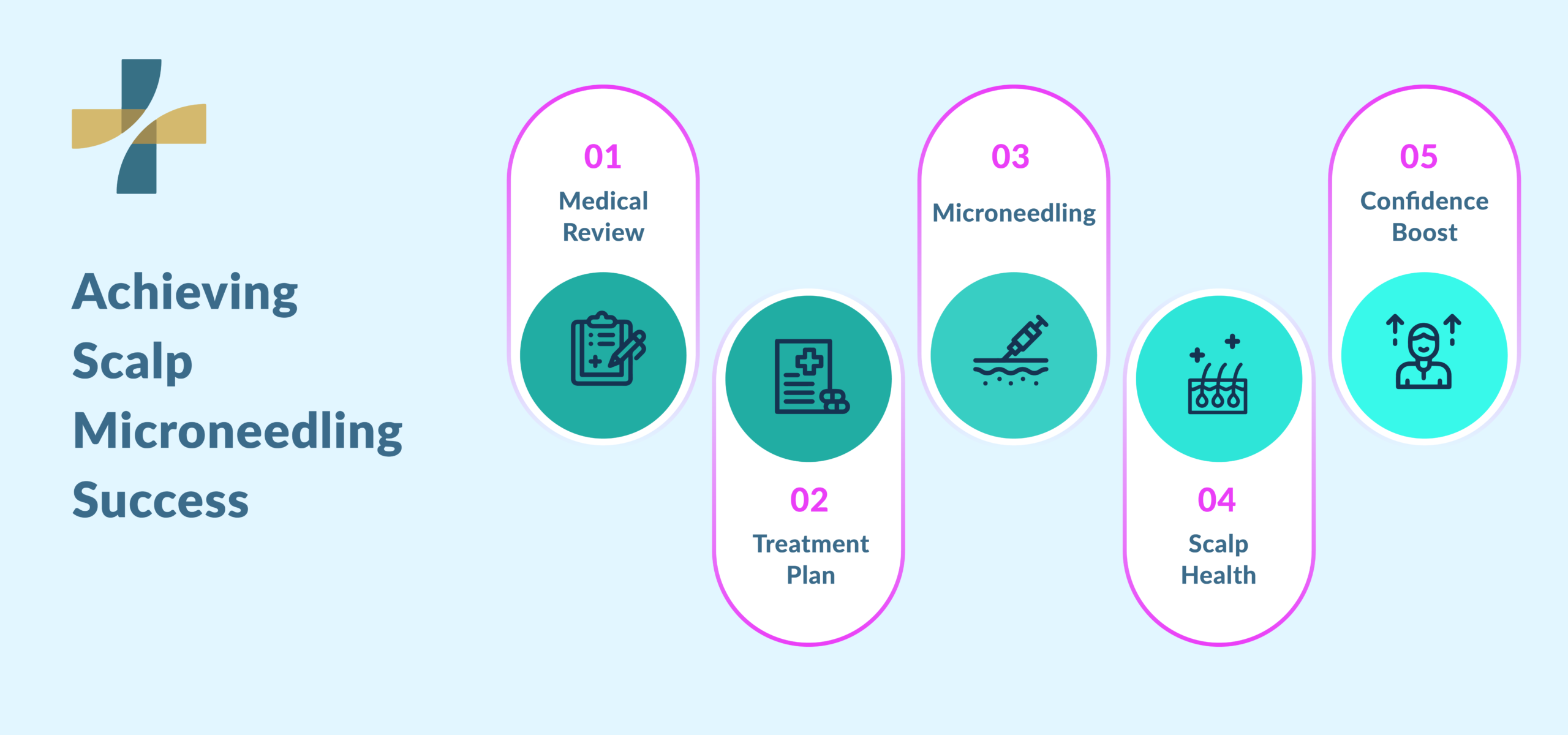
Scalp microneedling works best when it is matched to the right patient, the right diagnosis, and a realistic treatment plan. For people dealing with thinning hair, pattern hair loss, or ongoing shedding, the goal is not hype. The goal is a clear plan that may support better scalp health, better hair density, and better confidence over time.
At NV Med Center, patients can start with a medically guided review of their concerns, symptoms, and treatment goals in one local clinic. We offer microneedling-related care and broader medical support in North Vancouver, with a team that includes providers experienced in skin, hair, and aesthetic care. Contact us to discuss your options or book scalp microneedling in Vancouver through a professional consultation.
FAQs
Does scalp microneedling help pattern hair loss?
Scalp microneedling may help some people with pattern hair loss, especially those with early to moderate androgenetic alopecia and still-active follicles. It is usually discussed as support for thinning rather than a fix for long-standing smooth bald areas. A consultation helps confirm whether your hair loss pattern is a good fit.
When do results typically show, and how many sessions are needed?
Results are gradual. Some people notice less shedding or a healthier-feeling scalp in the first several weeks, while visible changes in hair density often take a few months. Most people need a series of sessions rather than one appointment, and the spacing should be based on the treatment plan.
Is microneedling more effective alone or combined with minoxidil or PRP?
For some patients, combined treatment may work better than one treatment alone. Recent reviews found stronger results in certain androgenetic alopecia studies when microneedling was paired with other therapies, including minoxidil. The right option depends on your scalp, your diagnosis, and how you tolerate treatment.
What does the procedure feel like, and what is the downtime?
Most people describe scalp microneedling as a series of quick pricks with mild to moderate discomfort. Redness, warmth, and tenderness are common for a short time after treatment, and many people return to normal tasks the same day. Your provider should tell you when to restart exercise, washing, and active scalp products.
Who should not do scalp microneedling?
People with active scalp infection, some inflammatory scalp conditions, poor healing, or long-standing areas with no active follicles may not be good candidates. It may also need caution in people with medical issues that raise infection risk or slow recovery. A proper medical review should come before treatment.