Workplace injuries can happen in any job setting. A fall on a construction site, a lifting injury in healthcare, repetitive strain in an office, or a vehicle incident during work duties can all lead to medical concerns that require proper documentation.
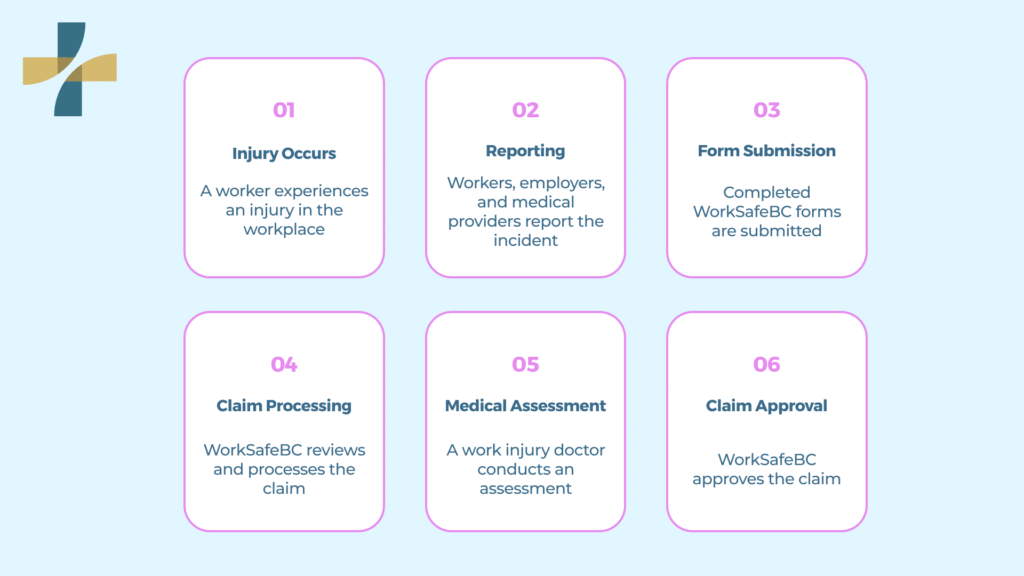
In Vancouver, workplace injuries are managed through WorkSafeBC. When an injury occurs, workers, employers, and medical providers each play a role in reporting what happened. WorkSafeBC forms help organise this information and support the workplace injury claim process.
This guide explains common workplace injuries, how WorkSafeBC works, which forms are used, and how a medical clinic supports injury documentation and recovery. It also explains when to see a work injury doctor and how a WorkSafeBC medical assessment fits into the process.
Understanding Workplace Injuries in Vancouver
A workplace injury is an injury, illness, or condition caused by job duties or the work environment. In British Columbia, WorkSafeBC manages workplace injury claims by collecting reports from workers, employers, and medical providers. WorkSafeBC forms help document what happened, support medical assessment, and guide the claim and recovery process.
Common workplace injuries
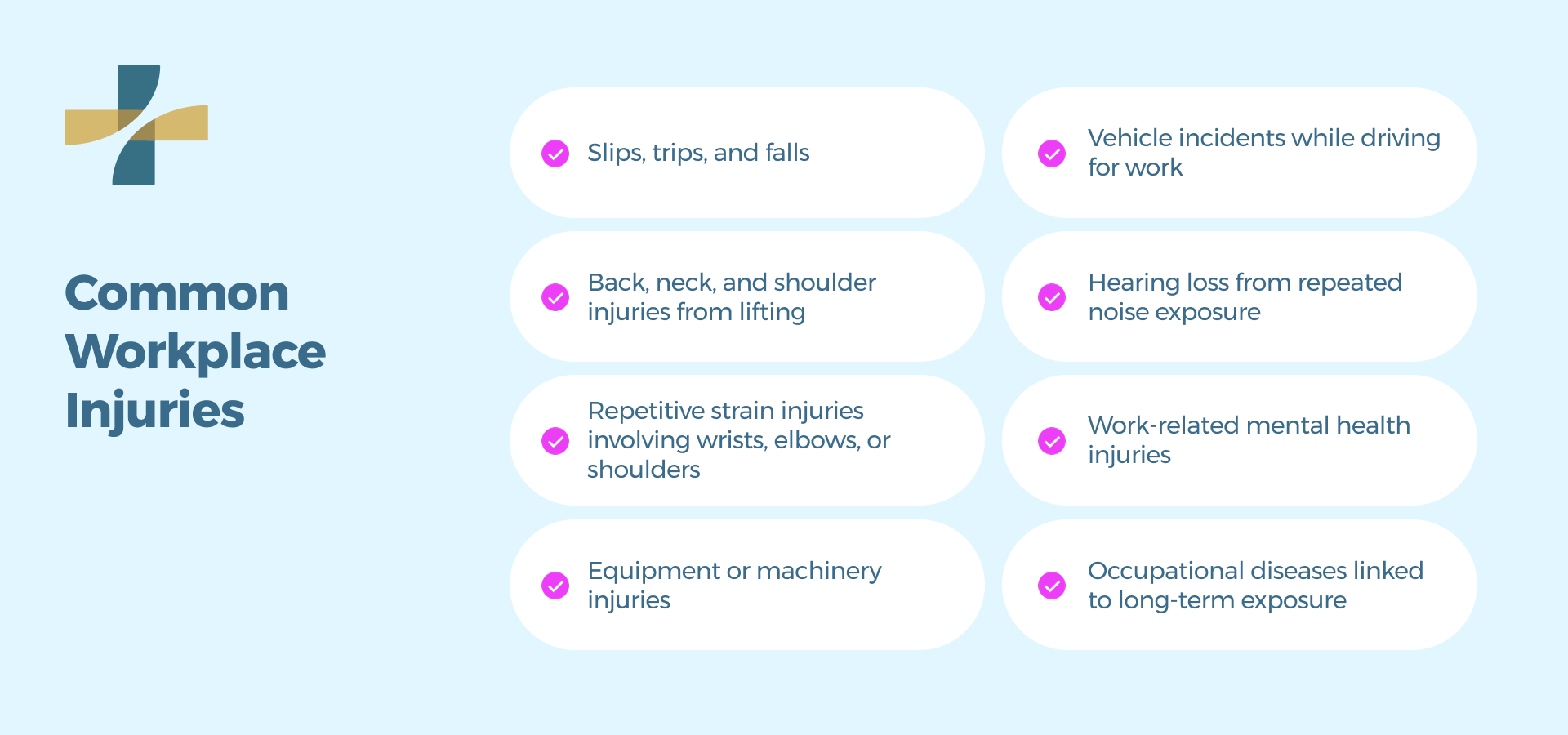
Workplace injuries in Vancouver often include:
- Slips, trips, and falls
- Back, neck, and shoulder injuries from lifting
- Repetitive strain injuries involving wrists, elbows, or shoulders
- Equipment or machinery injuries
- Vehicle incidents while driving for work
- Hearing loss from repeated noise exposure
- Work-related mental health injuries
- Occupational diseases linked to long-term exposure-
Some injuries were obvious at the time of the incident. Others appear hours or days later. Pain, stiffness, weakness, headaches, or reduced movement may develop after a shift ends.
Industries with higher injury risk
Certain roles have higher injury rates due to physical demands or environmental exposure:
- Construction and trades
- Warehousing and logistics
- Healthcare and caregiving
- Hospitality and food services
- Transportation and delivery
- Office roles involving repetitive computer work
A workplace injury that Vancouver workers experience does not need to involve time off to be reportable. Medical treatment beyond basic first aid often triggers reporting requirements.
When first aid is not enough
Medical care is often needed when:
- Pain does not improve after rest
- Movement becomes limited
- Symptoms worsen over time
- Numbness or weakness appears
- Head, neck, or back symptoms develop
- Mental health symptoms affect daily function
In these cases, a medical visit helps document the injury and begin appropriate care.
The Role of WorkSafeBC in Workplace Injury Claims
WorkSafeBC is the organisation responsible for workplace injury claims in British Columbia. Its role includes collecting injury reports, reviewing eligibility, and coordinating services related to work injuries.
What WorkSafeBC does
WorkSafeBC manages several parts of the injury process:
- Receives injury reports from workers, employers, and health care providers
- Reviews information to determine claim eligibility
- Coordinates medical and recovery-related services
- Supports return to work planning when appropriate
WorkSafeBC does not rely on one report alone. Claims are built using information from multiple sources.
When WorkSafeBC must be notified
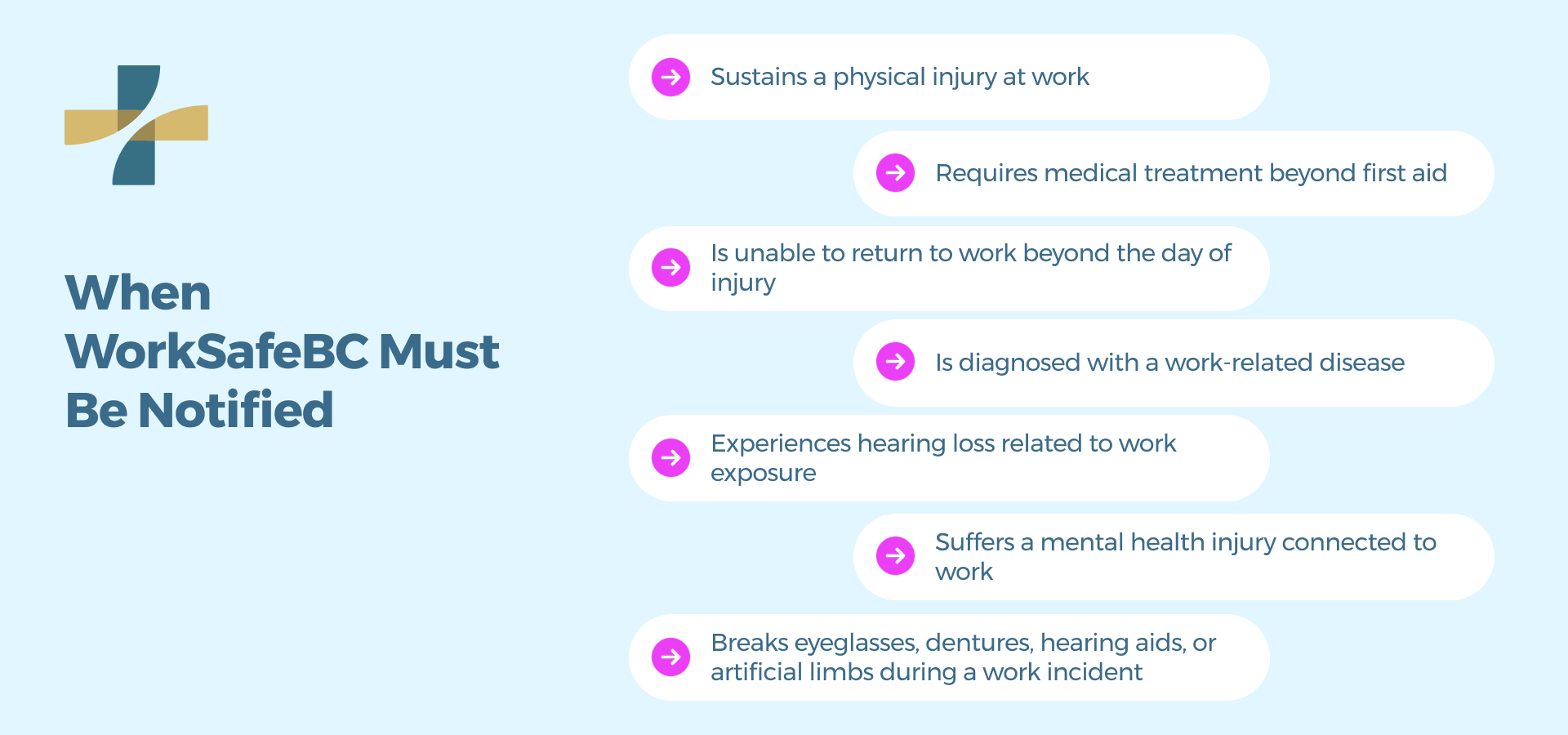
WorkSafeBC should be contacted when a worker:
- Sustains a physical injury at work
- Requires medical treatment beyond first aid
- Is unable to return to work beyond the day of injury
- Is diagnosed with a work-related disease
- Experiences hearing loss related to work exposure
- Suffers a mental health injury connected to work
- Breaks eyeglasses, dentures, hearing aids, or artificial limbs during a work incident
Reporting timelines
Reporting timelines affect how quickly a workplace injury claim can move forward.
| Reporting type | Timeframe |
| Employer reporting | Within 72 hours of awareness |
| Serious incidents | Immediate reporting |
| Medical reporting | After the first medical visit |
Early reporting helps reduce delays and missing information.
Key WorkSafeBC Forms and How They Are Used
WorkSafeBC forms organise injury details into a structured claim file. Each form serves a different role.
Why multiple forms are required
Workplace injury claims involve information from three key sources. The worker explains how the injury occurred, the employer confirms job duties and incident details, and the medical provider documents clinical findings. WorkSafeBC reviews all three reports together to assess and manage the workplace injury claim.
Worker Report Form 6
Form 6 is completed by the injured worker.
It includes:
- Personal information
- Employer and job details
- Date, time, and location of injury
- Description of how the injury occurred
- Body parts affected
- Witness information, if available
Workers can submit Form 6 online, by phone, or by paper.
Employer Report Form 7
Form 7 is completed by the employer.
It includes:
- Confirmation of the incident
- Job duties are being performed
- Equipment involved
- Work schedule and wage information
- Return to work details if available
Employers are required to submit this form within the reporting timeframe.
Physician Report Form 8 or 11
Physician Report Form 8 or 11 is submitted by the treating medical provider as part of a WorkSafeBC workplace injury claim. It documents the worker’s injury-related medical history, clinical findings, diagnosis, treatment provided, and any work-related restrictions. This medical report forms the clinical foundation of the claim and supports accurate review by WorkSafeBC.
Steps to Report a Workplace Injury
Reporting a workplace injury follows a clear sequence.
Step 1: Report the injury to your employer
Workers should inform their supervisor or employer as soon as possible. Provide clear details about what happened, where it occurred, and what task was being performed
Step 2: Seek medical care
Medical care should be sought when symptoms persist or when treatment beyond first aid is required. At the appointment, tell the clinic that the injury occurred at work, request documentation for WorkSafeBC, and describe symptoms clearly. A work injury doctor records clinical findings that support the claim process.
Step 3: Complete WorkSafeBC forms
Completing WorkSafeBC forms involves three required reports. The worker completes Form 6, the employer submits Form 7, and the medical provider files Form 8 or 11. WorkSafeBC combines all three reports to review the workplace injury claim and determine the next steps.
Step 4: Keep personal records
Keeping personal records is an important part of a workplace injury claim. Workers should track symptom changes, appointment dates, work restrictions, and follow-up visits. Maintaining clear records helps ensure continuity if symptoms change or additional documentation is needed.
How a Medical Center Supports Your WorkSafeBC Claim
Medical clinics play a central role in workplace injury documentation. Clear medical records help support accurate reporting and guide follow-up care when symptoms continue.
Role of a work injury doctor
A work injury doctor reviews the details of how an injury occurred and examines the affected areas during the visit. At NV Med Center, this type of evaluation is provided through Family Physician Care, which supports medical documentation and ongoing follow-up when required.
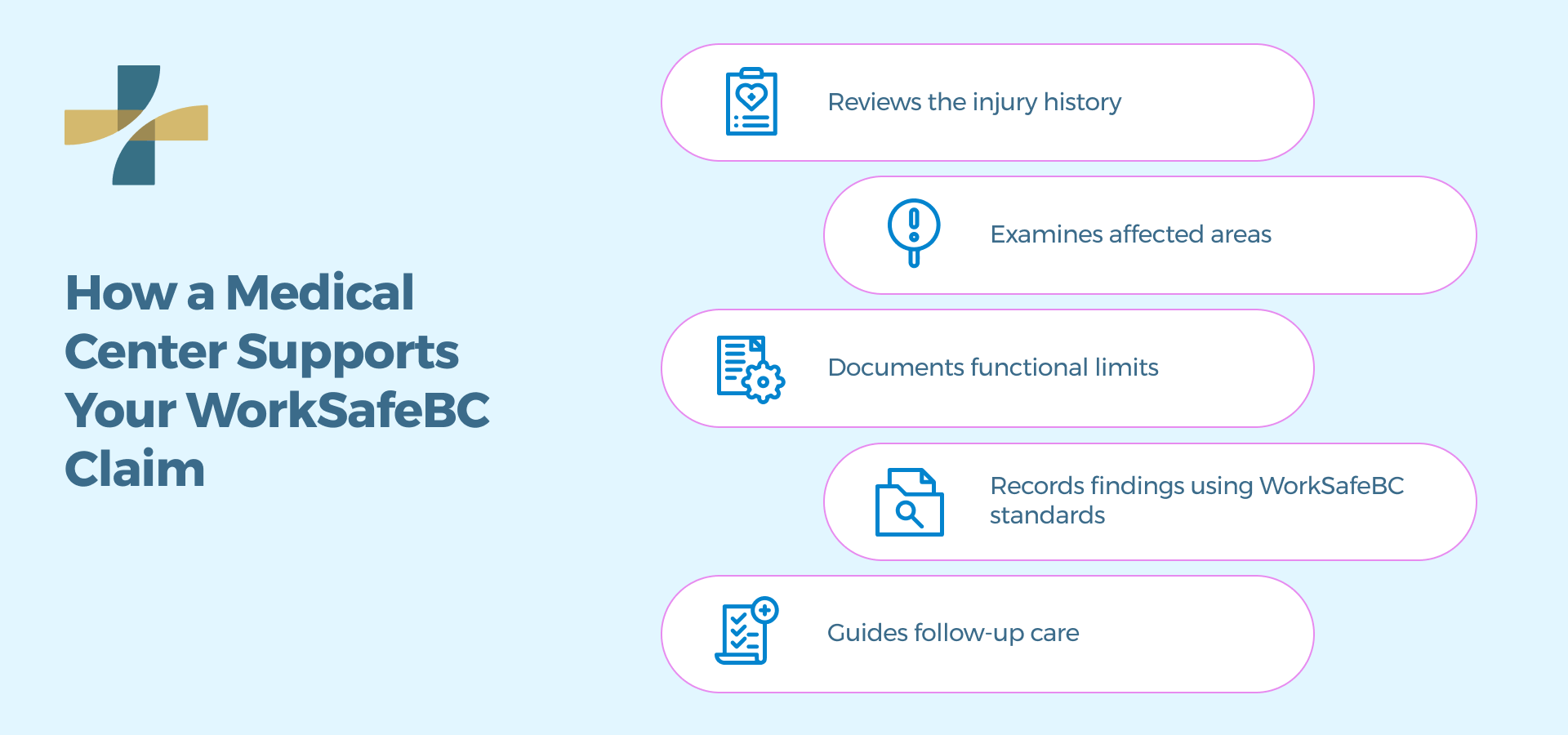
A work injury doctor:
- Reviews the injury history
- Examines affected areas
- Documents functional limits
- Records findings using WorkSafeBC standards
- Guides follow-up care
Medical records must reflect the injury accurately and consistently.
What happens during a WorkSafeBC medical assessment
A WorkSafeBC medical assessment often includes:
- Review of job duties
- Injury history discussion
- Physical or functional examination
- Documentation of symptoms and limitations
- Medical notes submitted to WorkSafeBC
This process supports clarity across the claim file.
Why early medical documentation matters
Early medical visits help:
- Establish a clear injury timeline
- Reduce reporting gaps
- Record symptoms before they change
- Support appropriate care planning
Delays may lead to missing or inconsistent information.
Tips for a Smooth Workplace Injury Claim Process
Workers can reduce delays by following practical steps.
Report injuries early
Reporting a workplace injury as soon as possible helps prevent delays in the WorkSafeBC claim process. Even mild symptoms should be reported when they are related to work, as early documentation supports accuracy and timely review.
Be consistent across reports
Consistency across worker, employer, and medical forms is important. Descriptions of how the injury occurred should align to help WorkSafeBC clearly understand the incident and avoid unnecessary follow-up requests.
Attend follow-up appointments
Follow-up medical visits help document recovery progress and work capacity. Ongoing appointments ensure symptoms, restrictions, and treatment updates are recorded correctly over time.
Communicate work limits clearly
Clear communication about physical limits helps reduce the risk of reinjury and supports modified duties when appropriate. Workers should report pain, reduced movement, or difficulty performing specific tasks during follow-up visits.
When workers begin increasing activity, movement-based support such as Kinesiology may help address strength and functional limitations related to work tasks.
Monitor symptom changes
Changes in symptoms should be reviewed promptly by a medical provider. New or worsening symptoms may require updated documentation to support ongoing care and claim continuity.
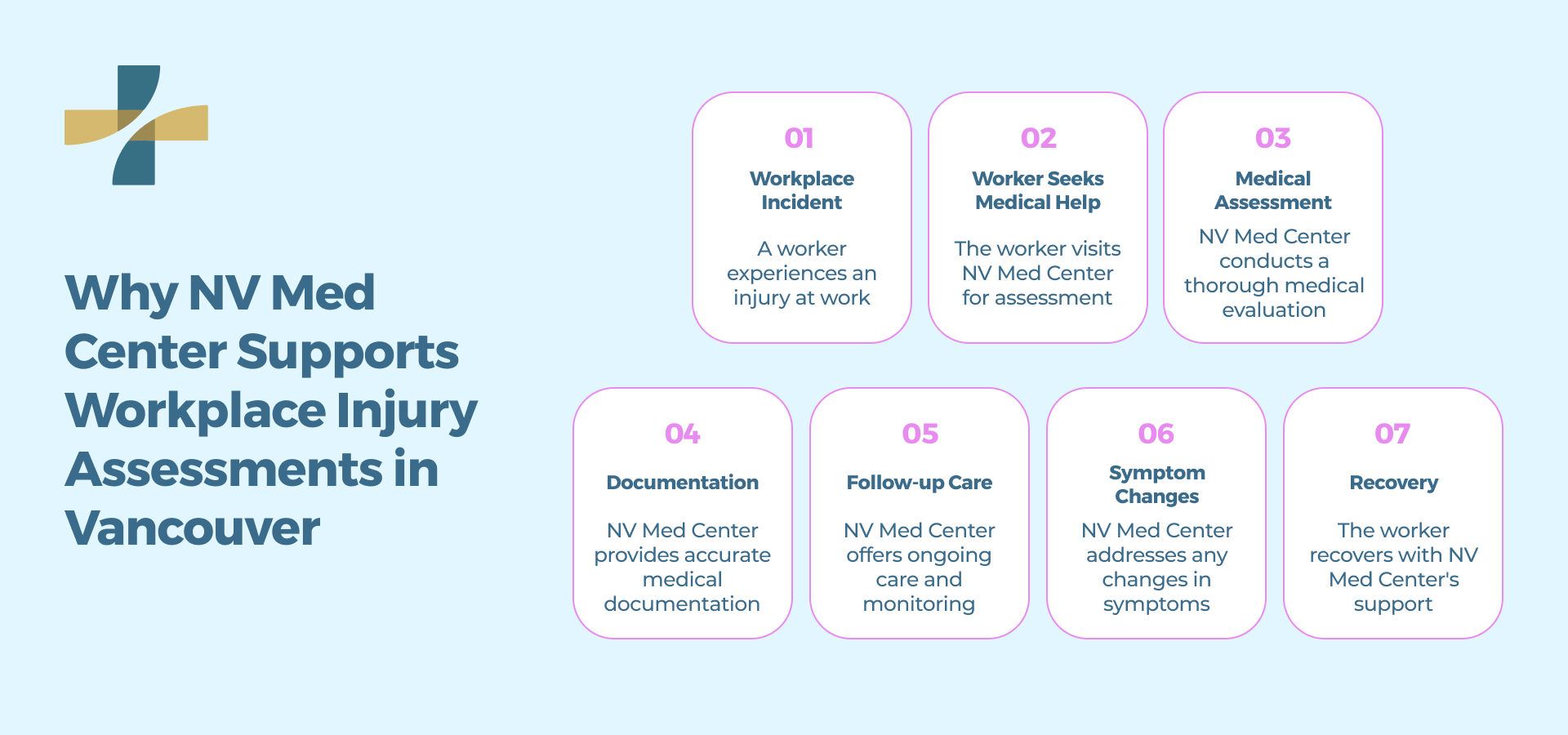
Why NV Med Center Supports Workplace Injury Assessments in Vancouver
NV Med Center provides WorkSafeBC medical assessments for Vancouver workers who require injury documentation, clinical evaluation, and follow-up care after a workplace incident. The clinic supports accurate reporting, clear medical records, and ongoing review when symptoms change or recovery takes time.
Workplace injuries can create uncertainty. Many workers are unsure where to go, what information is required, or how medical documentation fits into the WorkSafeBC process. A structured medical assessment helps clarify next steps and ensures injury details are recorded correctly from the beginning.
Experience with WorkSafeBC injury documentation
WorkSafeBC claims rely on consistent and accurate medical records. NV Med Center is familiar with how workplace injury documentation is reviewed and how clinical findings are used within the claim process.
Medical assessments support:
- Injury histories linked to specific job duties
- Documentation of physical findings and reported symptoms
- Recording functional limits that may affect work tasks
- Completion of medical notes aligned with WorkSafeBC reporting standards
Clear documentation helps reduce confusion, supports continuity, and allows follow-up visits to build on consistent records.
Patient-focused medical care after a workplace injury
Workplace injuries affect more than physical symptoms. Many workers also worry about job duties, recovery timelines, and what information must be reported.
At NV Med Center, medical visits focus on:
- Clear explanation of what the assessment includes
- Review of symptoms and how they may change over time
- Guidance on when follow-up visits may be needed
- Support if symptoms do not improve or new concerns appear
Appointments are designed to provide practical medical care and clear communication so workers understand what happens next.
Convenient access for Vancouver workers
Timely medical visits support accurate injury documentation. Delays can create gaps in records or uncertainty around symptom timelines.
NV Med Center supports Vancouver workers with:
- Initial workplace injury medical assessments
- Documentation for WorkSafeBC forms
- Follow-up visits when recovery takes longer than expected
- Review of delayed or worsening symptoms
- Ongoing medical notes when work capacity changes
Workers may book an appointment for:
- A new workplace injury
- Pain or symptoms that appear after the incident
- Medical documentation required for WorkSafeBC reporting
- Continued symptoms affecting daily work tasks
Book a workplace injury assessment
If you were injured at work and need medical documentation, booking a workplace injury assessment allows a doctor to review your symptoms and record clinical findings related to the incident. NV Med Center provides WorkSafeBC medical assessments for Vancouver workers who need clear medical records, follow-up care, and guidance after a workplace injury.
Book a workplace injury assessment at NV Med Center to begin your medical evaluation and documentation.
FAQs
Q1: What are the most common workplace injuries?
Common workplace injuries include slips and falls, lifting injuries, repetitive strain injuries, and equipment-related injuries. Back, neck, shoulder, and joint pain are frequently reported across many industries. Hearing loss and work-related mental health injuries are also reported in some cases.
Q2: What if symptoms appear days later?
Some workplace injuries develop gradually after the incident. Delayed pain, stiffness, or reduced movement should still be reviewed by a medical provider. Documentation helps link symptoms to the original work event.
Q3: Can mental health injuries be reported?
Yes. WorkSafeBC accepts certain work-related mental health injury claims when specific criteria are met. These claims must be linked to workplace events or conditions. Medical documentation is required as part of the process.
Q4: What should I bring to my appointment?
Bring government identification, employer details, and notes about how the injury occurred. Include the date, time, location, and any witnesses if available. Bring any paperwork provided by your workplace.
Q5: How long does WorkSafeBC take to review a claim?
Review timelines vary based on claim complexity and the information submitted. WorkSafeBC may request reports from the worker, employer, and medical provider. Decisions may take longer if additional information is needed.