Switching family doctors can feel overwhelming, especially when you’re not sure what happens to years of medical history sitting in your old clinic’s files. If you’re trying to figure out how to transfer medical records to a new doctor bc, you’re not alone. Thousands of British Columbians change doctors every year due to relocation, retirement, or simply needing a better fit for their personal health journey.
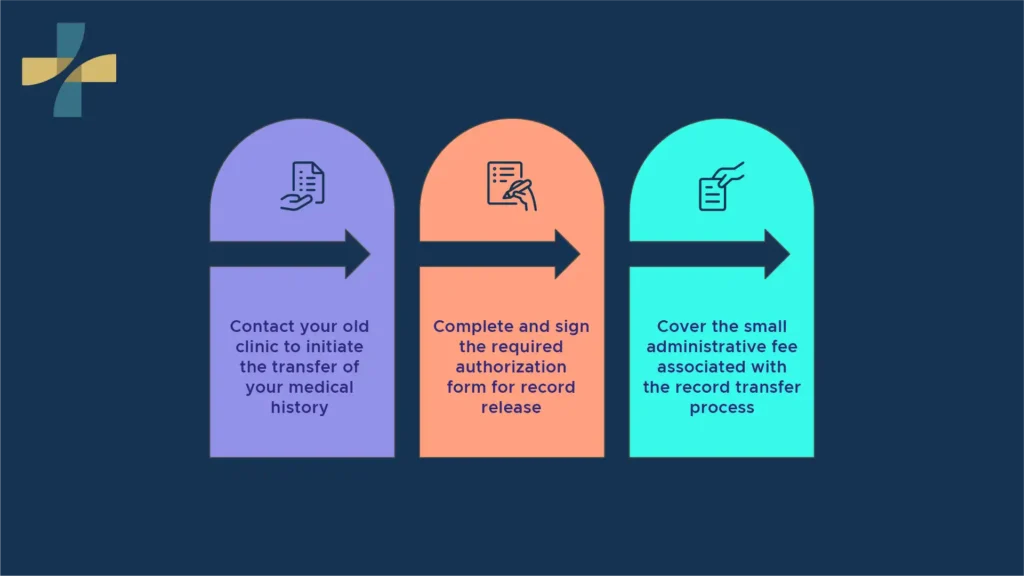
The good news is that transferring your medical records is a fairly straightforward process once you know the steps. It typically involves requesting your file, signing a consent form, and sometimes paying a small administrative fee. Whether you are transitioning to learn how to transfer your medical records to us or setting up care at a new facility, this guide walks you through exactly what to expect so your new physician has everything they need to continue your care without gaps.
Already found a new clinic? Make sure your first appointment goes smoothly by having your records ready. Learn how to switch your family doctor to NV Med Center today.
When You’d Need to Transfer Medical Records
Not every doctor change requires a full file transfer, but most do. If you’re establishing ongoing care with a new general practitioner, your complete medical history helps them make informed decisions from day one.
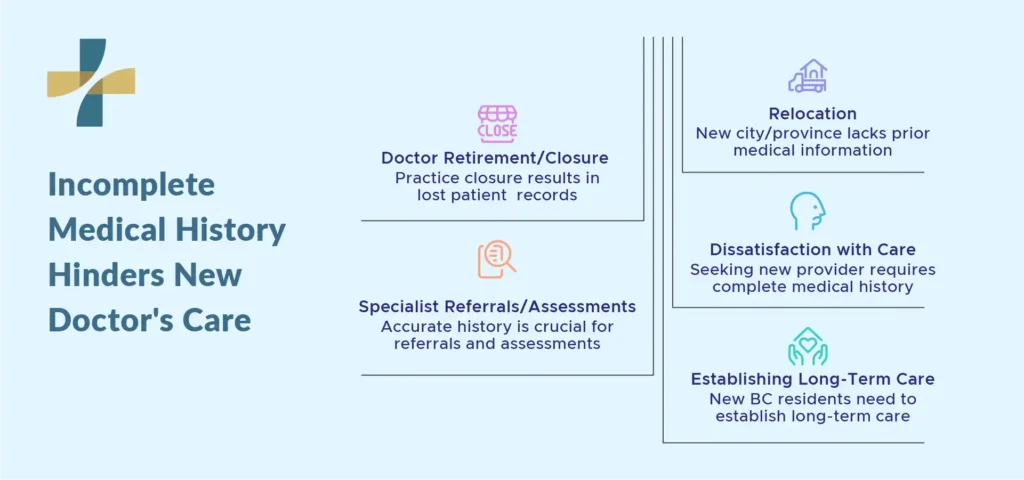
Common situations where a transfer is necessary:
Example Case: Sarah relocated from Ontario to Vancouver for work. She found a new clinic that offered ongoing primary care, but the clinic had no record of her past diagnoses, medications, or allergies.
- Moving to a new city or province within BC
- Your family doctor has retired or closed their practice
- You’re unhappy with your current care provider and want a new one
- You need specialist referrals or ICBC Medical Assessments that require accurate medical history
- You are navigating the process of moving to bc medical records and need to establish long-term care
Without your records, your new doctor may have to repeat tests, ask you to recall medication histories from memory, or miss important context about chronic conditions. Transferring your file protects continuity of care and avoids unnecessary delays. If you are wondering what happens during your initial consultation, read our guide on what to expect at your first family physician visit.
Step 1 | Request Records From Your Old Doctor
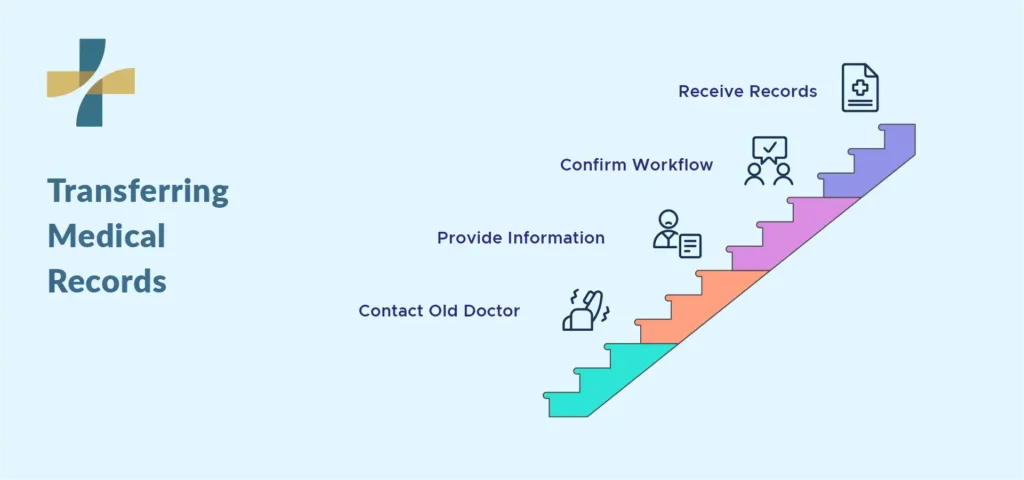
The first step is contacting your previous clinic directly, either by phone, email, or in person. Most clinics have a standard process for handling these requests.
When you request records from your old doctor’s office, be prepared to provide identifying information such as your full name, date of birth, personal health number (PHN), and the address of the new clinic where records should be sent. Understanding what services does a family doctor actually provide will help you know which specific diagnostic files or history charts are most important to request.
Example Case: James switched clinics after his doctor moved practices. He called the old clinic’s front desk, requested a transfer, and was told to complete a records release form before anything could be sent.
- Ask whether the clinic sends records directly to your new doctor or gives them to you
- Confirm what format they use (paper copies, secure fax, or electronic medical record/EMR export)
- Request a summary of your health history if a full chart isn’t necessary
Some clinics require you to formally submit a medical file transfer form bc through your new doctor’s office instead, so it’s wise to clarify the exact workflow with both reception desks.
Step 2 | Sign a Consent Form
Privacy laws in BC require your explicit written permission before any medical facility releases your personal health information. This is where a patient consent form for medical records authorization becomes essential.
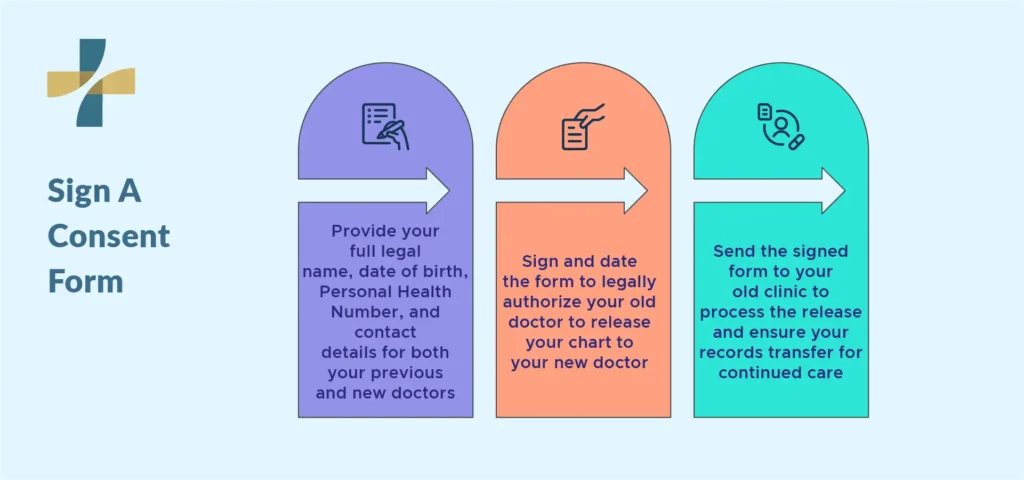
This document legally authorizes your old doctor to release your chart and grants your new doctor permission to receive it. Without this signed consent, clinics are strictly prohibited from transferring any part of your chart under provincial privacy regulations.
Most clinics provide their own version of this form, though the general information required stays consistent across BC:
- Your full legal name, date of birth, and Personal Health Number (PHN)
- The name and contact details of your previous doctor or clinic
- The name and contact details of your new doctor or clinic
- Your signature and the date
Once signed, the form is sent to your old clinic to process the release. If you are managing long-term conditions like hypertension or diabetes, ensure your records transfer quickly so your new provider can seamlessly continue your Chronic Care Management.
Costs and Timelines for Record Transfers
One of the most common questions patients ask is about the medical records transfer fee bc clinics charge. Since family doctors in BC operate as independent practitioners, administrative transfer fees are not standardized or covered by the Medical Services Plan (MSP).
Most clinics charge somewhere between $25 and $75 for a full records transfer, though simple chart summaries may cost less. This fee covers administrative overhead, secure file retrieval, printing, and encrypted transmission.
According to the official guidelines from the College of Physicians and Surgeons of BC, physicians are permitted to charge a reasonable administrative fee for reproducing and transferring medical records, as chart transfers fall outside of publicly funded MSP care.
Example Case: When Priya switched clinics in Kelowna, her old doctor’s office charged her $40 for a complete file transfer, which was processed and sent electronically within 10 business days.
Typical timelines look like this:
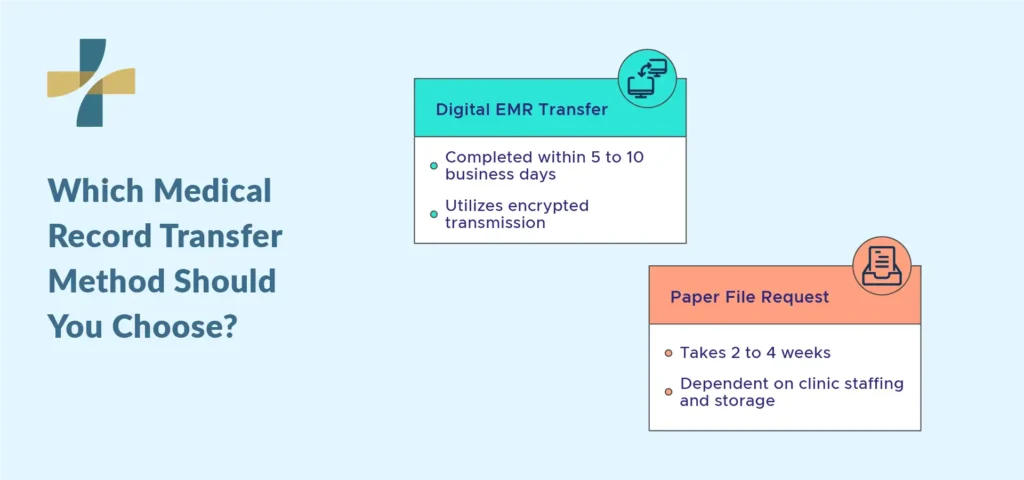
- Digital EMR transfers: often completed within 5 to 10 business days
- Paper file requests: can take 2 to 4 weeks depending on clinic staffing and archive storage
- Urgent transfers: some clinics offer expedited processing if required for immediate treatment
If you have an upcoming appointment, start the request at least three weeks in advance to avoid delays. If you need immediate care while waiting for your transfer to complete, you can utilize an Online Visit or consult our guide on general practitioner vs walk-in clinic to understand your short-term options.
What If Your Old Doctor Has Retired?
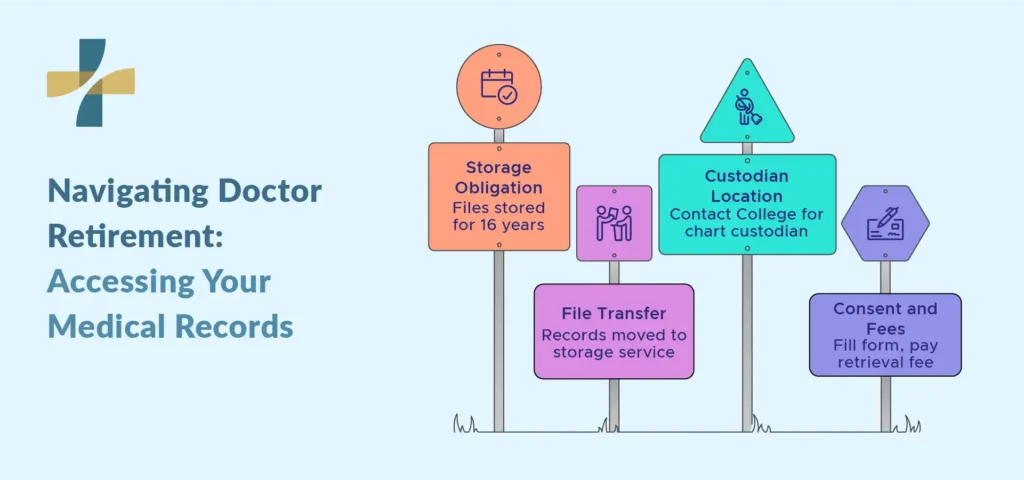
A retired doctor doesn’t mean your medical history is lost forever. In British Columbia, when a physician closes their practice or retires, they are legally obligated to store patient files securely for a mandated period, typically 16 years from the date of the last entry.
If you are dealing with a situation where your doctor retired how to get your records, your file has likely been transferred to a professional medical storage service like MedRecords Canada or assigned to a custodian clinic. You can contact the College of Physicians and Surgeons of BC to locate the current custodian of your medical chart. Once located, you simply fill out their consent form, pay the archive retrieval fee, and request the transfer to your new provider.
Ensuring a Smooth Transition to Your New Family Doctor
Learning how to transfer your medical records to a new doctor, as required by most clinics, is one of the most proactive steps you can take for your long-term health. By requesting your files early, filling out the appropriate consent documentation, and understanding any minor administrative fees involved, you guarantee that your new healthcare team has complete context regarding your medical history.
FAQs
1-How long does a medical record transfer take in BC?
Digital transfers between clinics using electronic medical records (EMR) usually take between 5 to 10 business days. However, physical paper files or archived charts from retired doctors can take up to 2 to 4 weeks to be retrieved and sent.
2-Can a clinic refuse to transfer my medical records if I haven’t paid the transfer fee?
According to provincial ethical standards, a doctor cannot withhold vital medical information required for urgent care due to an unpaid bill. However, for routine transfers, clinics are legally entitled to request payment of their reasonable administrative fee before releasing non-urgent records.
3-Do I need to transfer my medical records if I only use walk-in clinics?
While it is not strictly required for one-off visits, having your health records centralized at your primary clinic is highly recommended. If you frequently visit walk-in clinics for acute issues, requesting those visit summaries be forwarded to your main clinic ensures overall care continuity.
4-How do I transfer medical records to a new doctor in BC if I moved from another province?
To transfer medical records to new doctor bc facilities, you must contact your former out-of-province clinic directly and request an out-of-province records release form. Out-of-province transfers may take slightly longer, so requesting these files as soon as you relocate is advisable.
5-What specific records should I prioritize transferring to my new family doctor?
You should prioritize your immunization history, recent blood work results, major surgical reports, chronic disease monitoring files, and specialist consultation notes.
6-Will MSP cover the cost of my medical record transfer fee in BC?
No, the Medical Services Plan (MSP) of BC does not cover administrative tasks such as chart copying, file retrieval, or records transfers. These are considered non-insured services, meaning the patient is responsible for paying the clinic’s standard administrative fee directly.