You’re booking a checkup, filling out a form, or searching for a clinic near me, and suddenly you’re stuck on one word: should you be looking for a family doctor or a general practitioner? If you’ve ever paused and wondered if a GP is the same as a family doctor, you’re not alone. The confusion around family doctor vs general practitioner trips up patients across Canada and beyond, especially when clinic websites, insurance forms, and referral letters all seem to use different labels.
Here’s the good news: in most everyday situations, these terms describe the same type of medical professional. But there are subtle distinctions worth understanding, especially when it comes to training, general practitioner scope of practice, and how the family doctor terminology in Canada shifts depending on where you live. This article breaks it all down in plain language so you can walk into your next appointment with confidence.
Not sure what a primary care provider is or who yours actually is? Learn more about our family doctors at NV MedCenter to clear up the confusion once and for all.
Family Doctor vs General Practitioner: Are They the Same?
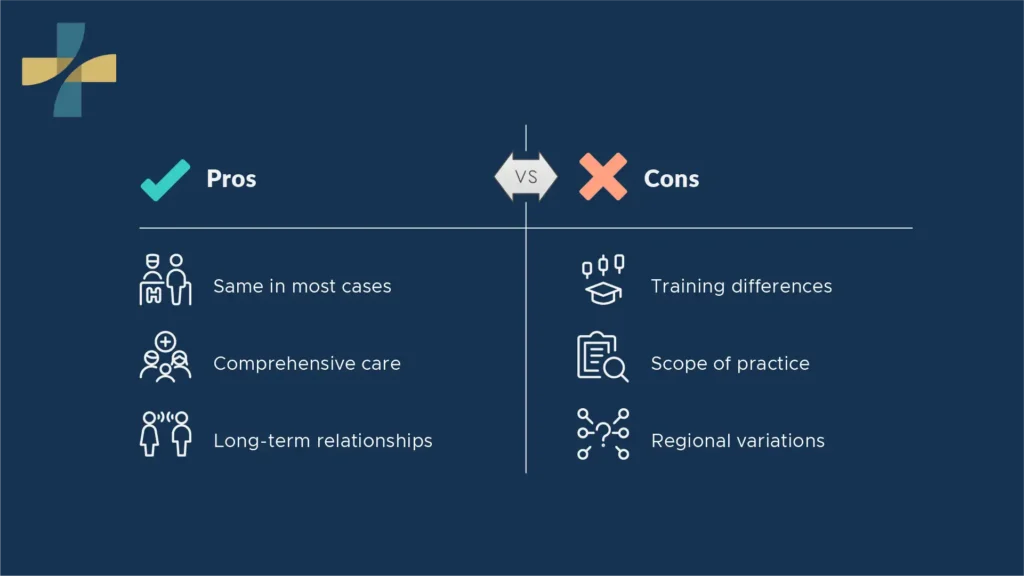
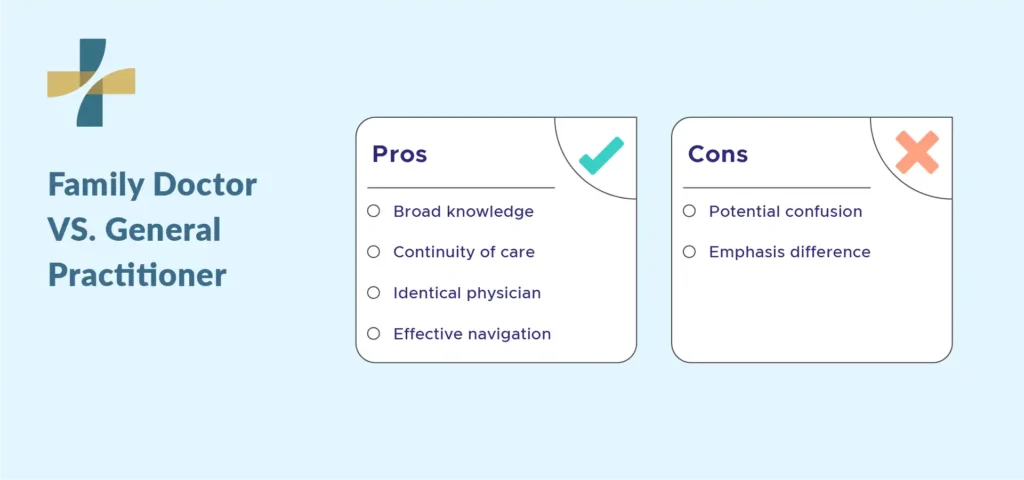
In practical terms, yes, when comparing family doctor vs general practitioner, they are almost always the same person wearing two different name tags. Both refer to a medical doctor (MD) who provides broad, ongoing healthcare rather than specializing in one body system or condition.
The difference lies mostly in emphasis. “General practitioner” highlights the breadth of medical knowledge, while “family physician” or “family doctor” emphasizes continuity of care across a patient’s entire family and lifespan. Understanding the true difference between GP and family physician helps patients navigate primary care, general practice, and family medicine more effectively.
Example Case: Sarah, a 34-year-old mother of two, sees the same doctor for her annual physical, her son’s vaccinations, and her husband’s blood pressure management.
- Her clinic’s sign says “Family Medicine Clinic”
- Her insurance paperwork refers to the same doctor as her “GP”
- Both terms describe the identical physician and scope of care
What Does “GP” Actually Mean?
If you’ve ever wondered what GP stand for in medicine, GP stands for General Practitioner. This is a medical doctor trained to diagnose and treat a wide range of health conditions without specializing solely in one specific area like cardiology or dermatology.
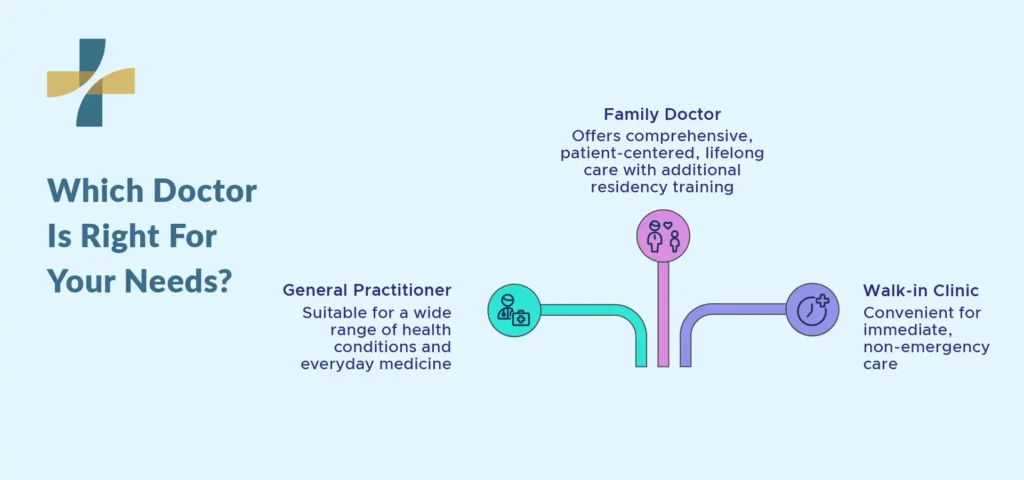
The term originated in the UK and Commonwealth healthcare systems, including Canada, where it’s used almost interchangeably with “family doctor” in casual conversation and official documentation alike. Whether managing chronic care or helping patients choose between a general practitioner vs walk-in clinic, GPs serve as the bedrock of everyday medicine.
According to the College of Family Physicians of Canada, family physicians complete additional residency training specifically focused on comprehensive, patient-centered, lifelong care, which is technically what separates the modern family medicine specialist designation from the older, broader “GP” label. Organizations like the BC College of Family Physicians and the Vancouver Medical Association emphasize this ongoing training for primary care doctors.
Example Case: A patient searching “what is a general practitioner” online will typically find that GPs handle everything from cold symptoms to long-term health, referring patients to specialists only when necessary. If you’d like to meet our general practitioners, you can explore how our medical team supports your ongoing health needs.
What About Primary Care Providers and Nurse Practitioners?
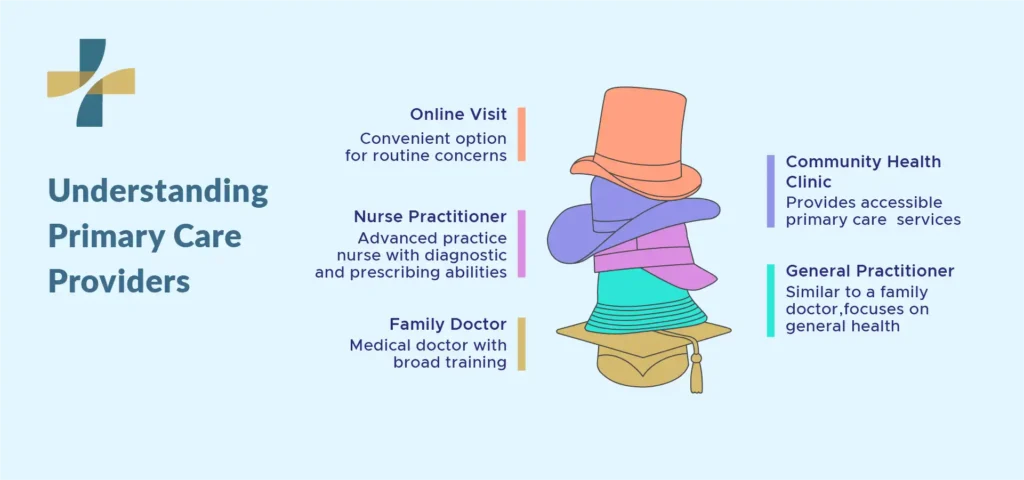
Primary care provider vs family doctor is another common source of confusion. Primary care provider is an umbrella term that includes family doctors, general practitioners, and increasingly, nurse practitioners (NPs). Knowing what a primary care provider is essential as modern healthcare networks expand.
A nurse practitioner is not a medical doctor but holds advanced nursing training that allows them to diagnose conditions, prescribe medications, and manage ongoing care. Whether you need specialized Paediatrics support for your children or a convenient Online Visit for routine concerns, primary care teams offer flexible options tailored to your family.
Example Case: In many Canadian provinces, patients without an assigned family doctor are matched with a nurse practitioner at a community health clinic who becomes their long-term primary care provider, handling everything from prescriptions to preventative health screenings recommended by family physicians.
- Family doctor / GP: Medical doctor (MD), broad training, specialized in family physician definition standards and comprehensive care.
- Nurse practitioner: Advanced practice nurse, overlapping scope, works independently or alongside physicians.
- Primary care provider: Umbrella term covering both roles.
Which Term Should You Use?
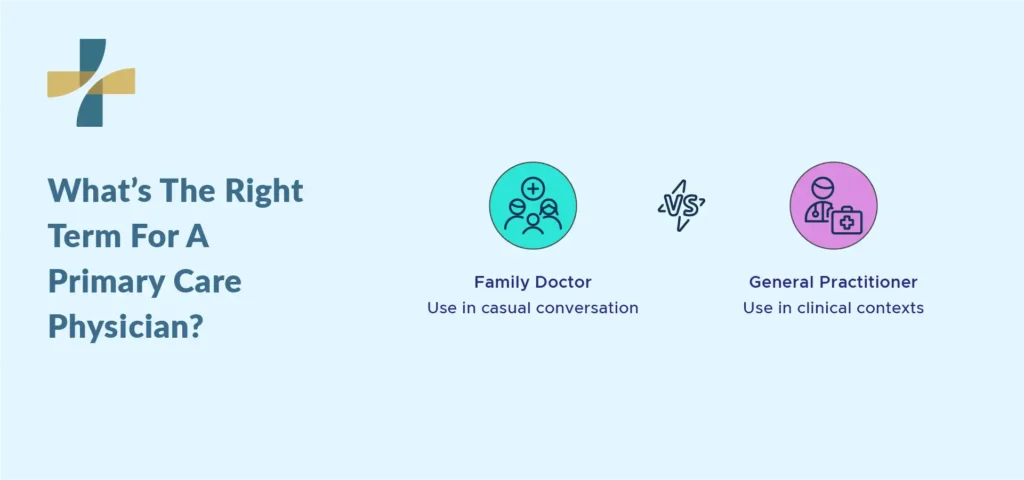
Honestly, when evaluating family doctor vs general practitioner, the phrase you choose depends on your audience, not medical accuracy. Use “family doctor” in casual conversation, especially with family members. Use “general practitioner” or “GP” in more clinical, insurance, or international contexts.
If precision matters, such as in medical records or referral documentation, family physician is the most formally accurate term in Canada today. If you are currently searching for a new physician, reading our guide on how to choose the best family physician for your family can help you make an informed decision. Additionally, if you experience sudden symptoms like irregular heartbeats, a primary doctor can arrange specialized tests such as Holter Monitoring Assessments right away.
Finding the Right Healthcare Partner for Your Family
At the end of the day, the family doctor vs general practitioner debate is more about language than medicine. Whether your clinic calls itself a “family practice” or a “general practice,” you’re getting the same foundational, whole-person healthcare. What matters most isn’t the label on the door; it’s finding a provider you trust who knows your medical history. If you’re looking for personalized care, don’t hesitate to contact NV MedCenter today.
Frequently Asked Questions
1-Are family doctors and GPs the same thing?
Yes. In everyday Canadian healthcare, “family doctor” and “GP” (General Practitioner) are used interchangeably to describe a primary care physician who manages your overall health.
2-What does GP stand for in healthcare?
GP stands for General Practitioner. It refers to a doctor who treats acute and chronic illnesses and provides preventive care without limiting their practice to one specific organ or age group.
3-Is a family doctor a type of specialist?
Yes, in Canada, family doctors undergo dedicated residency training in family medicine, making them specialists in comprehensive, lifelong primary care.
4-Can a family doctor treat children, or should I see a pediatrician?
Family doctors are fully trained to care for patients of all ages, including infants and children. However, for complex developmental or childhood conditions, understanding the differences between a pediatrician vs family doctor can help you decide which provider is best suited for your child’s needs.
5-How often should I visit my general practitioner for preventive care?
It is generally recommended to see your doctor once a year for a routine checkup. During these visits, your physician can review your overall health, order baseline blood work, and recommend essential preventative health screenings based on your age and medical history.
6-What should I expect during my first visit with a new family physician?
Your first appointment is primarily focused on building your medical history, reviewing current medications, discussing ongoing health concerns, and establishing a personalized care plan.