Many patients leave medical appointments with unanswered concerns. They forget doctor visit questions, feel rushed, or do not fully understand their diagnosis or treatment plan. Having clear questions to ask your doctor changes that experience.
Recent research from the Australian Commission on Safety and Quality in Health Care shows that communication gaps remain one of the most common causes of patient complaints. Health literacy directly affects outcomes. The more informed you are, the better decisions you can make.
This guide gives you a structured medical questions checklist you can use for any general practitioner’s (GP) visit, specialist referral, chronic condition review, or preventive health check. It is designed to help you ask better questions, understand your care, and leave your appointment with a clear plan.
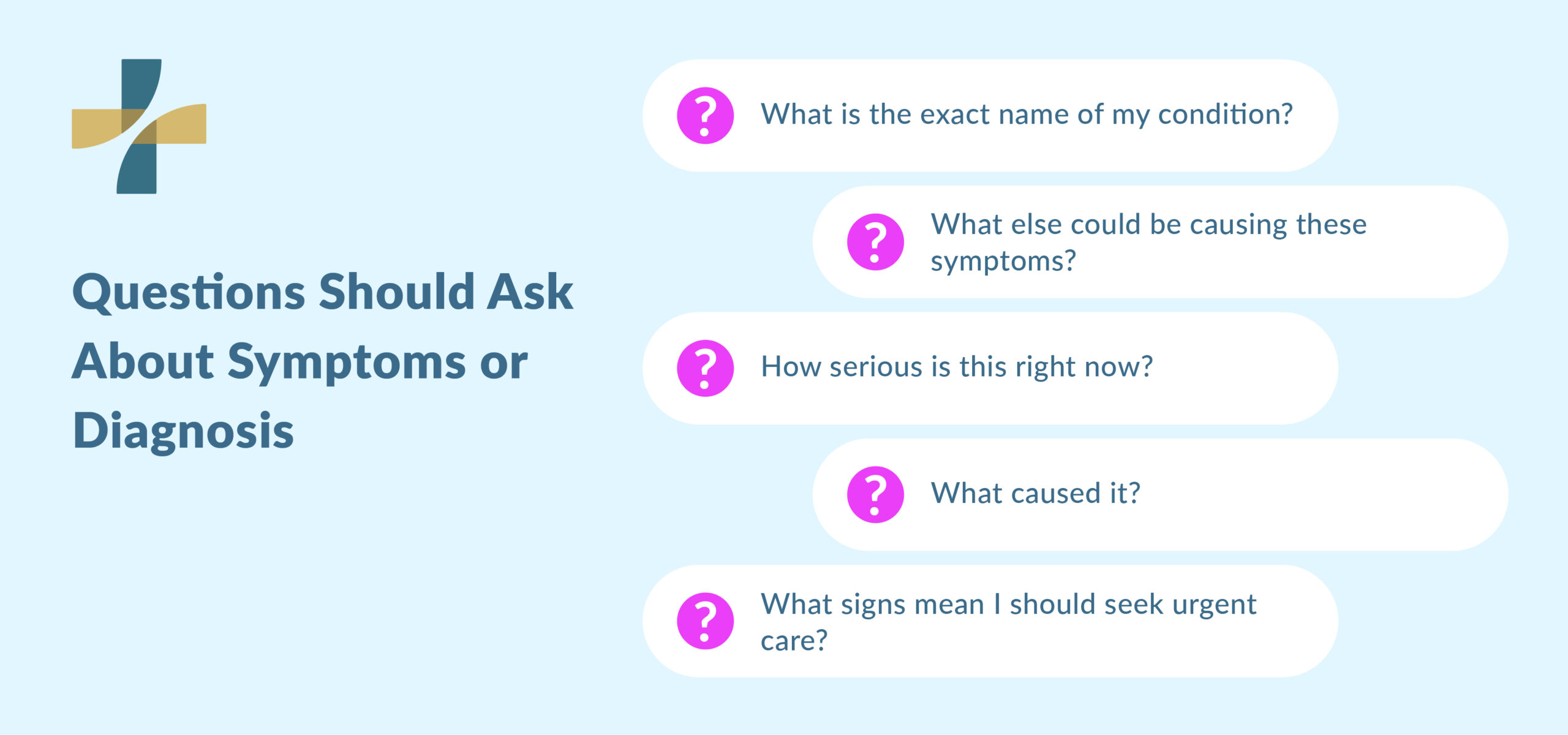
What Questions Should I Ask My Doctor About My Symptoms or Diagnosis?
The best questions to ask your doctor about symptoms focus on clarity, seriousness, cause, and next steps. Clear diagnosis questions help you understand what is happening, how urgent it is, and what to monitor at home.
If you visit your general practitioner for ongoing fatigue, headaches, chest discomfort, or new pain, start with these important health questions:
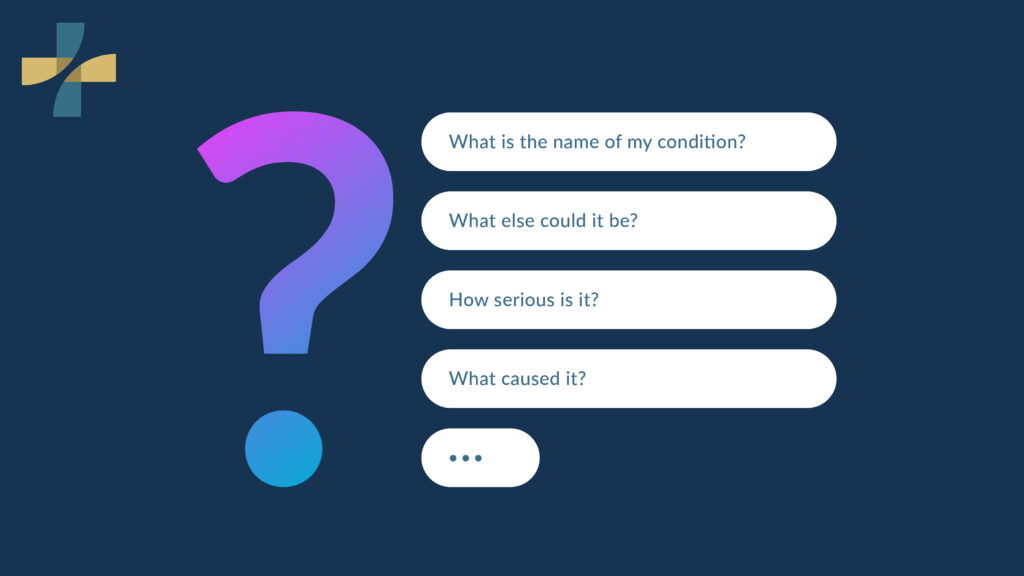
- What is the exact name of my condition?
- What else could be causing these symptoms?
- How serious is this right now?
- What caused it?
- What signs mean I should seek urgent care?
For example, if you present with recurring headaches, asking “What else could it be?” ensures migraines are not confused with medication overuse or high blood pressure.
This section forms the foundation of your patient questions list. Many patients assume they will remember details. Most do not. Writing these questions before seeing the doctor helps avoid confusion later.
What Doctor Visit Questions Should I Ask About Medical Tests
The best doctor visits questions about medical tests to clarify why the test is needed, what it will show, how to prepare, and how results will affect your care plan. Clear test questions reduce confusion and improve follow-through.
If your GP orders blood tests or imaging, ask:
- Why do I need this test?
- What happens if I delay or skip it?
- How should I prepare?
- When and how will I receive the results?
Also, if you are sent for cholesterol blood work, ask how the results affect medication or lifestyle changes. If you are having imaging, ask if fasting is required and when the results will return.
A simple test question can change care decisions. The National Institute for Health and Care Excellence highlights that informed patients are more likely to follow through with recommended investigations.
What Questions for GP Visits Help Me Understand Treatment Options?
The best questions for GP appointments clarify all available treatments, expected benefits, risks, and alternatives. Asking about options gives you control and helps align care with your preferences and goals.
Treatment-related doctor appointment questions include:
- What are my treatment options?
- Which option do you recommend and why?
- What are the risks or side effects?
- What happens if I wait or choose no treatment?
If you are diagnosed with early hypertension, you may have medication and lifestyle options. Asking what happens if you delay treatment clarifies urgency.
Dr. Atul Gawande, surgeon and public health researcher, has written extensively about patient involvement in improving safety and outcomes. Patients who ask structured questions understand risk better and make informed choices.
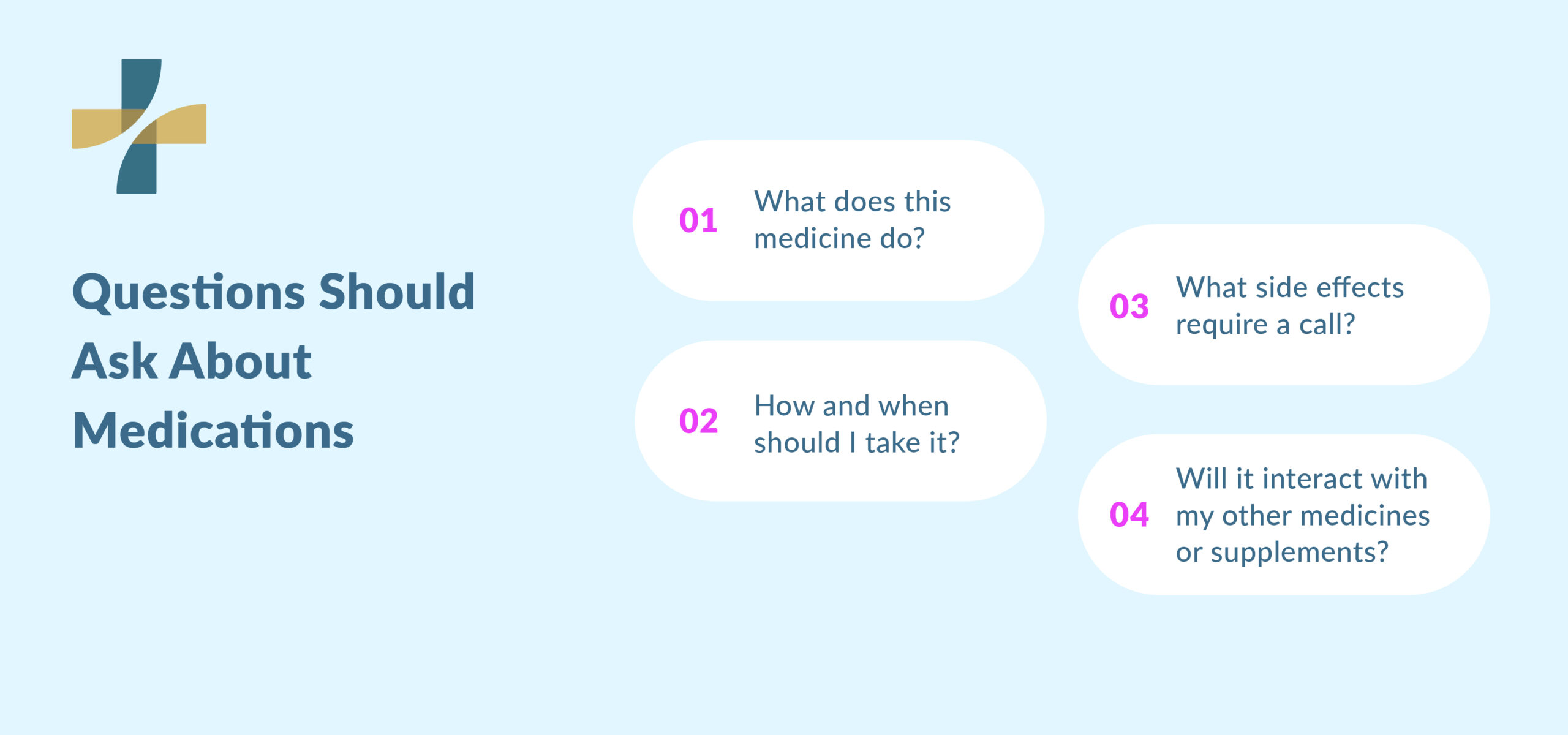
What Should I Ask My Doctor About Medicines?
To manage medicines safely, patients must ask about purpose, timing, side effects, and interactions. Medication errors remain one of the most common preventable harms in healthcare.
Use these patient-doctor questions:
- What does this medicine do?
- How and when should I take it?
- What side effects require a call?
- Will it interact with my other medicines or supplements?
If you are starting a statin, ask whether muscle pain is normal or requires review. If you take supplements, ask about interactions.
The World Health Organization reports medication errors cost billions globally each year. Clear medication doctor consultation questions reduce that risk.
What Doctor Appointment Questions Should I Ask About Follow-up and Prevention?
Doctor appointment questions about follow-up, clarify monitoring, and long-term care. They help you prevent complications and understand what progress looks like.
Ask:
- When should I book a follow-up?
- What signs mean I need urgent care?
- What can I do at home to improve my health?
If you manage asthma, ask what peak flow readings require review. If you have diabetes, ask your target HbA1c levels.
A good doctor visit checklist always includes prevention. Vaccinations, screenings, and lifestyle changes are part of long-term care.
How Do I Prepare Before Seeing a Doctor So I Do Not Forget Important Health Questions?
The best way to prepare before seeing a doctor is to write a short doctor visit checklist. Preparation improves recall and reduces stress during the consultation.
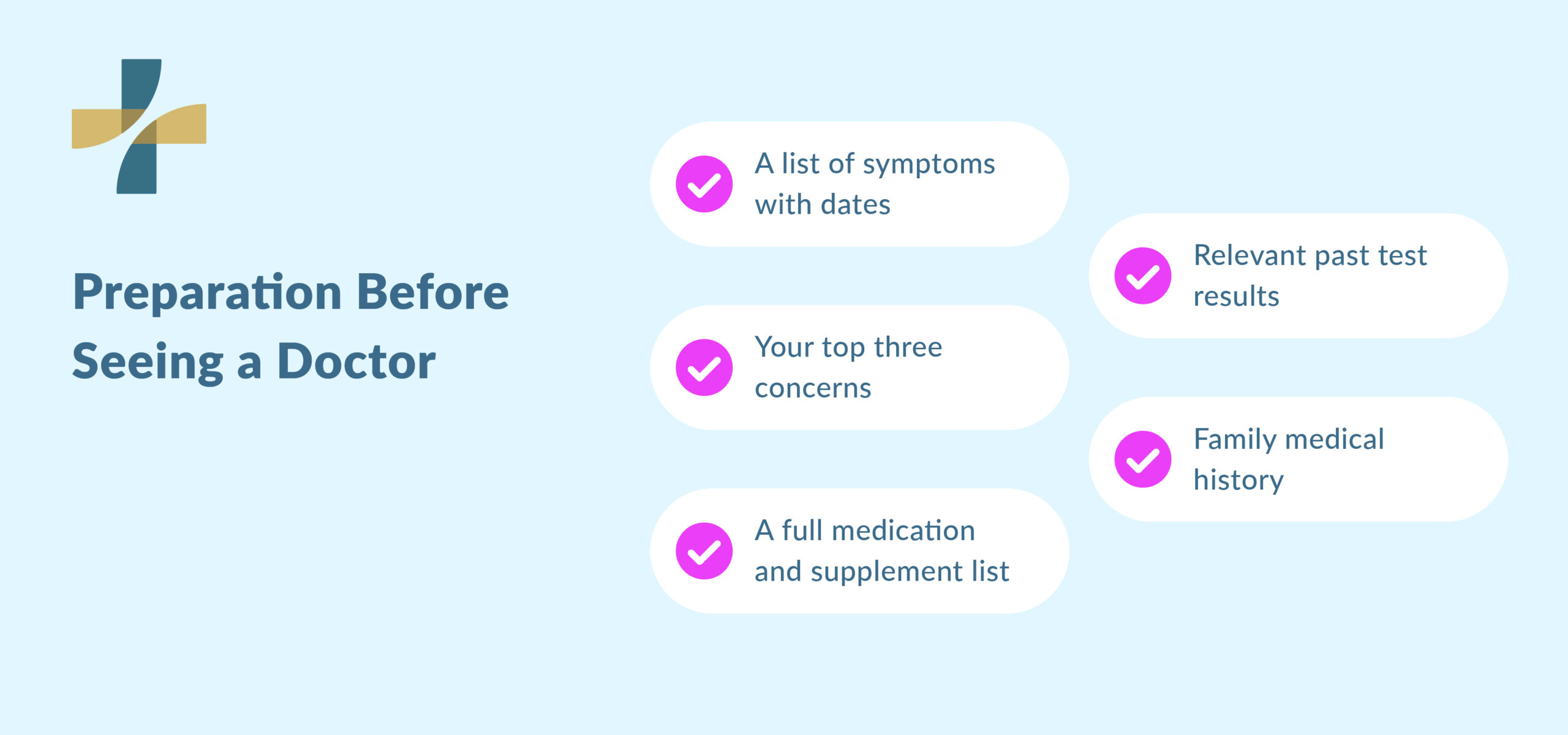
Bring:
- A list of symptoms with dates
- Your top three concerns
- A full medication and supplement list
- Relevant past test results
- Family medical history
Research indicates that patients may forget up to 40 to 80 per cent of the medical information shared by healthcare providers soon after a consultation. Writing down questions before seeing the doctor can improve understanding and recall, helping you remember what matters most.
If you are planning to see a general practitioner (GP), you can read about our family doctor services to understand how appointments are structured and what support is available.
If remote care suits your schedule, our online visits page explains how telehealth consultations work and when they may be appropriate.
Why Does Asking Your Doctor Questions Improve Health Outcomes?
Asking your doctor structured questions improves understanding, safety, and treatment adherence. Patients who participate actively in care have better health literacy and improved outcomes.
Research shows that patient activation interventions are designed to help patients identify medical decisions and the specific questions that will guide those decisions, encouraging them to prepare questions before their doctor visit and be more involved in shared decision making.
Clear communication reduces medical errors. It also reduces anxiety. Structured patient-doctor questions allow your GP to tailor care to your needs.
For broader context on patient safety, see World Health Organization Patient Safety Facts.
What Are the 20 Most Important Questions to Ask Your Doctor in One Printable List?
The 20 most important questions to ask your doctor cover diagnosis, testing, treatment, medication, and follow-up. A structured medical questions checklist improves clarity and planning.
Diagnosis
- What is the name of my condition?
- What else could it be?
- How serious is it?
- What caused it?
- What warning signs should I watch for?
Tests
- Why do I need this test?
- What happens if I delay?
- How should I prepare?
- When will I get results?
Treatment
- What are my options?
- What do you recommend?
- What are the risks?
- What if I wait?
Medication
- What does this medicine do?
- When do I take it?
- What side effects matter?
- Does it interact with anything?
Follow Up
- When should I return?
- What symptoms require urgent care?
- What can I do to improve my health?
This printable patient questions list can be saved to your phone or printed before your appointment.
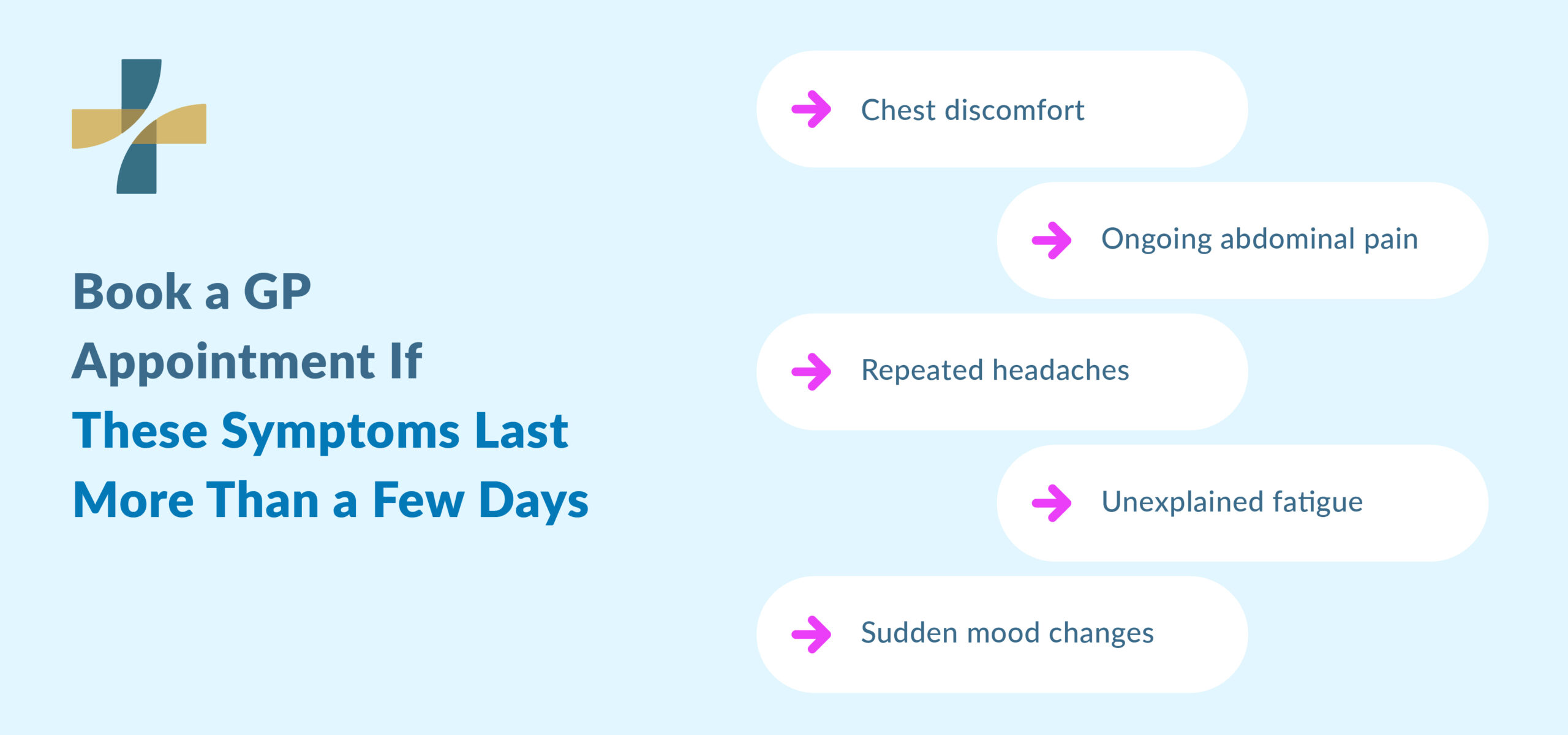
When Should I Book a GP Appointment Instead of Waiting?
Book a general practitioner (GP) appointment if symptoms last more than a few days, worsen, or interfere with daily life. Early review prevents complications and reduces long-term risk.
Examples include persistent chest discomfort, ongoing abdominal pain, repeated headaches, unexplained fatigue, or sudden mood changes.
How NV Med Center Helps You Leave Every Appointment With a Clear Plan
Clear questions to ask your doctor create better conversations and better outcomes. A structured doctor visit checklist improves understanding of diagnosis, tests, medications, and follow-up plans. When patients prepare, they reduce confusion and improve long-term health management.
At NV Med Center, we prioritise patient-focused care and clear communication during every consultation. Our family doctors support preventive care, chronic disease management, and coordinated referrals when needed. We encourage patients to bring their medical question checklist and take an active role in their health decisions. Schedule a consultation and come prepared with your questions so you leave with a clear plan.
FAQs
What questions should I ask my doctor?
You should ask about diagnosis, severity, tests, treatment options, medication safety, and follow-up. Structured questions to ask your doctor improve understanding and help you leave with a clear care plan.
How do I prepare for a doctor’s appointment?
Prepare by writing your symptoms, medication list, and top concerns. A simple doctor visit checklist prevents forgotten questions and improves communication.
What are the most important medical questions checklist items?
The most important items include diagnosis clarification, treatment options, medication instructions, test purpose, and follow-up timing. These form the core of effective doctor appointment questions.
Why do I forget what to ask during appointments?
Stress and information overload reduce memory recall. Writing your patient questions list before the appointment improves retention.
Can I ask my doctor for written instructions?
Yes. You can ask your doctor to write instructions down or provide printed summaries. Clear written guidance improves adherence and safety.