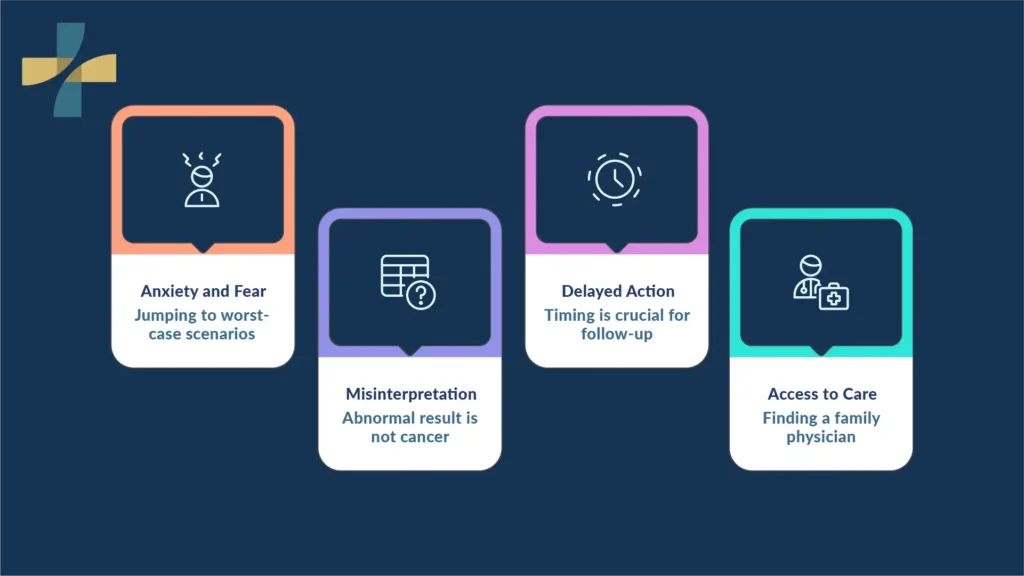
Opening an envelope or logging into Health Gateway to find a positive FIT test BC result can instantly make your heart sink. Your mind may jump straight to worst-case scenarios, but take a deep breath: an abnormal result does not mean you have colorectal cancer. It simply means the test found trace amounts of blood in your stool that need a closer look.
The good news is that this is exactly what the FIT screening program is designed to catch. A positive result is a signal to act, not a diagnosis. Understanding what happens next and why timing matters can help you move forward calmly and ensure you get the right follow-up care without unnecessary delay.
If you’ve received an abnormal FIT result and need a Family Physician to guide your next steps, our team of experienced physicians at NVMed Centre is here to provide comprehensive care. You can easily book an appointment to get timely, thorough follow-up care.
What a FIT test checks and what a positive result means
The Fecal Immunochemical Test (FIT) is a simple, at-home screening tool used across BC’s colon screening program. It checks for hidden (occult) blood in your stool, which can be an early warning sign of polyps or colorectal cancer.
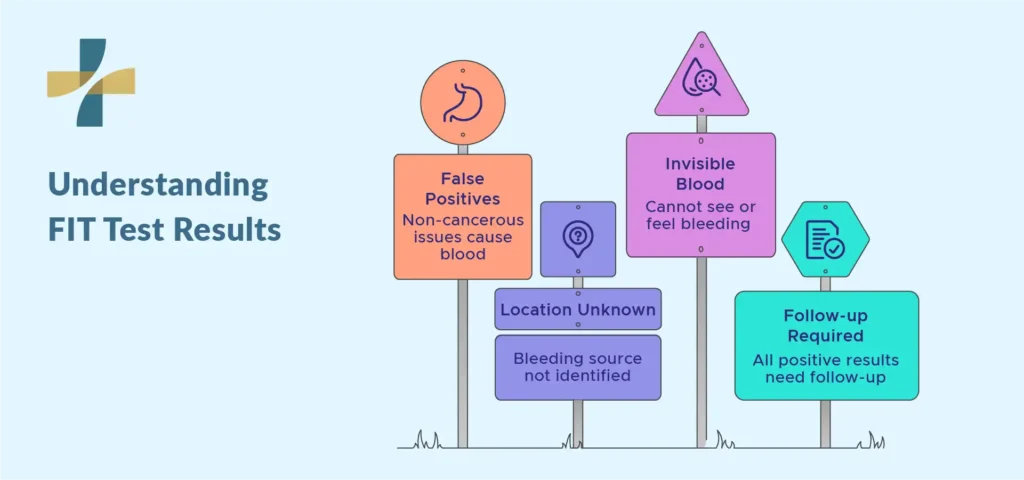
A positive or abnormal FIT result means blood was detected. It does not confirm cancer, and it doesn’t tell you where the bleeding is coming from. In fact, many everyday gastrointestinal issues can cause blood in stool, including hemorrhoids, small tears, ulcers, or mild intestinal inflammation.
Case Example: A 58-year-old woman in Kelowna received a positive FIT result through the BC Cancer screening program. She had no obvious symptoms and felt fine, as is common with many women’s preventive health screening tests, but the test still flagged microscopic blood invisible to the naked eye.
- FIT detects blood you cannot see or feel
- A positive result appears in roughly 1 in 13 people screened
- Most positive results are not caused by cancer, but all require follow-up
Why an abnormal FIT usually needs follow-up
An abnormal FIT result is considered incomplete on its own. It tells you something is happening, but not what. That’s why BC’s screening guidelines recommend a colonoscopy after positive FIT results, so a specialist can directly examine the colon lining.
A colonoscopy allows doctors to locate the source of bleeding, remove polyps if found, and take biopsies when necessary. Skipping this step leaves the underlying cause unaddressed, which can delay diagnosis of treatable conditions.
Real-world scenario: A man in Surrey assumed his positive FIT was due to hemorrhoids. Regular monitoring through men’s health screening over 40 can help detect these issues earlier. But he waited eight months before booking a doctor’s visit. When he finally followed up, doctors found a polyp that had grown large enough to require closer monitoring, something that likely would have been simpler to manage if caught earlier.
- Colonoscopy is the standard next step after an abnormal FIT
- Early follow-up increases the chance of finding treatable, non-cancerous causes
- Delaying follow-up can allow small issues to progress
Why repeating the FIT is not the right next step
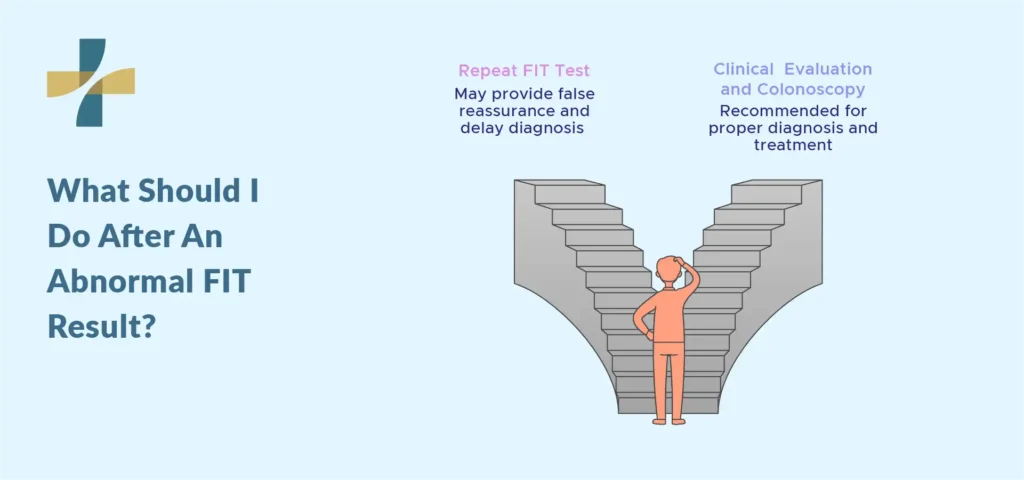
It might feel tempting to simply take another FIT test to “double-check” the result, but this is not recommended. Repeating the FIT after an abnormal result can create a false sense of reassurance and delay proper diagnosis.
The FIT test is a screening tool, not a diagnostic one. Once it flags a concern, the next appropriate step is a clinical evaluation and colonoscopy referral BC pathway, not another round of stool testing.
Example Case: A patient in Victoria took a second FIT kit hoping for a clearer answer. The second test came back negative, so she assumed everything was fine. Months later, ongoing symptoms led her back to her doctor, who explained that a negative second FIT doesn’t cancel out the first abnormal result; the follow-up should have happened regardless.
- A negative repeat FIT does not undo a prior positive result
- Guidelines from BC Cancer explicitly advise against retesting
- The right next step is a family doctor FIT result review, not self-testing

When to book a family doctor appointment
As soon as you receive a positive FIT test BC notification, it is best to book an appointment with your family doctor. Don’t wait for symptoms to appear or worsen, since many people with abnormal FIT results feel completely normal.
Your family doctor will review your result, discuss your health history, and determine whether a colonoscopy referral is needed. To learn more about how the referral process works in BC, read our guide on whether you need referrals for specialist visits.
In BC, this referral is typically the standard next step following any abnormal FIT result. If you don’t currently have a regular clinic, you can connect with trusted doctors at our clinic to guide you through the process.
Symptoms to mention while waiting for follow-up
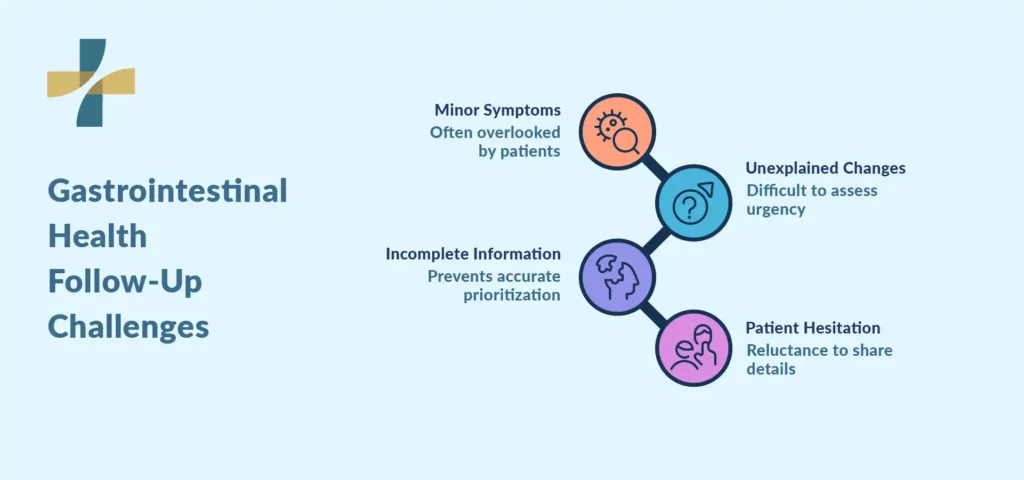
While you wait for your appointment, keep track of anything unusual, even if it seems minor or unrelated. This helps your doctor assess urgency and prioritise your referral appropriately.
Mention any of the following if present:
- Visible blood in stool or on toilet paper
- Changes in bowel habits lasting more than a few weeks (such as unexplained diarrhea or constipation)
- Unexplained abdominal pain, cramping, or bloating
- Unintentional weight loss or sudden decrease in appetite
- Persistent fatigue, weakness, or feeling unusually run down
Sharing these details gives your care team a complete picture of your gastrointestinal health, ensuring your referral is processed with the right priority level.
Questions to ask about referral and timing
When you meet with your doctor to review an abnormal FIT result, having a few key questions ready can help clear up uncertainty. Consider asking:
- What is the expected wait time for a colonoscopy referral in our health region?
- Are there any specific symptoms I should watch for while waiting for my procedure?
- Do I need to pause or adjust any current medications (like blood thinners) before the specialist consultation?
- Who should I contact if my symptoms change or worsen before the appointment?
Having clear answers to these questions ensures you stay informed, empowered, and proactive about your health throughout the process.
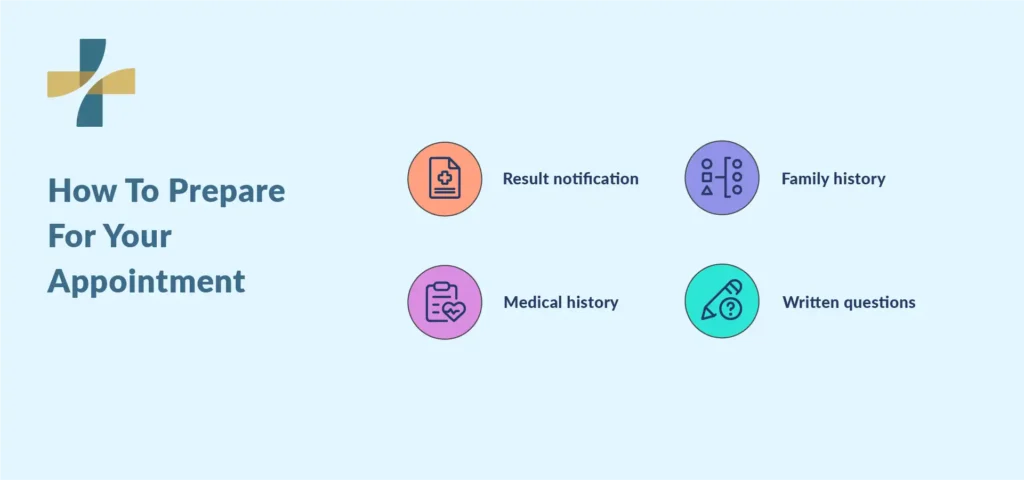
How to prepare for your appointment
To get the most out of your visit, take a few minutes to prepare beforehand:
- Bring your result notification: Have your Health Gateway printout or official BC Cancer screening result letter with you.
- List your medical history and medications: Write down any chronic conditions, past surgeries, and a complete list of prescription or over-the-counter supplements you take.
- Note family history: Be ready to mention if any immediate family members (parents, siblings, children) have a history of colorectal cancer or intestinal polyps.
- Write down your questions: Having your top concerns written down keeps the consultation focused and ensures nothing gets overlooked.
Getting an abnormal FIT result can feel overwhelming, but taking immediate action is the best path to peace of mind. If you need patient-centred healthcare and compassionate care from dedicated medical professionals, feel free to book your appointment online today.
FAQs
1-Does a positive FIT test mean colon cancer?
No. It means blood was found in the stool sample and the cause needs further investigation.
2-What happens after an abnormal FIT in BC?
BC Cancer guidance commonly points to follow-up investigation, often colonoscopy, based on the screening pathway.
3-Should I repeat the FIT test after a positive result?
BC Cancer advises not to repeat the FIT test hoping for a different result; the original finding still needs investigation.
4-When should I see a family doctor?
Book if you need help understanding the result, symptoms have changed, or you need referral and follow-up coordination.
5-What symptoms should I mention?
Mention rectal bleeding, new bowel changes, unexplained weight loss, abdominal pain, fatigue, or worsening symptoms.
6-What should I bring to the appointment?
Bring the results letter, Health Gateway details, medication list, family history, symptoms, and any previous colonoscopy records.