If you have ever typed “how much water should you drink” into a search bar while staring at a half-empty glass, you are not alone. Most people grew up hearing the classic eight glasses of water a day rule, but that generic advice fails to account for your unique body size, activity level, or the climate you live in.
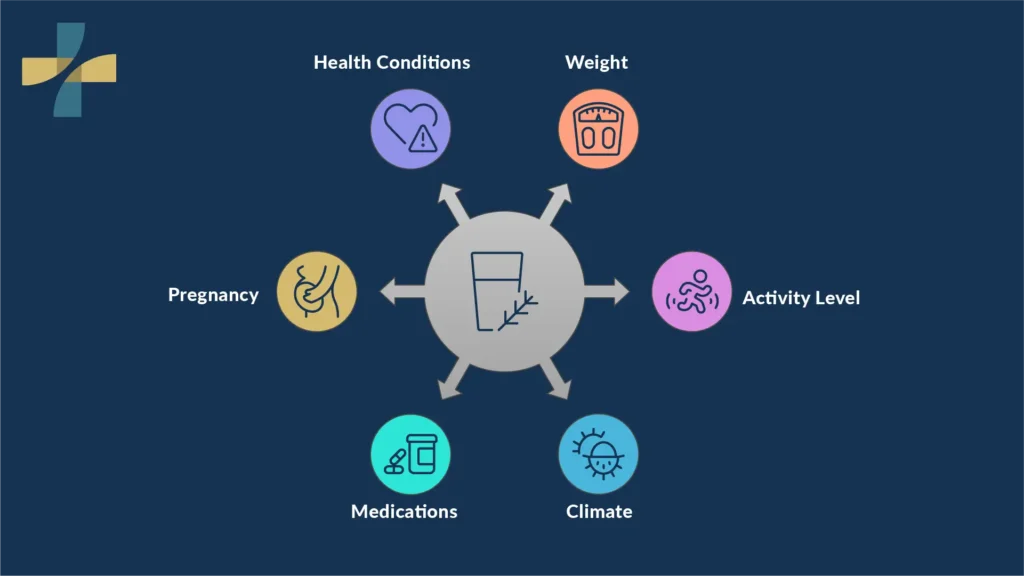
The truth is, there is no single number that works for everyone. Your hydration needs depend on factors like weight, sweat rate, medications, and even pregnancy or underlying health conditions. Understanding these variables ensures you maintain proper fluid needs, avoiding subtle dehydration without overcorrecting for the risks of overhydration.
If you are experiencing ongoing thirst, fatigue, or unusual changes in your urine color, the experienced team at NV Med Center can help identify the root cause. Book an appointment for dehydration symptoms with our primary care providers today.
How Much Water Should Most Adults Drink Daily?
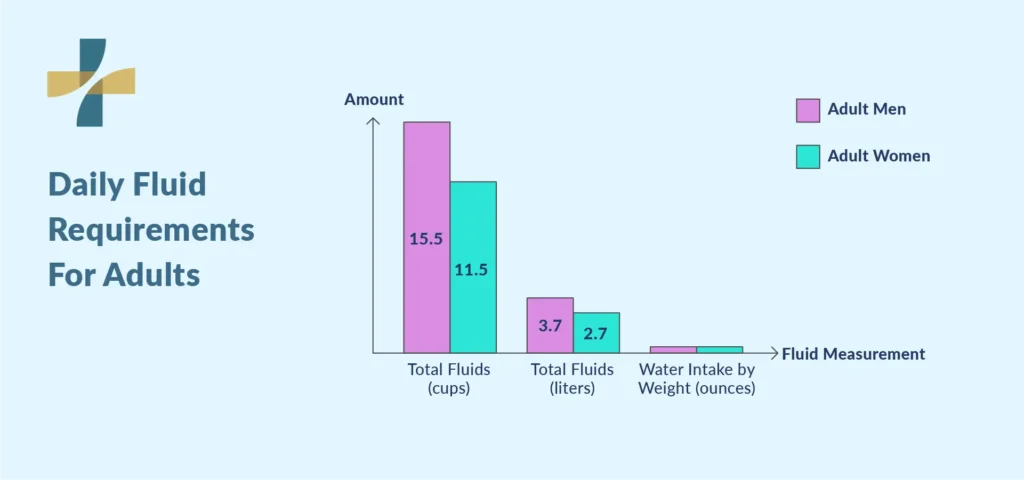
According to general health standards, adult women typically require about 11.5 cups (2.7 liters) of total fluids per day, whereas adult men need closer to 15.5 cups (3.7 liters). It is worth noting that this total daily water intake includes moisture absorbed from foods like fruits and vegetables, as well as plain water and other non-sugary beverages.
A practical starting point many clinicians use is calculating water intake by weight: drinking roughly half your body weight in fluid ounces daily. For instance, a 160-pound individual would aim for a baseline of approximately 80 ounces of water each day.
Example Case: A 35-year-old office worker weighing 150 pounds who is mostly sedentary may only need about 75 ounces of fluids daily. But if she starts jogging four times a week, her needs increase to replace fluid lost through sweat.
- Sedentary adults: closer to the baseline calculation
- Active adults or those in hot climates: add 12 to 24 extra ounces per hour of exercise
- Pregnant or breastfeeding women: Require significantly higher fluid needs to support fetal development and milk production.
Why water needs vary by body size, activity, and climate
Body composition plays a major role in hydration needs. Muscle tissue holds a much higher percentage of water than fat tissue, meaning a lean, muscular individual naturally requires a higher daily water intake than someone of the same weight with a higher body fat percentage.
Climate and activity level compound this effect. Someone exercising outdoors in Las Vegas summer heat can lose over a liter of sweat per hour, dramatically increasing fluid requirements compared to someone working indoors in air conditioning. Replacing both water and electrolytes becomes critical under these conditions to prevent physical exertion from stalling your system.
Signs You May Not Be Drinking Enough Water
Dehydration does not always announce itself with obvious thirst. Many signs of dehydration are subtle and easy to dismiss as everyday fatigue or stress.
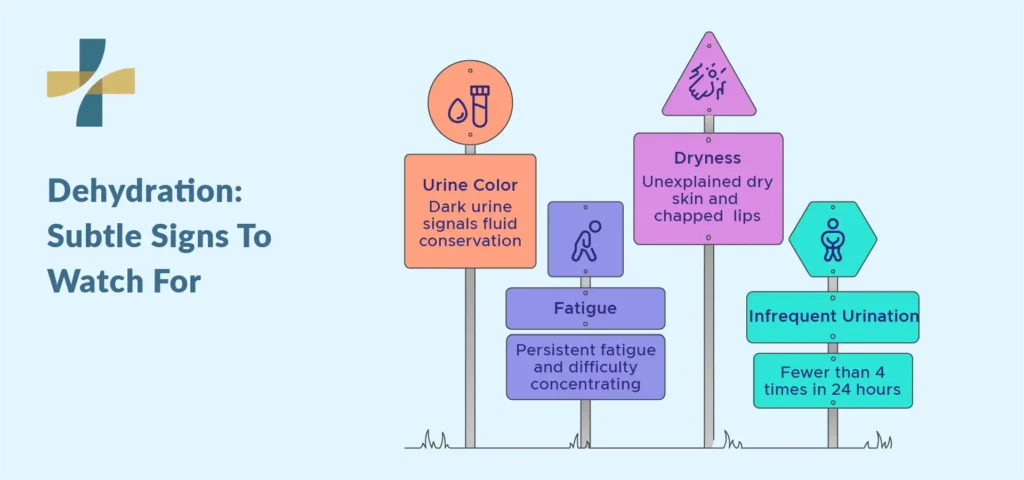
Monitoring your urine color is one of the simplest self-assessments available: a pale, straw-like yellow indicates a healthy balance, whereas dark, amber urine signals that your kidneys are conserving fluid. Other early indicators include dry mouth, persistent brain fog, tension headaches, and sluggish digestion leading to constipation.
Example Case: A construction worker who skips water breaks during a hot shift may notice a pounding headache and dark urine by midafternoon, both classic signs he needs to rehydrate immediately.
- Urine color that is significantly darker than pale yellow
- Persistent afternoon fatigue, dizziness, or difficulty concentrating
- Unexplained dry skin, chapped lips, or muscle cramps
- Infrequent urination (fewer than 4 times in 24 hours)
For a deeper look at recognizing subtle physical decline, review our clinical guide on identifying dehydration symptoms.
Can Drinking Water Help Prevent Kidney Stones and Constipation?
Adequate hydration is one of the most effective and low-cost strategies for preventing kidney stones. Water dilutes the minerals and salts in urine that form stones, particularly calcium oxalate, the most common type.
Research consistently shows that people who drink more fluids have a lower risk of stone recurrence. Water also softens stool and supports regular bowel movements, making it a first-line recommendation for chronic constipation.
Example Case: A patient with a history of recurrent kidney stones was advised by their doctor to increase water intake to produce at least 2.5 liters of urine daily, cutting their stone recurrence risk significantly over the following year.
Can You Drink Too Much Water?
While overhydration is less common than dehydration, drinking excessive water in a short period can lead to a dangerous condition called hyponatremia, or overhydration, where excessive fluid dilutes the essential electrolytes, specifically sodium, in your bloodstream.
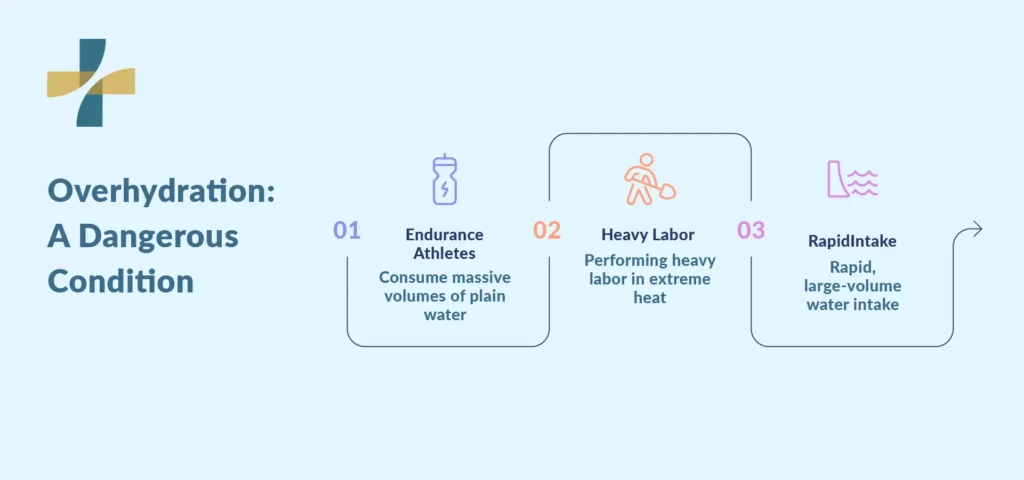
This scenario most frequently affects endurance athletes or individuals performing heavy labor in extreme heat who consume massive volumes of plain water without replacing lost sodium. Without balanced electrolytes, cells begin to swell, resulting in symptoms ranging from mild nausea and confusion to severe neurological distress.
Example Case: A marathon runner who drank several liters of water during a race without any electrolyte replacement began experiencing confusion and swelling, requiring emergency treatment for hyponatremia.
How to Avoid Overhydration:
- Drink to thirst rather than forcing excessive intake
- Replace electrolytes during prolonged, intense exercise
- Be cautious with rapid, large-volume water intake in short timeframes
Who Should Ask a Doctor About Fluid Intake?
General hydration guidelines serve as a helpful baseline, but certain populations require precise, individual medical oversight regarding their fluid needs. For instance, older adults often experience a naturally diminished thirst response, making them highly susceptible to silent dehydration even in comfortable indoor environments.
Similarly, individuals managing chronic health conditions such as kidney disease, advanced heart failure, or liver dysfunction frequently require strict fluid restriction protocols to prevent dangerous fluid retention. Certain prescription medications, including diuretics or blood pressure treatments, also alter how the body excretes sodium and water.
If you manage chronic conditions, routinely taking annual physical exam blood tests helps your physician evaluate your kidney filtration rate, electrolyte balance, and overall systemic health.
How NV Med Center Can Help With Dehydration or Urinary Symptoms
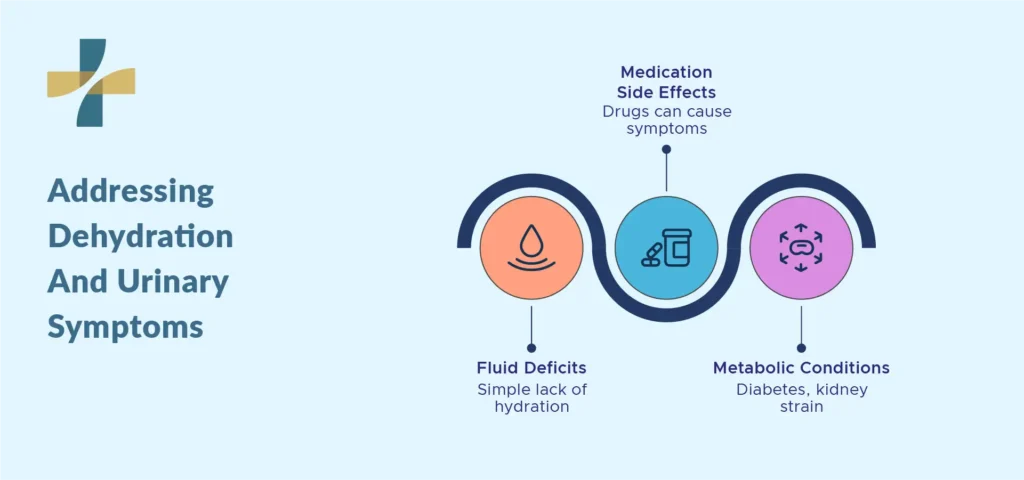
Navigating persistent thirst, ongoing fatigue, or changes in urinary frequency should never be left to guesswork. At NV Med Center, our experienced family medicine physicians offer comprehensive evaluations to uncover whether your symptoms stem from simple fluid deficits, medication side effects, or underlying metabolic conditions like diabetes or kidney strain.
Through dedicated Family Physician Care, we provide personalized health assessments, routine blood and urine testing, and tailored guidance on your exact hydration needs. If you are concerned about persistent dehydration symptoms, ongoing bladder discomfort, or managing complex health conditions, our team is here to support your long-term wellness.
FAQs
-
How much water should you drink a day?
While general guidelines suggest about 11.5 cups (2.7 liters) for women and 15.5 cups (3.7 liters) for men, your specific target depends on your weight, activity level, and environment. A helpful rule of thumb is to aim for half your body weight in fluid ounces daily.
-
Is eight glasses of water a day enough?
The traditional eight glasses of water rule is a reasonable baseline, but it may not be enough for active individuals, those living in hot weather, or people recovering from illness. Conversely, it might be slightly more than necessary for smaller, sedentary individuals.
-
What are the signs that you are not drinking enough water?
Key signs of dehydration include dark urine color, dry mouth, persistent fatigue, brain fog, tension headaches, and infrequent urination. Checking your urine color throughout the day is one of the most reliable ways to track your status.
-
Can drinking more water help prevent kidney stones?
Yes. Increasing your daily water intake is one of the most effective ways to prevent kidney stones. Water dilutes the mineral salts in urine that bind together to form stones, significantly reducing your risk of recurrence.
-
Can you drink too much water?
Yes, consuming excessive amounts of plain water in a short period can cause hyponatremia (overhydration), which dangerously dilutes your blood’s sodium levels. It is essential to balance high fluid intake with electrolytes, especially during long workouts.
-
When should I ask a doctor how much water I should drink?
You should consult a physician if you have underlying conditions like kidney disease, heart failure, are taking diuretic medications, or if you are an older adult experiencing chronic thirst or changes in urination patterns.