HPV Self-Screening Results in BC: When Should You Book a Doctor’s Appointment?
You did the responsible thing and completed your cervical screening kit at home. Now you’re sitting in front of your screen, looking at your HPV self screening results BC profile on your portal, and trying to decode what all this medical terminology actually means for your day-to-day health. Is this normal? Do you need to panic? Should you be calling a medical clinic right now? Take a deep breath. Most outcomes are very straightforward, and the BC Cancer screening initiative was designed to make cervical cancer prevention simple, accessible, and low-stress, not a source of anxiety. However, understanding when a notification requires a basic note-to-self versus an actual cervical self-screening follow up with a healthcare provider is where many people feel unsure. This guide breaks down exactly what your Health Gateway screening results mean, when a doctor’s appointment after an HPV result is recommended, and how to approach your follow-up feeling completely supported and informed. Already looking at a confusing test notification? Skip directly to “Result situations that may need follow-up” to find out your next steps. What BC cervix self-screening is designed to check The BC cervix self-screening program specifically looks for high-risk strains of human papillomavirus (HPV), which is the underlying cause of nearly all cervical cancer cases. Unlike a traditional Pap test that looks directly for cellular changes, this primary screening checks for the presence of the virus itself. The idea is simple: catch HPV early, before it has a chance to cause cell changes that could develop into cancer over many years. It is an essential component of women’s preventive health screening, a tool for prevention, not a diagnosis of illness. This difference matters because of how you read your results. Receiving a positive HPV result or BC status does not mean you have cancer. It simply indicates that the virus was detected, and that your care team should take a closer look, usually through a targeted Pap test after self screening BC or a quick primary care consultation. Example Case: Sarah, 34, used her self-screening kit at home after receiving a routine reminder. When she checked her portal, she saw “HPV detected result BC” and panicked. After speaking with a clinician during a routine checkup, she learned that virus detection is extremely common, easily monitored, and highly manageable when caught early. Tests for high-risk HPV strains, not cell abnormalities directly Replaces the need for as-frequent Pap tests for many patients Available through participating BC clinics and mail-in kit programs How and when results are usually shared Most people can access their HPV self-screening results BC directly through their online portal account, usually within a few weeks of mailing back their sample. In certain cases, your health clinic may also contact you by phone or issue an official follow-up letter. Processing times vary depending on lab volumes and regional submission methods. If six weeks have passed without an update, it is completely reasonable to contact your primary care office or check with BC CDC guidelines rather than wondering about your status. Because notifications arrive through different channels, it helps to know where to look: Health Gateway account notifications (the standard BC portal where lab reports are posted). A phone call or follow-up letter from BC Cancer or your screening provider. Need help understanding your report or taking the next step? If your results are ready or if you’re feeling unsure about what they mean, you don’t have to navigate them alone. You can book an online visit with NV Med Center or schedule a consultation with our experienced physicians to review your results and get personalized guidance on your next steps. Result situations that may need follow-up Not every report requires the same next step. Here is a clear breakdown of the three most common outcomes and what they mean for your routine sexual health care. HPV not found This is the most frequent and reassuring outcome. It means no high-risk virus strains were found in your sample. In this scenario, no clinic visit is required. You will simply be placed back on the standard routine checkup timeline, which generally means re-screening in five years for most eligible individuals in British Columbia. HPV found and follow-up recommended A positive HPV result in BC means that high-risk viral DNA was detected. It is important to remember that for many people, the immune system naturally clears the virus on its own within 12 to 24 months. However, to ensure long-term safety, your provider will recommend the next steps. This often involves a secondary clinic visit for a sample check, or in specific cases, a colposcopy referral BC. This is the exact moment when booking a follow-up appointment with a family doctor becomes an important priority. If you have immediate questions about what your report means, you can also schedule an online doctor visit for screening follow-up questions to discuss your cervical screening result with a doctor without delay. Clinics like NV Med Center offer comprehensive care to help guide you through these next steps smoothly. Unclear, delayed, or confusing results Occasionally, a test report comes back as inconclusive, often because there wasn’t enough sample material on the swab. A delay or unclear status does not mean something is wrong; it simply means the lab needs a fresh sample to give you an accurate answer. If your portal displays an inconclusive note after several weeks, reach out to your provider to request a simple repeat kit. Example Case: Mei received an “inconclusive” notification after her first home swab. Instead of worrying, she reached out to experienced physicians who explained that the swab simply needed a slightly larger sample. She completed a quick repeat test without any hassle. What to bring to a doctor appointment Walking into your appointment prepared makes the conversation faster and less stressful. A little organization goes a long way toward getting clear answers. If you do need a cervical screening appointment for a follow-up exam, coming prepared will help you get
24-Hour Holter Monitor Test: What to Expect Before, During and After Your Appointment
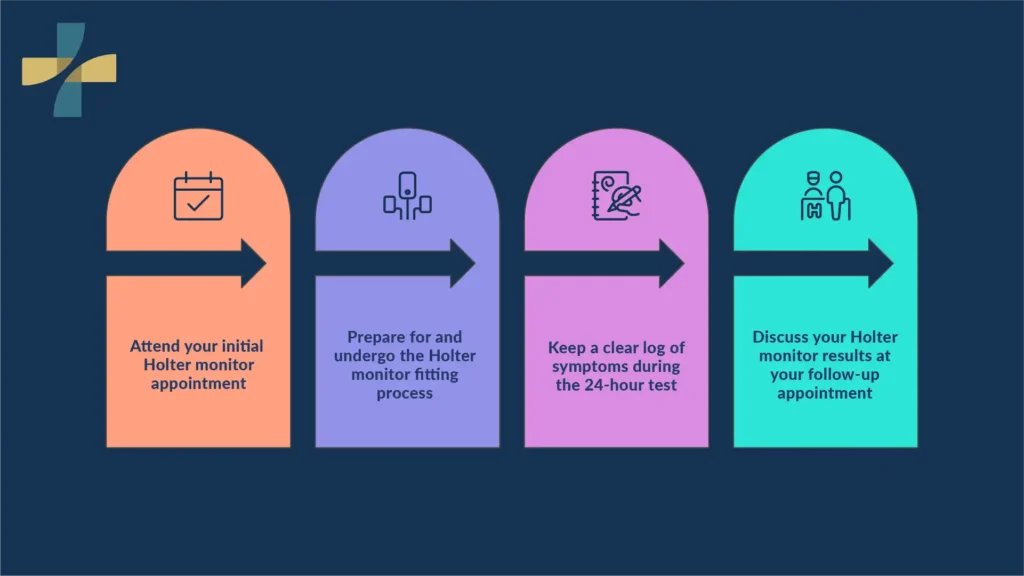
If your doctor recently recommended a heart rhythm assessment, it is completely natural to feel a bit uneasy and have questions. Knowing what to expect during Holter monitor test day, learning how to prepare for Holter monitor fittings, understanding whether you can shower, and figuring out what those results mean for your heart health are common, everyday concerns for first-time patients. The reassuring news is that a 24 hour heart monitor test is entirely painless, non-invasive, and remains one of the most reliable diagnostic tools cardiologists rely on to catch irregular heartbeats that slip through during a brief office checkup. This comprehensive guide walks you through the entire experience from your initial Holter monitor appointment to the follow-up conversation about your Holter monitor results appointment so you can step into our clinic feeling confident, informed, and completely at ease. Already have your appointment scheduled? Keep this guide handy so you know exactly what to bring, how to keep a clear symptom log, and what questions to ask your doctor. Why your doctor may order a Holter monitor A standard in-office electrocardiogram (ECG) only captures a few seconds of your heart’s electrical activity. Because many arrhythmias, fluttering palpitations, or sudden dizzy spells come and go unpredictably, they are easily missed during a routine consultation. A Holter monitor bridges this diagnostic gap by continuously recording your heart’s electrical activity over a full 24-hour or 48-hour monitoring window while you carry out your normal daily routine. According to the American Heart Association, continuous ambulatory ECG monitoring is essential for detecting intermittent cardiac events. Whether you consult a general doctor or a family practitioner, physicians typically order a 24 hour Holter monitor test when patients experience: Unexplained palpitations, skipped beats, or a racing heart Dizziness, lightheadedness, or fainting episodes Unexplained fatigue or shortness of breath Monitoring existing arrhythmias or checking how well heart medication is working Example Case: A 52-year-old patient experiencing occasional dizziness during her morning walks had a completely normal five-minute ECG at her clinic. Her physician recommended a Holter monitoring assessment at NV Med Center, which successfully captured a brief, hidden episode of atrial fibrillation during her routine walk, something a quick resting ECG would have missed entirely. Uncontrolled hypertension can also trigger irregular heart rhythms. If you are experiencing symptoms alongside cardiac fluttering, read our guide on high blood pressure symptoms and when to see a general practitioner. What happens before the monitor is attached Understanding Holter monitor preparation is straightforward, and there is very little you need to worry about beforehand. While our clinical staff will provide specific guidance, here is what typically happens on the day of your visit. We recommend wearing a comfortable, loose-fitting, two-piece outfit to your Holter monitoring clinic appointment, as your chest area needs to be easily accessible. Please avoid applying chest lotions, body oils, or powders on the day of your appointment, as these create a barrier that stops the Holter monitor electrodes from adhering securely to your skin. During your Holter monitor before, during, and after process, a qualified technician will: Clean and, if needed, lightly shave small areas of your chest for better electrode contact Attach 3 to 7 small adhesive electrodes to your chest Connect the electrodes to a small recording device, usually worn on a belt, in a pouch, or around your neck Confirm the device is recording properly before you leave Example Case: A first-time patient was nervous about the shaving step, worried it would be uncomfortable. In reality, only small coin-sized patches of chest hair were trimmed, and the entire attachment process took less than 10 minutes with zero discomfort. Patient Tip: Wear a front button-up shirt to make your Holter monitor test setup smoother, and feel free to ask your technician to show you how to reattach a patch if an electrode happens to peel loose at home. What wearing the monitor feels like during the day Most patients are surprised by how quickly they forget they’re wearing a Holter monitor. The device is lightweight, roughly the size of a small smartphone or deck of cards, and the wires are typically taped down to prevent tugging. You may notice a slight pulling sensation on your skin, especially around the electrodes, but this fades within the first hour or two. The goal of the test is to capture your normal daily activity, so you’re encouraged to go about your routine as closely as possible. Clothing, skin, showering, exercise, and sleep To clear up any confusion regarding wearing a Holter monitor, let’s break down the practical rules for daily living: Clothing: Stick with loose, breathable tops that will not snag or press against the wires. Avoid tight sports bras or stiff waistbands that compress the chest unit. Skin Care: A subtle itch or minor skin redness beneath the adhesive pads can happen. Avoid scratching or pulling at the edges of the electrodes. Showering Restrictions: Can you shower with Holter monitor equipment attached? For standard devices, the answer is no. Traditional monitors and chest leads are not waterproof, so you must avoid showering, taking baths, or swimming during the test period. Instead, opt for a careful sponge bath, keeping the unit and chest wires completely dry. Exercise & Sweat: Light walking and routine household errands are great because your doctor wants to see how your heart responds to mild exertion. However, avoid intense workouts that cause heavy sweating, as moisture can loosen the electrodes. Sleep Routine: You can sleep in your usual position. Side sleepers often find it most comfortable to rest on their back or opposite side to prevent direct pressure on the chest monitor. What to write in your symptom diary Your Holter monitor symptom diary is just as critical as the electronic recording itself. While the unit logs every heartbeat, your written journal gives those numbers real-world clinical context. Whenever you feel a physical symptom, whether it is a flutter, chest tightness, skipped beat, or lightheadedness, write down: The exact time (matching