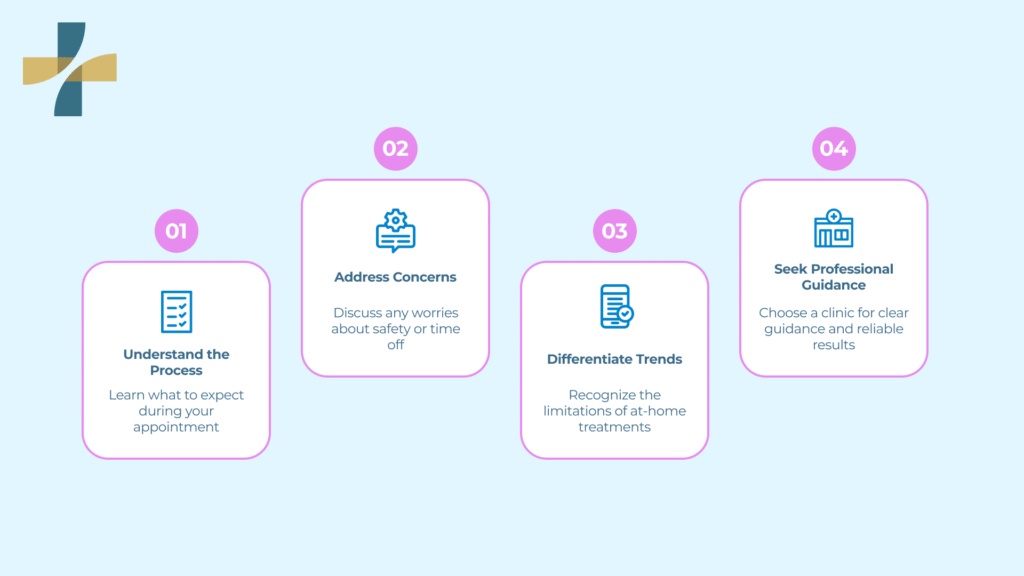
Skin rejuvenation can feel confusing when it is your first time. You might not know what happens in the room. You might worry about safety, redness, or time off work. At-home trends can add to the confusion. LED masks from brands like Therabody and Omnilux are all over social media and beauty news. They can be useful for some people, but they do not replace an in-clinic plan when you want clear guidance and reliable outcomes.
This guide gives clear steps so you can prepare well, ask better questions, and book with confidence.
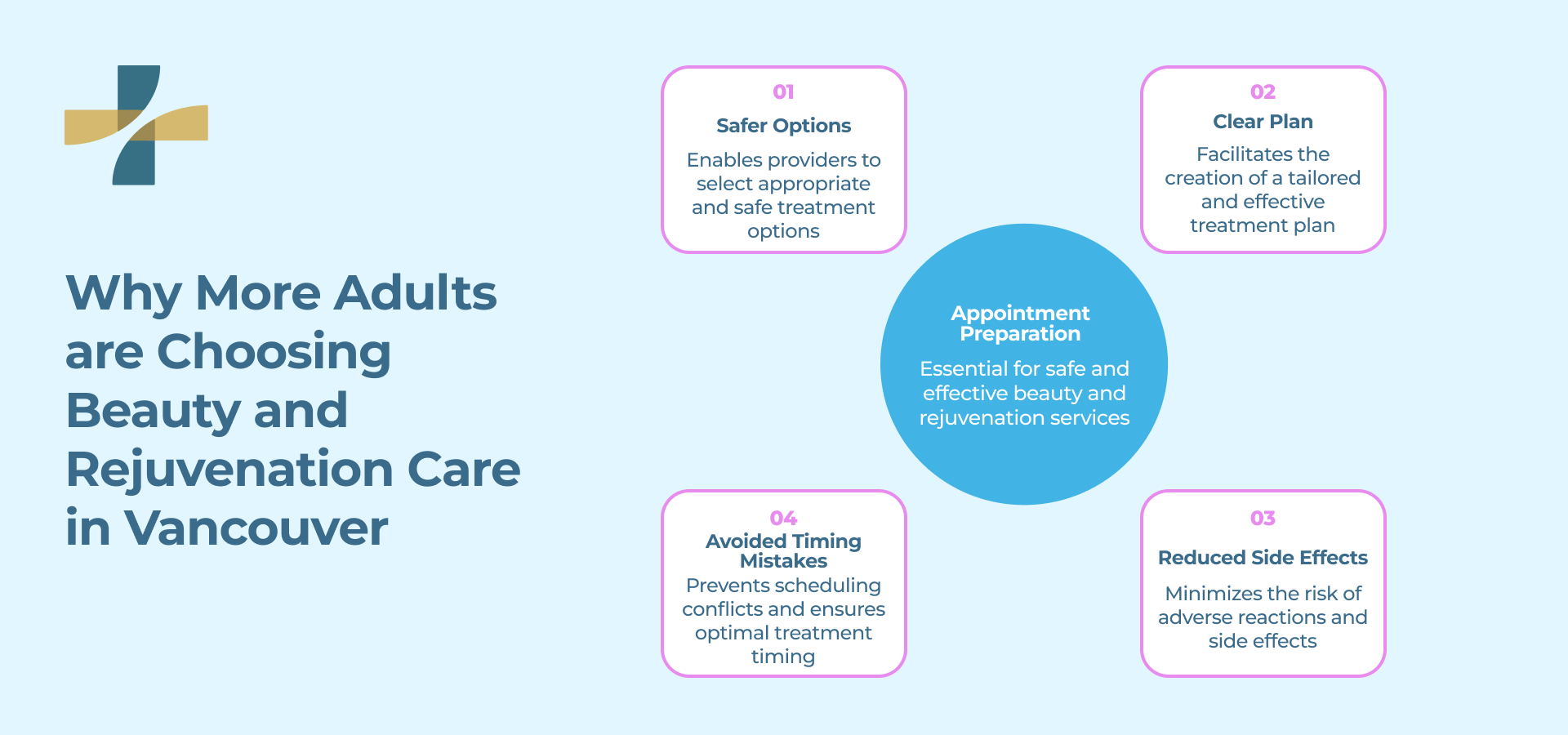
Why Preparation Matters for Your First Appointment
Preparation matters because it helps your provider choose safer options, set a clear plan, and reduce avoidable side effects. When you share your routine, meds, and goals, your first visit becomes a structured consult rather than guesswork. You also avoid timing mistakes, like booking too close to an event.
What preparation changes in real life
- Better product choices: Your provider can spot common triggers, like harsh acids.
- More realistic timing: You plan around redness, peeling, or swelling.
- Fewer surprises: You know what your first visit will include.
Mini scenario: You want a “glow,” but you also get stinging and redness. If you show your product list, your provider can start with a gentler approach, then add stronger options later. This often feels better than picking the strongest treatment on day one.
Minimally invasive aesthetic treatments are popular worldwide, which means more people are booking “first visits” than ever. International Society of Aesthetic Plastic Surgery (ISAPS) reported 8.88 million botulinum toxin procedures in 2023 and 5.56 million hyaluronic acid procedures.
That demand increases the need for clear planning, not rushed decisions.
Understanding the Services You’ll Receive
Beauty and rejuvenation care includes services that aim to improve tone, texture, hydration, and signs of ageing. Your first visit usually focuses on assessment and planning, not pressure to treat the same day. A consult-first approach helps match options to your skin and your schedule. This approach is common at the best beauty and rejuvenation clinic that Vancouver patients choose for consult-led care.
What “beauty and rejuvenation care” often covers
This varies by clinic, but first-timers usually ask about:
- Skin texture and dull tone
- Dryness and fine lines
- Uneven pigment or sun spots
- Enlarged pores and rough patches
- Early laxity or tired-looking skin
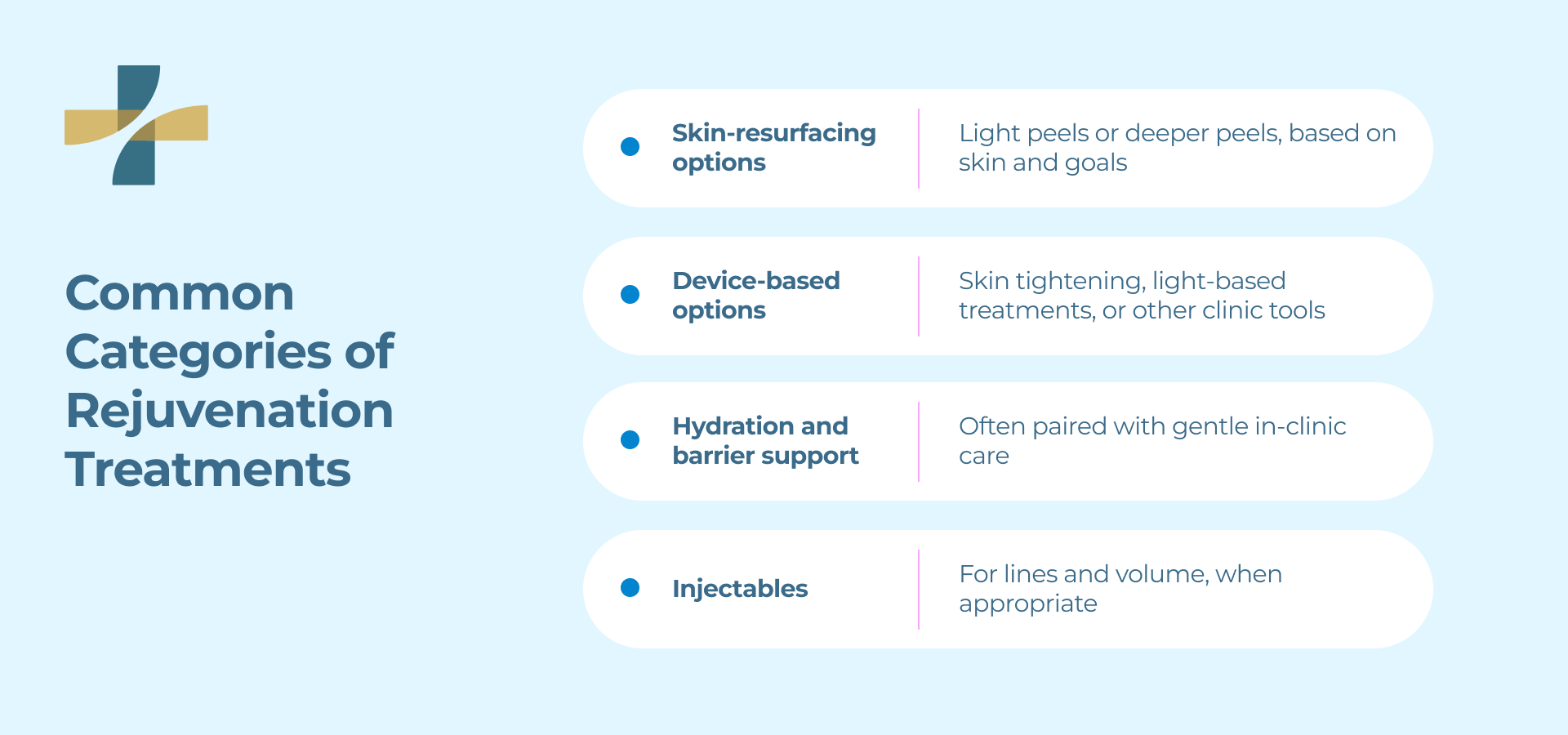
Common categories of rejuvenation treatments Vancouver patients ask about
- Skin-resurfacing options (light peels or deeper peels, based on skin and goals)
- Device-based options (skin tightening, light-based treatments, or other clinic tools)
- Hydration and barrier support (often paired with gentle in-clinic care)
- Injectables (for lines and volume, when appropriate)
You do not need to know the “right treatment” before you book. Your job is to explain your goal and your limits. The provider’s job is to guide the plan.
Why plans are often phased
Most people do better when care is staged. This is common in facial rejuvenation planning.
- Step one: calm irritation and build tolerance
- Step two: treat tone and texture
- Step three: target lines or laxity if needed
- Step four: maintenance visits
Mini scenario: A busy professional wants brighter skin for work photos and also wants help with texture. A staged plan can start with a gentle skin reset first, then add targeted steps. It lowers the chance of irritation and helps timing.
Documents and Information to Bring
Bring your health details, skincare routine, and your goal in plain terms. This helps your provider rule out risks, choose a safer approach, and give clearer aftercare. It also helps you avoid treatments that clash with your meds, sun exposure, or skin sensitivity.
What to bring in a simple checklist
Health and treatment history
- Current medications, including topical prescriptions
- Supplements (especially ones linked with bruising)
- Allergies and past reactions
- Past aesthetic treatments, even if years ago
- Pregnancy or breastfeeding status, if relevant to you
Skin routine
- Photos of product labels, or a written list
- How often do you exfoliate
- Any retinoids, acne products, or brighteners
- Any tools you use at home, like LED masks
Lifestyle and timing
- Upcoming events in the next 2 to 4 weeks
- Recent sun exposure or tanning plans
- Work limits (time off, video calls, or travel)
Mini scenario: You take fish oil and vitamin E “for health.” You forgot to mention it. You then book a treatment where bruising is a known side effect. Sharing supplements early helps your provider guide timing and prep steps.
What to bring and why it helps
| What you bring | Why it helps your plan |
| Medication and supplement list | Reduces the risk of bruising or reactions |
| Skincare product list | Spots irritants and helps prep timing |
| Photos of your skin in daylight | Helps track progress over time |
| Your goal in one sentence | Keeps the plan focused |
| Event date or deadline | Helps choose treatments with the right downtime |
What to Expect During Your First Appointment
Your first appointment usually includes a consult, a skin review, and a clear plan. You will discuss goals, timing, risks, and aftercare. Some people do the treatment on the same day. Others start with a plan first, then book the best timing for results.
Step 1: A goal-focused conversation
Expect questions like:
- What bothers you most right now?
- What does “better” look like for you?
- What is your deadline, if you have one?
- What have you tried already?
A good provider will help you describe goals in plain terms. You do not need perfect words.
Step 2: Skin review and product review
Your provider may look at:
- Dryness, redness, oil levels, and texture
- Pigment patterns and sun exposure signs
- Current irritation and barrier health
- Past scars or active acne
Your product list matters here. Many first-time issues come from overuse of actives.
Step 3: A plan with clear timing
A solid plan should cover:
- What treatment is suggested and why
- What changes to expect and when
- What downtime might look like
- How many sessions might be needed
- What home care supports results
ISAPS data shows non-surgical treatments are common worldwide, with botulinum toxin and fillers leading the totals. That popularity does not mean every treatment fits every person. Your plan should match you, not a trend.
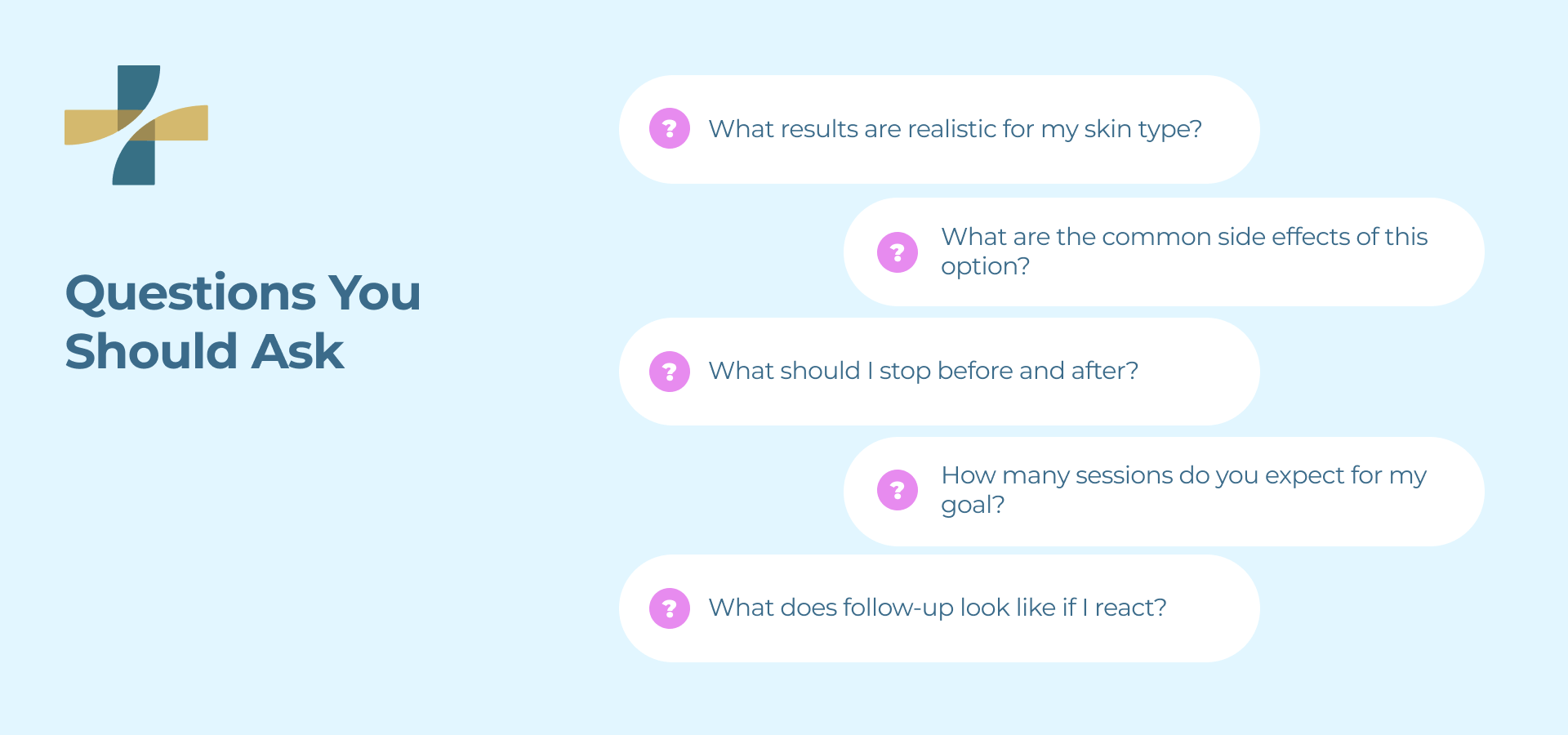
Step 4: Questions you should ask
Bring these questions and tick them off:
- What results are realistic for my skin type?
- What are the common side effects of this option?
- What should I stop before and after?
- How many sessions do you expect for my goal?
- What does follow-up look like if I react?
Mini scenario: You expect a same-day treatment, but your provider spots active irritation from recent exfoliation. A consult-first approach can delay treatment by a week or two, which often leads to a smoother outcome.
Tips for Skin and Health Care Before Your Visit
Your first beauty and rejuvenation appointment usually begins with a consultation rather than treatment. During your consultation, your skin is reviewed, and your goals are discussed in a care guided by a multidisciplinary medical team.
From there, your provider explains suitable options, outlines possible side effects, and discusses timing, recovery, and follow-up care so you know what to expect before moving forward.
7 days before
These steps help reduce surprises during your consult.
- Do not start new skincare products.
- Keep exfoliation light or pause it if you get redness.
- Reduce heavy sun exposure where you can.
- If you bruise easily, tell the clinic early.
Medication note: Do not stop prescribed medicines on your own. Ask your prescribing clinician first.
48 hours before
This is the most useful prep window for many first-time patients.
- Pause strong actives like retinoids and exfoliating acids.
- Avoid waxing, threading, or aggressive scrubs on the area.
- Keep the routine basic: gentle cleanser, plain moisturiser, SPF.
The day of your appointment
- Arrive with clean skin where possible.
- Avoid heavy makeup and thick creams.
- Bring your product list and questions.
- Wear comfortable clothing if the neck area is involved.
Mini scenario: You bought an LED mask after seeing it online. Your skin became more irritated, so you kept switching products. A consult helps you stop the cycle. You can reset your routine and choose steps that suit your skin and your tolerance.
After Your Appointment: Care and Follow-Up
Aftercare is the set of steps that protects your skin and supports results. Your provider will give guidance based on what you have done or planned. Most first-time patients do best with a simple routine, sun protection, and clear follow-up steps.
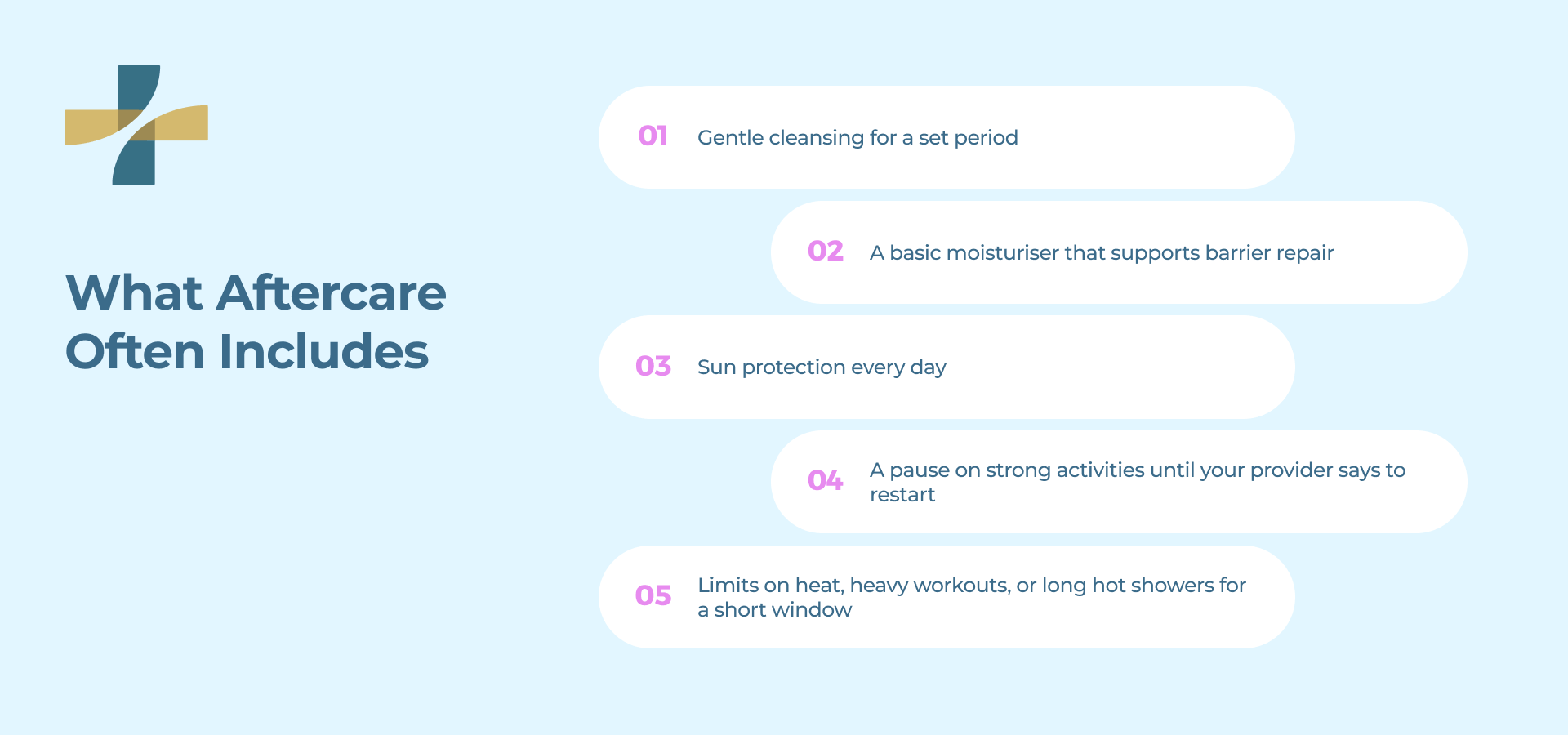
What aftercare often includes
This varies by treatment, but many plans include:
- Gentle cleansing for a set period
- A basic moisturiser that supports barrier repair
- Sun protection every day
- A pause on strong activities until your provider says to restart
- Limits on heat, heavy workouts, or long hot showers for a short window
What “normal” can look like
Depending on the plan, short-term effects can include:
- Mild redness
- Dryness or tightness
- Light flaking
- Mild swelling or tenderness
A good clinic tells you what is normal and what needs a call.
Planning your follow-up
Follow-up is part of a safe plan.
- Some treatments need a series.
- Some need a check-in to review the response.
- Some need maintenance visits
Mini scenario: You feel fine on day one, then your skin becomes dry on day three. If you have aftercare steps and a follow-up plan, you can respond early and avoid a longer setback.
Booking Your First Beauty & Rejuvenation Visit at NV Med Center in Vancouver
Preparing for your first beauty and rejuvenation appointment supports safer skin rejuvenation and clearer treatment timing. When your first visit feels like a guided consultation rather than guesswork, it becomes easier to choose suitable options and manage expectations. Bringing your medication list, skincare routine, and pausing harsh actives before your visit helps your provider create a plan that fits your skin. Planning around important events and asking clear questions about downtime and follow-up can improve the overall experience.
If you are ready to start beauty and rejuvenation care, book your consultation at NV Med Center in Vancouver to discuss skin rejuvenation options and receive a personalised plan based on your skin and schedule. Bringing a simple checklist with your goals, skincare products, medications, and any past reactions helps your provider guide your care with clarity and confidence.
FAQs
Q1: How do I prepare for my first beauty and rejuvenation appointment?
To prepare, keep your routine simple and avoid harsh activities for 48 hours. Bring your medication list and skincare products. Share your goals and any event dates so your provider can plan timing and aftercare.
Q2: Can I book facial rejuvenation if I have sensitive skin?
Yes, many people with sensitive skin can still book. Tell the clinic about redness, stinging, or past reactions. A staged plan often starts with gentler steps, then builds as your skin tolerates more.
Q3: Will I get a treatment at my first visit?
Sometimes, but not always. Many first visits focus on assessment and planning. If your skin shows irritation or you have timing limits, your provider may suggest starting later for a smoother result.
Q4: How early should I book before an event?
Book early if you have a fixed date. Some rejuvenation treatments Vancouver clinics offer can cause redness or flaking. A consultation first helps you choose options with downtime that fit your schedule.
Q5: How many sessions are common for skin rejuvenation?
It depends on your goal and the treatment type. Some people see change after one visit, while others need a series. Your provider should explain the likely number of sessions and the gap between them.