Parents often feel unsure when choosing between a pediatrician vs family doctor. Both can care for children, but they serve different roles. The right choice depends on your child’s age, health needs, and your long-term care goals.
Recent guidance from the Canadian Paediatric Society highlights that early childhood care plays a key role in development, preventive care, and long-term health outcomes. This makes choosing the best doctor for your child an important early decision.
This guide explains the difference between providers, when to see a pediatrician, and how the BC healthcare system works. You will also find real-life examples to help you decide with confidence.
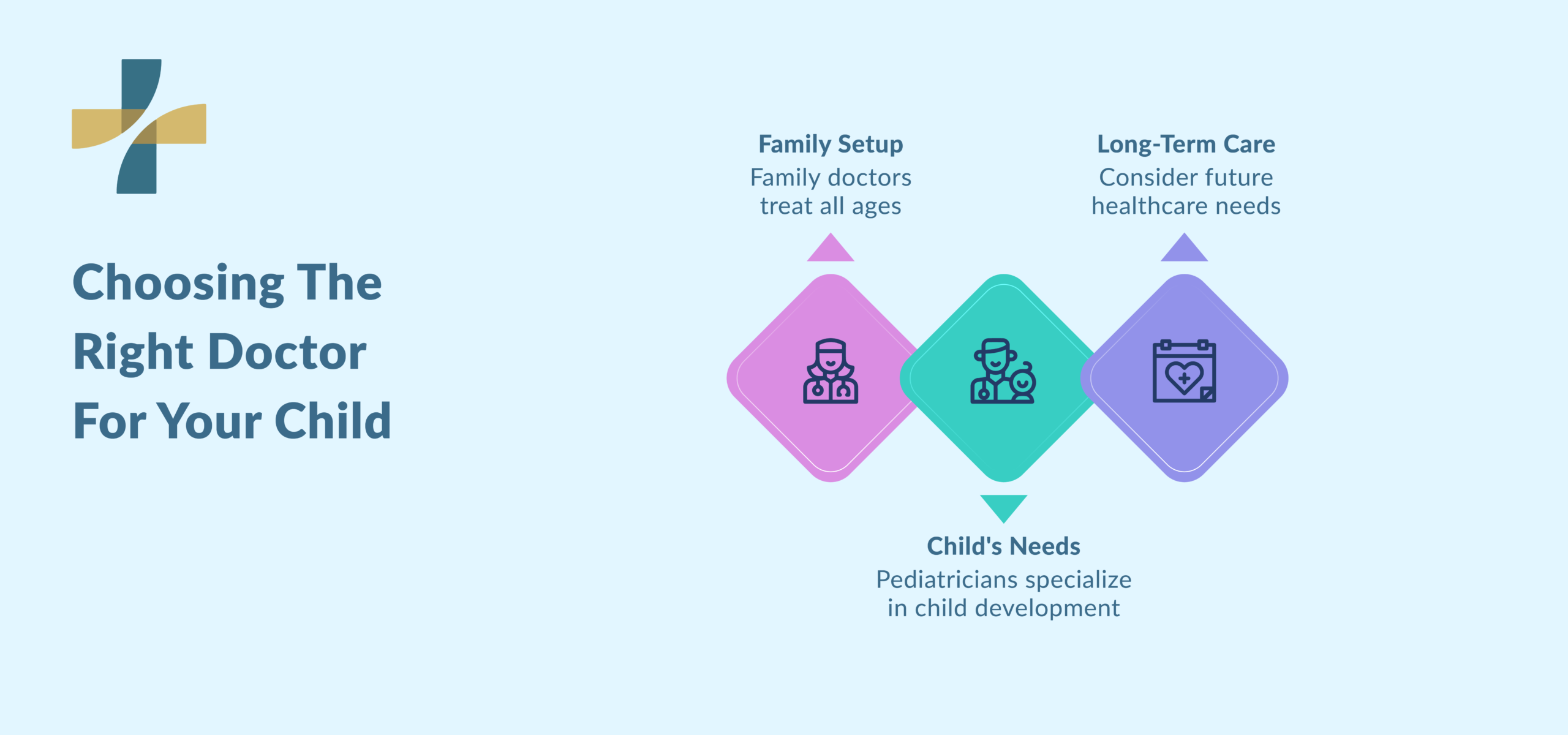
What Is The Difference Between A Pediatrician Vs Family Doctor?
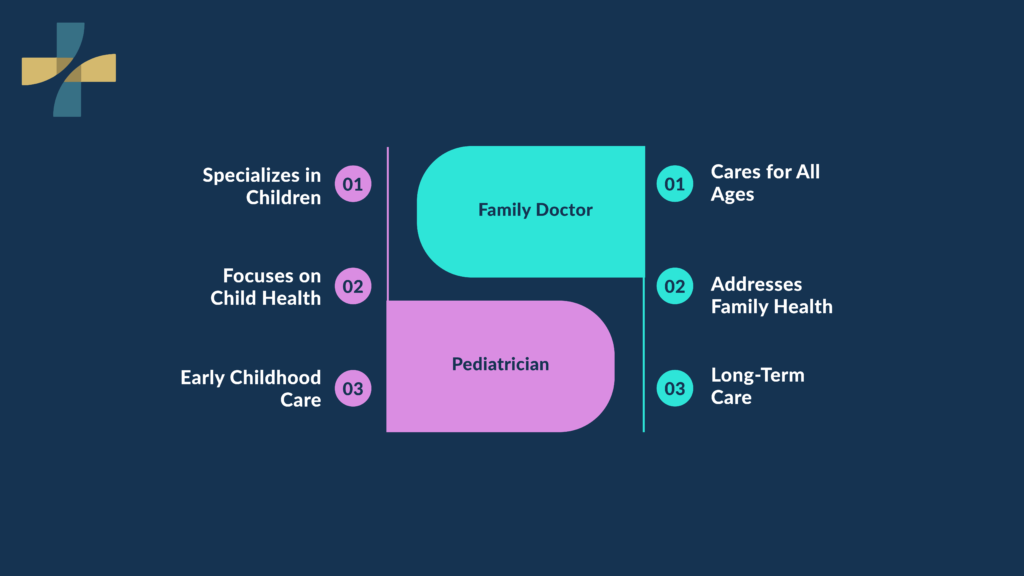
A pediatrician is a child health specialist focused on infants, children, and teens, while a family doctor is a primary care provider who treats patients of all ages. The best choice depends on your child’s needs, your family setup, and long-term care preferences.
What does a pediatrician do?
A pediatrician focuses only on children. Their training centres on child development, preventive care, and managing pediatric-specific conditions.
They typically provide:
- Monitoring of growth and developmental milestones
- Vaccination management based on age-specific schedules
- Diagnosis and care for chronic pediatric conditions
- Behavioural and developmental assessments
Pediatricians act as child health specialists. They are trained to spot early signs of developmental delay and manage complex childhood conditions.
What does a family doctor do?
A family doctor provides primary care for children and adults. They treat a wide range of conditions across all life stages.
They typically provide:
- Routine checkups and preventive care
- Treatment for common illnesses and injuries
- Ongoing care for families
- Basic child development monitoring
Family doctor for child care works well for healthy children who need general care and routine follow-ups.
Pediatrician vs family doctor training and expertise
| Area | Pediatrician | Family Doctor |
| Focus | Children only | All ages |
| Training | Child development and pediatric conditions | Broad medical training across age groups |
| Care Type | Specialised | General primary care |
| Role | Child specialist | General practitioner |
A child specialist vs general practitioner comparison shows that pediatricians focus deeper on children, while family doctors cover broader needs.
When Should You See A Pediatrician For Your Child?
You should see a pediatrician when your child needs specialised care related to growth, development, or complex conditions. Pediatricians are best for newborns, developmental concerns, and chronic pediatric conditions that require focused expertise.
Scenario 1: Pediatrician for newborn care
Newborns need frequent medical visits in their first year. A pediatrician tracks feeding, weight gain, and early development.
Example: A newborn with feeding issues or slow weight gain benefits from a pediatrician’s close monitoring.
Scenario 2: Developmental or behavioural concerns
Pediatricians are trained to assess delays in speech, learning, or behaviour.
Common concerns include:
- Speech delay
- Autism screening
- ADHD symptoms
Early intervention improves outcomes. A 2024 study from London Health Sciences Centre Research Institute followed 449 young patients and found that early, personalised care improved functioning, reduced symptoms, and increased quality of life over one to two years.
Scenario 3: Chronic or complex pediatric conditions
Children with long-term conditions need specialist care.
Examples include:
- Asthma
- Diabetes
- Congenital conditions
Pediatricians coordinate care with specialists and manage long-term treatment plans.
Scenario 4: Preventive care and vaccination management
Pediatricians follow structured schedules for immunisations and preventive care.
They monitor:
- Growth trends
- Nutritional status
- Developmental milestones
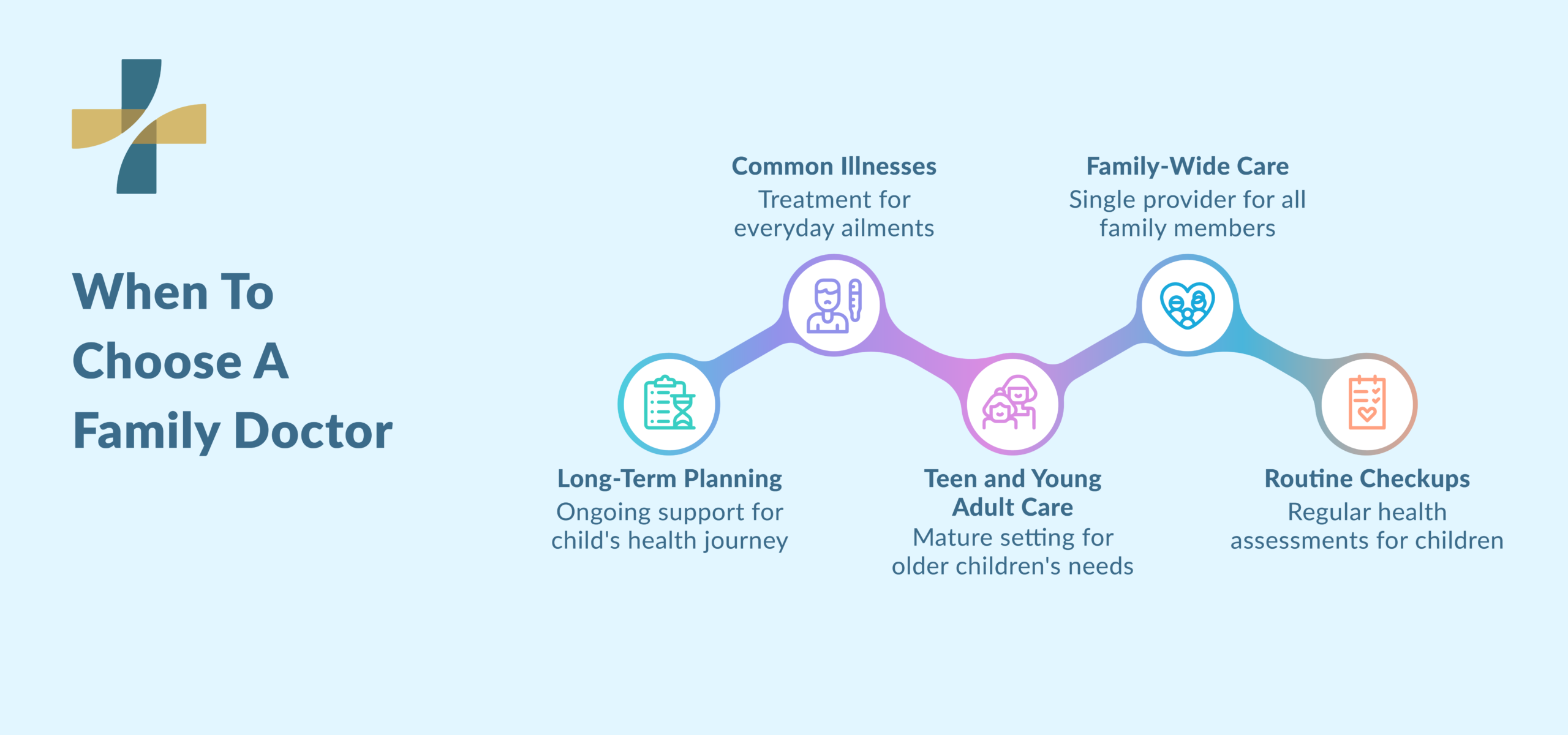
When Is A Family Doctor The Right Choice For Child Care?
A family doctor is the right choice for general child care and long-term family care. They treat common illnesses, provide preventive care, and manage health across all ages. This makes them a practical option for families who want one provider.
Scenario 1: Routine checkups and common illnesses
Family doctors treat everyday health issues.
Examples include:
- Colds and flu
- Minor injuries
- Routine physical exams
Scenario 2: Family-wide healthcare needs
A single provider for the whole family reduces the need for multiple clinics.
Benefits include:
- Fewer appointments across locations
- Consistent medical history tracking
- Convenience for parents
Scenario 3: Long-term child healthcare planning
Family doctors support long-term care across life stages.
They provide:
- Preventive care
- Ongoing monitoring
- Continuity into adulthood
Scenario 4: Teen and young adult care
Older children may prefer a more mature setting.
Family doctors support:
- Mental health discussions
- Lifestyle and preventive care
- Independent health decisions
Do You Need A Pediatric Referral In Vancouver, and How Does It Work?
In the BC healthcare system, most pediatricians require a referral from a primary care provider. This process helps prioritise children based on medical need and ensures access to specialist care when advanced assessment or treatment is required.
How the referral process works
- Visit a family doctor or walk-in clinic
- The doctor evaluates your child
- Referral is sent to a pediatrician
- Appointment is scheduled
When a pediatric referral to Vancouver is needed
Referrals are common for:
- Developmental delays
- Chronic pediatric conditions
- Specialist assessment
Can you see a pediatrician without a referral?
Some private clinics allow direct booking. However, most specialist care in the BC healthcare system follows the referral process.
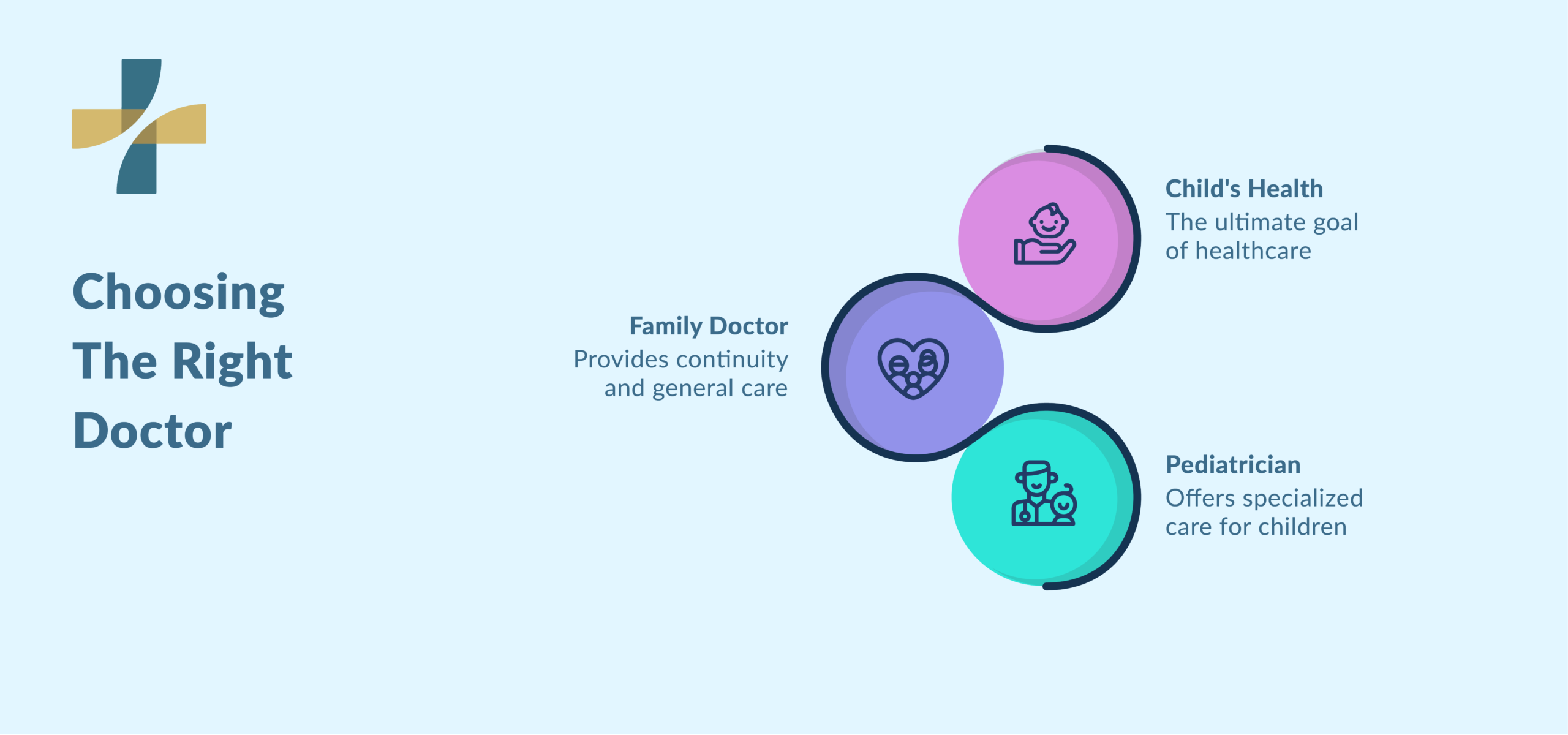
Which Doctor Is Better For Your Child’s Long-Term Care?
The best doctor for your child depends on their health needs and your family’s goals. Pediatricians provide specialised care for children, while family doctors offer continuity across life stages. Both support long-term child healthcare planning.
Health needs
- Complex conditions → pediatrician
- General health → family doctor
Family preference
- One provider → family doctor
- Specialised care → pediatrician
Care goals
- Preventive care focus → both options
- Long-term continuity → family doctor
- Specialist expertise → pediatrician
How Do Real-Life Situations Help You Choose Between A Pediatrician Vs Family Doctor?
Real-life scenarios help parents decide faster. A pediatrician is often better for specialised needs, while a family doctor works well for routine care and convenience across the family.
Scenario comparison
- Newborn with feeding concerns → pediatrician
- Healthy school-age child → family doctor
- Child with asthma → pediatrician or shared care
- Teen seeking independence → family doctor
Mixed care approach
Many families use both providers.
Example:
- Family doctor handles routine visits
- A paediatrician manages specialised conditions
This approach allows flexibility while maintaining quality care.
How Do You Choose The Best Doctor For Your Child In Vancouver?
The best way to choose is to match your child’s needs with the provider’s expertise. Consider health complexity, comfort level, and access to services when deciding between a pediatrician vs family doctor.
Questions to guide your decision
- Does my child need a child health specialist?
- Do we want one provider for the whole family?
- Will we need a referral for specialised care?
- Is my child comfortable with the doctor?
What to look for
- Experience with child development
- Clear communication
- Access to preventive care and vaccination management
When to book a pediatric consultation in Vancouver
- Ongoing developmental concerns
- Complex health issues
- Need for specialist input
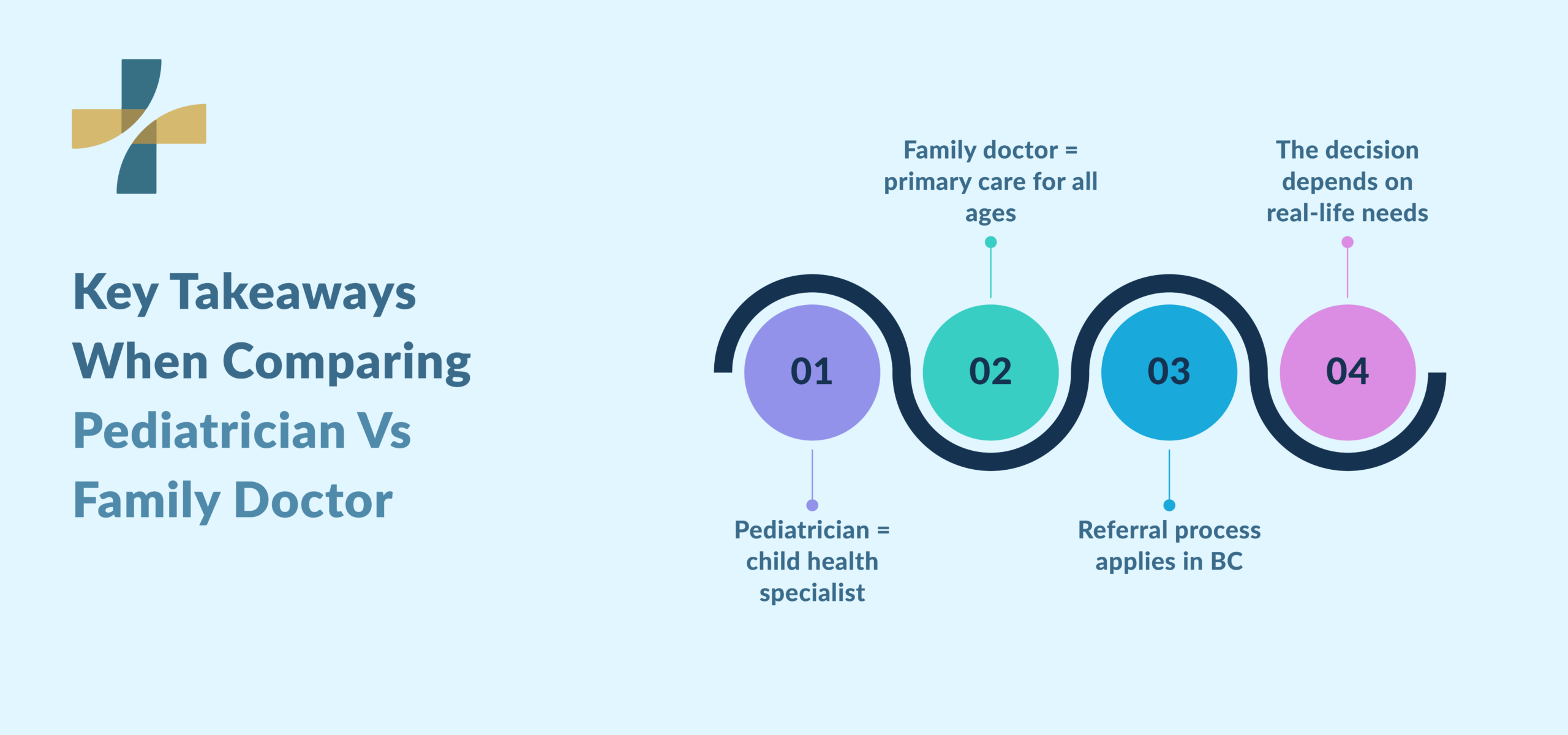
What Are The Key Takeaways When Comparing Pediatrician Vs Family Doctor?
Pediatricians specialise in children’s health, while family doctors provide care for all ages. The right choice depends on your child’s condition, your family’s needs, and your care goals.
Key points
- Pediatrician = child health specialist
- Family doctor = primary care for all ages
- Referral process applies in BC
- The decision depends on real-life needs
How Nv Med Center Helps You Choose The Right Care For Your Child
Choosing between a pediatrician vs family doctor depends on your child’s health needs, stage of development, and your family’s care goals. Some children benefit from specialised care, while others do well with general primary care. Clear guidance helps parents make confident and timely decisions that support long-term health.
At NV Med Center, our team supports both routine care and specialised pediatric needs in one place. You can book a pediatric consultation in Vancouver for expert assessment, or get guidance on whether your child needs a referral or specialist care. Book your appointment today or contact us to get the right care for your child.
FAQs
What is the difference between a pediatrician and a family doctor?
A pediatrician is a child health specialist who focuses on infants, children, and teens. A family doctor provides care for all ages, including children. The main difference is the level of specialisation in child health and development.
Do I need a referral to see a pediatrician in BC?
In most cases, yes. The BC healthcare system usually requires a referral from a family doctor. Some private clinics may allow direct booking, but specialist care often follows the referral process.
Can a family doctor manage childhood vaccinations?
Yes. Family doctors provide vaccination management as part of routine care. They follow standard immunisation schedules and monitor your child’s health during visits.
When should I choose a pediatric specialist instead?
You should choose a pediatrician when your child has developmental concerns, chronic conditions, or complex health needs. They provide focused care that goes beyond general primary care for children.
Which option is better for long-term child care?
Both options can support long-term care. A family doctor offers continuity into adulthood, while a pediatrician provides specialised care during childhood. The best choice depends on your child’s needs and family preferences.