Skin advice is everywhere right now. TikTok routines, celebrity brands, and “skin cycling” trends can make it hard to know what you need. A recent study published in Pediatrics found that many social media skincare routines include multiple active products and often omit sunscreen, which may increase irritation risk. That trend is one reason people search dermatologist vs skincare clinics more than ever.
This guide explains the difference between a dermatologist and a skincare clinic so you can choose the right care in Vancouver for acne, ageing, dark spots, or general skin health.
Who Is a Dermatologist and What Do They Do?
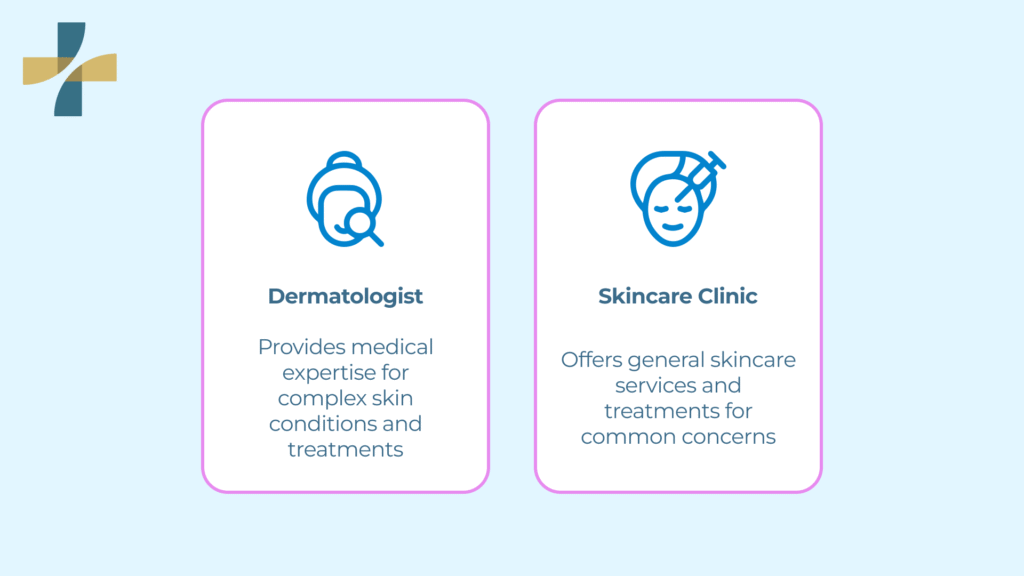
A dermatologist is a medical doctor trained to diagnose and treat skin, hair, and nail conditions. They can prescribe medicine, perform medical procedures, and check for serious issues like skin cancer. If a skin problem is painful, spreading, bleeding, or not improving, a dermatologist is often the safest next step.
H3: Medical training and scope
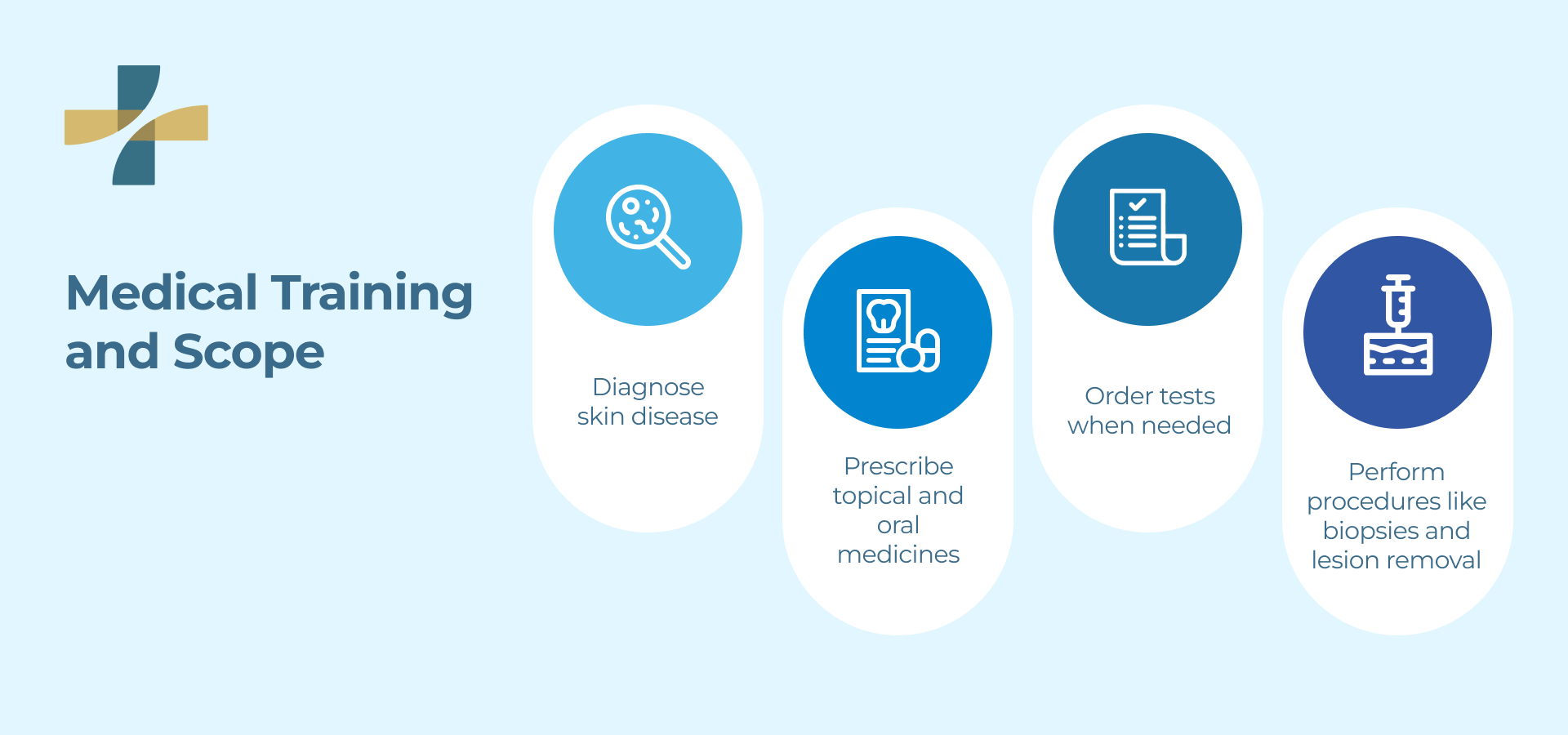
Dermatologists are doctors. Their work is medical care, not just cosmetic care. They can:
- Diagnose skin disease
- Prescribe topical and oral medicines
- Order tests when needed
- Perform procedures like biopsies and lesion removal
Common problems dermatologists treat
A dermatologist may be the right choice if you have:
- Acne that is severe, cystic, or scarring
- Eczema, psoriasis, or long-term rashes
- Repeated hives or allergic skin reactions
- A mole that changes shape, colour, or bleeds
- A sore that does not heal
- Hair loss patterns that start fast
- Nail infections or nail changes
Dermatology treatments you may get
Depending on the problem, a dermatologist may use:
- Prescription retinoids, antibiotics, or other acne medicines
- Steroid creams for inflammation
- Antifungals for skin or nail infections
- Biopsy for a suspicious spot
- Cryotherapy for some lesions
- Removal of cysts or growths
Mini-scenario
You notice a new dark spot on your skin that looks uneven and keeps changing in colour or size. Treating pigment without a medical check can delay the diagnosis of a serious skin condition, including skin cancer. Cosmetic treatments may mask warning signs rather than address the cause. A medical skin exam should come first, with a biopsy if needed, before any cosmetic treatment is started.
What Services Skincare Clinics Provide
A skincare clinic provides non-surgical skin treatments and routine support for skin goals like tone, texture, breakouts, and early ageing. Many people use a professional skincare clinic for maintenance, product guidance, and treatment plans that target surface-level concerns. The best results often come from clear goals and safe treatment choices.
What a skincare clinic focuses on
A skincare clinic usually focuses on:
- Skin appearance and daily skin health habits
- Preventive care, like sun protection planning
- Cosmetic concerns that do not look like a disease
- Routine support for results over time
In the skincare clinic in Vancouver, many people want help with acne, dullness, dark spots, and fine lines without long waits or complex referrals.
Common skin care services you may see
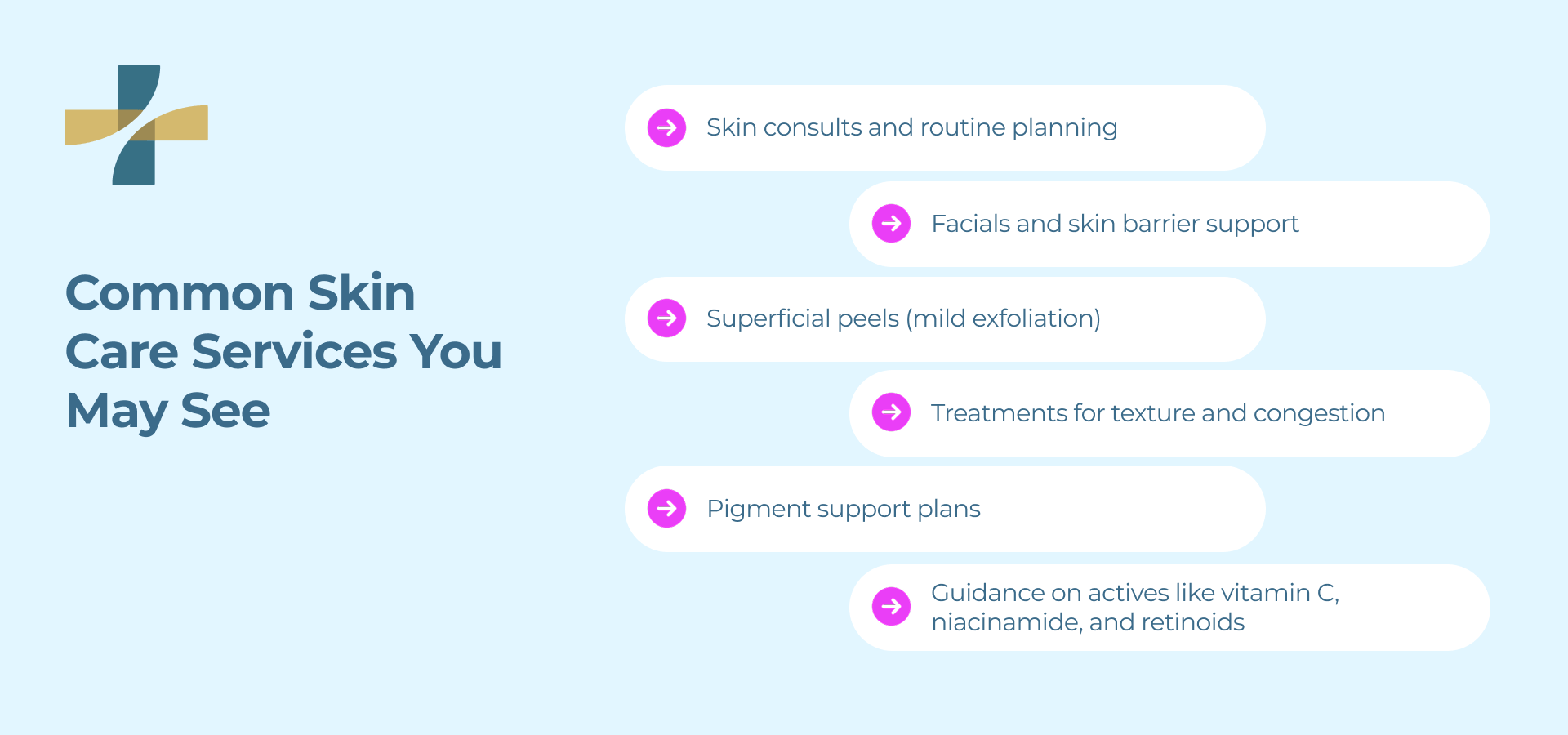
Skincare clinics vary, but common skin care services in Vancouver that patients look for include:
- Skin consults and routine planning
- Facials and skin barrier support
- Superficial peels (mild exfoliation)
- Treatments for texture and congestion
- Pigment support plans
- Guidance on actives like vitamin C, niacinamide, and retinoids
Some skincare clinics also support cosmetic injectables such as Botox and dermal fillers when appropriate, following a structured consultation and treatment process.
Who you might see at a skincare clinic
You may be treated by:
- Aesthetic clinicians or skin therapists
- Medical aestheticians in a clinic setting
- Staff trained in device-based cosmetic care, where allowed
Mini-scenario
You have mild acne and blackheads that come and go without pain or scarring. Using random products or harsh treatments can irritate the skin and make breakouts harder to control. A skincare clinic can help build a simple routine with gentle exfoliation, clear product steps, and follow-up visits to keep breakouts manageable over time.
Key Differences: The Difference Between a Dermatologist and a Skincare Clinic
The difference between a dermatologist and a skincare clinic comes down to medical scope, prescribing rights, and the type of problems they can treat safely. Dermatologists diagnose and treat disease. Skincare clinics treat cosmetic concerns and support routines. Many people use both, but they start in different places.
H3: Quick comparison table
| Feature | Dermatologist | Skincare clinic |
| Core role | Medical diagnosis and treatment | Cosmetic care and routine support |
| Can diagnose disease | Yes | No |
| Can prescribe medicine | Yes | No |
| Can do biopsies | Yes | No |
| Best for | Rashes, severe acne, and suspicious lesions | Mild acne care, texture, tone, maintenance |
| Typical setting | Medical clinic, specialist practice | Skin clinic, medical aesthetics clinic, wellness clinic |
Medical care vs cosmetic care
- Dermatologist: treats medical problems first. They manage risk, diagnosis, and treatment plans.
- Skincare clinic: supports skin goals like glow, texture, and early ageing, when red flags are not present.
Prescribing and procedure limits
If you need prescription medicine, a skincare clinic cannot provide it. If you need a biopsy or mole check for cancer risk, that is a medical job. Canada’s melanoma rates highlight why new or changing skin lesions should be checked by a medical professional.
Where confusion happens
Many concerns sit in the middle. Acne is a common example:
- Mild acne may fit a skincare clinic plan.
- Severe acne, scarring acne, or acne with pain often needs medical care first.
Dermatologist vs Skincare Clinic for Common Skin Concerns
Dermatologist vs skincare clinic choices become clearer when you match the provider to the problem. Medical symptoms usually call for a clinician-led assessment. Cosmetic goals can fit a skincare clinic plan. If you are unsure, start with medical screening and then move to cosmetic care.
Acne
Start with a dermatologist when:
- Acne is deep, painful, or cystic
- You have scarring
- You have tried basic products for 8–12 weeks without change
A skincare clinic may help when:
- Acne is mild and mostly clogged pores
- You need help with routine steps and product choice
- Your skin barrier is irritated from too many actives
Mini-scenario:
You copied a TikTok routine using multiple acids and retinol. Now you have burning and flaking. Dermatologists are urging people to simplify their skincare routines, warning that social media has made them overly complicated. Yale dermatologist Dr Kathleen Suozzi said many routines include too many products and that basic care should start with a gentle cleanser, a moisturizer, and sunscreen.
Ageing and fine lines
- Dermatologists can help when ageing changes involve medical-grade options or when you need advice around stronger actives.
- Skincare clinics can help with texture and routine support, plus gradual improvements with safe treatment plans.
Brands like La Roche-Posay, CeraVe, and The Ordinary are popular because they focus on simple actives and barrier support. That fits many skincare clinic plans, but a medical screen still matters if symptoms look unusual.
Pigmentation and sun damage
Pigment problems can be cosmetic, but they can also hide medical issues. The safe flow is:
- Rule out suspicious lesions and risky spots
- Then treat pigment with a plan that matches your skin type and sensitivity
General skin health and prevention
Many people want preventive care. This is where a professional skincare clinic can add value:
- Build a simple routine that you can stick with
- Set a realistic product plan
- Reduce irritation from overuse of actives
The American Academy of Dermatology says some social media skin care trends may not suit every skin type and can cause irritation, clogged pores, or breakouts if products are used incorrectly.
When to Visit a Dermatologist
You should see a dermatologist when symptoms suggest disease, risk, or a need for prescription care. This is the safest path if you have warning signs or pain. Canada still sees thousands of melanoma cases each year, so skin changes deserve proper checks.
Fast checklist
Book medical care if you have:
- A mole that changes, bleeds, or looks uneven
- A sore that does not heal in 3–4 weeks
- A rash that spreads or keeps coming back
- Swelling, pus, or signs of infection
- Painful acne cysts or acne scars are forming
- Sudden hair loss patches
- Nail changes with pain or separation
If any of these are present, a skincare clinic should not be the first stop.
When a Skincare Clinic May Be the Right Choice
A skincare clinic is a good fit when your goals are cosmetic, routine-based, and not linked to warning signs. Many people searching “skin clinic near me” want help with breakouts, tone, dryness, or early ageing, plus a plan they can follow.
A skincare clinic may suit you when:
- You want routine support and product guidance
- You have mild acne or congestion
- You want help with uneven tone and texture
- You want preventive skin habits and follow-up care
- You want a plan that avoids overuse of strong active
A simple “start here” test
Start with a skincare clinic when:
- The issue is mild
- It is stable
- It does not bleed, spread, or hurt
- You mainly want appearance changes
Start with medical care when:
- The issue is new and changing
- It is painful, swollen, or infected
- You have a strong family history of skin cancer
- You have symptoms that keep returning
Why Many Vancouver Patients Use Both
Many people get the best results by pairing medical screening with cosmetic maintenance. Dermatologists treat disease and risk. Skincare clinics support routines and gradual improvements. This is common for acne, rosacea-prone skin, and pigment goals.
A safe combined approach often looks like this:
- Medical check when symptoms are unclear
- A treatment plan for the root problem
- Skincare clinic support for routine, barrier care, and long-term results
This matches how major guides describe the roles as different but complementary.
Choosing a Skincare Clinic in Vancouver
Choosing a skincare clinic in Vancouver is about safety, scope, and clear plans. A good professional skincare clinic stays in its lane. It does not try to treat the disease. It knows when a medical check is needed.
What to look for
Use this checklist:
- Clear intake questions and skin history review
- Patch testing or caution with strong actives, when needed
- Clear advice on sun protection and irritation risk
- Written plan with products and steps
- A referral pathway when symptoms look medical
Questions to ask before you book
Ask these in plain terms:
- “What problems do you not treat?”
- “What happens if my skin reacts?”
- “Do you work with medical clinics or refer out?”
- “How many products will I use each day?”
- “What is the plan if this does not improve?”
How NV Med Center Supports Skin Health in Vancouver
NV Med Center helps Vancouver patients start in the right place with a medical clinic approach and practical skin support. If you are unsure whether your concern needs a dermatologist or fits skincare clinic care, a consult can help you choose a safe next step.
What you can expect
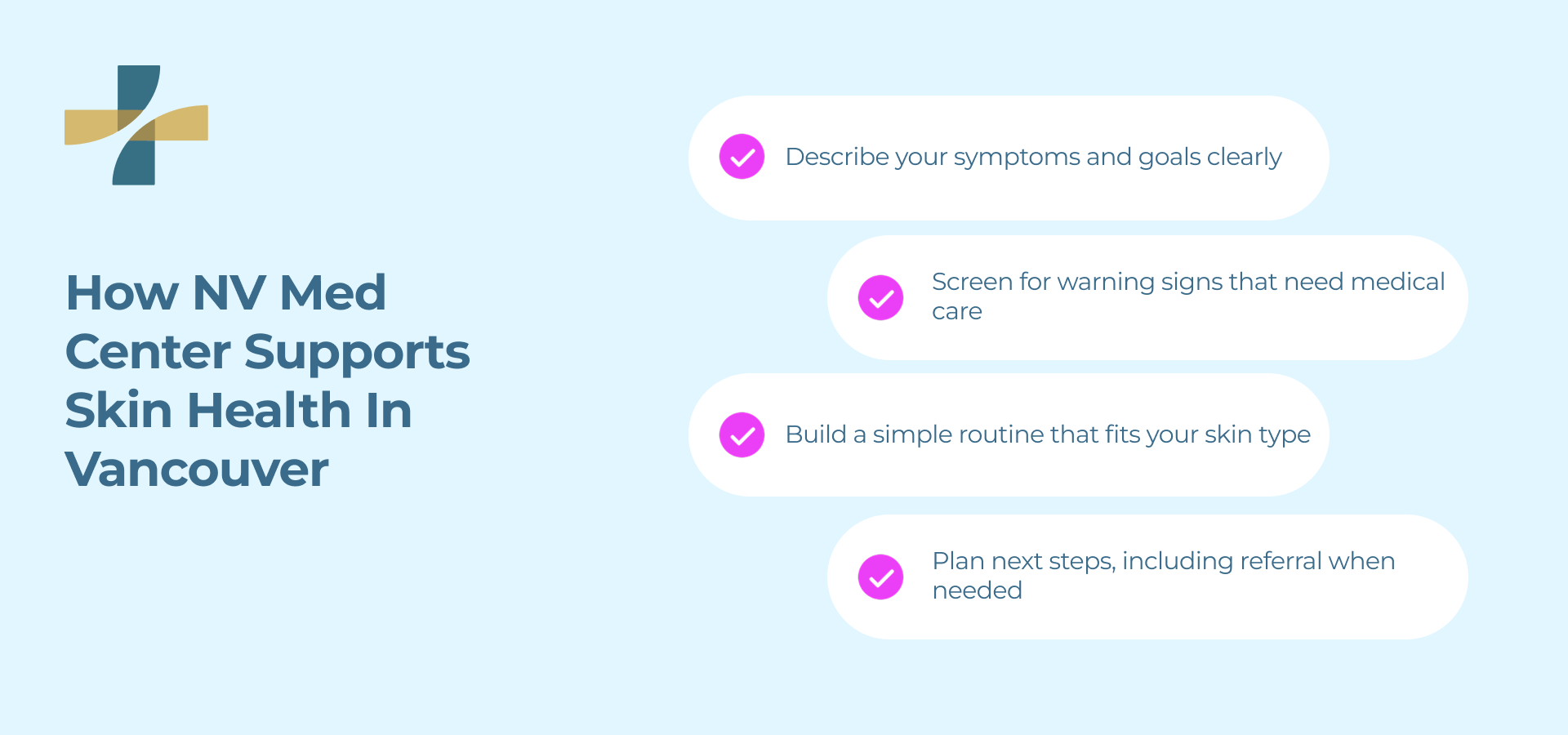
A skin consult can help you:
- Describe your symptoms and goals clearly
- Screen for warning signs that need medical care
- Build a simple routine that fits your skin type
- Plan next steps, including referral when needed
Summary
The difference between a dermatologist and a skincare clinic comes down to medical scope. Dermatologists diagnose and treat skin diseases and manage health risks, while skincare clinics focus on cosmetic goals and routine skin care support. If a spot is changing, bleeding, painful, or not healing, medical care should come first. If your goals involve texture, tone, mild breakouts, or ongoing routine support, a skincare clinic may be a suitable option.
Book a Skincare Consultation at NV Med Center
If you are weighing dermatologist vs skincare clinic options and want clear guidance, a skincare consultation at NV Med Center can help you understand the most appropriate next step. Our team will review your symptoms, discuss your skin goals, and outline safe care options based on your needs. Book a skincare consultation to receive personalised guidance and move forward with confidence.
FAQs
Q1: What is the difference between a dermatologist and a skin care doctor?
A dermatologist is a medical doctor trained to diagnose and treat skin disease, including acne, rashes, and skin cancer. A skin care doctor or skincare provider usually focuses on cosmetic skin treatments and routine care. Dermatologists can prescribe medication, while skincare providers cannot.
Q2: Should I go to a dermatologist for a skin care routine?
You should see a dermatologist if your skin problems are painful, spreading, or not improving. For basic routines, mild acne, or maintenance care, a professional skincare clinic may be enough. If you are unsure, a medical skin assessment is a safe place to start.
Q3: Is skincare part of dermatology?
Skincare is part of dermatology when it relates to treating medical conditions or preventing skin disease. Dermatologists often guide skincare routines alongside medical treatment. Cosmetic skincare and routine maintenance are usually handled in skincare clinics.
Q4: Can you see a dermatologist in BC without a referral?
In British Columbia, many dermatologists require a referral from a primary care provider. Some private clinics may allow direct booking, but costs may not be covered by MSP. A medical clinic can help decide if a referral is needed.