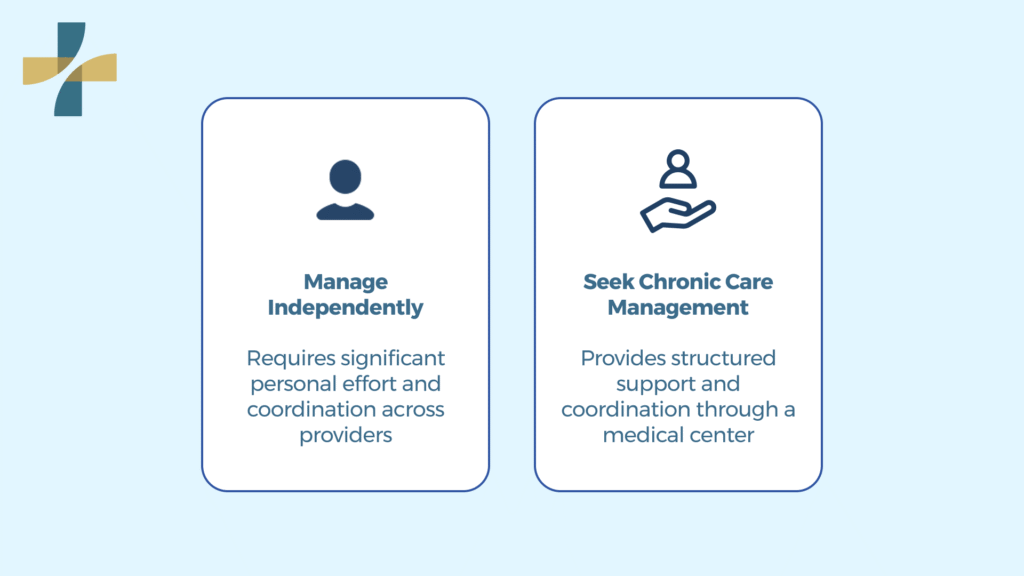
Living with a long-term health condition can feel like a full-time job. Many people manage medications, monitor symptoms, book appointments, follow specialist advice, and try to keep daily habits on track. When care is spread across several providers, it can also feel disconnected. Chronic care management is a structured way to support people with long-term conditions through planned follow-ups, clear care plans, and coordination across a care team. It focuses on day-to-day stability, early action when symptoms change, and practical support between appointments.
Chronic conditions are common. In Canada, according to the Canadian Public Health Association, an estimated 44 percent of adults have at least one chronic disease, and chronic diseases account for a large share of deaths. According to the World Health Organization globally, noncommunicable diseases account for a major share of deaths. This is why long-term condition management matters for many adults and seniors. This guide explains chronic care management in plain language and shows how a medical center’s chronic care approach can support people in Vancouver who are managing chronic illness.
Disclaimer: Educational content only. This is not medical advice. If you have urgent symptoms, seek urgent care right away.
Understanding Chronic Care Management
Chronic care management is a structured approach to supporting people with long-term health conditions through planned follow-ups, care coordination, and ongoing monitoring.
You may see “chronic care management” used as a formal term in some health systems. In the United States, the term CCM has a defined meaning for Medicare billing, including support for patients with two or more chronic conditions expected to last at least 12 months. In Canada, clinics may not use the same billing model, but the core idea still applies: people with ongoing health concerns often need planned check-ins, clear treatment plans, and coordinated care.
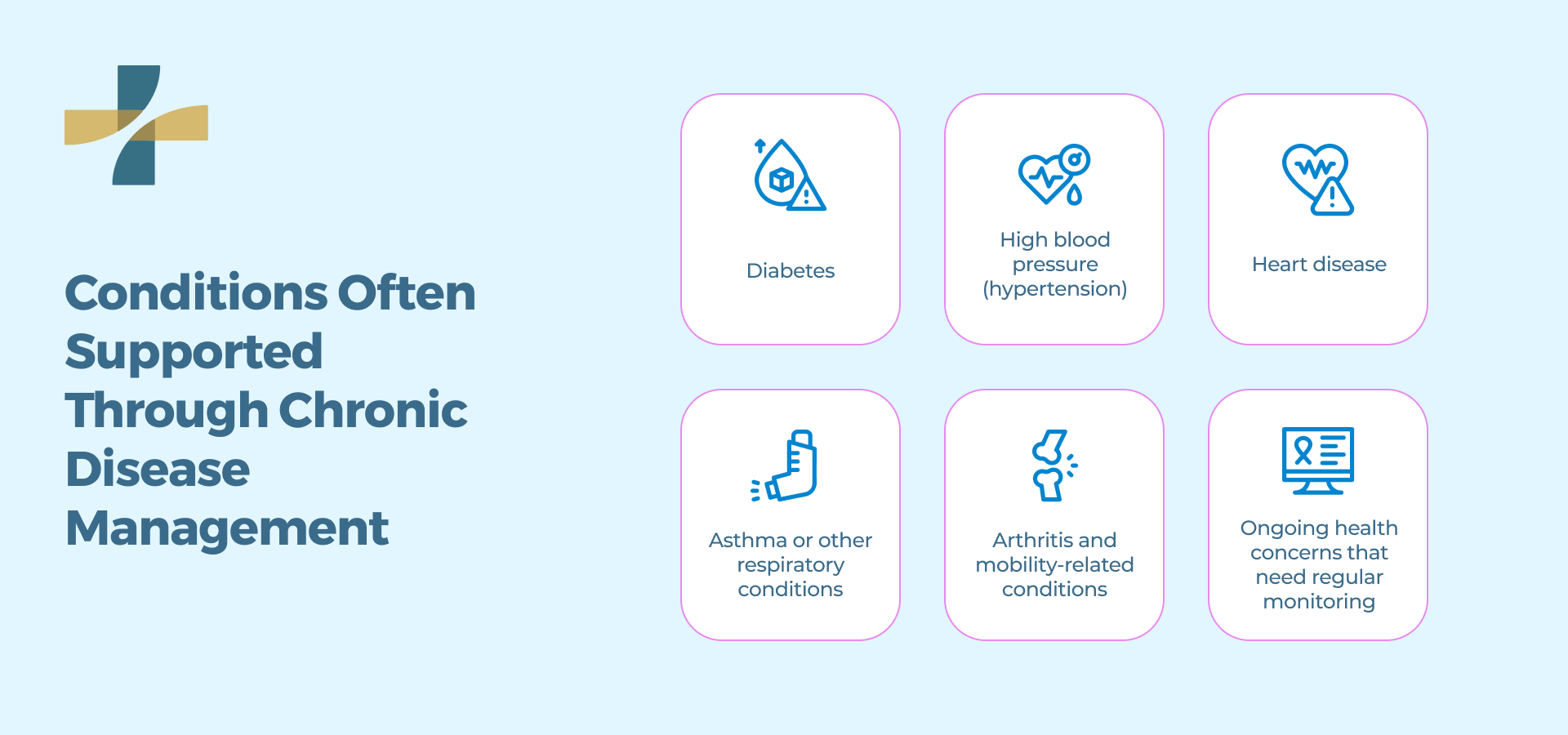
Conditions often supported through chronic disease management
Chronic disease management in Canada may help people living with conditions such as:
- Diabetes
- High blood pressure (hypertension)
- Heart disease
- Asthma or other respiratory conditions
- Arthritis and mobility-related conditions
- Ongoing health concerns that need regular monitoring
Some people manage one condition. Others manage several at the same time. The more moving parts there are, the more helpful a structured plan can be.
Why Managing Chronic Conditions Without Support Can Be Difficult
Many people do their best at home, yet still run into problems that make long-term condition management harder than it needs to be.
H3: Common pain points for adults and seniors managing chronic illness
- Care is split across multiple providers. One doctor changes a medication while another doctor is not aware of it yet.
- Follow-ups are not consistent. Lab results, symptoms, or medication changes may not be reviewed at the right time.
- The plan is unclear. People may leave an appointment unsure what to do next or when to return.
- Symptoms change between visits. Without a clear plan, it is easy to wait too long.
- Medication routines get complicated. Multiple prescriptions can lead to missed doses, side effects, or confusion.
Chronic care management addresses these gaps by putting structure around follow-up, care planning, and care coordination.
The Role of a Medical Center in Managing Chronic Conditions
A medical center’s chronic care model is built around continuity. Instead of treating each appointment as a stand-alone visit, the care team looks at patterns over time and helps the patient stay on track between visits.
How a medical center supports chronic care management
- Acts as a central home base for care
- Keeps records and updates in one place
- Coordinates next steps with referrals and follow-ups
- Supports planning for medications, monitoring, and lifestyle changes
- Helps patients know what to do when symptoms change
This is where chronic care support in Vancouver can feel more stable. People do not have to manage every detail alone. Chronic care management is often led through family physician care, where long-term conditions are reviewed, monitored, and adjusted over time.
Creating a Personalised Care Plan
A care plan is a written, practical guide that connects medical advice to day-to-day life. It helps patients understand what is happening, what the goals are, and what steps come next.
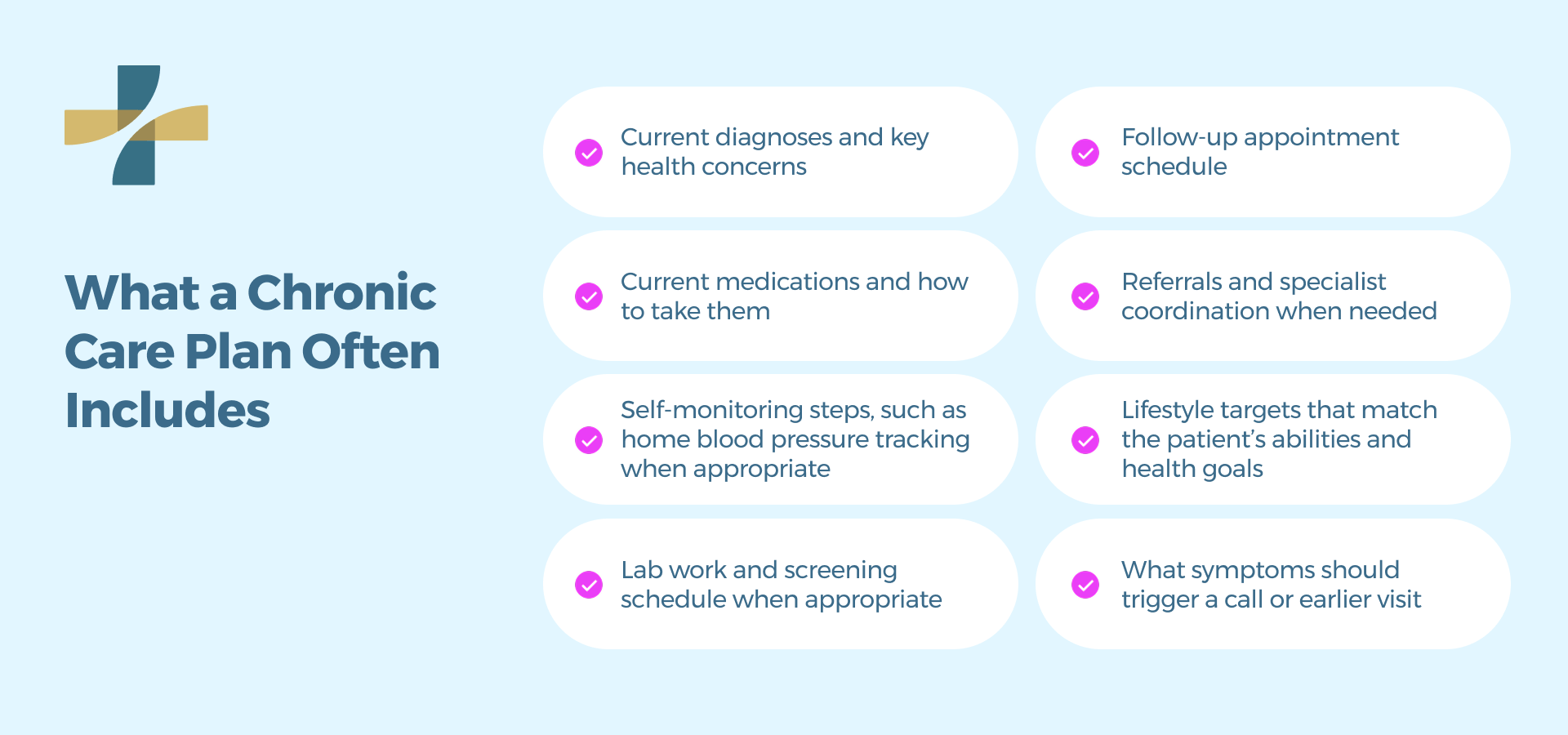
What a chronic care plan often includes
A personalised plan may cover:
- Current diagnoses and key health concerns
- Current medications and how to take them
- Self-monitoring steps, such as home blood pressure tracking when appropriate
- Lab work and screening schedule when appropriate
- Follow-up appointment schedule
- Referrals and specialist coordination when needed
- Lifestyle targets that match the patient’s abilities and health goals
- What symptoms should trigger a call or earlier visit
Care plan checklist table
| Care plan item | What it covers | Why it helps |
| Health summary | Conditions, history, recent results | Keeps everyone aligned |
| Medication list | Doses, timing, and recent changes | Reduces confusion and duplication |
| Monitoring plan | What to track at home or in the clinic | Helps spot change early |
| Follow-up schedule | When to return and why | Builds consistency |
| Specialist plan | Referrals, reports, shared updates | Improves coordination |
| Action steps | What to do if symptoms worsen | Reduces delays in care |
A good plan is not generic. It fits the person’s current health, risks, and daily routine.
Questions patients can ask when building a care plan
These questions help patients get clarity:
- What are the main goals for the next 3 months?
- What symptoms should trigger an earlier appointment?
- Are any medications overlapping or causing side effects?
- What tests are needed, and when should results be reviewed?
- Who is managing each part of my care plan?
Regular Monitoring and Follow-Up Appointments
Chronic care management works best when follow-up is planned, not random. Regular check-ins support early action and help prevent problems from building up.
What monitoring can look like
Monitoring varies by condition and patient needs. It may include:
- Reviewing home readings, such as blood pressure logs, when appropriate
- Tracking symptoms and triggers
- Checking medication tolerance and adherence
- Reviewing lab results and adjusting the plan
- Setting small, realistic goals for the next visit
Example follow-up schedule table
This is a general example only. Actual timing depends on the condition and the clinician’s plan.
| Situation | Example follow-up timing | Typical focus |
| New diagnosis or new medication | 2 to 6 weeks | Side effects, early response, next steps |
| Stable chronic condition | Every 3 to 6 months | Progress, prevention, and medication review |
| Multiple conditions or recent flare-up | Monthly to every 3 months | Symptom control, coordination, and goal tracking |
Follow-up appointments are usually scheduled based on the care plan and how symptoms are changing over time. When a review is needed, patients may be able to arrange their appointment through online visits, which can support routine follow-ups, result reviews, or medication discussions without coming into the clinic.
Red flags that should trigger earlier review
If any of these happen, patients should contact a clinician promptly:
- New chest pain, severe shortness of breath, or fainting
- Sudden weakness, facial droop, speech changes
- Severe dizziness or confusion
- Blood sugar extremes in people with diabetes
- Rapid swelling, sudden weight changes, or worsening breathing
- Medication side effects that stop daily functioning
If symptoms are severe or sudden, urgent care may be needed.
Coordinating Care with Specialists and Allied Health Services
Many people managing chronic illness see more than one provider. This can include specialists, allied health professionals, and community services. Coordination reduces mixed messages and missed steps.
Where coordination often breaks down
- A specialist changes a plan, but the primary care provider has not received the update yet
- A medication is added, but the full medication list is not reconciled
- A patient gets advice from different providers that does not match
- Follow-up tests are ordered, but results are not reviewed in a clear timeframe
What coordinated care can include
Chronic care management often includes:
- Referral planning and tracking
- Sharing relevant updates with involved providers when possible
- Medication reconciliation during follow-ups
- Reviewing how new specialist advice fits into the overall plan
This is one of the biggest advantages of medical center chronic care. It helps make care more consistent when more than one provider is involved.
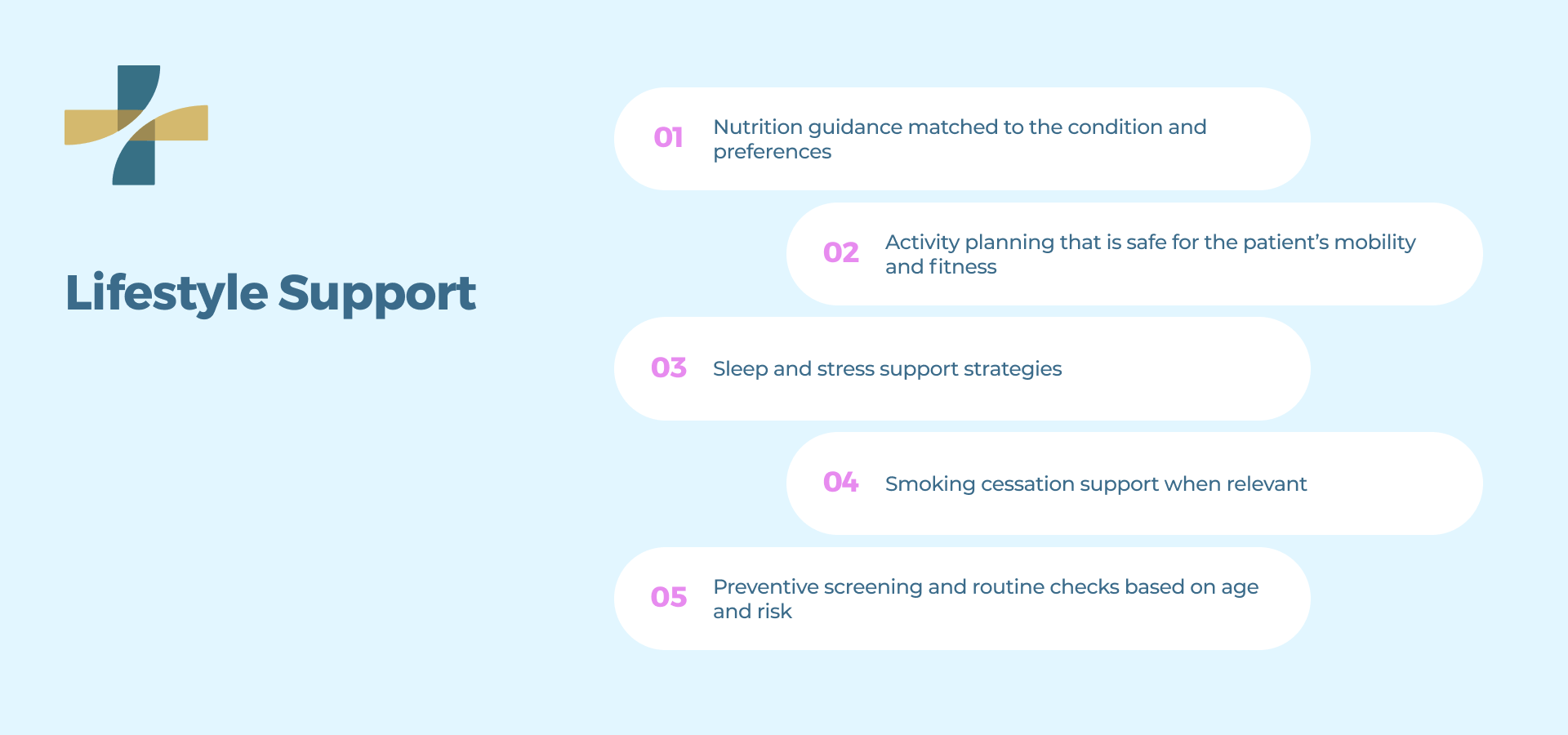
Lifestyle Guidance and Preventive Strategies
Chronic disease management is not just about medication. Daily habits affect blood pressure, blood sugar, breathing, sleep, stress, and mobility. A care team can help patients set realistic goals that match their situation.
Lifestyle support often includes
- Nutrition guidance matched to the condition and preferences
- Activity planning that is safe for the patient’s mobility and fitness
- Sleep and stress support strategies
- Smoking cessation support when relevant
- Preventive screening and routine checks based on age and risk
Preventive care in long-term condition management
Prevention in chronic care management often means:
- spotting early signs of worsening symptoms
- supporting steady medication routines
- reducing avoidable flare-ups
- reviewing risks at regular intervals
Globally, chronic conditions drive a large share of illness and death. That is one reason preventive strategies matter for adults and seniors living with ongoing health concerns.
How NV Med Center Supports Chronic Care Management in Vancouver
If you are looking for chronic care support Vancouver residents can rely on, the goal is simple: steady, coordinated care that helps you manage long-term conditions with more clarity.
At NV Med Center, chronic care management support is built around:
- Personalised care planning based on your health history, symptoms, and goals
- Regular follow-up appointments to review progress and adjust your plan
- Coordination support when care involves more than one provider
- Clear communication so you know what to do next and when to return
- Preventive focus, so changes can be addressed early
NV Med Center offers multiple services that can support a coordinated care approach, depending on your needs. This may include primary care oversight, allied health services, and diagnostic support when needed.
When it makes sense to book a chronic care management appointment
A planned visit can help if you:
- have one or more long-term conditions and feel your plan is unclear
- manage multiple medications and want a full review
- See multiple providers and want better coordination
- have symptoms that keep changing between visits
- want a steady follow-up schedule instead of reactive care
Book an appointment at NV Med Center
If you are managing a long-term health condition and want clearer follow-up, a care plan, and coordinated support, book an appointment with NV Med Center in Vancouver to discuss chronic care management. A planned visit is a good first step toward steady long-term condition management with a medical team that can support your care over time.
FAQs
Q1: What is the difference between chronic care management and a regular doctor visit?
A regular visit often focuses on a single issue at a single point in time. Chronic care management focuses on managing chronic illness over time with planned follow-ups, a written care plan, and coordinated next steps.
Q2: Who benefits most from chronic care management?
Adults and seniors who live with ongoing conditions, take several medications, or see multiple providers often benefit most. Chronic disease management support can also help people who want clearer follow-up and better tracking of symptoms.
Q3: How often will I need follow-up appointments?
Follow-up frequency depends on your condition, medications, recent changes, and symptoms. Some people need short-interval follow-ups after a change, then less frequent reviews once stable.
Q4: Can chronic care management help prevent complications?
Chronic care management supports early review when symptoms change and keeps the care plan updated. Early action can help reduce flare-ups and avoid delays in treatment.
Q5: What should I bring to a chronic care management appointment?
Bring a list of medications, recent test results if you have them, and notes on symptoms. If you track home readings such as blood pressure or blood sugar, bring those logs too.