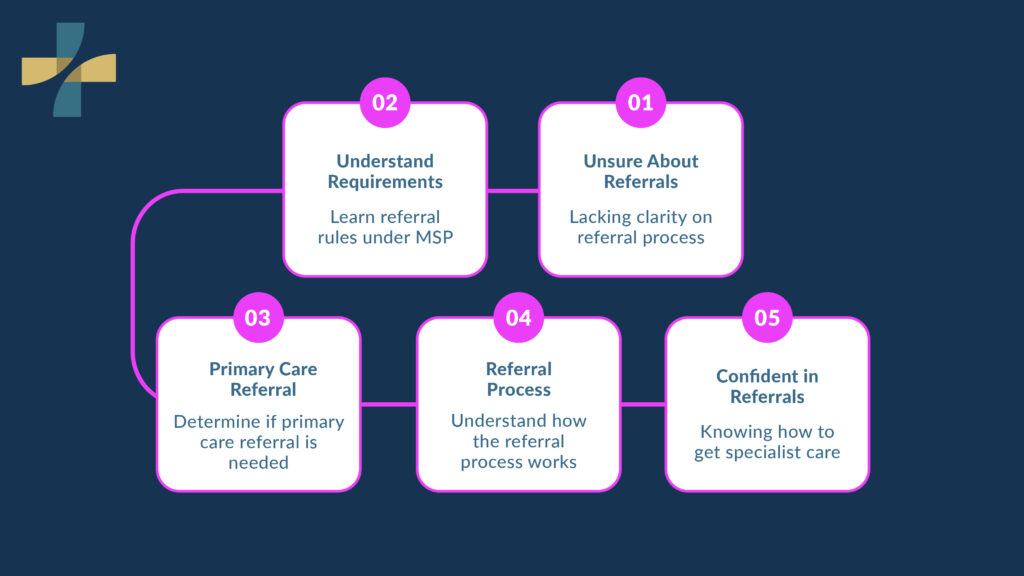
If you are dealing with ongoing chest pain, a changing mole, chronic knee pain, or unexplained fatigue, your first question may be simple: Do I need a referral before seeing a specialist? Many patients in North Vancouver are unsure how referrals for specialist visits work in British Columbia’s public health care system.
This guide explains specialist referral requirements, medical referral rules under MSP, and how the referral healthcare system works in practice. You will learn when a primary care referral is required, how the referral process works, and how to reduce delays in getting a specialist appointment.
H2: Do I Need a Referral to See a Specialist in British Columbia?
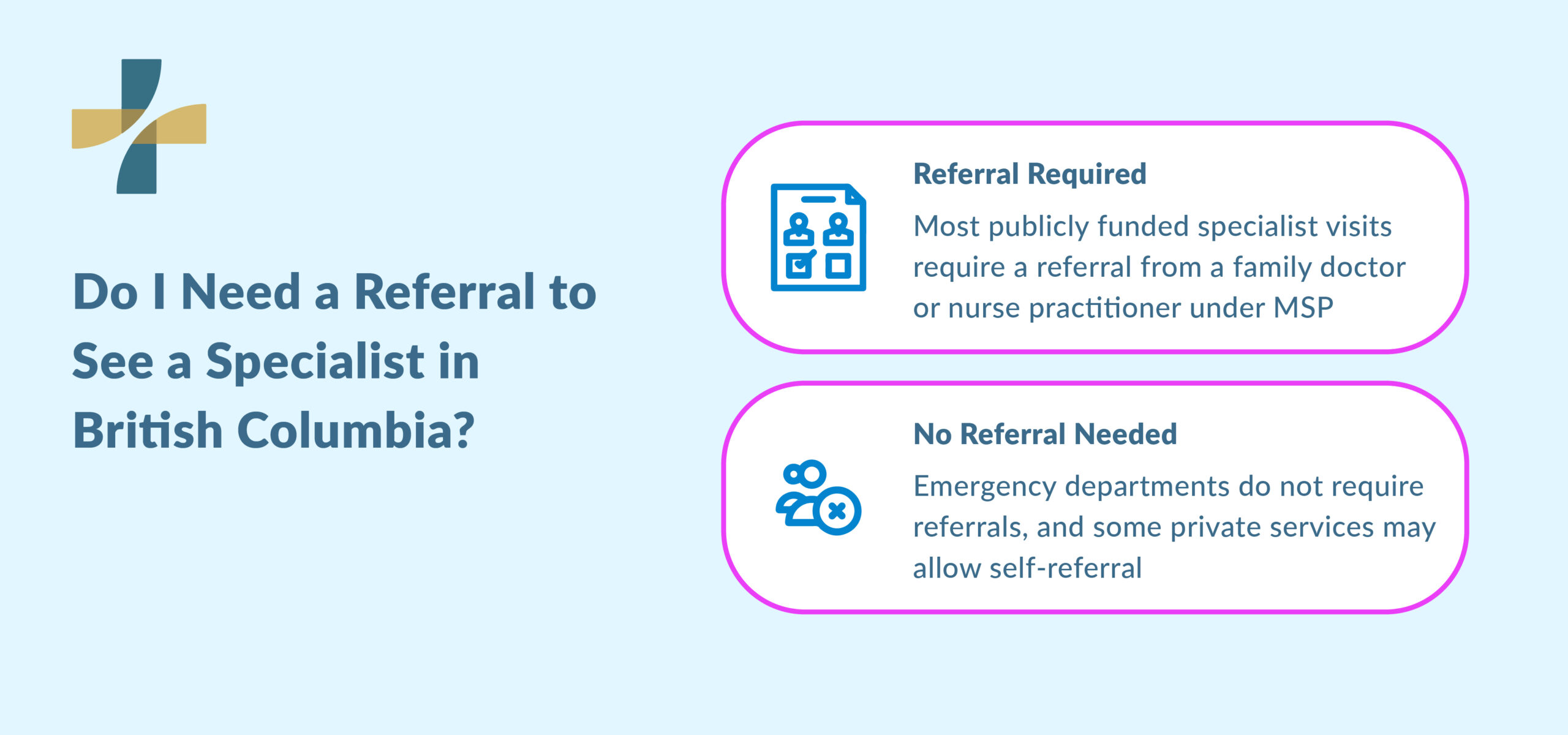
In British Columbia, most publicly funded specialist visits require a referral from a family doctor under MSP. Without a primary care referral, MSP will not cover the cost of your appointment.
In BC, the referral healthcare system is structured around family doctors and nurse practitioners. They assess your symptoms, order initial tests, and decide if specialist care is appropriate. This process helps manage wait lists and ensures patients with urgent needs are prioritised.
For example, if you experience irregular heartbeats, you cannot book directly with a cardiologist under MSP. You must first see a family doctor, who will determine whether a referral to a specialist is needed. If so, the referral is sent to the cardiology clinic for triage.
There are exceptions. Emergency departments do not require referrals. Some private services may allow self-referral, but public specialist care generally requires a formal referral.
Why Do Referrals for Specialist Visits Exist?
Referrals for specialist visits exist to coordinate care, reduce unnecessary testing, and prioritise urgent cases. A primary care referral provides medical history, test results, and urgency details so specialists can triage patients safely.
The referral process protects patients. It reduces duplicate imaging and ensures specialists see patients who meet clinical criteria. According to the Canadian Institute for Health Information, specialist wait times vary across provinces, and structured referrals help manage limited capacity.
Referrals also improve communication. When your family doctor includes lab results, imaging reports, and medication lists, the specialist can focus on treatment rather than repeating assessments.
Dr. Gabor Maté, a Canadian physician known for his work on chronic illness and stress, often speaks about the importance of coordinated care in reducing fragmented treatment. Coordinated referral systems support this principle.
How Referrals Reduce Delays
A clear referral can reduce wait time in three ways:
- Urgency classification allows faster triage
- Completed tests prevent repeat appointments
- Accurate history prevents misdirected referrals
For example, a detailed dermatology referral that includes photos and biopsy results may be booked sooner than one with limited information.
What Are the Specialist Referral Requirements Under MSP and Insurance?
Under MSP, a referral is required for publicly funded specialist care. According to the BC Medical Services Plan coverage details, specialist services are publicly funded only when accessed through the appropriate referral pathway.
If you attend a specialist without a referral, MSP will not reimburse the visit. Private insurance referral requirements vary by policy and service type.
Medical referral rules in BC are clear for publicly funded services. If your visit is to a cardiologist, neurologist, dermatologist, orthopaedic surgeon, or other medical specialist, a primary care referral must be documented.
Below is a simplified comparison:
| Scenario | Referral Required | Covered by MSP |
| Cardiologist visit |
Yes |
Yes |
| Dermatologist visit |
Yes |
Yes |
| Private cosmetic service |
No |
No |
| Emergency department |
No |
Yes |
Extended health plans may have additional insurance referral requirements for imaging, physiotherapy, or psychological services. These rules differ from US HMO referral rules. In the United States, some HMO referral rules restrict which specialists you can see. In BC, referrals focus on clinical need rather than network restrictions.
What Happens During the Referral Process?
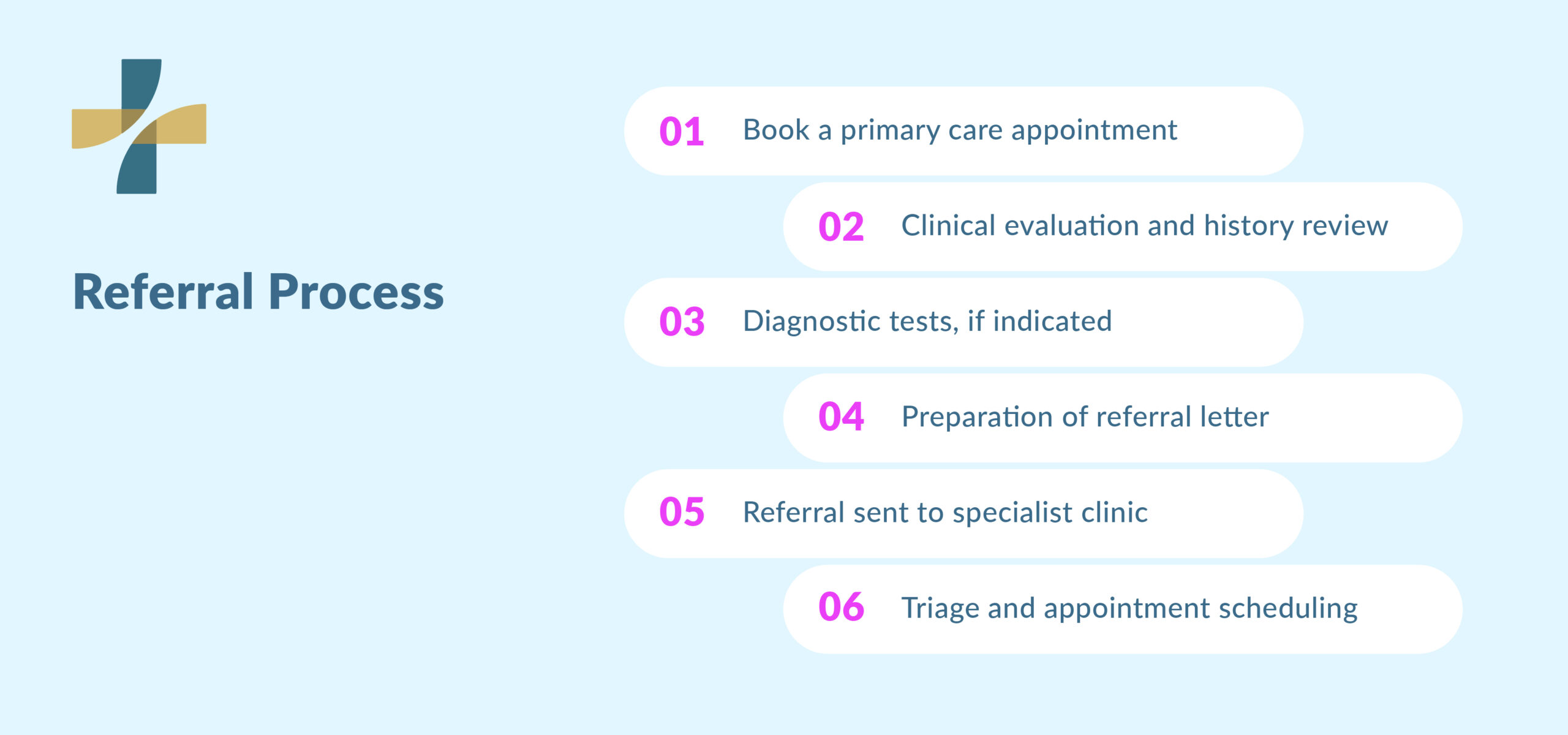
The referral process begins with a medical assessment. Your provider evaluates symptoms, orders tests if needed, and prepares a specialist appointment referral that includes clinical details and urgency level before sending it to the specialist clinic.
The referral process typically follows these steps:
- Book a primary care appointment
- Clinical evaluation and history review
- Diagnostic tests, if indicated
- Preparation of referral letter
- Referral sent to specialist clinic
- Triage and appointment scheduling
This structure ensures that medical referrals explained in simple terms follow a clear pathway.
What Is Included in a Specialist Appointment Referral?
A standard referral letter includes:
- Reason for referral
- Relevant medical history
- Current medications
- Test results and imaging
- Urgency assessment
- Provider contact information
If key information is missing, the specialist may return the referral for clarification, which delays booking.
When Is a Referral Required to See a Specialist?
A referral is required for most publicly funded specialist care in British Columbia. If you want MSP coverage, a primary care referral must be submitted before the specialist appointment takes place.
Common cases that require referrals for specialist visits include:
- Persistent chest pain needs cardiology
- Suspicious skin lesions requiring dermatology
- Chronic joint pain requiring orthopaedics
- Neurological symptoms needing neurology
- Child development concerns needing paediatrics
Emergency cases do not require referrals. If symptoms are severe or life-threatening, attend the emergency department.
Can I Choose Which Specialist I See?
Patients in British Columbia can request a specific specialist, although availability and wait times vary. Your family doctor can address the referral to a named specialist or clinic if clinically appropriate.
Choice depends on several factors:
- Sub-specialty focus
- Wait time estimates
- Location in Metro Vancouver
- Language preferences
If a specialist has a long wait list, your provider may suggest alternatives within the same specialty. This can reduce delay.
How Long Do Referrals for Specialist Visits Last?
Most referrals in BC apply to a specific course of care. If your condition changes or you develop a new issue, you may need a new referral. Some specialists require updated referrals after a defined period.
For chronic conditions such as arthritis or heart disease, follow-up visits may remain valid under the original referral. If more than a year passes or the issue changes, a new primary care referral may be required.
What Causes Delays in the Referral Process?
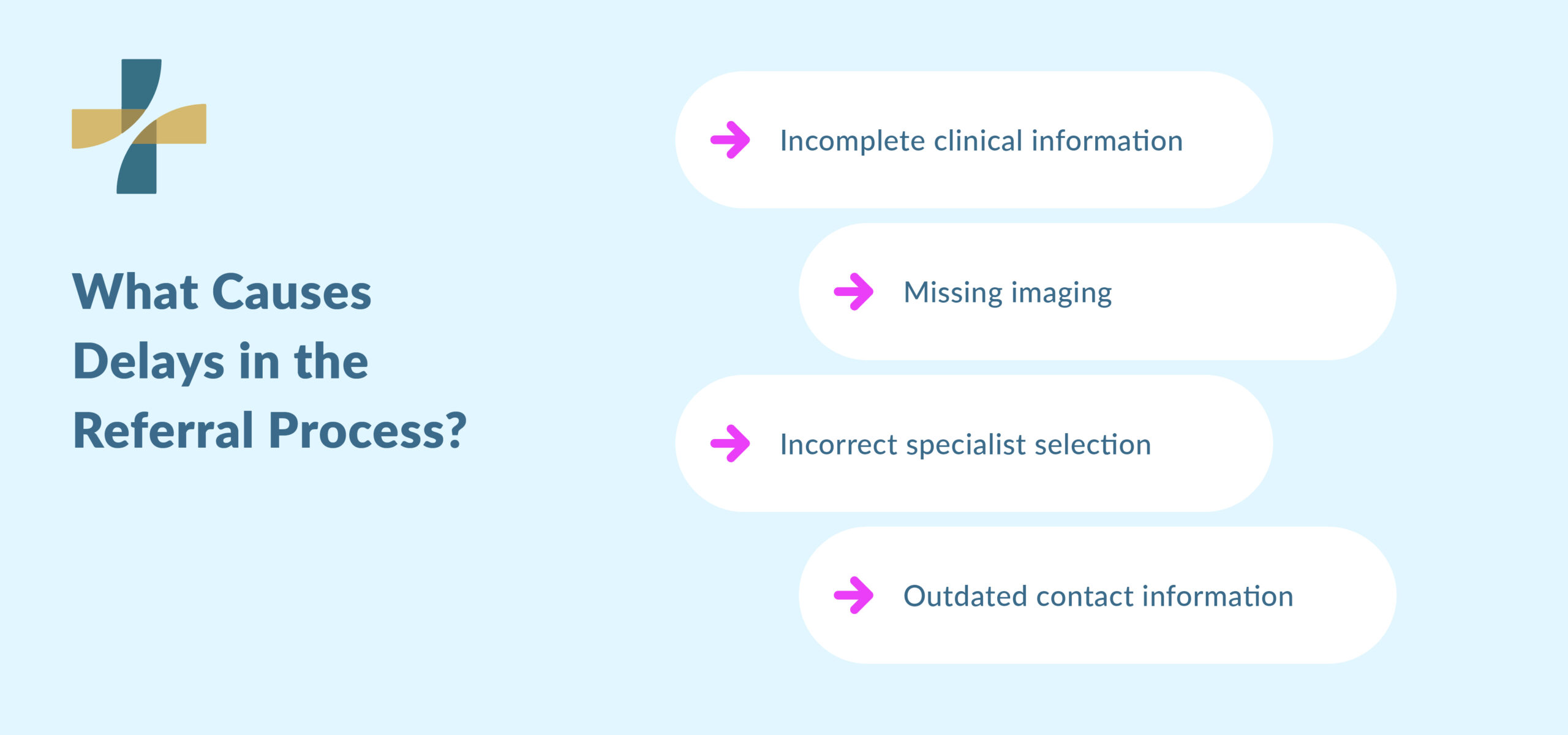
Referral delays often occur due to incomplete documentation, missing test results, or long specialist wait lists. Accurate referrals and early assessment reduce delays in the referral process.
Common delay causes:
- Incomplete clinical information
- Missing imaging
- Incorrect specialist selection
- Outdated contact information
You can reduce delays by:
- Bringing a medication list
- Providing a clear symptom timeline
- Completing recommended tests promptly
- Following up with the specialist office if needed
These steps support smoother specialist referral requirements.
How NV Med Center Helps You Get the Right Referral Faster
Referrals for specialist visits are often required under MSP in British Columbia, and understanding medical referral rules helps reduce delays and confusion. A primary care referral improves triage, supports coordinated care, and increases the likelihood that your specialist appointment referral includes the right documentation the first time.
At NV Med Center, ur family physicians assess your symptoms carefully and determine whether a specialist visit referral is clinically appropriate. We prepare structured referral letters, including relevant diagnostic results, and support communication between providers to reduce unnecessary delays. If you think you may need a specialist, book an appointment today.
FAQs
Do You Really Need a Referral to See a Specialist?
Yes, most publicly funded specialist visits in BC require a primary care referral. Without one, MSP will not cover the appointment. Emergency care does not require a referral.
When Is a Referral Required to See a Specialist?
A referral is required when accessing publicly funded medical specialists such as cardiologists, neurologists, and dermatologists. Private services may differ depending on insurance referral requirements.
Can I Book a Specialist Without Seeing a GP?
You cannot book most MSP-covered specialists without a referral. Some private services allow direct booking, but public specialist care requires a referral.
How Long Does It Take to Get a Specialist Appointment?
Wait times vary based on urgency and specialty. Urgent referrals are triaged faster. Routine referrals may take several weeks or months, depending on demand.