General Practitioner vs Walk-In Clinic in Vancouver: What’s Best for Your Health?
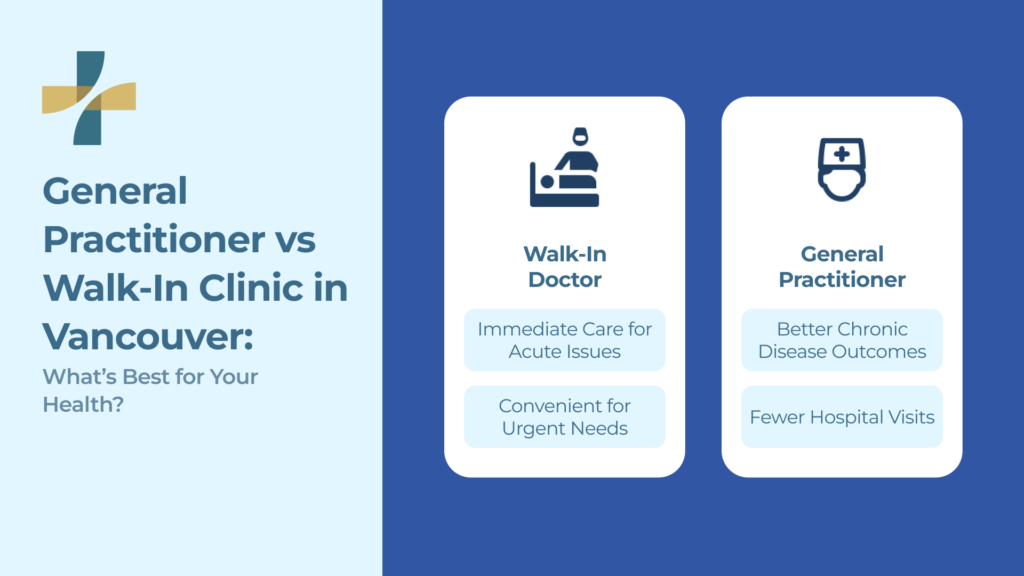
Finding trusted healthcare in Vancouver can feel overwhelming. Many residents wonder whether to visit a General Practitioner (GP) or drop by a walk-in clinic when health issues arise. Both options serve important roles, yet they differ greatly in how they manage your long-term health. With BC’s healthcare system evolving, especially as more clinics adopt online booking and telehealth, understanding the differences matters more than ever. According to the BC College of Family Physicians, people who see the same GP regularly have better chronic disease outcomes and fewer hospital visits. In this guide, we’ll explain how GPs and walk-in clinics compare, when each is appropriate, and why continuity of care at NV Med Center can make a lasting difference. Understanding the Difference: General Practitioner vs Walk-in Clinic A General Practitioner (GP) provides ongoing medical care for individuals and families. They know your medical history, track your health over time, and coordinate specialist referrals when needed. A walk-in clinic, on the other hand, offers quick access for immediate or minor concerns, no appointment necessary. These clinics are ideal when you can’t see your GP quickly or when you’re traveling and need short-term care. Example: A 35-year-old from Vancouver wakes up with flu symptoms. If she needs fast relief, a walk-in clinic can help that day. But if she experiences repeated respiratory infections, seeing a General Practitioner helps identify underlying causes and prevention strategies. Benefits of Seeing a Family Physician in Vancouver Choosing a General Practitioner (GP) means choosing long-term, personalised healthcare. Regular visits allow your GP to understand not just your medical record but your lifestyle, family background, and emotional health. Top Benefits: Continuity of Care: Your GP follows your health journey over the years, managing conditions, reviewing medications, and anticipating risks. Preventive Health: Regular screening and check-ups prevent illness rather than simply reacting to it. Whole-Person Approach: GPs consider physical, mental, and social factors that affect wellness. Chronic Condition Management: From diabetes to hypertension, consistent monitoring reduces complications. Referrals You Can Trust: GPs maintain reliable connections with specialists and hospitals. According to a 2024 report from the Canadian Institute for Health Information (CIHI), about 1 in 7 emergency department visits in Canada were for conditions that could have been managed in primary care. This finding highlights how limited access to a regular family doctor often pushes patients toward emergency care for non-urgent needs, reinforcing the importance of having a consistent General Practitioner in Vancouver who knows your medical history and can provide timely, preventive support. When a Walk-in Clinic is Appropriate Walk-in clinics provide convenient solutions for non-emergency health issues that can’t wait for a General Practitioner (GP) appointment. They’re ideal for: Colds, flu, and sore throats Minor infections (e.g., ear or urinary tract) Prescription renewals Sprains, strains, or minor injuries Immunisations or quick health forms However, because these visits are often one-time encounters, walk-in doctors may not have access to your full medical history. This can make it difficult to track trends or detect chronic issues early. Mini Scenario: A new immigrant in Vancouver visits a walk-in clinic for high blood pressure. The doctor treats the symptom, but he doesn’t receive follow-up care. If he had a General Practitioner at NV Med Center, the doctor could monitor his readings, adjust medication, and help him manage lifestyle changes over time. Continuity of Care and Medical History Tracking Continuity is what separates a General Practitioner (GP) in Vancouver from a walk-in visit. Your GP maintains detailed health records, including allergies, past treatments, and ongoing conditions. This continuity helps detect patterns that might otherwise go unnoticed. For example, Health Canada’s report on primary care continuity confirms that consistent GP relationships improve medication safety and patient satisfaction. Chronic conditions like asthma or diabetes require regular monitoring, something walk-in clinics cannot provide effectively. With BC’s healthcare system under reform, continuity of care has become a central focus. Following initiatives like the BC Health Connect Registry and Dr. Bonnie Henry’s call for preventive care prioritisation, family practices that combine innovation with personalised support, like NV Med Center, are redefining what effective, modern primary care looks like. “The best medical care comes from understanding a patient’s story over time, not just a single visit,” says Dr. Bonnie Henry, BC’s Provincial Health Officer, reinforcing the importance of trusted GP relationships. Services Offered at NV Med Center vs Typical Walk-in Clinics At first glance, walk-in clinics and general practices might seem similar, but the scope of care differs greatly. To help you decide which fits your health needs, here’s a clear comparison of the services and advantages offered by NV Med Center versus a typical walk-in clinic in Vancouver. Service Type NV Med Center (GP Care) Typical Walk-in Clinic Continuity Ongoing relationship with one provider One-time visits, rotating doctors Appointments Online or same-day booking Drop-in may involve long waits Preventive Care Annual physicals, screening, immunisations Focus on immediate symptoms Chronic Disease Long-term monitoring and medication management Short-term fixes Women’s Health Prenatal, menopause, contraception Basic contraceptive prescriptions Mental Health In-house counselling and referrals Basic referrals only Diagnostics Holter monitoring, ICBC exams, and lab coordination Limited or external referrals Global brands such as Telus Health and Maple Virtual Care have made telehealth more accessible, yet many patients still value an ongoing relationship with a doctor who knows their full health history. NV Med Center bridges that gap by offering both in-person and virtual General Practitioner (GP) appointments, ensuring that patients receive consistent care, anytime, anywhere. At NV Med Center, patients also benefit from allied services like clinical counselling, acupuncture, weight management, and aesthetic rejuvenation, all in one coordinated clinic. Factors to Consider Before Choosing Before deciding between a General Practitioner (GP) and a walk-in clinic, consider these factors: Health Complexity: Do you have chronic conditions or recurring symptoms? If yes, a GP is essential. Availability: NV Med Center offers same-day GP appointments in Vancouver, combining convenience with continuity. Budget: If you’re looking for an affordable general practitioner in Vancouver, services covered by MSP are
Why a General Practitioner Beats a Walk-In Doctor for Chronic Care
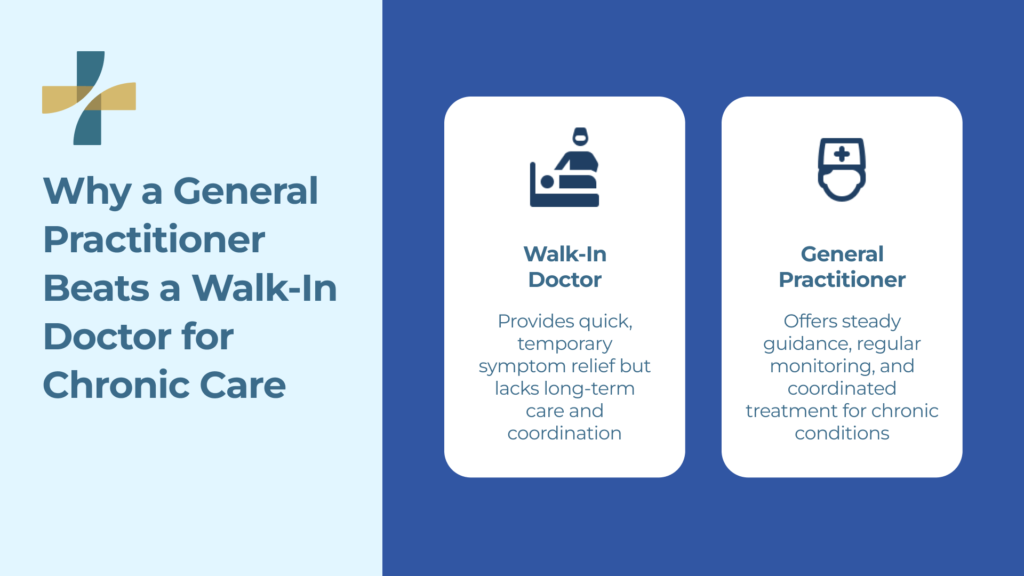
Many patients visit a walk-in doctor when they need quick help, but managing a chronic condition calls for steady guidance and long-term care. Recent Canadian reports show rising rates of conditions such as diabetes and high blood pressure among adults. Statistics Canada has also reported that between 25 percent and 45 percent of adults live with multimorbidity, meaning they manage two or more ongoing health issues. At the same time, UBC’s BC Primary Health Care Research Network highlights that stronger primary care systems improve outcomes for patients who rely on ongoing support, which includes newcomers adjusting to BC’s healthcare system. With this trend in mind, patients are looking for support that goes beyond temporary symptom relief. A General Practitioner offers planned care, regular monitoring, and coordinated treatment that a simple drop-in visit cannot match. This article explains what chronic care involves, how a General Practitioner (GP) can support each step, and how NV Med Center provides accessible services for adults, seniors, and new immigrants seeking reliable, long-term medical oversight. Understanding Chronic Conditions and Their Impact Chronic conditions include illnesses that last longer than three months and require continuous attention. Examples include diabetes, asthma, COPD, thyroid disorders, arthritis, and hypertension. These health issues affect daily life, energy levels, and the ability to work or care for family. They also require long-term changes to diet, habits, medication routines, and medical reviews. Common Chronic Conditions and Their Health Impact Condition Examples of Symptoms Long Term Needs Diabetes Fatigue, thirst, blurry vision Blood sugar management, medication, and foot care Hypertension Headaches, nosebleeds Regular BP checks, diet changes, and medication checks Asthma Wheezing, shortness of breath Inhaler updates, lung monitoring, trigger control Thyroid Disease Hair loss, temperature sensitivity Blood tests, medication adjustments Arthritis Joint pain, stiffness Pain management, mobility support, physio For new immigrants in Vancouver, these conditions feel even harder to manage. Many arrive with incomplete medical records or without a stable provider. Others are unsure how Canadian healthcare works or how often they should book reviews. This group often starts by visiting a walk-in doctor because it feels convenient, but chronic diseases require consistent oversight that only a GP can provide. The Role of a General Practitioner in Chronic Care A General Practitioner (GP) offers long-term medical support that gives patients structure and confidence. Unlike a walk-in doctor who focuses on short-term concerns, a GP builds an ongoing relationship through repeat visits, detailed health reviews, and continuity of records. Mini Scenario: A patient with hypertension who visits multiple walk-in doctors may receive different advice, medication renewals, or test requests. A GP tracks their progress over time, reviews blood pressure logs, adjusts medication based on trends, and checks for side effects. This approach helps prevent complications such as stroke or kidney damage. What a GP Provides? One provider who follows your medical history Consistent medication review Long-term planning for health goals Early detection of complications Clear guidance for lifestyle changes Routine testing with interpretation This makes the GP model more reliable for chronic condition management in Vancouver. Creating a Personalized Management Plan A General Practitioner (GP) helps create a structured plan after learning about symptoms, triggers, habits, and family history. This plan becomes the roadmap for long-term health. What a Personalized Plan May Include Lab tests such as A1C, thyroid panels, and cholesterol Medication schedules Referrals to counselling, physiotherapy, or dietetics A plan for reducing flare-ups Instructions for home monitoring Education on what symptoms require urgent care For example, a new immigrant living in Vancouver experiences frequent asthma attacks. A walk-in doctor can provide an inhaler refill, but a GP can create a detailed plan that includes: Trigger identification Lung function testing Emergency action steps Environmental changes Regular follow-ups every three to six months This structured support helps the patient feel more in control and reduces the need for emergency visits. Monitoring and Regular Check Ups Chronic conditions require frequent check-ins to track progress and spot problems early. A General Practitioner (GP) monitors these metrics at planned intervals, while a walk-in doctor only deals with what is happening that day. According to CIHI, Canada’s 2024–2025 age-standardised rate of potentially avoidable hospitalisations for ambulatory care-sensitive conditions was 325 per 100,000, and people with these conditions do better when they have a regular primary care provider who sees them routinely to diagnose early, monitor, and adjust treatment. Examples of Regular Monitoring Blood pressure readings Blood sugar trends Lung capacity and breathing patterns Medication side effects Weight changes Sleep patterns Stress levels or mental health changes For instance, a patient with diabetes visits a walk-in doctor for a leg wound. The doctor treats the wound but does not know the patient’s A1C history or previous complications. A GP already understands their risk factors and can: Order a foot exam offer wound care guidance adjust their diabetes plan Discuss diet changes Monitor nerve damage This prevents small issues from becoming serious complications. Coordinating with Specialists and Allied Health Services Chronic care often involves more than one health provider. A General Practitioner coordinates the entire network so patients do not have to figure out referrals, reports, or follow-up schedules on their own. How GPs Coordinate Care Referrals to endocrinologists, cardiologists, dermatologists, or respiratory specialists Collaboration with physiotherapists, kinesiologists, and counsellors Reviewing shared test results Explaining specialist recommendations in plain language Ensuring recommended treatments fit the patient’s long-term plan Well-known campaigns led by the Canadian Medical Association have urged patients to maintain a regular GP for this exact reason. Consistency leads to better outcomes and fewer emergency room visits. Let’s say a patient with arthritis may need pain management, mobility support, and periodic imaging. A GP coordinates: imaging tests physiotherapy medication reviews referral to a rheumatologist monitoring for medication side effects A walk-in doctor does not offer this level of coordination because each visit is isolated. Lifestyle Advice and Preventive Measures Chronic conditions improve when patients make changes in diet, exercise, sleep, and stress. General Practitioners (GPs)
Choosing the Right Family Physician in North Vancouver: A Smart Guide for Your Family’s Long-Term Care
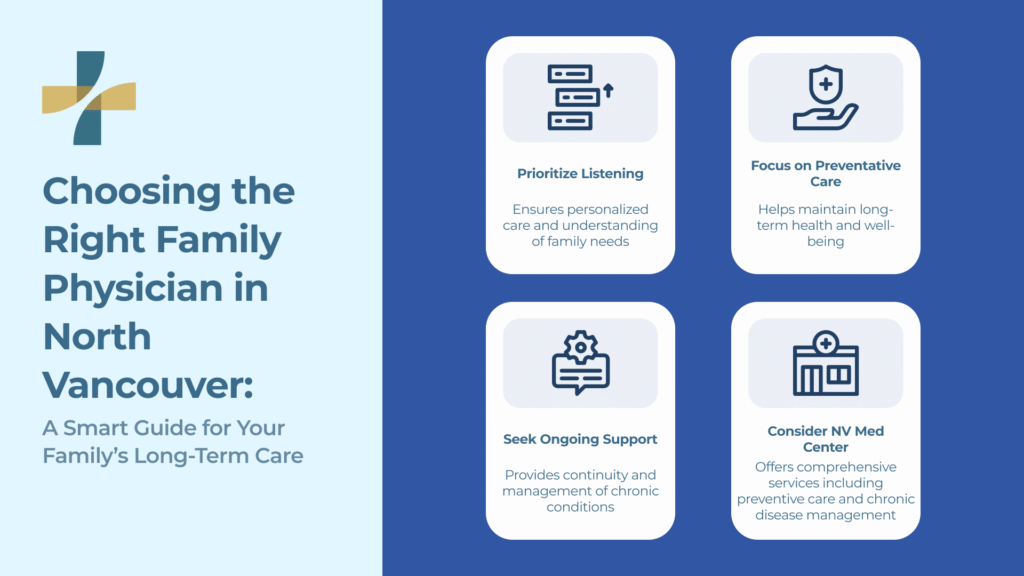
Many Vancouver families are searching for a family physician who listens, offers preventative care, and provides ongoing support. The search has become even more urgent after recent reports from the Canadian Medical Association Journal showing that nearly one in five Canadians lacks a regular primary care provider. The Canadian Institute for Health Information reports that 17 percent of Canadians do not have a regular primary care provider, and this gap in access has been getting worse in recent years. This guide uses clear steps to help you choose the right family physician and understand which services matter most for long-term care. NV Med Center offers family physicians who support preventive care, chronic disease management, and whole-family health, making it a practical choice for individuals and families looking for continuity. Why Choosing the Right Family Physician Matters in Vancouver A family physician plays a central role in your health by offering one place to turn to for everyday concerns, routine screenings, and support for long-term conditions. This includes regular checkups, preventative care, women’s health, paediatric care, and health education. Statistics Canada reports that 14.4 percent of Canadians did not have a regular health care provider in 2021, showing how common it is for families to struggle to find consistent primary care. With more Vancouver residents looking for stable primary care, having a trusted family physician helps reduce unnecessary walk-in visits and gives families a reliable point of contact. A family physician can also monitor your health over time. For example, a parent with two school-aged children may want a doctor who offers steady follow-up and quick access during busy school months. When the physician already knows your child’s health history, they can spot changes sooner, guide age-appropriate screenings, and help prevent minor issues from turning into larger concerns. Families also benefit when a physician works within a clinic that offers additional services such as counselling, physiotherapy, or diagnostic testing. This helps reduce the number of separate appointments across the city and supports smoother communication between providers. Table: What a Family Physician Supports Long-Term This table outlines common areas of care that a family physician manages over time. Area of Care Examples Preventative care Vaccines, physical exams, Pap tests Chronic conditions Diabetes, asthma, and blood pressure Family health Paediatric care, women’s health, senior support Acute concerns Infections, minor injuries, and allergies Coordination Referrals to specialists or allied health Consider Your Family’s Health Needs Each household has its own health priorities, so the family physician you choose should be able to support those needs over time. Some families need a physician with a strong paediatric focus. Others may need help managing chronic conditions such as hypertension, asthma, or diabetes. If you have seniors at home or family members with ongoing health concerns, a clinic that offers several services in one place can make appointments easier to manage. For instance, a family caring for an elderly parent, for example, may want access to physiotherapy, counselling, or Holter monitoring without visiting multiple clinics. NV Med Center provides these services under one roof, which helps reduce travel, simplifies follow-up care, and supports better communication between providers. Families also benefit from choosing a physician who understands how lifestyle, work schedules, school routines, and caregiving roles affect overall health. This makes it easier to plan visits, manage long-term conditions, and stay consistent with preventative care. Questions to Ask About Your Family’s Needs These questions can help you understand what type of support your family will need from a physician. Do you need regular follow-ups for chronic conditions Do you prefer in-person or online visits Will children or seniors also use the same clinic Do you need support with mental health, weight management, or women’s health Check Credentials and Experience A physician’s credentials help you understand their training, background, and the type of care they provide. Many Vancouver families use the College of Physicians and Surgeons of British Columbia registry to confirm licensing, check practice history, and see if the physician has specific areas of interest. A family physician who focuses on preventative care can also guide long-term health planning for both adults and children. For example, a patient who experiences recurring migraines may want a physician who understands both neurological symptoms and lifestyle factors. A doctor with the right experience can order the appropriate tests, review patterns in your symptoms, and coordinate referrals when needed. This support helps reduce repeat visits and improves overall management. Choosing someone with practical experience in paediatrics, chronic disease, women’s health, or senior care can also benefit families who want consistent support under one provider. What to Look For These points can help you review a physician’s background and practical experience. Medical license status Areas of interest such as women’s health or chronic disease Experience working with families Professional memberships or certifications Evaluate Clinic Services and Specialties A clinic that offers multiple services makes it easier for families to manage their health in one place. This can reduce the need to travel across the city and help keep communication clear between providers. NV Med Center offers family medicine, clinical counselling, acupuncture, physiotherapy, paediatrics, ICBC assessments, Holter monitoring, and aesthetic services. These options support both everyday health needs and more specific concerns that may come up over time. For example, a teenager with sports injuries may need care from a family physician, physiotherapist, and kinesiologist. When these services are available in the same clinic, it supports smoother follow-up, faster recovery, and better coordination between providers. Families with young children, seniors, or members with chronic health needs often benefit from this kind of integrated approach. Helpful Services When Choosing a Clinic These services can make it easier for families to manage routine care and specialist needs in one location. Paediatric care Women’s health Chronic disease management On-site screenings and testing Mental health support Allied health services like physio and massage Read Reviews and Ask for Recommendations Online reviews can help you understand what it
Your First Visit to a Family Doctor in North Vancouver: What to Expect & How to Prepare
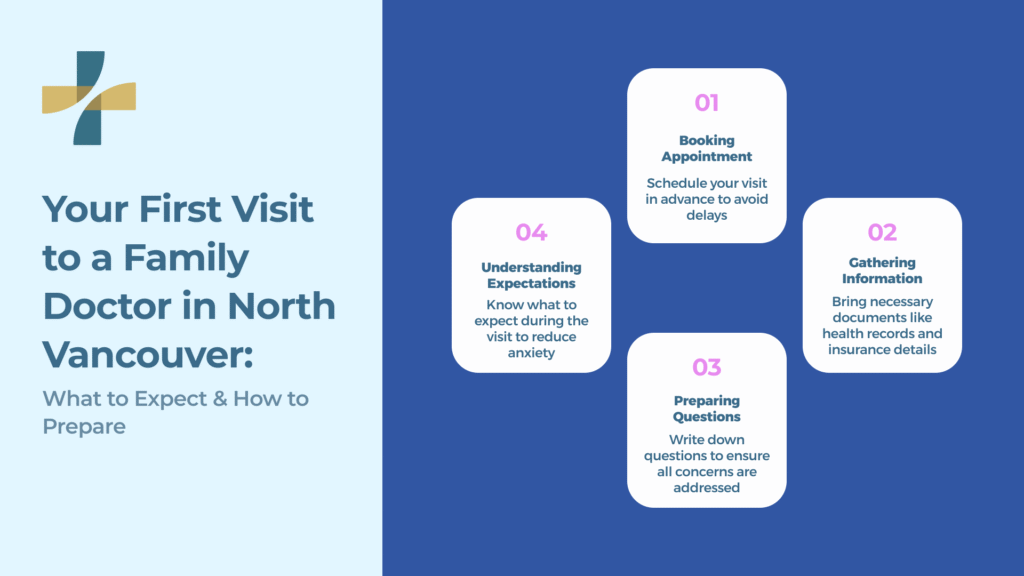
Booking a first appointment with a family doctor can feel unfamiliar, especially if it has been a while since your last visit or you’re new to the Vancouver area. Many Canadians are securing a family physician because of recent discussions around primary care shortages reported by CBC and Health Canada. This growing interest shows how important consistent care is for long-term health. This guide explains what to expect during your first appointment, how to prepare, and how a family physician helps support your overall well-being. Why Having a Family Physician in Vancouver Matters A family doctor gives you access to ongoing care, preventive support, and a reliable point of contact for new health concerns. This helps reduce emergency room visits and improves management of chronic conditions. How a Family Doctor Supports Your Long-Term Health A 2023 report from the Canadian Institute for Health Information found that adults with a regular family physician have fewer hospital visits and better outcomes in conditions such as asthma, diabetes, and high blood pressure. This is because a family physician: Tracks changes in your health over time Manages chronic conditions with regular follow-up Performs screenings based on age and risk Coordinates care with other specialists when needed For families in the North Vancouver area, having a consistent doctor also helps support children’s development, women’s health needs, and preventive care across all life stages. Recent Canadian research supports this data. A 2022 study in BMC Primary Care followed more than 400,000 previously unattached patients and found that once they were formally connected to a family doctor, their number of primary care visits doubled in the first year. They were also 53 percent more likely to have all their care coordinated by one physician, strengthening continuity and improving preventive care. At North Vancouver Medical Center, patients benefit from having a dedicated family physician within a multi-disciplinary team that also includes counsellors, acupuncturists, and diagnostic specialists. This allows patients to receive full-circle care without needing multiple clinics. How to Prepare Before Your First Appointment Preparing ahead makes your visit smoother and helps your family doctor understand your health needs right away. Gathering the right information allows your physician to review your history, identify risks, and create a clear plan for your care. Being prepared also helps you feel more confident and ensures you get the most value from your first appointment. What to Bring and How to Get Ready Here’s what to bring: A list of your current medications and supplements Your medical and surgical history Immunization records Any recent test results or referral notes Your health insurance card and photo ID If you’re seeing a family doctor near you in Vancouver for ongoing care, it’s also useful to bring questions about lifestyle, family health history, or any recent symptoms. Before the appointment, try to: Arrive 10–15 minutes early to complete forms. Prepare notes about health changes or concerns. List your top health goals (e.g., weight loss, pain management, better sleep). Many patients find it helpful to book through NV Med Center’s 24/7 online booking system to secure convenient appointment times. What Happens During Your First Visit Your first appointment helps your family doctor build a clear understanding of your health history, daily habits, and current concerns. This visit often includes basic assessments, questions about your lifestyle, and a review of past medical records. The information gathered during this appointment helps your physician create a personalised care plan for ongoing support. Step What Happens Why It Matters Health Review Discussion of your health history, medications, and habits. Helps identify risk factors and tailor your care. Physical Exam Basic checks like heart rate, blood pressure, lungs, and reflexes. Detects potential early signs of illness. Preventive Screening Depending on your age and gender, you may receive screenings (blood work, Pap smear, etc.). Detects common issues early when they’re most treatable. Care Planning Your family physician discusses next steps, referrals, or tests. Builds a proactive plan for ongoing health management. For new patients, this appointment is also about comfort and communication. The family physician will take time to understand your concerns and explain results clearly. A national survey published by the Canadian Medical Association Journal found that 65 percent of Canadians value having a provider who knows them personally and understands the factors affecting their health. Your first visit starts that relationship and supports better long-term care. NV Med Center’s physicians focus on creating a welcoming experience by coordinating care with in-house specialists like counsellors or physiotherapists when needed. Common Questions to Ask Your Doctor Many patients are unsure what to talk about during their first visit, and asking the right questions can help your doctor understand your needs. Preparing a short list makes the appointment more productive and helps you get clear guidance about your health. These questions are a good starting point and can be tailored to your age, lifestyle, and medical history. Here are useful questions you can bring to your appointment: What preventive screenings should I have based on my age and family history? How often should I schedule routine checkups? Are there lifestyle changes that can improve my current condition or symptoms? What warning signs should I watch for between visits? Do I need follow-up appointments, lab tests, or referrals? These questions support shared decision-making, help you understand your next steps, and give you a clear plan to follow after your visit. After the Appointment: Next Steps Your first visit usually leads to a clear health plan that continues after you leave the clinic. The family physician may schedule follow-up tests, provide lab requisitions, send prescriptions to your pharmacy, or share educational materials to help you manage your health at home. NV Med Center uses a secure electronic records system that keeps your information organised, which makes it easier for your doctor to review your history and plan future care. How Follow-Up Care Supports Your Health
Complete Guide to the WorkSafeBC Medical Form in Vancouver
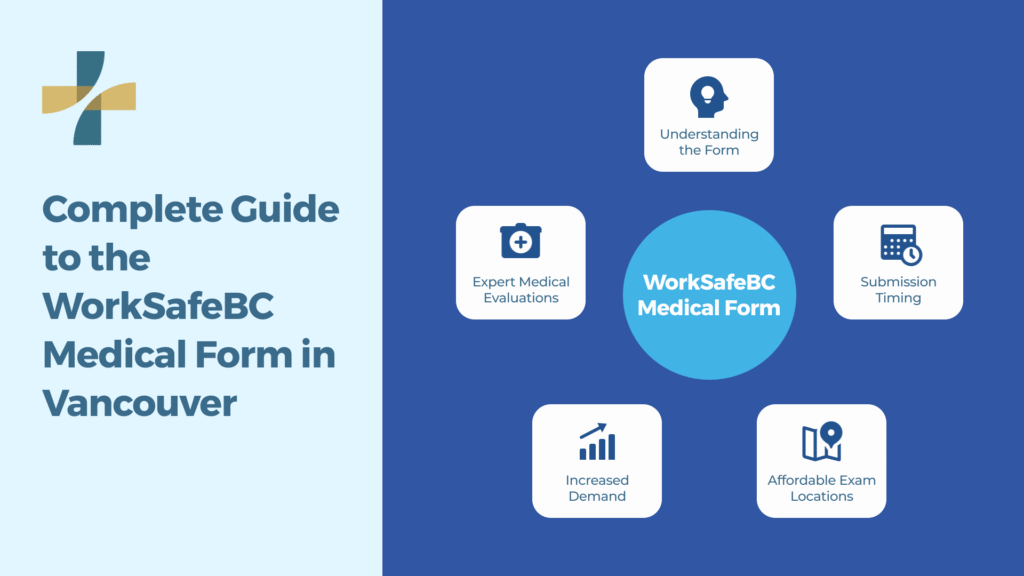
If you’ve sustained a workplace injury, filling out a WorkSafeBC medical form can feel confusing and stressful. You might wonder which form you need, when it must be submitted, or where you can get the exam done affordably in North Vancouver. In recent years, as more British Columbians file workplace injury claims, demand has increased for clinics that handle these assessments efficiently. This guide clears up the process, explains why these forms exist, and shows how expert medical evaluations support you with affordable WorkSafeBC medical exams. What Are WorkSafeBC Medical Forms And Why Do You Need Them Workers’ Compensation Board of British Columbia, or WorkSafeBC, is the agency that oversees workplace injury claims, safety regulations, and compensation for injured workers. When a worker injures themselves on the job, the employer must report it (often via Form 7, the employer’s report) within 72 hours. At the same time, certain medical forms must be completed by a physician or qualified health provider to certify the injury, fitness for work, recovery progress, and other important details. Key Forms You Should Know Here are a few of the main WorkSafeBC medical or health-provider forms: Form 6 / Worker’s Report of Injury or Occupational Disease — submitted by a worker to report the injury or exposure. Form 7 / Employer’s Report of Injury or Occupational Disease — filled by the employer to officially record the workplace incident. Physician’s First Report (Form 8/11) — medical practitioners must file this within three business days of first seeing the injured worker when certain criteria (e.g., potential disability, musculoskeletal injury, hernia, mental disorder) apply. Progress Reports / Return to Work assessments — used later if the worker’s condition changes or is ready to resume work. Other specialized forms, e.g., Certificate of Medical Fitness for divers, etc. These forms ensure that WorkSafeBC has accurate medical evidence to approve claims, authorize treatment, and support a safe return to work. Mini Scenario: A Construction Worker Imagine a carpenter slips while on site and injures her wrist. She reports it to her employer (employer fills Form 7) and visits a doctor who suspects a joint sprain. The physician must file Form 8/11 within three days. She may also fill out Form 6 to report the injury. With those documents, WorkSafeBC can begin reviewing her claim, and treatment like physiotherapy or imaging can proceed under approved coverage. Who Needs a WorkSafeBC Medical Exam? Anyone who has been injured or become ill due to their job, or needs medical clearance for a WorkSafeBC claim, may require a WorkSafeBC medical exam. Below are some of the most common situations and individuals who typically need this type of assessment: Employees who have suffered a workplace injury or illness. Workers who need a medical evaluation to support their compensation claim. Employers or insurers who require confirmation of fitness to return to work or to document medical status. If you’ve been injured in your line of work (e.g., industrial, health care, transport, construction) or develop a condition due to repetitive tasks, you’ll likely be asked to complete medical forms. Even if your employer has submitted reports, the medical side must still be in order. How to Complete WorkSafeBC Medical Forms: Step-by-Step Guide Completing a WorkSafeBC medical form is straightforward when you follow each step carefully to ensure your claim is processed without delays. 1. Report the Injury or Illness Promptly When an injury occurs at work, both the employee and employer have specific responsibilities to report it properly. Here’s what each must do: As a worker, submit Form 6 or an online equivalent as soon as possible. Your employer should file Form 7 within 72 hours if medical treatment or time off is needed. Prompt reporting helps avoid delays in claim processing by ensuring WorkSafeBC receives accurate details early. This allows your benefits, medical coverage, and recovery plan to start as soon as possible. 2. Book a Medical Assessment with a Qualified Clinic Choose a clinic experienced in WorkSafeBC medical exams, like NV Med Center, ideally one that understands BC’s forms, deadlines, and billing practices. During your assessment: The physician or relevant practitioner reviews your medical history, injury details, and performs a physical exam. You may be asked to add imaging (X-ray, MRI) or lab tests if needed. The provider completes the necessary form(s) e.g., Form 8/11 or progress updates. 3. Submit the Form(s) to WorkSafeBC Once your healthcare provider has completed the necessary paperwork, the next step is making sure the forms reach WorkSafeBC on time. Health providers are required to submit the reports within three business days of the first visit under applicable conditions. Use WorkSafeBC’s online document uploader where possible to speed up submission. Keep a copy for your records. 4. Monitor Your Claim and Follow Up After your forms are submitted, it’s important to stay involved by tracking your claim’s progress and following up on any updates from WorkSafeBC. Through your WorkSafeBC online services account, you can upload additional documents, check status, and see correspondence. If your condition changes, the provider may issue a progress report or update the medical form. When you are ready, the clinic may issue a return-to-work form indicating your capacity to resume work (full, part-time, or modified duties). News Tie-In & Trend Angle In 2025, British Columbia has seen a surge in workplace injury claims, particularly in sectors like healthcare, construction, and tech. Many workers now also submit mental health claims under WorkSafeBC’s expanded coverage for workplace stress-related disorders. With this shift, the role of medical assessments is more critical, not only for physical injuries but also to certify mental or neurological rehabilitation. Clinics like NV Med Center are evolving to support workers with holistic medical evaluations that address both body and mind, making “worksafebc medical form” a more searched and relevant term than ever. Practical Tips & Common Mistakes to Avoid Completing a WorkSafeBC medical form can feel detailed, but following a few simple tips can help you avoid common mistakes and speed
Where to Find Doctors Accepting ICBC Forms in Vancouver
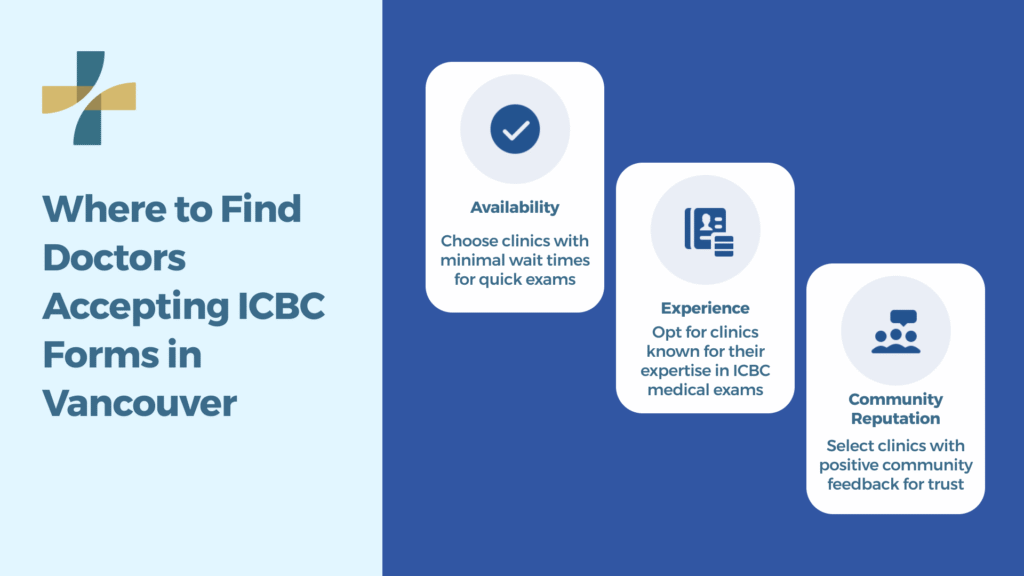
When ICBC asks you to complete a medical form, the first question isn’t how to do it, but it’s where to go. Many drivers struggle to find doctors accepting ICBC forms who can complete the exam quickly, correctly, and affordably. The good news? Several reputable clinics across Vancouver and the North Shore offer these assessments with minimal wait times. This 2025 update highlights the top clinics for ICBC medical exams in Vancouver, based on availability, experience, and community reputation. Whether you’re a senior driver renewing at age 80 +, a commercial driver needing an annual check, or someone flagged by RoadSafetyBC, this list helps you find a trusted local doctor easily. Why Choosing the Right ICBC Clinic Matters Your ICBC medical exam isn’t just a formality; it determines your ability to keep driving legally and safely. That’s why choosing the right clinic makes a real difference. A qualified clinic ensures: The Driver’s Medical Examination Report (DMER) is filled out correctly the first time. You get accurate vision and health assessments that meet RoadSafetyBC standards. Your report is submitted on time, avoiding costly delays or licence suspensions. Many drivers in British Columbia have learned the hard way that incomplete or incorrect DMER forms can cause processing delays. In 2024, RoadSafetyBC faced a significant backlog, still processing medical forms from May 2024, with nearly 196,000 documents as of mid-2025. As more seniors and commercial drivers are asked to provide medical updates, demand for ICBC-qualified clinics continues to rise. Example: When an 82-year-old received an ICBC notice, she first visited a general walk-in clinic, only to learn the doctor didn’t complete ICBC forms. She lost a week before finding a clinic that did. Choosing the right one from the start saves both time and stress. Recent Update on ICBC’s Age-Based DMERs In 2023, RoadSafetyBC resumed age-based Driver’s Medical Examination Reports (DMERs) after pausing them during the COVID-19 pandemic. This means drivers aged 80 and older once again receive medical examination requests based on age, not only when health concerns arise. This policy change has led to a noticeable increase in demand for doctors accepting ICBC forms, especially among seniors needing timely appointments. With many clinics still catching up after previous processing delays, it’s more important than ever to book with an experienced clinic that understands ICBC and RoadSafetyBC requirements. What to Look For When Choosing Doctors Accepting ICBC Forms Before booking your appointment, consider these essential criteria to ensure your experience is smooth and compliant: Experience with ICBC DMER forms – Clinics familiar with RoadSafetyBC standards can guide you through the form correctly. Transparent pricing – Because ICBC exams aren’t covered by MSP, costs can vary, so always confirm upfront. Short wait times – Look for clinics offering online booking or walk-in slots. Comprehensive service – The best clinics can refer you for vision, heart, or neurology testing if required. Convenient location – Accessibility is key, especially for seniors or professional drivers on tight schedules. Tip: Always call ahead to confirm that the clinic accepts ICBC driver medical exams and specify that you need the Driver’s Medical Examination Report (DMER) completed. Top 5 Clinics for ICBC Medical Exams in Vancouver (2025 Rankings) Below are clinics in Vancouver and nearby areas known to accept ICBC driver’s medical forms. Use these as options, but keep reading to see why NV Med Center is a strong choice for many. Clinic Location / Coverage Strengths / Notes Example Use Case NV Med Center North Vancouver Multidisciplinary care, telehealth, walk-in + bookings Jane can walk in or schedule online and get her DMER done locally CityMed Clinic White Rock, Surrey (serving wider area) Explicit ICBC DMER service, vision & physical evaluation For those in the south or border communities seeking consistency South Vancouver Medical Clinic Vancouver Performs in-person medicals, accepts ICBC forms Ideal if you live in South Vancouver Kensington Medical Clinic Vancouver Walk-in + bookings; includes ICBC & work physicals Good for people needing flexibility TriMedical Assessment Centre Multiple BC Full driver medical exams, including hearing, vision, and physical tests Useful for commercial drivers needing all tests in one place Let’s go deeper into how to pick among these. 1. NV Med Center (North Vancouver) Why it stands out: Located on the North Shore, and is ideal for many local drivers. Offers online booking 24/7 and virtual care when suitable. Doctors understand ICBC / RoadSafetyBC rules; they fill out and guide the submission of forms. Because NV Med Center is a full-service clinic (physio, acupuncture, counselling), they can address underlying health factors that might affect driving fitness. 2. CityMed Clinic They clearly advertise ICBC Driver’s Medical Examinations (DMER). They discuss assessing cognition, vision, and physical health in their process. Good for drivers in the south or border areas of Greater Vancouver. 3. South Vancouver Medical Clinic They offer driver’s medical examinations and accept the ICBC form. Best if you live in or near South Vancouver. 4. Kensington Medical Clinic They mention ICBC and private driver physicals in their service list. Good for those who need walk-in flexibility or short notice. 5. TriMedical Assessment Centre Their service includes the full battery of tests (vision, hearing, etc.) for driver medicals. Useful for commercial drivers who need all tests in one session. Quick Comparison: Which Clinic Fits Your Needs? Choosing the right ICBC medical clinic depends on your specific needs, location, and schedule. Here’s a quick overview to help you decide which option may fit best: Best for seniors: NV Med Center – Offers a calm, accessible North Vancouver location, patient-focused care, and experience with age-related driver exams. Best for commercial drivers: TriMedical Assessment Centre – Provides full driver medical testing, including vision, hearing, and physical fitness in one visit. Best for South Vancouver residents: South Vancouver Medical Clinic – Convenient location for residents in the southern area of Vancouver with consistent ICBC form handling. Best for flexibility: Kensington Medical Clinic – Accepts walk-ins and same-day appointments, ideal for
How to Complete Your ICBC Driver Medical Exam in Vancouver
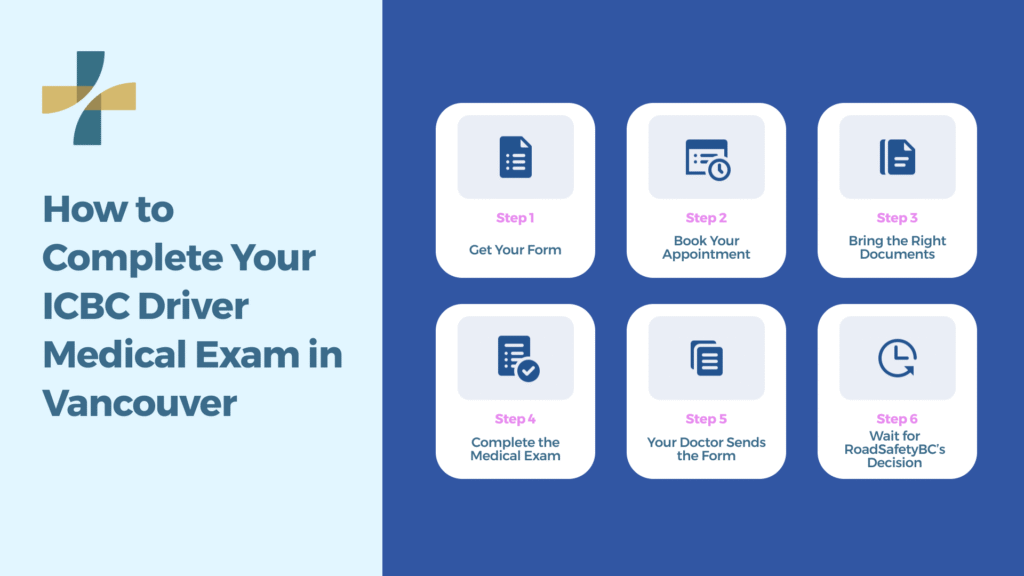
If you’ve recently received a notice from ICBC or RoadSafetyBC asking you to submit a medical form, you’re probably feeling unsure: Which form do you use? What tests will your doctor need, and where should you go in North Vancouver? This guide walks you through completing your ICBC driver medical exam in Vancouver, from gathering documents to submitting your report. By the end, you’ll know exactly what to expect and how NV Med Center can make your assessment smooth and stress-free. Whether you’re turning 80, renewing a commercial licence, or ICBC flagged a health concern, this is your one-stop resource. What Is an ICBC Driver Medical Exam and Why You Might Need One ICBC, short for Insurance Corporation of British Columbia, is the government-owned organisation that handles driver licensing, vehicle registration, and auto insurance in British Columbia. It works with RoadSafetyBC to make sure all drivers are medically fit to operate a vehicle safely. The ICBC driver medical exam is a health assessment completed by a doctor or nurse practitioner to confirm that your medical condition, vision, reflexes, and overall fitness meet BC’s driving standards. You might need one if: You’re a senior driver turning 80 or older You’re a commercial driver (Class 1–4 licence) You’ve reported or been diagnosed with a medical condition that could affect driving ICBC or RoadSafetyBC has asked you to submit a Driver’s Medical Examination Report (DMER) This process helps protect both you and others on the road by ensuring you’re physically and mentally capable of driving safely. Note: The DMER does not include a road test. It’s strictly a medical/fitness assessment. Step-by-Step: How to Complete the ICBC Medical Form Here’s a clear walkthrough to help you navigate the process. Step 1: Get Your Form ICBC or RoadSafetyBC will send you a Driver’s Medical Examination Report (DMER), also known as the ICBC driving form, in the mail. It includes all instructions and deadlines. If you lose it, you can contact ICBC to request a replacement copy. Step 2: Book Your Appointment Make an appointment at a medical clinic that can complete ICBC medical assessments, like NV Med Center. These clinics have doctors or nurse practitioners who know how to fill out the DMER correctly. If you can’t visit in person right away, you can use our online visits and telehealth options for general medical advice or to prepare for your upcoming ICBC exam. Step 3: Bring the Right Documents Bring these items with you to your appointment. Item Notes / Tips The DMER form itself The form must be completed by the physician or nurse practitioner. If you’d like ongoing medical support beyond this exam, explore our family physician care. Government-issued ID Bring accepted primary and secondary ID (e.g., driver’s licence + passport). See the ICBC accepted ID list for details. Medical history/records Any reports for heart, vision, neurological, diabetes, or other conditions. Medication list List of current prescriptions, dosage, and prescribing physician. Eyeglasses or lenses If you use corrective lenses for vision. Any specialist reports If relevant (cardiologist, neurologist), to avoid repeat work. Step 4: Complete the Medical Exam Your provider will assess several key areas. Below are typical components with mini-scenarios: Physical & cardiovascular Check your blood pressure, pulse, and cardiovascular health. For instance, if you’ve had palpitations or dizziness, the provider may ask for an ECG or cardiology referral. Vision & visual field You’ll test visual acuity. For non-commercial licences, BC requires 6/15 (20/50) or better combined vision as outlined in the official BC driver vision standards. If you fall below the threshold, a functional assessment or on-road test may be requested. Cognition, reflexes, and motor function Especially for drivers over 80 or those with a neurological history, cognitive screening (memory, judgment) can be required. Other systems Depending on your health history, tests for hearing, glucose tolerance, pulmonary function, etc., may be part. Step 5: Your Doctor Sends the Form After the exam, your doctor completes and signs the DMER. They’ll send it directly to RoadSafetyBC, usually within about 45 days. If you need more time, you or your doctor can ask RoadSafetyBC for an extension. Step 6: Wait for RoadSafetyBC’s Decision Once your ICBC form is submitted, RoadSafetyBC reviews the medical information to confirm that you meet the province’s fitness-to-drive standards. They may: Approve your licence continuation or renewal Request Enhanced Road Assessment (ERA) (for Class 5 or 7 drivers needing further on-road evaluation) Order a re-exam for commercial drivers (Class 1–4 or Class 6) if needed If approved, your licence status continues. If not, you may face restrictions, additional tests, or licence suspension. Common Scenarios & Practical Tips Here are some of the most common reasons why people need a driver medical exam, and what you can do to make the process easier. Senior Drivers (Age 80 and Over) If you’re turning 80, you’ll receive a Driver’s Medical Examination Report (DMER) from RoadSafetyBC. You’ll need to complete this form again at age 85 and then every two years after that. Book your appointment early, especially if you have eyesight, memory, or reaction-time concerns. Getting it done ahead of time helps you avoid any licence delays. Commercial Drivers If you drive for work, for example, a Class 1–4 licence or a Class 5 with commercial endorsements, you’ll need regular medical exams to keep your licence active. Make sure you book these exams on time. Missing a deadline can lead to a temporary suspension or downgrade of your licence until the medical form is submitted. Drivers with Health Conditions If you’ve had a medical condition such as diabetes, a heart issue, or a stroke, ICBC or your doctor may ask for extra details. Bring reports from your specialists (for example, your cardiologist or neurologist). These documents can speed up the process and reduce the chance of extra follow-ups. Vision Concerns If your vision isn’t clear even with glasses or contacts, you may need extra testing. Drivers whose corrected vision falls between 6/15 and 6/60
General Practitioner (GP) in Vancouver: What They Do and When to See One
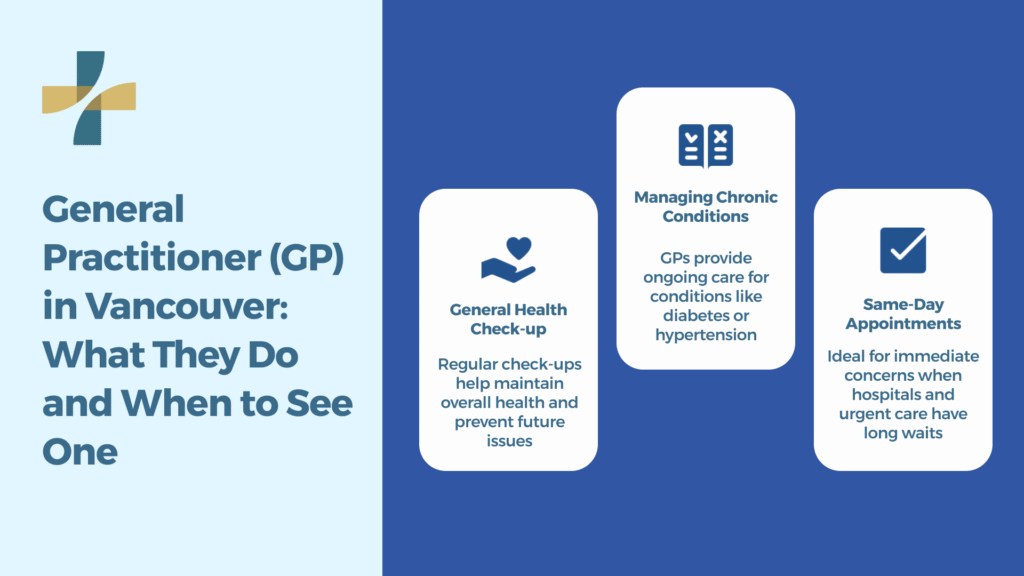
When you or a loved one feels unwell, the first thought is often, “Who should I see?” For most people, the answer is a General Practitioner (GP), your first point of contact in the healthcare system. From treating colds to managing chronic conditions, GPs, or General Practitioners, play a critical role in keeping families healthy. Today, more patients are searching for same-day GP appointments in Vancouver because hospitals are crowded and urgent care centers face long wait times. Knowing exactly what a GP doctor does, and when to see one, has never been more important. In this blog, you’ll learn what a GP does, how they differ from urgent care, when to visit one, and why same-day GP appointments are essential for Vancouver patients. What Is a General Practitioner Doctor? A GP doctor (General Practitioner) is a licensed medical physician who provides primary and continuous care for patients of all ages. They diagnose, treat, and manage a wide range of health conditions. Unlike specialists focusing on a single body system, GPs offer whole-person care. Example: If a child has recurring ear infections, a GP can prescribe antibiotics, track progress, and, if necessary, refer them to an ear, nose, and throat specialist. Example: An older adult with high blood pressure sees a GP for regular monitoring, medication adjustments, and lifestyle counselling. Expert Insight: The American Academy of Family Physicians notes that nearly 48% of physician visits in the US are to family doctors or GPs, underlining their central role in healthcare. The Role of a General Practitioner in Everyday Health A General Practitioner (GP) is often the first healthcare professional people turn to for day-to-day health concerns. Beyond diagnosing and treating illnesses, GPs play a vital role in maintaining long-term wellness, supporting preventive care, and managing ongoing conditions. Their approach ensures patients have a trusted medical partner for every stage of life. Preventive Care and Screenings GPs don’t just treat illness; they help prevent it. Services often include: Vaccinations Pap smears Cholesterol checks Routine blood work For example, a GP doctor in Vancouver might remind you it’s time for your flu shot before winter or schedule a Pap smear to catch early warning signs of cervical cancer. Managing Chronic Conditions From diabetes to asthma, GPs create long-term care plans. They act as the coordinator between you and specialists, ensuring your treatment is consistent. For instance, a busy professional diagnosed with Type 2 diabetes may see their GP quarterly for lab tests, prescription adjustments, and diet support. General Practitioner vs Specialist – When Will a General Practitioner Refer You? While a General Practitioner (GP) or family doctor in Vancouver can diagnose and manage a wide variety of conditions, there are times when more specialized expertise is needed. In these cases, your GP becomes the coordinator of your care, making sure you see the right specialist at the right time. This prevents unnecessary delays and ensures your health needs are addressed comprehensively. For example: A GP may detect irregular heart rhythms during an exam and refer you for a Holter monitoring assessment to track your heart activity over 24 to 48 hours. A patient with persistent back pain might be directed to physiotherapy or kinesiology for targeted treatment and rehabilitation. Someone struggling with severe acne or suspicious moles could be referred to a dermatologist for advanced care. Patients experiencing vision changes may be referred to an ophthalmologist for specialized testing and treatment. By working closely with specialists, your GP ensures your care is well-coordinated and nothing falls through the cracks. This collaboration means you avoid fragmented care and always have a trusted medical professional overseeing your overall health journey. When to See a General Practitioner vs Urgent Care With Google searches for urgent care Vancouver climbing, many patients are unsure whether they should head to urgent care, an ER, or their GP’s office. Here’s a clear breakdown: See a GP doctor for: chronic disease management, follow-ups, preventive care, mild illnesses (coughs, rashes, urinary infections). Visit urgent care for: stitches, minor fractures, sudden but non-life-threatening illnesses like strep throat or ear infections when your GP isn’t available. Go to the ER for: chest pain, stroke symptoms, major trauma, or life-threatening emergencies. According to the Canadian Institute for Health Information, about 15% of ER visits in Canada could potentially have been managed in primary care. This highlights the importance of timely access to family doctors and same-day GP appointments. Same Day General Practitioner Appointments in Vancouver – Why Access Matters With local hospitals under pressure, clinics offering same-day GP appointments in Vancouver have become essential. Parents often need same-day care for kids with sudden fevers. Seniors may need urgent prescription renewals. Working professionals prefer quick GP visits instead of waiting hours in urgent care. At NV Med Center, our Family Physician Care in North Vancouver combines accessibility with quality. Patients can book 24/7 online appointments, ensuring you get reliable medical support when you need it most, while building long-term relationships with doctors who know your health history. The General Practitioner Doctor’s Role in Mental Health Today, conversations about mental health are front-page news, with public figures like Prince Harry and brands like Headspace normalizing therapy and mindfulness. GPs play an important role here too. They screen for anxiety and depression. Provide counselling or prescribe first-line medications. Refer patients to psychologists or the clinical counselling team when needed. For example, if a college student in Vancouver is experiencing burnout, their GP may provide immediate support while connecting them to the clinical counselling team. How GPs Support Families Across Generations A GP is often described as the “quarterback” of family health care because they oversee and coordinate care for every stage of life. They aren’t just treating illnesses at the moment. They build long-term relationships with patients, tracking health histories over decades and often caring for multiple generations within the same family. For children: GPs monitor growth and developmental milestones and provide routine immunizations. They also treat common
Beauty Clinic Vancouver: Step-by-Step Botox and Fillers Guide
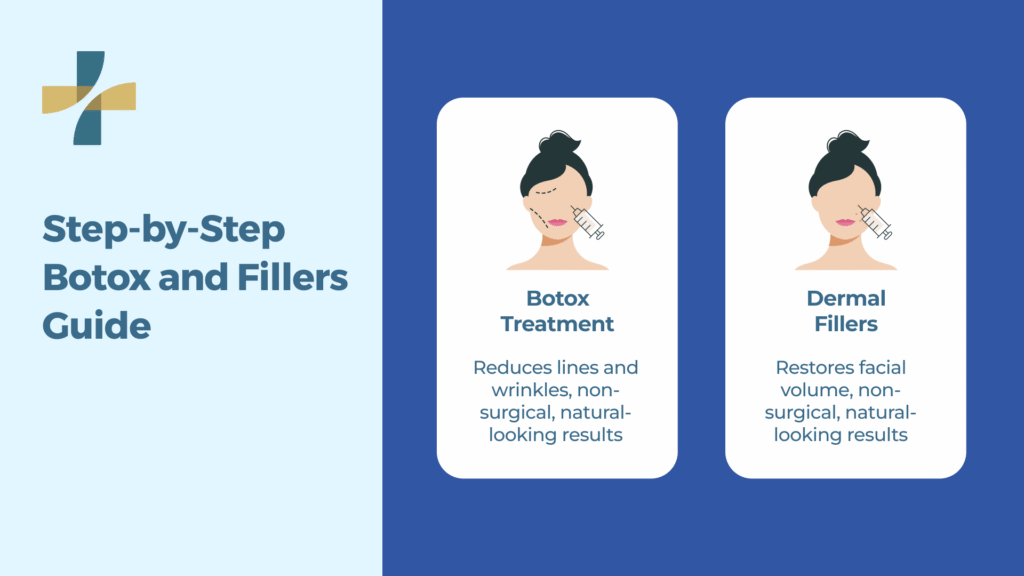
Botox and dermal fillers are two of the most requested cosmetic treatments in Vancouver. They are widely chosen for their ability to reduce lines, restore facial volume, and create natural-looking results without surgery. In 2024, aesthetic procedures worldwide reached 38 million, with non-surgical treatments like Botox and fillers driving much of that growth. If you are planning your first visit to a beauty clinic in Vancouver, you may feel uncertain about the process. Patients often ask about treatment steps, how long results last, and what aftercare involves. This guide explains what to expect during your consultation, procedure, and recovery. This will give you a clear view of how Botox and fillers work in a skin rejuvenation clinic. Step 1 — Booking an Aesthetic Consultation The journey starts with an aesthetic consultation. This appointment sets the foundation for safe and effective care. At this stage, your provider will review your health history, any medications you take, and your goals. This matters because Botox and fillers interact with the body in specific ways, and your plan must be customized. During the consultation, expect a discussion about your main concerns. Some patients focus on reducing frown lines, while others are interested in fuller lips or lifting the mid-face. The provider may take baseline photos and create a personalised treatment plan that matches your budget and expectations. For example, a patient in her early 40s may want Botox for forehead lines and fillers to restore cheek volume. Another in her 30s may choose a light filler for lip enhancement combined with Botox to soften frown lines. A clear plan gives you an accurate roadmap. Step 2 — What to Expect During Your First Visit When you arrive for your first treatment at a beauty clinic in Vancouver, the visit usually begins with preparation. The provider will clean the skin and may apply a numbing cream if needed. Some clinics use facial mapping software or draw small marks to show injection points. This helps guide placement for symmetry and balance. At this stage, you will have another chance to ask questions. Good clinics explain the benefits and limitations of each option. For instance, Botox works well for dynamic wrinkles caused by muscle movement, while fillers address lost volume and structure. Understanding this difference helps set realistic expectations. Dr Jean Carruthers, a well-known ophthalmologist based in Vancouver, is credited with pioneering the use of Botox for cosmetic purposes. Her work established the medical credibility of these anti-aging procedures, which are now standard across Canada. Step 3 — The Botox Procedure Explained Botox is injected into targeted muscles using a fine needle. It works by temporarily blocking signals that cause muscle contractions, leading to smoother skin. Common areas include the forehead, crow’s feet around the eyes, and frown lines between the brows. The procedure is quick and clear: It takes about 10–15 minutes. Pain is minimal, often described as small pinches. You can return to work or daily tasks right away. Results begin to show within 3–7 days and reach their peak at about two weeks. They usually last 3–4 months before a repeat session is needed. According to the American Society of Plastic Surgeons (ASPS) 2024 Procedural Statistics Report, Botox remains one of the most common cosmetic procedures in the United States. In 2024, there were 9.88 million injections, a 4% increase from 2023. This growth shows how widely trusted and popular Botox has become when performed by licensed providers in a beauty clinic in Vancouver. Step 4 — The Fillers Procedure Explained Dermal fillers are injectable gels made from substances like hyaluronic acid. They restore lost volume, smooth folds, and improve facial contours. Fillers are often used for the lips, cheeks, under-eye hollows, jawline, and nasolabial folds. In a clinical study, over 90% reported noticeable improvement following filler treatment. This shows how effective fillers can be when performed by trained professionals. Here is what to expect: The procedure takes 20–30 minutes. Results are immediate, though mild swelling is normal at first. Depending on the product, results last 6–18 months. Well-known brands include Juvederm and Restylane, both approved by Health Canada. These products are trusted because they have been tested for safety and effectiveness. For example, someone who feels their mid-face looks tired might choose cheek filler to restore lift, while another person may want lip filler to improve symmetry and definition. These treatments can be tailored to individual goals and are often combined as part of a wider facial rejuvenation plan. Step 5 — Post-Treatment Care After treatment, care is simple but important. Following the right steps helps maintain results and reduce side effects. What to do: Apply a cold compress to reduce swelling. Stay upright for 4 hours after injections. Follow all written aftercare instructions. What to avoid: Do not rub or massage treated areas. Skip strenuous exercise for 24 hours. Avoid alcohol or saunas on the same day. These steps support healing and lower the chance of bruising or uneven results. Your provider may also schedule a check-in call or recommend a follow-up visit if needed. Many patients appreciate clear guidance on before and after care, as it makes recovery more predictable. Step 6 — Follow-Up and Maintenance Most clinics schedule a review visit two weeks later. This follow-up allows the provider to check results against your baseline photos. Adjustments can be made, such as adding a small amount of filler or topping up Botox in one area. Here is a quick reference chart: Treatment Results Start Results Peak Duration Botox 3–7 days 2 weeks 3–4 months Fillers Immediate 1 week 6–18 months Maintenance plans often include regular injectables combined with skincare. Many patients also use facials, light therapy, or medical-grade skincare to extend results. Risks and Safety Considerations While Botox and fillers are widely used, no procedure is completely risk-free. The most common side effects are temporary. These include
Primary Care Physician Insights: The Top Preventive Screenings You Shouldn’t Miss
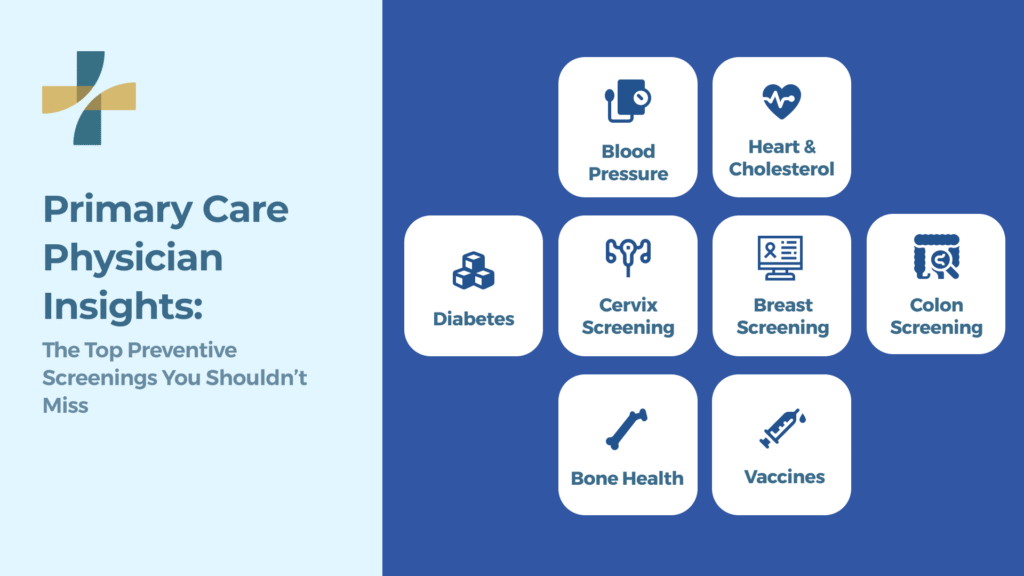
From Blood Pressure to Cancer Screenings: Best Primary Care Physician Recommendations Feeling overwhelmed by all the health advice out there? Between all those online articles, social media tips, and the conflicting opinions popping up everywhere, we all end up more confused than confident about the screenings we may need. Most people find it difficult to keep track of the tests they need; you’re not alone in this. In such situations, a primary care physician can help you choose screenings that fit your age, risks, and goals. This way, you can catch problems early and stay active in North Vancouver. In this guide, we’ll walk you through the major preventative screenings your family physician may recommend, and show you the easiest ways to get them booked stress-free. Why Screening Matters in Vancouver Health screenings are like an early warning system; they try to catch problems before you even notice symptoms. It can be scary to think of getting sick, but you should know that most health issues can be managed more easily if caught early. In BC, new recommendations encourage earlier blood pressure checks, modern HPV-based cervical screening, and organized programs for breast and colon health through BC Cancer. How a Primary Care Physician Personalizes Your Screening Plan Everyone has their own health story; therefore, screening plans need to be tailored, not generic. A good screening plan is based on age, family history, sex at birth, and risk factors like smoking, diabetes, and high blood pressure. In BC, most people start cardiovascular risk checks around age 40, often using cholesterol tests and risk assessments. But picture this: you’re a 44-year-old office manager whose parent had a heart attack at 52. In this case, you may need earlier cholesterol testing and a blood pressure check at home. To get more practical, here’s the core preventative screenings most commonly advised by primary care physicians: a health to-do list. 1. Blood Pressure: The “Silent” Screening You Shouldn’t Skip 2. Heart & Cholesterol: Know Your Numbers 3. Diabetes: Simple Tests, Big Impact 4. Cervix Screening: HPV Testing & Self-Screening in BC 5. Breast Screening: Talk at 40, Routine by 50 (for Most) 6. Colon Screening: The FIT Test Saves Lives 7. Bone Health: Screening to Prevent Fractures 8. Vaccines: The Often-Forgotten Prevention Tool Busy Schedule? Here’s How We Make It Easy Taking charge of your health doesn’t have to mean juggling multiple clinics or spending hours trying to book appointments. At NVMed Center, you can handle it all in one place; from family medicine to allied services like physiotherapy, counselling, and more. With online booking available 24/7, you can schedule in-person visits or telehealth on your own time. Curious about all we offer? Explore our services overview. Need directions, parking info, or hours? Find everything you need on our Contact Us page. Your health is important, and we just make it easier to look after. Summary & Next Steps Preventive screenings work best when they’re tailored to you. A primary care physician coordinates blood pressure checks, heart risk, diabetes tests, and cancer screenings at the right time—then follows through with reminders, results, and next steps. Book your annual health check-up and get a clear plan today. Book Family Physician Care | Book Online Now Frequently Asked Questions Q1: Do I really need a yearly check-up if I feel fine? Yes. It’s the best time to review risks, vaccines, and screenings without the stress of an illness visit. Many conditions, like high blood pressure or diabetes, have no symptoms. Q2: At what age should I start colon screening? In BC, most people start at 50 with a FIT test every 2 years until 74, unless you’re high risk, which means you need to start sooner. Q3: I’m 40. What labs should I get? Usually, lipids and a blood pressure check, plus diabetes screening starting at 40, every 3 years. Your doctor adjusts based on your risks. Q4: Can I self-screen for cervical cancer? Yes. BC offers HPV self-screening every 5 years for eligible people ages 25-69. You can also have a provider collect a sample. Q5: What if my blood pressure is high at the pharmacy? Don’t panic. We confirm with standardized clinic readings and home monitoring before diagnosing hypertension.